The Three-Clipper Rotation: How to Build a Professional Setup That Covers Every Cut
Disclosure: this article contains Amazon affiliate links. As an Amazon Associate we earn from qualifying purchases, at no extra cost to you. It does not change what we recommend.
In this article
- Role One: The Bulk Remover
- Role Two: The Precision Machine
- Role Three: The Low-Profile Fade Specialist
- Why This Three Works as a System
- The Budget Sequence: How to Buy It in Order
- What This Rotation Does Not Replace
- Maintaining the Rotation Week to Week
- For Students and Second-Year Barbers
- The Takeaway
ConcisetheBarber has spent years ranking clippers on camera, and his video asking “If You Had To Pick 3 Clippers… Watch This First!” (watch it here) taps into a truth every experienced barber eventually learns: nobody wins with one clipper, and nobody needs ten. What wins is a rotation of three machines, each with a defined job, bought in the right order. This guide lays out that framework, assigns a proven machine to each role, and sequences the purchases so your setup grows with your skills instead of against your budget.
Role One: The Bulk Remover
The first clipper you buy is the one that knocks down grown-out cuts and powers through thick density without dragging. This machine takes the most abuse, spins the hardest material, and forgives technique errors, so it should be your most torque-per-dollar purchase rather than your most prestigious one.
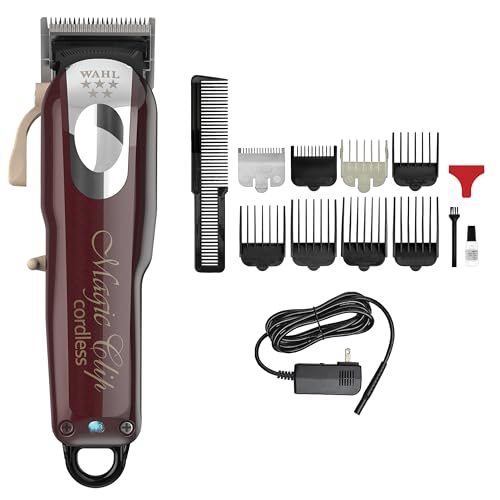
The pick for most barbers here is the Wahl Professional 5 Star Magic Clip Cordless. Its stagger-tooth blade is engineered to soften lines of demarcation as it cuts, which means the machine starts blending while it removes bulk, and its 100+ minute lithium runtime covers a full day’s book. With more than 23,000 ratings averaging 4.5 stars on Amazon, it is the most battle-tested cordless clipper in the industry, and parts availability is unmatched: blades, batteries, and chargers are stocked by every supplier in the country. When this machine is your bulk remover, you are never more than a parts order from a full recovery.
Barber tip: spend on torque, not prestige, in this slot. The bulk machine absorbs the daily abuse and forgives technique, and the dollars you save here fund the precision buy clients actually notice.
Role Two: The Precision Machine
The second clipper is the one that finishes cuts: taper work, sensitive necklines, clipper-over-comb on fine hair, and the detail passes that make a haircut look like a paid haircut. This role rewards blade quality and lever refinement over raw power.
The pick here is the Andis Master Cordless Lithium Ion Clipper, the cordless expression of the most iconic clipper silhouette in barbering. It carries the adjustable carbon-steel Master blade that runs from a #000 fine position up to #1, driven by a rotary motor exceeding 7,200 SPM with constant-speed technology that refuses to drag or stall. The unbreakable aluminum housing is the classic Master build, lithium-ion gives you 90+ minutes per charge with a one-hour recharge, and cord/cordless operation means the machine never takes you out of commission mid-shift. The Master blade’s fine-to-coarse adjustability is precisely what Role Two demands: half-step lever control that other machines simulate with guard fudging.
Role Three: The Low-Profile Fade Specialist
The third slot is the modern one. Low-profile clippers changed the game because their shortened blade-to-body distance lets barbers grip the machine high and see the blade hit the skin, which is the single biggest factor in clean skin fades. This is the machine that turns three-star fades into five-star ones.
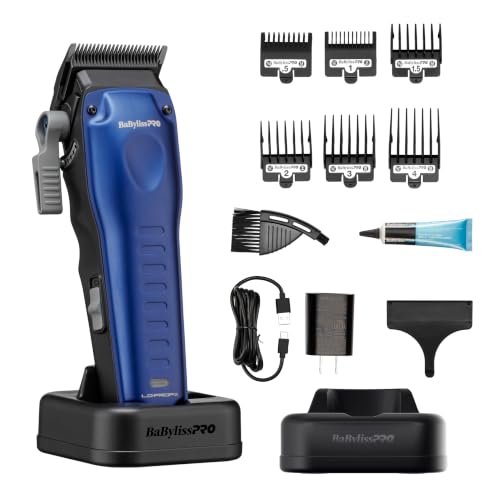
The pick is the BaBylissPRO Lo-ProFX High-Performance Low Profile Clipper. Its graphite wedge blade is zero-gap adjustable, the brushless high-torque motor holds speed through dense passes, and the five-position locking metal taper arm gives you repeatable settings during a fade’s ladder of guard steps. The compact ergonomic housing sits lower in the hand than a traditional clipper by design, and the 2+ hour lithium runtime keeps you through a working day.
Why This Three Works as a System
The rotation covers the complete service menu without overlap. The Magic Clip handles bulk and first-pass blending, the Master Cordless handles taper detail and fine finishing, and the Lo-ProFX owns the skin-fade work where blade-to-skin visibility decides the result. Three machines, three distinct strengths, zero redundancy. It is the configuration that keeps appearing in working barbers’ videos when they show what is actually on their station rather than what sponsors sent them.
Battery strategy across the trio is also sound: all three charge fast, hold through a full shift, and none leaves you stranded mid-service. Set up a charging strip at your station and the whole rotation stays topped between clients.
Shop note: the system only pays when each machine stays in its lane. Pushing the bulk machine into taper work or the precision machine into heavy bulk blurs the division of labor that makes the rotation fast, and it burns blades on jobs they were not ground for.
The Budget Sequence: How to Buy It in Order
Money matters, so here is the sequence that respects it. Start with the Magic Clip Cordless, because a single great all-rounder covers 80 percent of what a new barber needs. Add the Andis Master Cordless when clients start asking for sharper tapers, because that is the moment the precision gap becomes visible in your work. Finish with the Lo-ProFX once your fade demand justifies a dedicated low-profile machine.
Barbers on tighter budgets can compress the plan: the TPOB GO Professional Clippers and Trimmer Set delivers a clipper, trimmer, and shaver in one case with a 7000-9000 RPM TORQ motor and a complete magnetic guard set, covering the trimmer role this rotation does not address while the clippers are being acquired over time. It is the bridge between “one clipper” and “full rotation,” and at its price it makes the wait affordable.
What This Rotation Does Not Replace
Keep the boundaries honest: a three-clipper rotation is not a complete station. You still need a dedicated T-blade trimmer for lineups, a foil shaver for skin finishes, and shears for scissor work, which is exactly why the GO set’s trimmer-and-shaver inclusion matters during the build-out years. For those supporting tools, our beginner barber tools guide lists the full kit, and the 2026 professional cordless clipper roundup places the three rotation picks against the year’s full field.
Maintaining the Rotation Week to Week
A three-machine setup only stays an advantage if it stays maintained, and the routine is simple enough to run without thinking. Oil every blade before the first client of the day and after every third cut; blade oil takes ten seconds and is the difference between blades that stay sharp for a year and blades that burn out in a quarter. Drive each machine’s blades against the disinfectant routine your state board requires between clients, and deep-clean the housings weekly, because hair packed into vents is what cooks motors.
Watch the blades for wear markers rather than the calendar. A Magic Clip blade that starts pulling, a Master blade that no longer holds its zero-gap, or a Lo-ProFX wedge that leaves streaks at open are all replacement signals, not repair projects. Because all three platforms have deep parts ecosystems, replacing a blade costs a fraction of replacing a machine, and keeping a spare blade for each in your drawer turns a worn blade from a lost day into a five-minute swap.
For Students and Second-Year Barbers
If you are in barber school or your first shop year, the rotation framework still applies, just compressed. Buy the Magic Clip Cordless first and pair it with a quality trimmer, which is the two-machine minimum for practicing the full service menu at school. Add the Master Cordless when you start taking clients who request specific taper work, typically around the time your book includes repeat adults rather than walk-ins. The Lo-ProFX can wait until fade requests dominate your book, which is the natural moment the low-profile advantage starts paying for itself in speed.
Barber school programs have their own kit requirements, which we cover separately in our barber school clipper guide, and students should check those requirements before buying anything, since some programs specify brands for classroom standardization.
The Takeaway
Building a clipper setup is a systems problem, not a shopping problem. Define the three roles, buy the machine that best fills each, and let the rotation grow as your book does. Start with the Magic Clip Cordless if you are buying today, add the Master Cordless when precision demand arrives, and close the loop with the Lo-ProFX when your fades are the reason clients rebook. That is how a three-clipper rotation becomes the backbone of a station barbers actually run, not a shelf of tools they photographed once.