Andis GTX-EXO Review: Should You Buy the Original EXO Today, or Wait for the EXO II?
Disclosure: this article contains Amazon affiliate links. As an Amazon Associate we earn from qualifying purchases, at no extra cost to you. It does not change what we recommend.
In this article
Tank Be Choppin has reviewed more Andis trimmers on camera than almost anyone, and his video asking whether the GTX Exo II is Andis’ most overhyped or underrated trimmer reopened the question every trimmer buyer now faces: with the second-generation GTX-EXO on the shelf, what happens to the original that started the open-design trimmer revolution? This review answers it from the working barber’s seat, because the original Andis GTX-EXO Cordless Li Trimmer is still in production, still stocked, and still the trimmer thousands of barbers reach for at open. Whether you buy it or its successor depends on three specific things, and all three are covered below.
The Lineage: Why the EXO Mattered
Andis built its reputation on the T-Outliner, the corded T-blade trimmer that has defined crisp lineups for decades, and our T-Outliner Cordless review covers that machine’s own evolution. The GTX-EXO took the same GTX-series cutting DNA and rethought everything around it. The signature move is the open blade deck: instead of a housing that crowds the blade, the EXO’s sculpted body leaves the blade and the surrounding skin visible from every angle, so you can see exactly where the edge meets the hairline while you work. Barbers who learned on T-Outliners describe the difference as the difference between driving a sedan and driving a glass-floor car; the visibility alone changes how confidently you corner a hairline.
Barber tip: the EXO zero-gaps beautifully, but check your work on dry skin, not damp. The deep tooth T-blade cuts through product buildup that stalls shallower blades, which is why it earned its station spot.
The gold GTX-Z blade is the second half of the story. Andis retooled the GTX blade to cut closer than the original GTX teeth, finished it in gold, and made it zero-gap ready without modification. That last part matters enormously in working shops, because traditional T-blade zero-gapping means filed guards and careful adjustment, a process our guides on how to zero gap trimmers and the blade-specific version walk through in detail. On the EXO, the blade ships zero-gap capable out of the box, which removes the single most intimidating ritual in trimmer ownership for newer barbers.
What the Original GTX-EXO Delivers Day to Day
Under the blade, the 74150 runs a rotary motor with constant-speed technology at roughly 7,200 strokes per minute, which is the sweet spot for T-blade detail work: fast enough to cut cleanly on the first pass, controlled enough that the blade does not chatter along fine necklines. The lithium-ion battery delivers over 100 minutes of consistent runtime and the trimmer runs corded or cordless, so a dead battery never takes the tool out of a shift. The included charging stand is the detail owners end up appreciating most, because a trimmer that always lives on its stand never starts a service at half power.
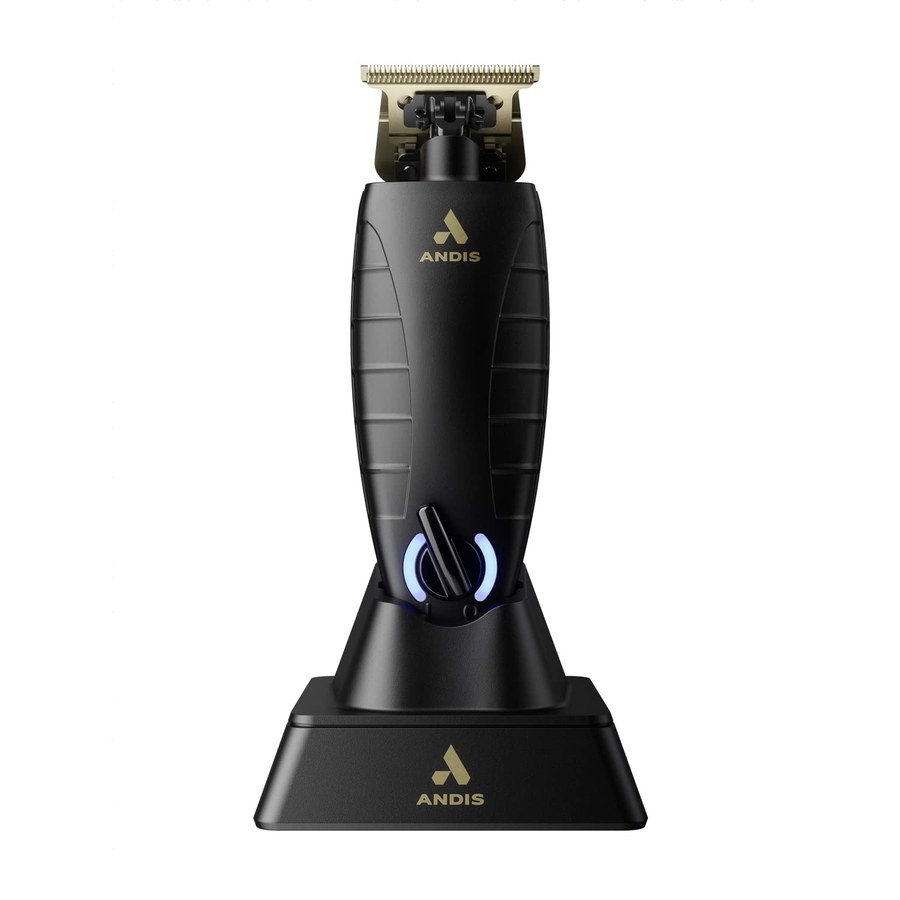
The ergonomics deserve their own mention. The sculpted body sits lower in the hand than a traditional T-Outliner, and the open design keeps your view of the blade unobstructed whether you outline a hairline, dry shave a neck, or carve a hard part. Weight is well under the full-size clipper class, which matters during long lineup-heavy days when wrist fatigue becomes a service-quality problem.
What the GTX-EXO II Adds
The second generation, which Tank Be Choppin’s video examines at length, pushes the platform further in three directions. First, the M-Force magnetic tension system replaces the standard blade drive tension with a magnetic mechanism designed for zero-drag, first-pass performance and more consistent blade-to-comb pressure across the blade’s life. Second, the brushless motor version runs at 7,200 SPM roughly 20 percent cooler and quieter with steady torque under load, and the lithium pack stretches runtime to as much as four hours, which is multiple shifts per charge. Third, the frame is lighter and more ergonomically sculpted with dedicated grip zones and better drop and splash resilience for the realities of a working station.
What the II does not change is the cutting principle: it runs the same GTX-Z blade family, zero-gap ready, in the same open-deck visibility philosophy. The cutting result between the two generations, on the same head with the same barber, is closer than the price difference suggests it should be.
Who Should Buy Which
Buy the original GTX-EXO Cordless Li if you want the EXO experience at the lower price, and especially if you are building a station rather than upgrading one. It is a complete professional trimmer, its blade and parts ecosystem is mature, and at its current street price it undercuts the II by a wide margin. Barbers working out of one drawer, students assembling their first kit per our barber school guide, and home users who want a genuine pro detailer all belong here.
Buy the GTX-EXO II if trimming is your bread and butter and the tool earns money every day. The four-hour runtime, the cooler and quieter brushless motor, and the M-Force blade tension are working-barber upgrades: they reduce the small frictions that accumulate across twenty services. If your book is lineup-heavy and the trimmer never rests, the II’s improvements are worth real money to you; if the trimmer is one tool among six, the original delivers the same lines for less.
How It Stacks Against the Competition
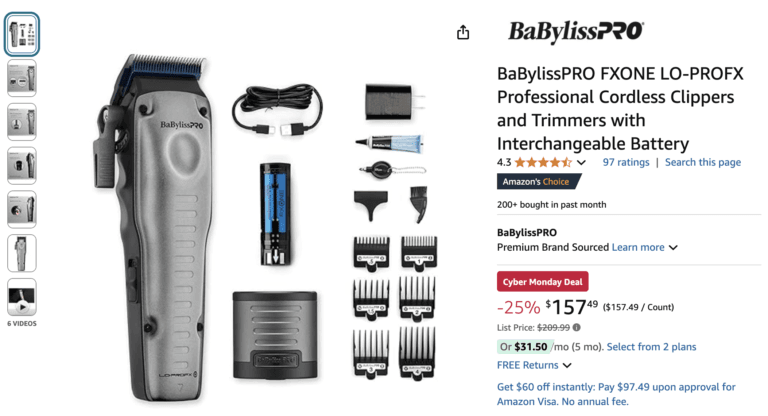
Against its own house, the EXO sits alongside the corded T-Outliner line rather than replacing it; some barbers still prefer the corded machine’s infinite runtime for all-day detail stations, and the cordless original splits the difference well. Against other brands, the comparison barbers keep making on camera is with BaBylissPRO’s FX trimmers and JRL’s Onyx line, and our head-to-head of the JRL Onyx versus BaBylissPRO Lo-ProFX and the wider zero-gap trimmer roundup place the EXO in that field. The EXO’s persistent edge in those comparisons is visibility: no other trimmer in its price class shows you the blade and the skin the way the open deck does, and for linework that is not a novelty, it is the job.
Against the Wahl Magic Clip cordless it is not a fight: the Magic Clip is a clipper, the EXO is a trimmer, and the shops that run both do it on purpose. Our TPOB Slime 2 vs. Magic Clip comparison covers the clipper side of that decision.
Practical Care Notes
Maintenance follows the Andis standard: oil the blade before the first service and periodically through the day, brush out the deck between clients, and disinfect per your state board’s protocol. The GTX-Z blade is available as a replacement part, so a worn blade is a modest parts order rather than a new trimmer, and because the same blade family runs across both generations, an investment in the original keeps paying even if you later add the II as your backup machine.
Care note: the EXO blade does not like being oiled while hot. Run it, let it cool for a minute, then oil. Blowing clipper spray into a warm blade gums the guide teeth, and that is the most common cause of the mid-cut stutter barbers blame on the tool.
What Comes in the Box, and What Barbers Add
The 74150 ships as a complete working kit: the trimmer, the gold GTX-Z blade mounted, the charging stand, four attachment guide combs for the rare moments a T-blade needs a guard, a blade brush, blade oil, and a blade guard for storage. Barbers typically add two things on their own: a replacement GTX-Z blade kept in the drawer, and a zero-gap check after the first week of use, since individual blades arrive at slightly different tolerances even when the platform is zero-gap ready. The charging stand deserves a word too, because it is not an afterthought accessory; it keeps the trimmer topped between clients and doubles as a display cradle at the station, which is where it earns its place in shops that keep tools in front of the client rather than hidden in a drawer.
The first add-on most EXO owners buy is a smaller detail blade for the work the deep tooth T-blade is too aggressive for. The Wahl Detailer Lithium Ion is the common pick, and at its price it slots in next to the EXO without guilt.
On-camera reviewers consistently note one more thing the spec sheet undersells: the sound. The EXO runs noticeably quieter than the corded T-Outliner class, and quieter matters more than it sounds, because it changes the conversation you can have with a client mid-service and it matters enormously for the kid’s first haircut experience. A trimmer that does not scare children is a service upgrade no marketing sheet lists.
Related: if you are building a full rotation around the EXO, our guide to building a three-clipper setup shows where a trimmer like this earns its slot.
The Verdict
The original GTX-EXO remains one of the smartest professional trimmer purchases on the market in 2026: pro-grade cutting, genuine cordless convenience, a zero-gap-ready gold blade, and an open design that actually improves your linework. The EXO II is the better machine for full-time trimmer-heavy barbers, and everyone else is not losing much by buying the original with confidence. At today’s price and availability, the Andis 74150 GTX-EXO is the value pick in Andis’ own lineup, and Tank Be Choppin’s verdict on the II only sharpens that case: the platform is excellent, and the entry point into it just got cheaper.