TrustedBarber is reader-supported. If you buy through links on this page, we may earn a commission from Amazon at no extra cost to you.
Flakes on a black shirt collar will undo a good haircut faster than anything. The fix is usually not washing more; it is washing smarter, with the right active ingredient for your scalp. This guide covers the scalp care products that actually move the needle for men, what dermatologists say about picking a dandruff shampoo, and the barbershop habits that keep a scalp calm between cuts.
- Your scalp is skin, and it keeps score
- Pick the active ingredient, not the brand
- Nizoral A-D: the stubborn-flake specialist
- Head and Shoulders Supreme: the daily maintenance set
- SheaMoisture: for dry scalps and curly hair
- The mistakes that keep flakes coming back
- Barbershop habits that keep a scalp calm
- FAQ
Your scalp is skin, and it keeps score
Barbers see every kind of scalp across the chair: oily, flaky, dry, irritated from product buildup, red from hard water. Most of it comes down to the same few causes, and none of them are poor hygiene. Dermatologist Mona Sadeghpour puts it plainly:
“It is a common misconception that dandruff is caused by poor hygiene. Causes range from oily skin to hair care habits, along with some medical conditions.”
– Dr. Mona Sadeghpour, board-certified dermatologist, American Academy of Dermatology
That matters because the fix depends on the cause. Dry scalp wants moisture and gentler washing. True dandruff is usually a yeast called Malassezia feeding on scalp oil, and it wants an antifungal active ingredient. Product buildup wants a proper rinse and fewer heavy stylers. Same flakes, different fixes.
Pick the active ingredient, not the brand
The American Academy of Dermatology’s advice is to choose a dandruff shampoo by what is in it: zinc pyrithione, salicylic acid, sulfur, selenium sulfide, ketoconazole, or coal tar, and to alternate ingredients if one alone stops working. A dermatologist with 16 years of practice says the same thing in fewer words:
“Stop shopping for your anti-dandruff shampoo based on the brand name and start picking your shampoo based on the active ingredient.”
– Dermatologist, YouTube
One more instruction most men skip: let the shampoo sit. The AAD notes that medicated shampoos often need 5 to 10 minutes of contact time on the scalp before rinsing, which is why the lather-and-immediately-rinse routine never seems to work.
Nizoral A-D: the stubborn-flake specialist
Nizoral A-D is the over-the-counter ketoconazole shampoo, 1% strength, and ketoconazole is the ingredient dermatologists reach for when ordinary dandruff shampoos stop cutting it. The FDA label describes it as clinically proven to control flaking, scaling and itching by controlling the fungus that can cause dandruff.
Use it two or three times a week, not daily. Lather it into the scalp, leave it for a few minutes, rinse, then follow with your normal conditioner if your hair feels dry. Most men see a difference within two to four weeks; if nothing changes after a month, that is a dermatologist visit, not a stronger shampoo.
- Ketoconazole 1%, the strongest OTC antifungal active
- Use 2 to 3 times per week, not as a daily driver
- Clean scent, works into a normal routine easily
- Best for: stubborn flakes, itchy scalp, oily scalps with buildup
Head and Shoulders Supreme: the daily maintenance set
For mild flakes and everyday prevention, zinc pyrithione is the classic active, and Head and Shoulders built its name on it. The Supreme Nourish and Smooth set pairs the anti-dandruff shampoo with a matching conditioner, which matters because dandruff shampoos alone can leave hair feeling stripped.
This is the set to keep in the shower as the daily driver, alternating with Nizoral on the weeks flakes act up. It is gentle enough for daily use and usually the cheapest per wash of anything in this guide.
- Zinc pyrithione active for everyday dandruff control
- Shampoo plus conditioner set, so hair does not dry out
- Mild enough for daily washing
- Best for: mild flakes, prevention, budget-conscious buyers
SheaMoisture: for dry scalps and curly hair
If your flakes come with tightness, dull hair, or curls that drink moisture, the problem is usually dryness rather than dandruff, and medicated shampoo will make it worse. The SheaMoisture Curl and Shine Shampoo with the matching conditioner is the sulfate-free route: coconut oil and shea butter instead of harsh detergents, so the scalp keeps its natural oils while still getting clean.
The AAD’s texture guidance lines up here: coarse, curly, or coily hair should be washed less often, and medicated shampoo applied to the scalp only, because the active ingredients dry the hair itself out.
- Sulfate-free, silicone-free moisture-focused formula
- Coconut oil and shea butter for dry scalps and curls
- Pair shampoo and conditioner for best results
- Best for: dry scalp, curly and coily hair, anyone whose flakes come with tightness
The mistakes that keep flakes coming back
The most common one is stopping too early. Medicated shampoos control dandruff; they do not cure it, so the flakes return within weeks of quitting. Keep a maintenance wash in the rotation even when your scalp looks clear.
The second is treating a dry scalp like a dirty one. Scrubbing harder and washing more strips the oils that were the only thing keeping the skin calm, and the scalp answers with more flakes. If your scalp feels tight after washing, that is your sign to switch to moisture, not to wash again.
The third is ignoring the tools. Dirty clipper guards, a greasy pillowcase, and a hat that never gets washed all reintroduce whatever you just rinsed out. Wash the hat, change the pillowcase twice a week, and disinfect the guards.
Barbershop habits that keep a scalp calm
- Rinse longer than you think you need to. Most buildup is shampoo and product left behind, not dirt.
- Wash after every heavy product day. Pomade left overnight is food for scalp yeast.
- Keep water warm, not hot. Hot water strips the oils your scalp then overproduces to replace.
- A few drops of argan oil worked into a dry scalp before bed beats scratching all evening.
- Clean your clipper guards and combs weekly. Whatever lives on them ends up on your head.
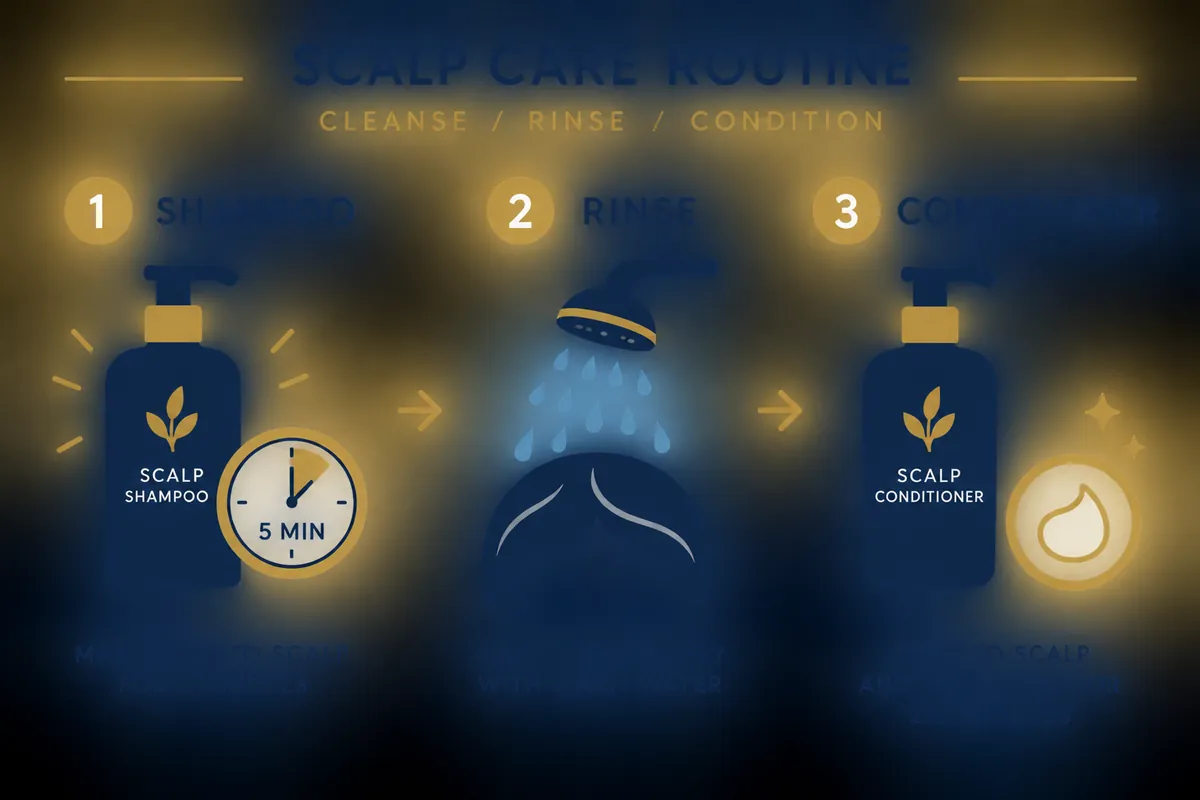
Video credit: a dermatologist breaking down anti-dandruff ingredients
FAQ
How often should men wash their hair?
Fine, straight hair and oily scalps can handle daily washing. Coarse or curly hair does better at two to three times a week. The AAD’s rule of thumb: wash according to your hair type, not a fixed schedule.
Do I need a medicated shampoo if I only see a few flakes?
No. Start with a regular anti-dandruff shampoo like the zinc pyrithione set above and good rinse habits. Bring in ketoconazole when that stops working.
Can dandruff shampoo cause hair loss?
Not that dermatologists report. Untreated scalp inflammation can contribute to shedding, which is one more reason to treat flakes instead of ignoring them. Persistent loss deserves a dermatologist.
When is it time to see a dermatologist?
If an over-the-counter routine changes nothing after four to six weeks, if the scalp is red, cracked, or bleeding, or if flakes come with hair loss. The AAD’s advice is the same: that is an appointment, not another bottle.