TrustedBarber is reader-supported. If you buy through links on this page, we may earn a commission from Amazon at no extra cost to you.
A safety razor without a brush is only getting half the shave. The brush is what builds real lather from a puck of soap and lifts the beard so the blade meets each hair standing up. The good news for 2026: you no longer need to spend badger money to get there. This guide covers the brushes and bowls worth buying, what knot size and loft actually change, and how to build a lather that holds for three passes.
What the brush actually does
A shaving brush has three jobs, and your fingers can only do one of them. Shaving School’s Jonathan West, who tests brushes for a living, lays them out:
“A shaving brush carries water into the soap, works air into the mixture to build lather, and lifts the beard so the blade meets each hair upright instead of flattened against the skin.”
– Jonathan West, Shaving School
That last job is the one that changes the shave. Hairs cut standing up are cut closer and cleaner, with less pressure, which means less irritation. Everything else, the scent, the ritual, the warm lather, is a bonus on top.
Badger vs boar vs synthetic in 2026
The old advice was simple: buy badger or buy twice. That advice is out of date. Modern synthetic knots lather as well as badger, dry in about an hour instead of overnight, never shed, cost less, and need no break-in. West’s testing reaches the same conclusion: the case for badger has narrowed to the feel of it, not the performance.
Boar is the other traditional option: genuinely scratchy for the first twenty or thirty shaves until the tips split, then an excellent stiff brush for hard soaps. Badger still holds more water than anything else, but its grades are marketing terms with no standard behind them, and its supply chain has no meaningful welfare certification. For most men in 2026 a good synthetic is the right brush, full stop.
Knot size and loft: the numbers that matter
Fibre gets all the attention, but the dimensions change the shave more than the hair type does.
- Knot 20 to 21mm: precise, good for travel and tight spots like under the nose.
- Knot 22 to 24mm: the sweet spot for most faces, enough lather for three passes with a reload.
- Knot 26mm and up: a lather mop built for bowl use, more brush than most men need.
- Low loft, 45 to 50mm: stiff backbone, scrubs hard soap, drives lather into the beard.
- High loft, 55mm and up: soft and luxurious, paints lather on, struggles to load a hard puck.
Anbbas 3-in-1 set: the starter kit to buy
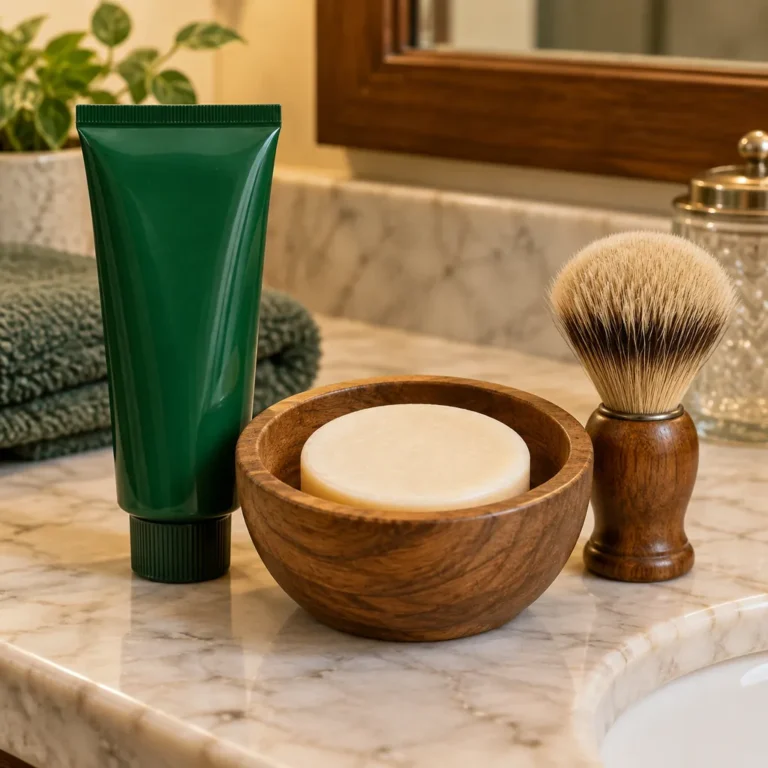
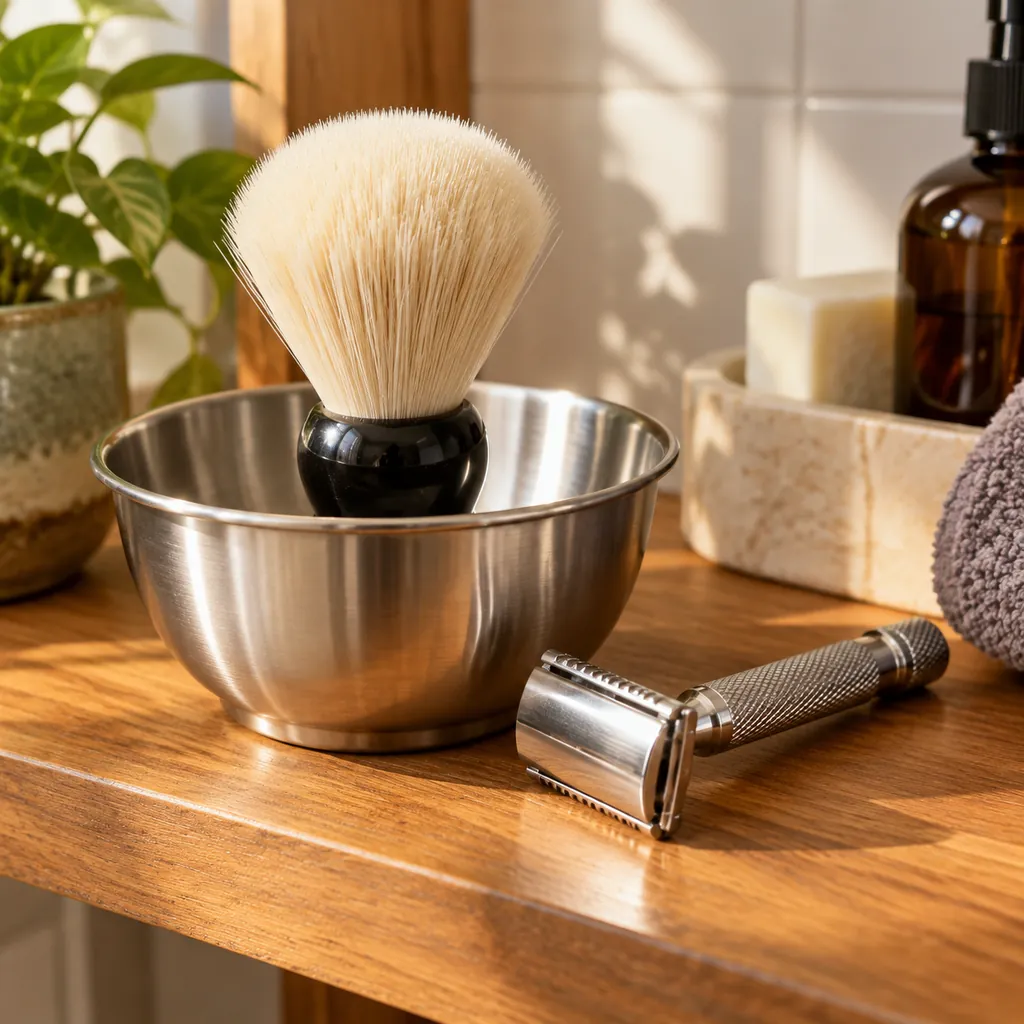
The easiest way in is a set that includes everything, and the Anbbas 3-in-1 kit is the one we recommend: a synthetic badger-style brush, a stainless lather bowl, and a stand that holds both so the brush dries bristles-down like it should. The synthetic knot means no break-in, no shedding, and no animal hair question at all.
The stand matters more than it looks. A brush stored upright or on its side keeps water in the knot, which breaks down the glue and breeds the musty smell that kills brushes early. Hang it to dry and a decent brush lasts for years.
- Synthetic knot: soft tips, no break-in, dries in about an hour
- Stainless bowl sized for building lather, not just holding soap
- Stand stores the brush bristles-down to dry properly
- Best for: first wet-shave setups, gifts, anyone upgrading from canned foam
Pair it with: a razor that earns the lather
If you are building the full kit from zero, the Vikings Blade Chieftain set adds a safety razor, five Swedish steel blades and a travel case in one box. The Chieftain is a butterfly-open razor, so blade swaps take ten seconds and never put fingers near an edge, which makes it a friendly first razor.
If you would rather choose the razor separately, the Merkur 34C is the other standard recommendation: a heavy, short-handled two-piece razor that has taught more men to wet shave than anything else on the market. Either way, the brush and bowl come first, because canned foam with a great razor still loses to real lather with a decent one.
Keeping the brush alive
A shaving brush asks for almost nothing, but the little it asks for is not optional. Rinse the knot clean under warm water after every use until the water runs clear, because dried soap at the base of the bristles is what makes brushes shed. Shake it out hard, flick the rest out, and hang it bristles-down on the stand.
Once a month, give the knot a deeper clean with a drop of mild shampoo, rinse, and let it dry fully before the next use. Never store it inside a closed cabinet while damp, and never stand it on its base to dry. Water trapped at the knot dissolves the glue that holds the whole brush together.
Bowls are simpler. Stainless steel survives drops and travels well, ceramic holds heat longer if you like a warm lather, and wood looks best on a shelf but needs to dry between uses. Any of them beats lathering in your palm.
How to build a lather that holds
- Soak the brush in warm water for a minute, then shake out the extra. Damp, not dripping.
- Swirl on the soap puck for 20 to 30 seconds to load the knot.
- Move to the bowl and work the lather in circles, adding a few drops of water at a time.
- Stop when it looks like Greek yogurt and holds soft peaks. Runny means more swirling; pasty means more water.
- Paint it on against the grain first to lift the beard, then smooth it over.
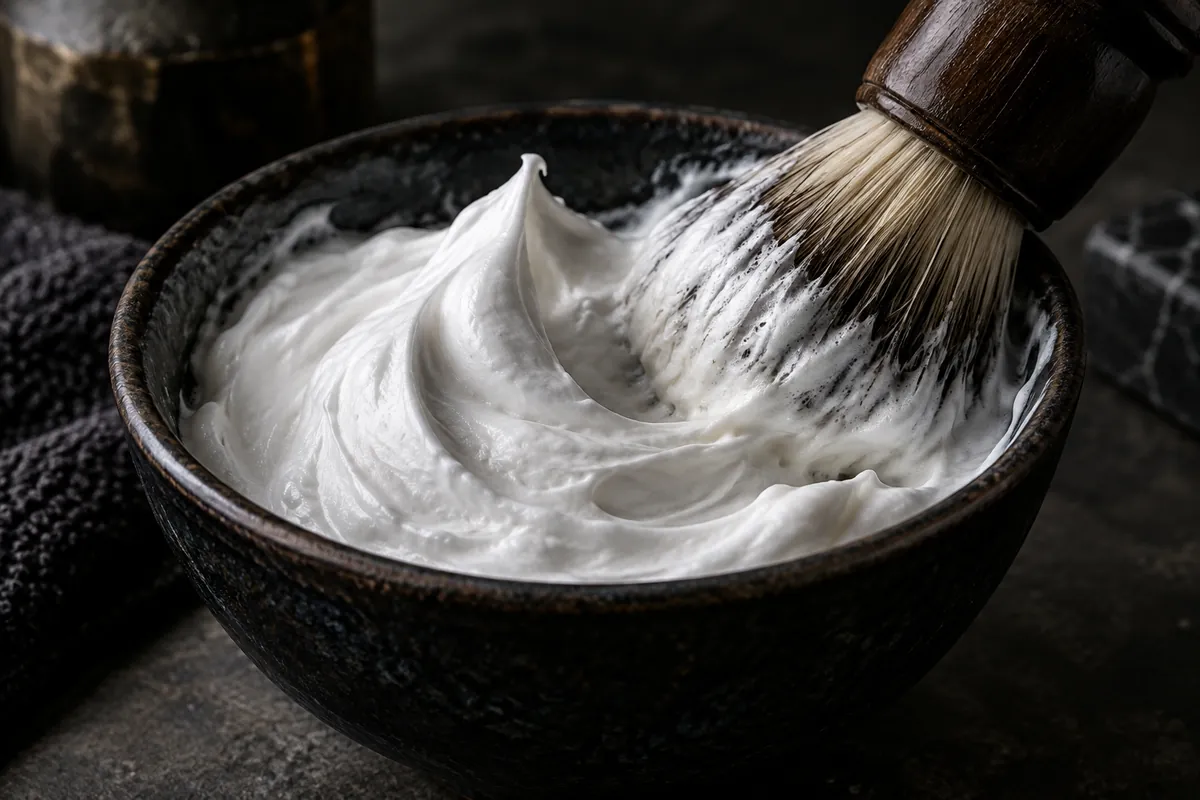
Video credit: a hard-puck lathering tutorial
FAQ
Is a shaving brush worth it if I use cartridge razors?
Yes. The brush is about the lather and the beard lift, not the razor. Cartridge shavers get the same closer, calmer shave from real lather.
How long does a brush last?
A synthetic brush used daily lasts for years with basic care: rinse it clean, shake it out, hang it bristles-down. What kills brushes is standing water in the knot.
Do I need the bowl?
You can lather directly on your face or in your palm, but a bowl builds thicker, more consistent lather and keeps the mess in one place. In a set like the Anbbas it costs almost nothing extra.
What soap goes in it?
Any shaving soap or cream puck. Hard triple-milled soaps last the longest; soft creams load the fastest. Start with whatever scent you like, because technique matters more than the soap at the beginning.