TrustedBarber is reader-supported. If you buy through links on this page, we may earn a commission from Amazon at no extra cost to you.
A barber’s hands are the whole business, and they take the beating quietly: dozens of washes a day, sanitizer between clients, clipper vibration for hours, and winter air on top. By February most barbers have cracks at the knuckles and a thumb that aches by the last fade. This guide covers the hand creams worth keeping at your station, the washing habits dermatologists actually recommend, and the stretches that keep wrists working for a long career.
Why barbers’ hands wear out early
Cutting hair is repetitive strain dressed up as craftsmanship. The wrist snaps out and back on every clipper pass, the thumb and forefinger pinch a comb for hours, and between clients the hands get washed or sanitized again. Lucia Farina, a personal trainer who works with barbers, puts it plainly:
“The muscles between fingers and wrists can shorten in barbering and this stretch reminds the muscles and tendons to lengthen and helps avoid pain and weird sensations in the hands and knuckles.”
– Lucia Farina, via Modern Barber
Add the skin side of it: every wash strips the natural oil barrier, and alcohol sanitizer strips it faster. Cracked knuckles are not a toughness badge. They are a barrier failure that stings every time you shampoo a client, and they heal slowly because you keep reopening them all day.
The washing habit that actually fixes dry hands
The American Academy of Dermatology’s hand-washing advice boils down to three steps, and the third is the one barbers skip. Wash with lukewarm water, not hot. Dry with a towel but leave the skin slightly damp. Then get hand cream on immediately, while the skin is still damp, because that is when moisturizer seals water in instead of sitting on top.
The AAD’s phrase is worth quoting directly:
“Apply hand cream or ointment to your damp skin, making sure you work some of the moisturizer into your fingertips and nails.”
– American Academy of Dermatology
Their product guidance matters too: pick a cream with mineral oil or petrolatum, in a tube rather than a pump bottle, fragrance-free and dye-free. The fancy scented lotion by the till fails on three of those counts.
Sanitizer is the silent one
Soap gets the blame, but alcohol gel does more damage in a modern shop because it goes on ten times a day and never gets rinsed off. The fix is not skipping it: clients expect it and hygiene rules require it. The fix is choosing a sanitizer with added moisturizer (most commercial gels now include glycerin or aloe) and treating every sanitize as a wash for cream purposes. Gel on, client in the chair, pea of salve after the service. That rhythm is the difference between hands that survive December and hands that split by Thanksgiving.
O’Keeffe’s Working Hands: the repair tube
For knuckles that are already cracked, the O’Keeffe’s Working Hands tub is the standard fix, and it is cheap. It is a concentrated, unscented cream built around a high glycerin base that pulls water into the skin and keeps it there. It is not pleasant in a spa way. It is a tool: thick, slightly tacky, and it works.
The routine that heals cracks fast: a thin layer after every wash during the day, then a heavy coat before bed with a pair of cheap cotton gloves over it. Most barbers see the cracks close inside a week of actually doing that, and the tub lasts months because you use so little per application.
- Unscented, no sting on open cracks
- High-glycerin formula pulls moisture into the skin
- Tub format: a fingertip scoop covers both hands
- Best for: repairing skin that is already cracked and painful
Kiehl’s Ultimate Strength Hand Salve: the station bottle
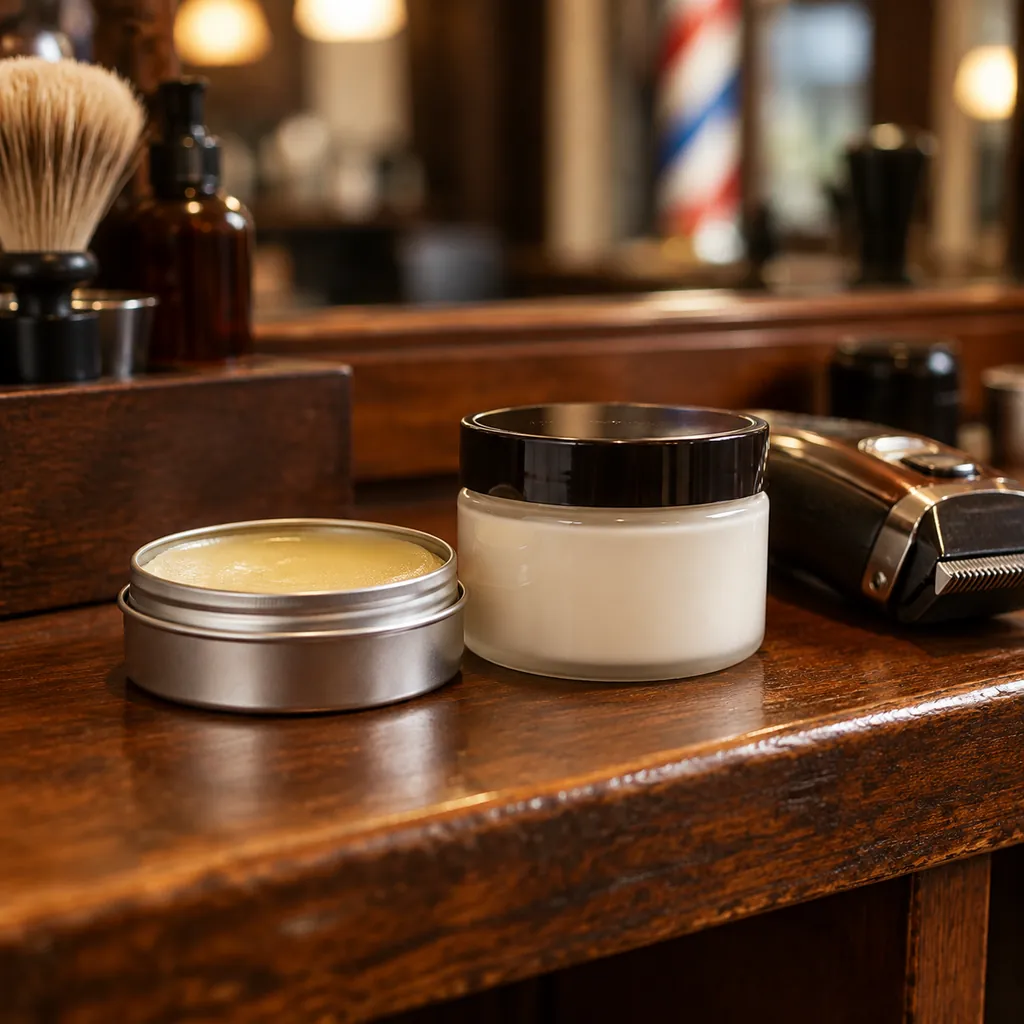
For all-day maintenance rather than repair, the Kiehl’s Ultimate Strength Hand Salve is the one worth the counter space. It is a thick salve built on avocado oil and sesame oil with a matte finish, which is the whole point for a barber: it absorbs fast and does not leave your grip greasy on a clipper body or a client’s hair.
Keep it at the station and use a pea-sized amount after every other wash. The eucalyptus and lavender scent is mild and clean, which matters when your hands are six inches from a client’s face all day. It costs more per ounce than O’Keeffe’s, and the difference buys you a finish you can work with.
- Matte finish: no greasy grip on tools
- Fast-absorbing salve, works on damp or dry skin
- Mild scent that will not fight your shop smell
- Best for: all-day maintenance between washes
The two-minute stretch routine
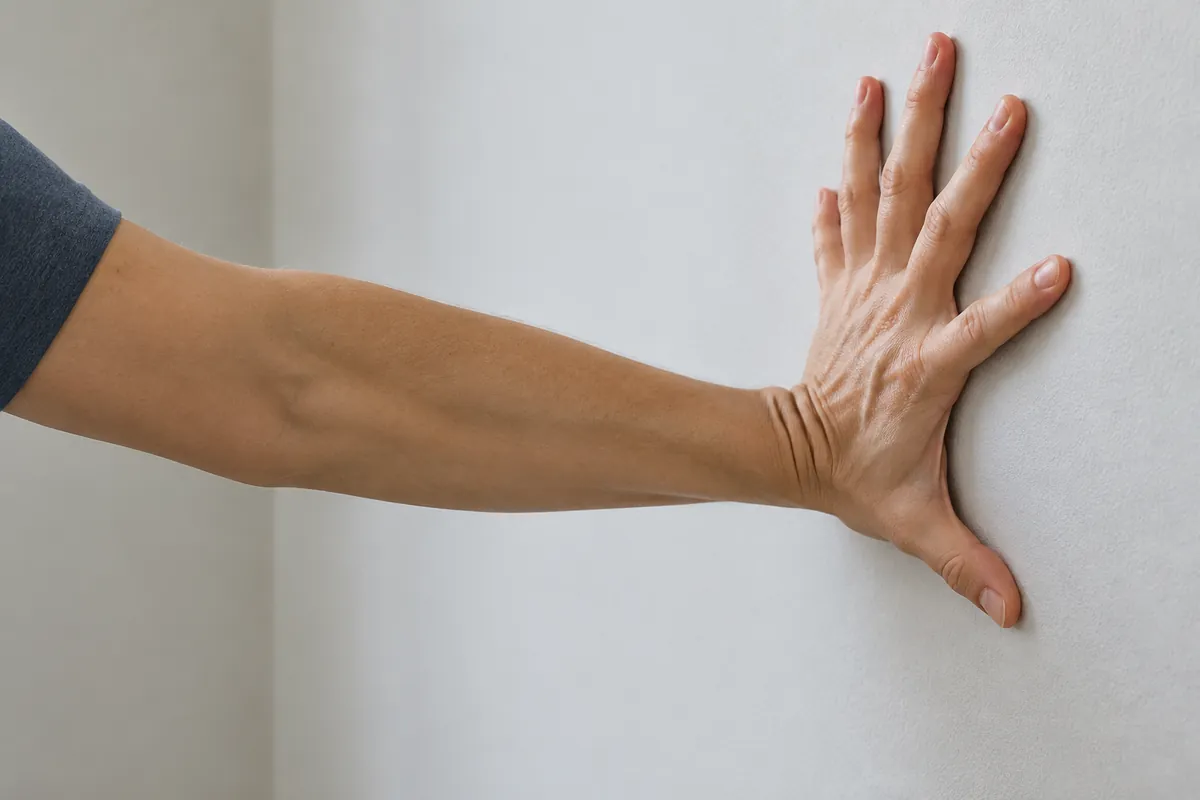
Cream fixes skin. It does nothing for the tendons. Farina’s number one stretch for barbers targets the wrist and hand chain: stand side-on to a wall, raise your arm to shoulder height, press your hand flat to the wall with fingers spread wide, and hold until you feel the sensation change in the forearm. Repeat with the back of the hand against the wall, then swap arms. A rolled towel under the heel of the hand makes it easier at first.
Do it between clients, not just at home. Two minutes, three times a day, is worth more than twenty minutes once a week.
Video credit: a stretching routine for haircutting professionals
Shop habits that save your hands
- Turn the water temperature down. Hot water strips skin faster than soap does.
- Wear nitrile gloves for color work and when a client’s scalp is broken. Keep a box that actually fits.
- Swap the harsh antibacterial soap at the back bar for a mild, fragrance-free one. Clients cannot tell the difference; your knuckles can.
- Keep both creams in reach: O’Keeffe’s at home for the overnight repair, Kiehl’s at the station for the day.
- File your nails short. Long nails split cracked skin open further and catch in guards.
FAQ
How do I stop my hands cracking in winter?
The overnight repair is the lever: a heavy coat of O’Keeffe’s and cotton gloves before bed, every night until the cracks close. Daytime washing habits keep them closed.
Will hand cream mess up my grip on clippers?
A greasy formula will. A fast-absorbing salve like the Kiehl’s dries to a matte finish within a minute, so grip is not affected.
Are the cracks on my knuckles something a doctor should see?
Usually not. If cracks bleed constantly, weep, or do not respond to two weeks of real moisturizing, see a dermatologist, because hand eczema and psoriasis are both common in barbers and treatable.
Can I just use one cream for everything?
Yes. O’Keeffe’s alone handles both jobs if budget is tight; it is just heavier and tackier for daytime use. The two-product split is a comfort upgrade, not a requirement.
Do gloves help or hurt?
Nitrile gloves protect skin from chemicals and constant wet work, but skin sweats inside them, so take them off between tasks and moisturize after. Bare, dry, creamed skin beats damp gloved skin for plain cutting.