TrustedBarber is reader-supported. If you buy through links on this page, we may earn a commission from Amazon at no extra cost to you.
A curly beard grows in five directions at once, and no amount of oil changes that. Heated beard brushes promise to fix it in three minutes, and the honest answer is that the good ones do, as long as you respect the temperature ceiling. This guide covers how the heat actually works on beard hair, the brush worth buying, and the technique that straightens without cooking your face. We also cover the temperature numbers that separate a trained beard from a fried one, because the difference between the two is about fifteen degrees.
What heat actually does to a beard
Beard hair is held in its shape by hydrogen bonds inside each strand, and heat temporarily breaks those bonds so the hair can be reset in a new shape. That is the whole trick: soften the bonds with heat, pull the hair straight with the brush, let it cool in the new position. It is the same physics as a clothes iron, minus the steam.
The risk is real but narrower than the warnings suggest. Beardbrand’s research roundup found one number worth memorizing:
“185 degrees Celsius (385 degrees Fahrenheit) was the sweet spot for using heat on hair. Everything above that temperature began to cause damage.”
– Beardbrand
Below that line, used on dry hair a few times a week, a heated brush is safe for most beards. Above it, you are trading curl for breakage. The same research surfaced a surprise: a study found blow drying at 95 degrees Celsius from 15cm away caused less damage than letting hair air dry, because wet hair is swollen and fragile. Controlled, moderate heat is not the enemy. Max settings are.
What results to expect
A heated brush will take a curly beard to a natural-looking straight, not a flat-ironed one. Expect the beard to sit longer, lie flatter against the face, and look noticeably tidier, with a slight wave remaining in the stubborn spots. That is the right outcome: a beard with zero texture reads as overworked. The goal is a beard that looks like it grew that way, and three minutes most mornings is what it costs.
The temperature settings that matter
Ignore the marketing about maximum heat. The number that matters is the minimum, because the right setting is the lowest one that works on your beard.
- Fine or light-colored beards: start around 150 to 160 Celsius. Fine hair scorches first.
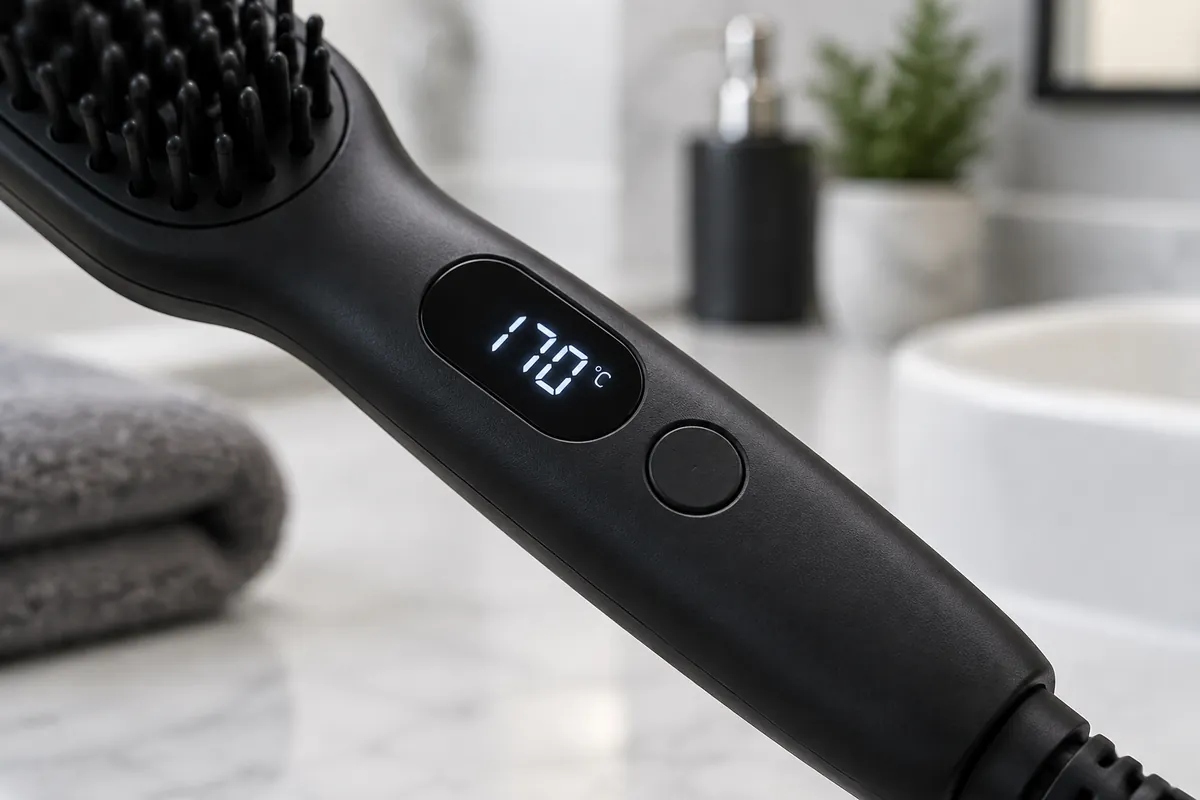
- Average beards: 170 to 180 Celsius handles most curl.
- Coarse, dense, or gray beards: up to 185 Celsius, and no higher. Gray hair has less moisture and shows heat damage fastest.
- Anything above 185 Celsius: head-hair territory, and the damage research says stay out.
If your brush only displays arbitrary levels instead of degrees, treat level one and two as the working range and ignore the rest until those fail.
Who a heated brush is actually for
- Beards past about an inch with real curl or wave that fights a comb.
- Men who want a straighter look for work without a full relaxer.
- Patchy beards do not benefit: there is nothing for the brush to grab.
- Very short beards should skip it. A boar brush and balm do the same job under an inch.
Aberlite heated beard brush: the one to buy
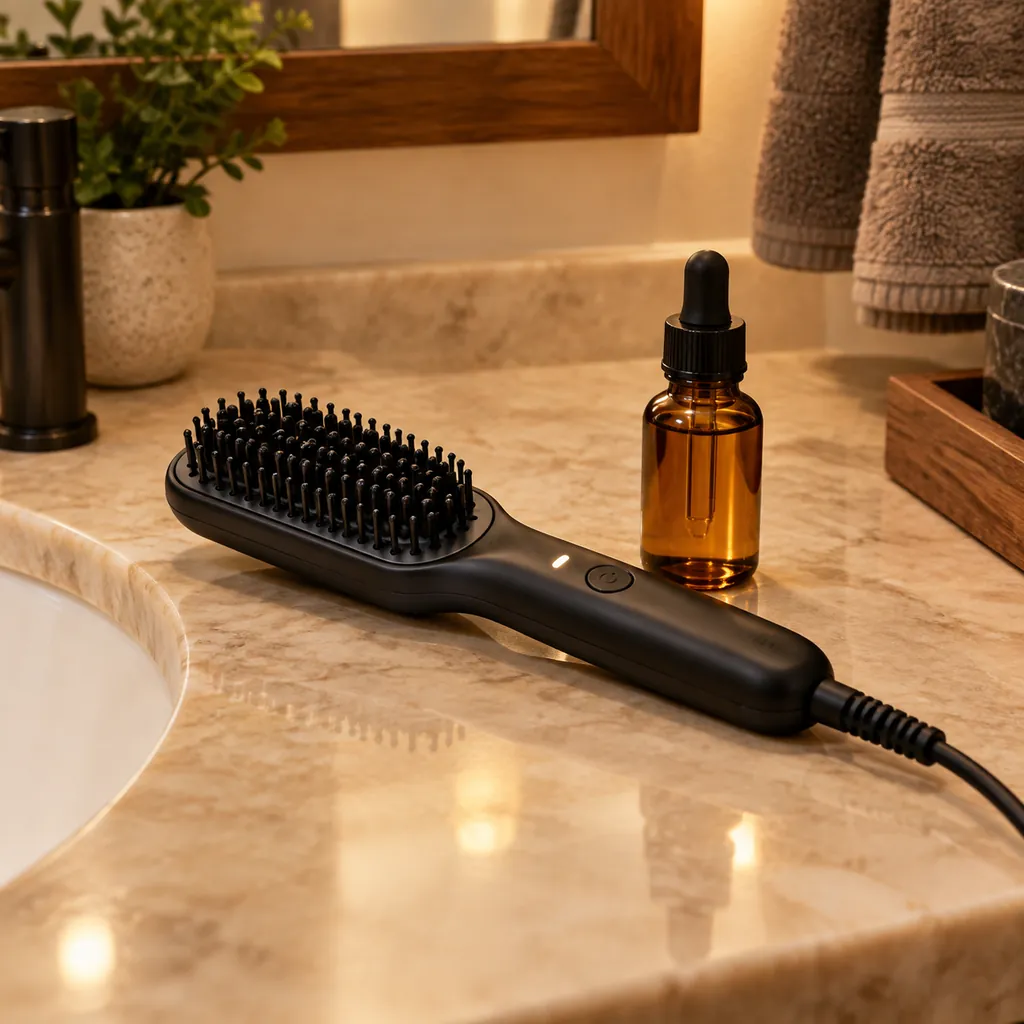
The Aberlite heated beard brush is the pick because it is built for beards rather than adapted from head hair tools: a compact head that fits under the chin, anti-scald bristle tips, and temperature settings that start low enough to matter. The lower settings are the feature. Most beard damage stories start with a tool that only offers hot and hotter.
Work in sections on a dry beard, start at the lowest setting that moves the hair, and make slow passes from root to tip. If the beard does not straighten at a lower setting, step up one level, not three. Pair it with a heat protectant spray or a light coat of beard oil applied before the heat, not after.
- Compact brush head sized for jaw and chin lines
- Anti-scald tips protect skin at the neck
- Multiple heat settings, including genuinely low ones
- Best for: curly and wavy beards past an inch
Other names you will see
Two brands come up constantly in beard communities: Tame the Wild and Arkam. Both have loyal followings and both make capable brushes, and creator reviews comparing them head to head are worth a watch before you buy either. The Tame the Wild Beard Brush and Straightener pairs a heated ionic comb with a wooden beard comb in a two piece set for under $30, and the Arkam Premium Heated Beard Brush Kit adds a hard shell travel case in the $30 range. Both are in stock and both make legitimate alternatives if the Aberlite is out of stock.
The tools to avoid are the generic straightening brushes marketed for head hair and repackaged for beards: full-size heads that cannot reach under the jaw, minimum temperatures above the damage line, and no anti-scald design for the neck.
Video credit: a head-to-head beard straightener review
The three-minute technique
- Start with a fully dry beard. Heat on wet hair boils the water inside the strand.
- Work a small amount of beard oil or heat protectant through first.
- Brush the beard out with a regular comb to remove tangles.
- Take sections and make slow passes, root to tip, following the growth direction you want.
- Let each section cool before touching it. Cooling is what sets the shape.
- Finish with a light balm to hold the result through the day.
FAQ
Do heated beard brushes actually work?
On beards past an inch with real curl, yes. The result lasts until the next wash. On short or patchy beards there is not enough hair for the brush to grip, so skip it.
Will it damage my beard?
Used below 185 Celsius on dry hair a few times a week, no. Damage comes from daily max-temperature passes and from using heat on wet hair.
Heated brush or blow dryer with a comb?
The blow dryer and comb works and costs nothing extra, but it takes two hands and practice. The heated brush is the same job in one hand, which is why most men stick with it.
How long does the straightening last?
Until the beard gets wet again. Sweat and humidity relax it over the day, which is what the finishing balm is for. Most men touch up in two minutes the next morning rather than starting over.
Does beard oil go on before or after the heat?
Before, in a light coat, as protection. After the pass, use balm, not more oil. Oil on hot hair right after straightening can cook rather than condition.
Can I use it every day?
You can, but you should not need to. Every other day with proper technique keeps the beard trained, and your hair will thank you for the rest days.