TrustedBarber is reader-supported. If you buy through links on this page, we may earn a commission from Amazon at no extra cost to you.
The can of foam is the most expensive way to shave badly. Real shaving creams and soaps cost less per shave, protect the skin better, and turn a chore into three quiet minutes. This guide explains the cream versus soap choice in plain terms, then names the specific products worth buying whether you lather with fingers or a brush. Two products cover nearly every face: one classic tube that teaches the habit, and one built specifically for the coarse, curly beards that canned foam fails hardest.
Why canned foam loses
Canned foam is mostly air and propellant around a thin layer of detergent. It goes on fluffy, collapses against the beard, and leaves almost nothing between the blade and your skin. The menthol tingle most cans add is there to distract you from that.
A real cream or soap does the actual job of shaving prep: it holds water against the whisker so the hair softens, and it builds a slick cushion so the blade glides instead of scraping. The difference shows up in the mirror as less redness and in the calendar as fewer ingrowns.
Cream versus soap, honestly
The wet-shaving world argues about this endlessly, but the practical difference is effort versus reward. Sharpologist’s comparison puts the trade-off cleanly:
“Shave creams offer a softer texture with quicker lather and may be better for sensitive skin. On the other hand, shave soaps provide longer shelf life and greater customization options.”
– Sharpologist
Cream is the fast lane: an almond-sized blob, thirty seconds with a brush or fingers, done. Soap is the hobbyist lane: a hard puck you load with a damp brush and build in a bowl, with a longer learning curve and, at the top end, the best lather there is. Most men should start with cream. The ones who catch the wet-shaving bug add a soap puck later and keep both.
- Cream: instant lather, travels well, forgiving of bad technique.
- Soap: cheaper per shave, better peak performance, needs a brush and a minute of practice.
- Both beat canned foam by a distance that is not close.
What good lather actually looks like
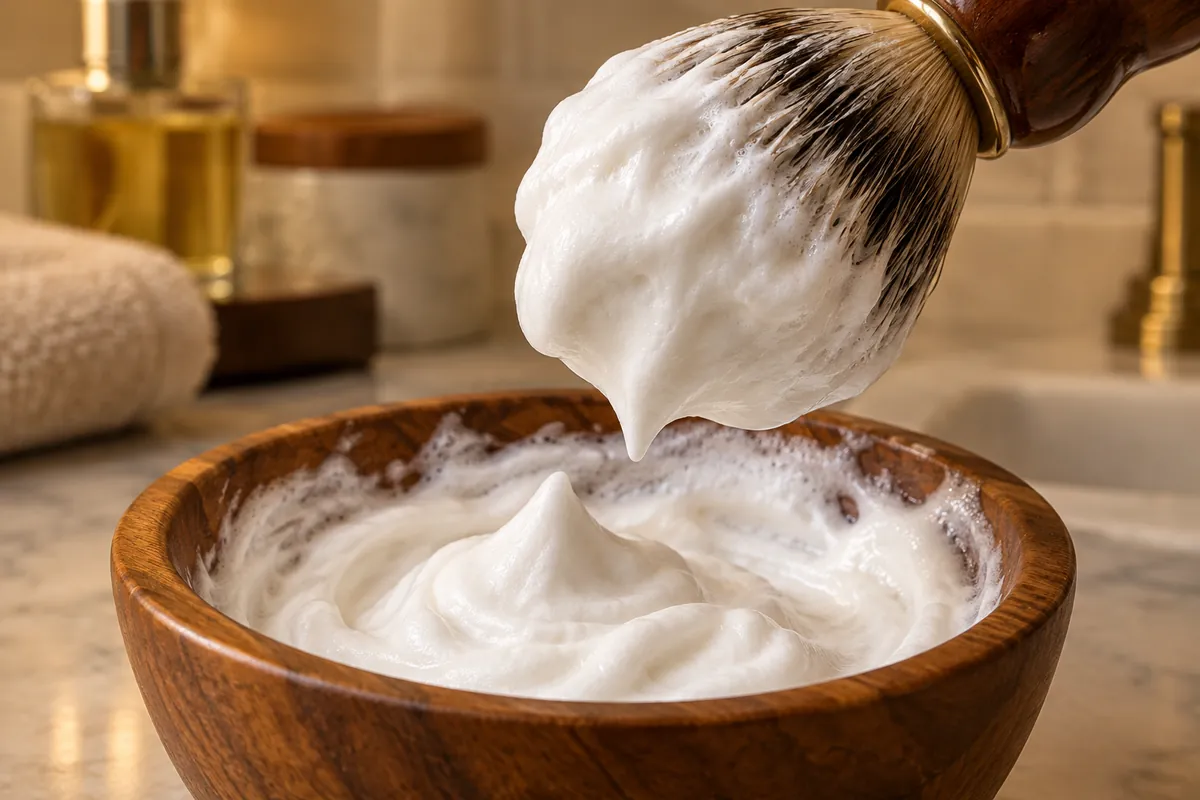
Forget the foam-commercial version. Good shaving lather is not a towering foam; it is a dense, wet, low lather with no visible bubbles, somewhere between yogurt and whipped cream. Big bubbles are air, and air protects nothing.
The test is the peak: drag the brush out of the lather and it should pull up soft peaks that slump slowly. Too runny means keep working it. Too pasty means add water a few drops at a time. When it is right, it paints on shiny and wet, and the razor moves like the beard was never there.
Ingredients that earn their place
- Glycerin high on the list: the humectant that holds water against the whisker.
- Shea butter or aloe: cushion and post-shave calm, the reason Bevel works for coarse growth.
- Eucalyptus and menthol: the classic barbershop feel, skip them if your skin objects.
- Avoid long alcohol lists near the top: they dry the skin the shave just exposed.
Proraso shaving cream: the default for a reason
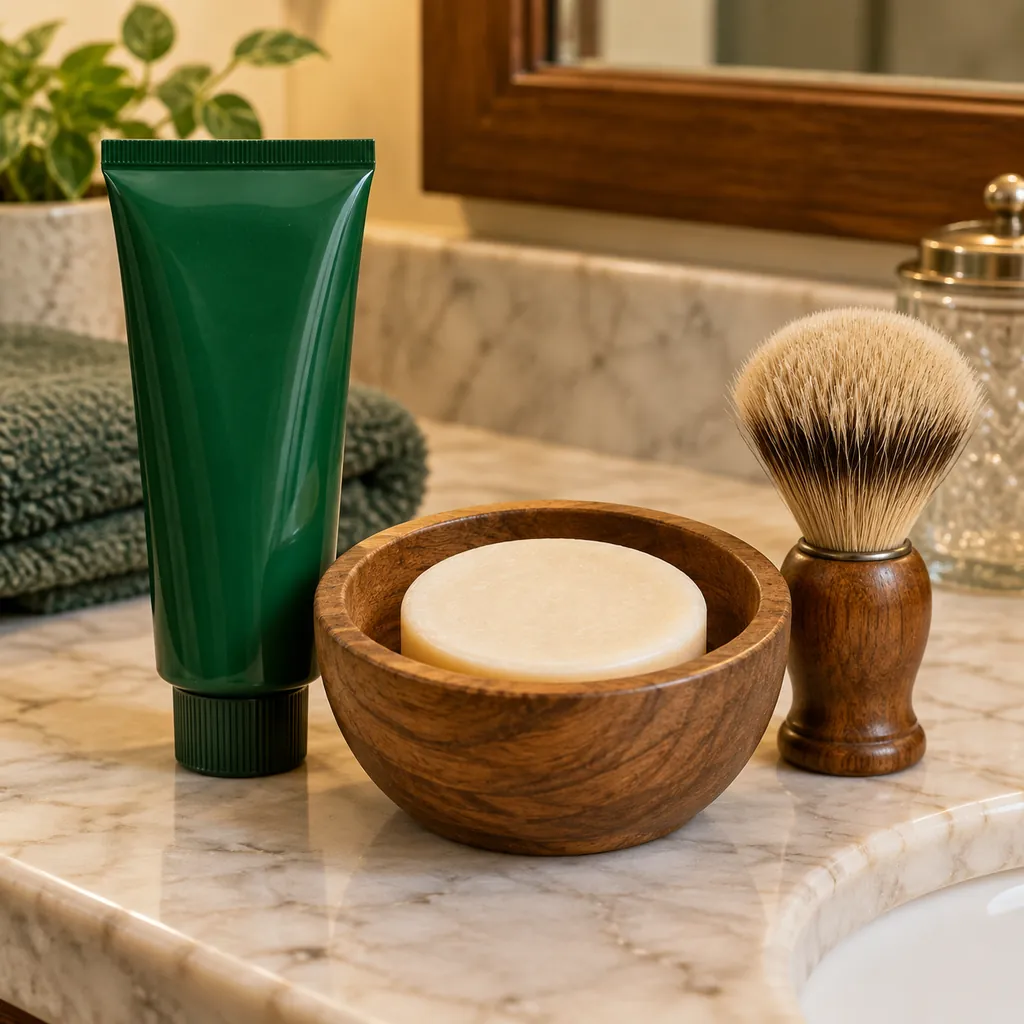
The Proraso shaving cream tube has been the starter cream for generations of wet shavers, and it still earns it: a eucalyptus and menthol classic that lathers in seconds with a brush or bare fingers, cushions well, and costs less per month than a can of foam. The green tube is the refreshing version; the white tube trades the menthol for a sensitive-skin formula if your face objects to tingle.
This is the tube to buy first. It teaches you what good lather feels like without demanding any technique you do not have yet, and a tube lasts two to three months of daily shaving.
- Lathers fast with a brush or fingers
- Eucalyptus and menthol, or a sensitive-skin variant
- Outstanding cost per shave
- Best for: first real cream, daily shavers, travel
Bevel Shave Cream: built for coarse and curly beards
The Bevel Shave Cream was designed from the ground up for men whose facial hair curls back into the skin: a rich, moisturizing cream with aloe and shea butter that keeps coarse whiskers soft through the whole pass, so the blade cuts cleanly instead of tugging hairs into ingrowns.
If razor bumps are your recurring problem, this is the tube to try before you try anything else. It is thicker than Proraso, lathers best with a brush, and the extra cushion is exactly what coarse and curly growth needs. Pair it with a single-blade razor and the bump cycle usually breaks within a couple of weeks.
- Formulated for coarse, curly, ingrown-prone beards
- Aloe and shea butter keep whiskers soft through the pass
- Thick cushion, best lathered with a brush
- Best for: men fighting razor bumps and ingrowns
When you are ready for a soap puck
The classic next step is a triple-milled soap puck, and the standard name here is Taylor of Old Bond Street: a hard soap that loads onto a damp brush in twenty seconds and builds into lather dense enough to stand a brush upright. Proraso makes a soap version of the green formula in a tub that is the easiest first puck. The Taylor of Old Bond Street Sandalwood Hard Shaving Soap Refill is the one to start with, usually around the $20 mark, and the Proraso Shaving Soap in a Tub runs about half that. Both are in stock and hard to get wrong.
The technique is the only barrier, and it is a low one. Soak the brush, shake it out, swirl on the puck for twenty to thirty seconds, then build the lather on your face or in a bowl, adding drops of water until it looks like yogurt. Our shaving brush guide covers the full routine.
Video credit: a lathering tutorial for every format
FAQ
Do I need a brush to use these?
Proraso lathers well with fingers. Bevel and any soap puck really want a brush; the brush is what builds the dense lather they are designed for, and a decent synthetic brush is a small one-time buy.
Cream or soap for sensitive skin?
Cream, specifically a sensitive-formula one. Fewer steps means fewer chances to irritate, and creams tend to carry more built-in moisturizers. Bevel is the pick if sensitivity comes with coarse or curly growth.
How long does a tube or puck last?
A cream tube lasts two to three months of daily shaving. A hard soap puck commonly lasts six months or more, which is why soaps win on cost per shave.
Can I use hair conditioner instead?
In an emergency it is better than nothing, but it is built to coat hair, not to hold water against whiskers or cushion a blade. A ten dollar tube of Proraso outperforms it on every measure that matters.