Barbers see dandruff before clients ever mention it, usually in the cape during the first pass. The good news from the medical side is blunt and reassuring: most of the time you do not need a doctor for it, because an over-the-counter anti-dandruff shampoo from the pharmacist handles the common cases. The catch is that there are five different active ingredients on the shelf, and they do five different jobs. Pick the wrong one and you can wash for a month without results.
This guide walks through the five actives exactly as Dr O’Donovan, a medical education creator with over 600,000 subscribers, explains them in his dandruff treatment video, along with the usage rules and the specific moments he says you should stop and see a doctor instead.
Affiliate disclosure: As an Amazon Associate, TrustedBarber earns from qualifying purchases.
What dandruff actually looks like
Dandruff is a common skin condition that dries and flakes the scalp, showing up as white or gray flakes of skin on the scalp and in the hair. The flakes are often more noticeable against darker hair, and if they fall from the scalp onto the shoulders, they make their way there too. The scalp may also feel dry and itchy.
Flakes are a signal, not a character flaw. Cold, stress, and skipped washes are the usual suspects.
Nobody knows exactly what causes it, but three things reliably make it worse: cold weather, which dries the skin; stress; and infrequent hair washing. That last one is worth pausing on, because the barber-shop version of the problem often comes from the opposite direction, styling product buildup between washes. Either way, the flakes are a signal, not a character flaw.
Zinc pyrithione: the antibacterial and antifungal workhorse
The first active to look for is zinc pyrithione, an antibacterial and antifungal agent. In the video, Dr O’Donovan names Head and Shoulders and DermaZinc as the products that carry it, which tells you how mainstream this ingredient is: the biggest shampoo brand on the shelf is built around it.
Start gentle. The biggest brand on the shelf is built on the gentlest active.
For most people with mild, ordinary flaking, a zinc pyrithione shampoo is the sensible first stop. It is gentle, widely available, and priced like a supermarket product rather than a treatment. If your flakes are seasonal, showing up when the weather turns cold, this is the tier where most people find their answer.
Salicylic acid: the scaling remover
The second active is salicylic acid, and its job is different: these shampoos are designed to help eliminate scaling, the visible buildup of dead skin, rather than to fight what causes it. Dr O’Donovan names Jason Dandruff Relief Treatment Shampoo and Baker P&S among the examples.
Think of this tier as the exfoliating one. If your scalp has a real layer of scale built up, a scale-removing shampoo is the tool that clears the ground so the other treatments can reach skin. It pairs logically with the antifungal tiers rather than competing with them, which is exactly how pharmacists tend to sequence scalp care.
Selenium sulfide: the antifungal with a warning
The third active is selenium sulfide, an antifungal agent, with Head and Shoulders Intensive and Selsun Blue as the named examples. This is a step up in strength from the zinc tier, aimed at flaking that has a fungal component the milder shampoos are not touching.
It carries the first real warning of the five: use these products as directed and rinse them well after shampooing, because selenium sulfide can discolor the hair and scalp. That warning matters enormously at a barber site, because blondes, highlights, and gray coverage are all at risk. If your color work matters to you, either skip this tier or use it with the rinsing discipline the label insists on.
Stronger active, stricter rinse. Selenium sulfide can discolor hair and scalp, so the label’s directions are not optional.
Ketoconazole: the fungus killer
The fourth active is ketoconazole, and the named example is Nizoral, Nizoral Anti-Dandruff Shampoo. These shampoos are designed to kill the dandruff-causing fungi that can live on your scalp. That framing matters: if your dandruff is fungal, which much of the persistent kind is, this tier attacks the cause rather than the symptom.
Kill the cause, not the symptom. Fungal flaking is where this tier earns its price.
Nizoral is also the tier that has crossed over into general use, largely because a little goes a long way: the product is typically used a couple of times a week rather than every wash, which makes a bottle last months. For flaking that survived the zinc tier, this is the logical next rung.
Coal tar: the cell-cycle slowdown
The fifth active is coal tar, with Neutrogena T/Gel and Scalp 18 Coal Tar Shampoo as the named examples. Coal tar shampoos slow down how quickly the skin cells on your scalp die and flake off, which is a genuinely different mechanism from everything else on this list: rather than fighting fungus or removing scale, it changes the pace of the skin’s own turnover.
It comes with two warnings from the video. On light-colored hair, coal tar shampoo may cause discoloration, and it can also make the scalp more sensitive to sunlight. Like the selenium tier, that makes it a careful choice for anyone with color work or a lot of time outdoors. For stubborn, thick, recurring scale, though, it is one of the oldest and most proven tools in the cabinet.
How to actually use them
The ingredients are half the story; the usage rules are the other half. A pharmacist can tell you how to use the shampoos, but read the information leaflet carefully, because some products need to be left on for a few minutes while others need to be rinsed off quickly. Getting that backwards quietly defeats the treatment: a leave-on active rinsed instantly does almost nothing.
Then comes the timeline. Use the shampoo for at least a month to see whether your dandruff improves. You may need to try more than one type to find out which one works for you. If one type works for a while and then seems to lose effectiveness, the video’s advice is to alternate between two different types of dandruff shampoos. Once the dandruff is under control, shift to using the medicated shampoo less frequently for maintenance and prevention.
One month minimum before you judge a shampoo, and two alternating types if the first one quits on you.
When to stop using a product
Two stop rules from the video, and both are unambiguous. If you develop itching or stinging from any product, stop using it. And if you develop an allergic reaction, such as a rash, hives, or even difficulty breathing, you need to seek immediate medical attention. Scalp skin is already irritated when you start treating dandruff, so it is the least forgiving skin on the body for pushing through a bad reaction.
Itching or stinging means stop. An irritated scalp does not get pushed through.
When to see a doctor
The doctor conversation, the video stresses, is typically rare. It comes up in three situations: you have used a shampoo consistently for about a month and still have dandruff symptoms; your scalp is extremely itchy, red, or swollen; or you have flaky, itchy patches on your face or other parts of your body.
A month of honest use is the gate. Past it, let a professional read the scalp.
At that point the doctor may check your scalp for the skin conditions that could be causing the dandruff, psoriasis among them, and may prescribe a short course of steroid cream or, if a fungal infection is behind it, an antifungal shampoo. Many of those are also available over the counter, but the point of the visit is to find out which situation you are actually in rather than guessing with stronger products.
A barber’s note: the beard gets it too
Everything above is about the scalp, but anyone who keeps facial hair knows flaking does not stop at the jawline. The skin under a beard dries out exactly the way a scalp does, especially in cold weather, and the same active-ingredient logic applies to beard-specific washes and treatments, while our razor bump treatment guide covers the neighboring irritation problem. Where a beard is the problem rather than the scalp, a dedicated beard oil is the usual maintenance move, and our beard oil versus balm versus butter guide explains which layer does which job; Honest Amish Classic Beard Oil is the long-running standard for keeping the skin under a beard conditioned. And if the flaking sits under heavier growth, our guide to growing a thicker beard covers the skin care that comes first.
The jawline flakes too. Under-beard skin dries like a scalp does.
Choosing between them, in one pass
If you want the short version for a pharmacy aisle: start with zinc pyrithione for ordinary seasonal flaking; move to ketoconazole if a month does not settle it; reach for selenium sulfide or coal tar when you need the heavy tiers, respecting their discoloration warnings; and use salicylic acid when visible scale is the main event. That sequence, gentle to strong, cause first and symptom second, is the whole decision tree.
Gentle to strong, cause before symptom. That is the whole decision tree.
Building a routine around the five actives
Five ingredients on the shelf invites a temptation the medical guidance does not endorse: stacking them all at once. The better pattern is the opposite. Start with the gentlest active that matches your flaking, use it alone, and give it the full month before drawing conclusions. Changing two variables at once, product and frequency, leaves you with no idea which change did anything, which is how people end up cycling through every bottle on the aisle without results.
The aggravators from the video give the routine its supporting cast. Cold weather dries the skin, so winter is the season to be more consistent, not less. Stress flares it, which nobody can shampoo away but everybody should at least expect. And infrequent washing makes it worse, so whatever your cadence is, make it regular rather than reactive. A hot shower feels like the answer to an itchy scalp and often leaves it drier than it started; lukewarm water and a conditioner on the mid-lengths and ends keep the rest of the hair from paying for the scalp’s treatment.
One more practical habit: treat the shower as application time. The leave-on actives in particular reward a few minutes of patience, so work the shampoo in at the start of the shower and rinse it near the end. That single change is the difference between following the leaflet and merely owning it.
One active at a time, one month at a time. Changing two things at once teaches you nothing.
What a barber can and cannot do about it
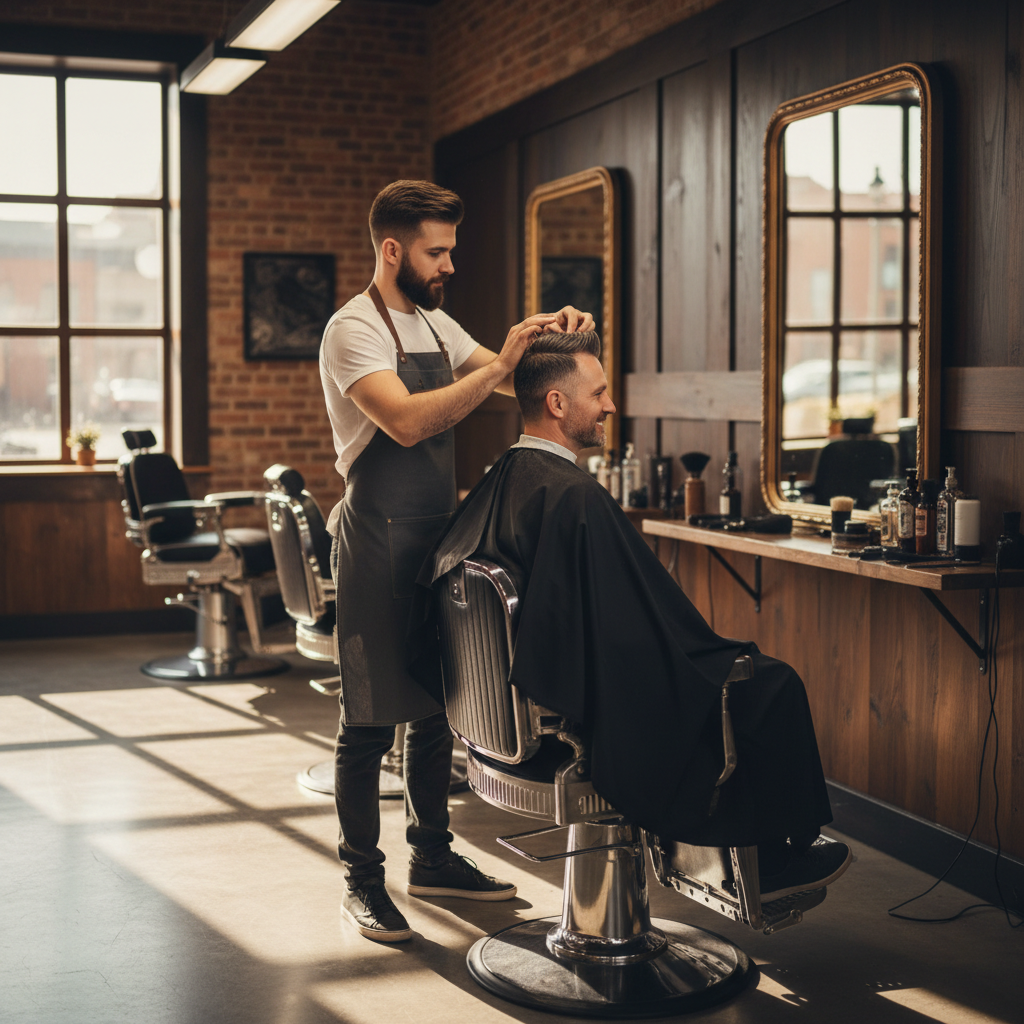
Worth being clear-eyed about, since you are reading this on a barber site: your barber sees the flakes before you mention them, often in the cape during the first pass, and honest shops will say something. What a barber can do is practical. They can tell you whether what they are seeing reads like ordinary dry flaking or looks like something that needs a doctor’s eyes. They can point you at the gentlest over-the-counter tier rather than the strongest, which is where most people should start anyway. And they can adjust the service around the condition, softer brush pressure on a sensitized scalp, less manipulation where the skin is irritated.
Your barber can flag it and soften the service. The diagnosis stays with a professional.
What a barber cannot do is diagnose or treat it. The moment flaking comes with real redness, swelling, or raw patches, the conversation belongs with a pharmacist or a doctor, not in the chair. The distinction protects both sides: the barber’s read is a useful second opinion about what the scalp looks like up close, and the treatment decision stays where the medical guidance puts it.
The same logic applies to product buildup, the great impersonator of dandruff. Heavy waxes, clays, and pomades that sit for a week between washes can flake exactly like dandruff when they are combed out, and the fix is a proper clarifying wash rather than a medicated shampoo. If the flakes started when the styling routine did, that ordering is your biggest clue.
Once the scalp is calm again, the styling side is a separate conversation; our face shape guide narrows the beard and hair choices that suit the head you are working with.
FAQ
How long does an anti-dandruff shampoo take to work?
Give any active a month of consistent use before judging it. The video’s rule is at least a month, and it may take trying more than one type to find the one that works for you.
Can I use two different dandruff shampoos?
Yes, and alternating two different types is the specific advice given when one shampoo works for a while and then loses effectiveness. Once things are under control, you can cut back to less frequent use for maintenance.
Will anti-dandruff shampoo strip hair color?
The selenium sulfide and coal tar tiers carry explicit discoloration warnings in the medical guidance, so color-treated hair should either avoid them or rinse extremely well per the label. The zinc and ketoconazole tiers are the gentler starts.
When should I stop treating at home and see a doctor?
If a month of consistent use has not helped, if the scalp is extremely itchy, red, or swollen, or if flaky patches appear on the face or body. And immediately, for any allergic reaction signs like a rash, hives, or difficulty breathing.
Why does dandruff get worse in winter?
Cold weather dries the skin, which is one of the named aggravators, alongside stress and infrequent washing. Dry indoor heating through the season tends to compound it.