

As an Amazon Associate, TrustedBarber earns from qualifying purchases.
Our top picks
Check Barbicide Concentrate pint Price
Check Wahl Premium Blade Oil, 4 oz Price
The right clipper maintenance supplies are cheap insurance. There is a special kind of pain in watching an expensive clipper slow down. Before you throw it in a drawer and order another one, know that most “dying” clippers are just filthy inside, and the fix is a few inexpensive supplies, starting with a bottle of Wahl Premium Blade Oil, 4 oz. We watched The One Minute Barber’s full teardown-and-refurb of a slow Wahl Senior, and the gunk that came out of it explained everything. We cover the consumables worth owning, what each one actually does, and the teardown order that brings a tired clipper back to new.
Key Takeaways
- Most slow clippers are clogged, not broken: hair packed around the lever and blade pin kills speed and travel.
- The four supplies that cover most routine maintenance: clipper oil, a 5-in-1 coolant spray, blade wash for baths, and Barbicide for disinfecting tools you can immerse.
- Oil before or after every use, as Wahl suggests; a blade bath when the blade is gummed; Cool Care between clients.
- Deep cleaning means pulling the blade and lever: hair packs inside where spray never reaches.
- Reassembly matters: lever screws slightly less than hand-tight, and the bottom blade set just forward of the top blade unless you are zero-gapping.
In this guide
- Watch a Slow Clipper Come Back to Life
- The Four Supplies That Matter
- How to oil clipper blades, Wahl’s way
- Blade bath: dip jar or blade wash
- The Teardown That Saves a Slow Clipper
- A simple maintenance schedule
- Small extras worth owning
- Common maintenance mistakes
- Consumables Comparison
- FAQ
- The bottom line
Watch a Slow Clipper Come Back to Life
In the video above, The One Minute Barber refurbishes a Wahl Senior that had started failing. Watch the blade bath alone: one bath is not enough, and the second bath still flushes out cut hair. Then he pulls three screws, slides the housing off, and finds hair packed so deep the blade’s rotating pin is invisible. That is what “my clippers are dying” usually means.
The Four Supplies That Matter
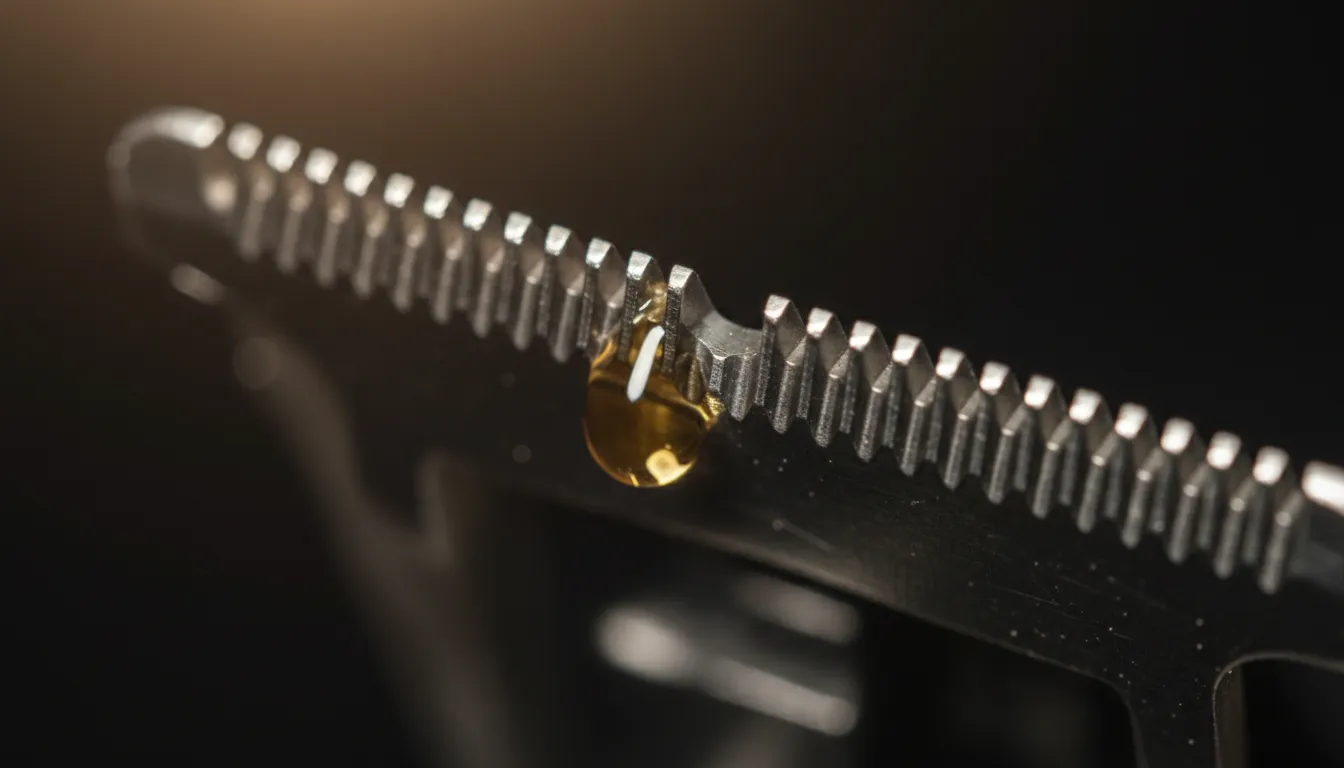
Clipper oil. The cheapest and most important consumable you own. Wahl’s method is five drops: one in the center of the top blade, one on each end of the top blade, and one on each side of the bottom blade’s heel, then run the clipper and wipe off the excess (the full steps are below). Wahl says oiling reduces friction, helps the clipper run cooler and prevents rust, and that skipping it can leave a trimmer slowing down, getting noisy and starting to rust. The Wahl Premium Blade Oil, 4 oz is the bottle we link. Our how-often-to-oil guide covers the full routine.
A 5-in-1 coolant spray. This is the between-clients tool: it cools, cleans, lubricates, disinfects and prevents rust in one spray, and the high-pressure nozzle blasts hair out of the blade teeth without removing the blade. The Andis Cool Care Plus, 15.5 oz is the standard; Andis describes it as a 5-in-1 formula that disinfects, cools, lubricates, cleans and prevents rust. Spray the blade while it runs, and when you are using it to disinfect, keep the blade wet for the contact time on the can (the label directions call for ten minutes), then let it air dry.
Blade wash for baths. When a blade is gummed with product and hair, spray is not enough. Fill a small tub with a blade wash such as Oster Blade Wash, run the blade in it, and watch what comes out. In the video, the technician gives the blade two baths and still finds gunk inside, which is why the teardown step below exists. The Wahl Professional Blade Ice, 14 oz is a different tool: a quick-drying coolant, lubricant and cleaner spray for the blades during a cut, not a bath liquid.
Barbicide. Cool Care disinfects blades; Barbicide is for the tools you can fully immerse, such as combs, guards and shears, not the clipper body itself. Barbicide’s own mixing video says to add 2 oz (a quarter cup) of concentrate to 32 oz (4 cups) of cold water, which is 1 part to 16. Immerse clean tools for the ten-minute contact time, rinse and dry, and change the solution every day. A pint of concentrate makes several jars of working solution. We have a full Barbicide mixing and contact-time guide and a step-by-step clipper disinfecting walkthrough.
How to Oil Clipper Blades, Wahl’s Way
Wahl’s support page on clipper blade maintenance spells out exactly where the oil goes, and its how-to-oil guide covers when:
- Brush the blade clean first. Wahl says to brush away trapped hair; if the blade is rinseable, remove it, rinse it and dry it thoroughly to prevent rust.
- Move the taper lever up and down a few times (on clippers that have one).
- Place one drop in the center of the moving top blade and one on each end of the top blade.
- Add one drop to the heel of the stationary bottom blade on each side, for five drops in total.
- Run the clipper to spread the oil, switch it off and wipe off the excess with a soft cloth.
On timing, Wahl suggests oiling before you use the clipper or after every use, and says oiling after cleaning leaves the blade lubricated in storage, which helps avoid corrosion. Its answer on substitutes is short: it does not recommend WD-40 or olive oil, only blade oil. A bottle of Wahl Premium Blade Oil, 4 oz or the Wahl Professional Clipper Oil is made for this job.
Check Wahl Premium Blade Oil, 4 oz Price
Blade Bath: Dip Jar or Blade Wash
A bath is for the gummed-up blade that spray will not clear. There are two common ways to do it.
A dip jar. The Andis Blade Care Plus Dip Jar is built for it: Andis’s product page calls it a 7-in-1 formula that cleans, cools, lubricates and protects blades, and says you just dip the blades between clients. Run the blade teeth in the liquid, lift it out and let the clipper run dry.
Check Andis Blade Care Plus Dip Jar Price
A blade wash. Oster Blade Wash is the classic pour-it-in-a-dish option, sold for cleaning and lubricating clipper blades and flushing out hair caught between the upper and lower blades. Pour a little into a shallow dish, run the blade teeth in it, and replace it when it turns cloudy. Either way, finish with oil, because a bath is not a substitute for it.
The Teardown That Saves a Slow Clipper
The routine from the video, in order. First, brush all loose hair off the clipper body and blade. Second, spray around the blade with your 5-in-1 or clipper spray to lubricate and loosen. Third, the bath: blade wash, blade running, until the fluid runs clean, twice. Fourth, remove the blade’s two screws and lift it off, then the lever’s screw and the lever slide. Fifth, open the housing (three screws on the back, the lid is clipped on, so pry gently with a plastic tool, not a screwdriver) and look inside. In the video, hair is packed around the switch and the blade’s rotating pin is completely buried.
Clean the inside with the pointed end of the blade brush, blast it out with a hair dryer, and scrape the gunk off the housing’s sealing edge so the lid reseals and hair stays out. Then reassemble: spring in first, housing slides into the top lip, moving blade on, lever slide back in. Screw the blade in loosely, and set the lever screw slightly less than hand-tight, because you still need to move the lever when you line up the blades. With the lever up, set the bottom blade just slightly forward of the top blade, about half a millimeter, unless you are zero-gapping, in which case align them almost perfectly. The video’s Senior came back cutting like new without a single part replaced.
Consumables Comparison
| Supply | What it does | How often |
|---|---|---|
| Clipper oil | Lubricates, cuts heat and rust | Before or after every use |
| 5-in-1 spray | Cools, cleans, disinfects blades | Between clients |
| Blade wash or dip | Flushes gummed blades | When gummed |
| Barbicide | Disinfects immersible tools | Fresh solution daily |
Our picks for each row: Wahl Premium Blade Oil for oiling and Andis Cool Care Plus, 15.5 oz between clients.
For baths and disinfecting, the Andis Blade Care Plus Dip Jar and a pint of Barbicide concentrate cover the last two rows.
Check Barbicide Concentrate pint Price
A Simple Maintenance Schedule
Put the four supplies on a rhythm and most of the teardown work never builds up:
- Every client: brush the hair out of the blade and spray it with your 5-in-1, such as Andis Cool Care Plus, 15.5 oz. Wipe guards and combs.
- Before or after every use: oil the blade with Wahl’s five drops.
- When the blade feels gummy: a dip or blade-wash bath, then oil.
- Every day: mix fresh Barbicide for immersible tools, as Barbicide directs.
- When the clipper slows down or runs hot despite all of that: the teardown above.
A shop’s state board sets its own disinfection rules, so check those too; this schedule is about keeping the clipper running, not a substitute for them.
Small Extras Worth Owning
Two cheap items make the routine easier. The Andis 12415 Blade Cleaning Brush gets hair out of the blade teeth and, with its pointed end, out of the housing during a teardown, which is how the video’s refurb starts. And if you disinfect combs and guards at the station, a Barbicide Disinfecting Jar (Large) gives the solution a home with a lift-out tray.
Check Andis 12415 Blade Cleaning Brush Price
Common Maintenance Mistakes
- Using the wrong oil. Wahl does not recommend WD-40 or olive oil on clippers.
- Rinsing a blade that is not rinseable. Wahl only describes rinsing for rinseable blades, and says to dry them thoroughly afterward.
- Treating spray as oil. A 5-in-1 spray lubricates, but it is not a precision oil.
- Putting the clipper in Barbicide. Barbicide is an immersion disinfectant for tools like combs and guards; use a clipper spray on the blade instead.
- Over-tightening on reassembly. As the video shows, the lever screw goes slightly less than hand-tight so you can still align the blades.
- Storing it wet. Wahl says to store clippers clean, oiled and thoroughly dry to prevent rust.
FAQ
My clipper is slow and hot. Is it broken?
Probably not. It is almost certainly packed with hair inside the lever housing and around the blade pin. Do the teardown above before you spend money on a replacement.
Can I use Cool Care Plus instead of oil?
It lubricates, but it is a spray, not a precision oil. Use Cool Care between clients and real oil before or after each use. They are not substitutes.
Can I wash clipper blades with water?
Only if the maker says the blade is rinseable. Wahl says a rinseable blade can be removed and rinsed, then dried thoroughly to prevent rust. For other blades, use a blade wash or dip, then dry the blade and oil it.
How long does Barbicide mixed solution last?
Barbicide says to change the mixed solution every day, and sooner if it is visibly cloudy or dirty.
Can I use WD-40 on hair clippers?
Wahl does not recommend WD-40 or olive oil. Use a blade oil made for clippers, such as Wahl Professional Clipper Oil.
How many drops of oil does a clipper blade need?
Wahl’s method uses five: one in the center and one on each end of the top blade, plus one on each side of the bottom blade’s heel.
What is the difference between Blade Ice and Cool Care Plus?
Both are sprays you use on the blade during or between cuts. Andis says Cool Care Plus also disinfects, which is why it gets the between-clients job here; Wahl sells Blade Ice as a coolant, lubricant and cleaner.
The Bottom Line
A slow clipper is usually a dirty clipper. Keep oil, a 5-in-1 spray, a bath liquid and Barbicide on hand, follow the schedule above, and save the teardown for the day the clipper still drags. If you buy one thing today, make it Andis Cool Care Plus, 15.5 oz for between clients, alongside the oil you already own.


