
Disclosure: this article contains Amazon affiliate links. As an Amazon Associate we earn from qualifying purchases, at no extra cost to you. It does not change what we recommend.
Barber pick
Proraso Pre-Shave Cream. a pre-shave that softens the beard before a single pass.
The skin-side rules here follow board-certified dermatologist Dr. Daniel Sugai’s shaving guide below (watch it here), which covers how to shave to avoid razor burn.
Video: Dr. Daniel Sugai on YouTube
- The Five Minutes Barbers Never Skip
- Pre-Shave: Get the Hair Ready to Be Cut
- The Shave Itself: With the Grain First
- Post-Shave: Calm, Then Rebuild
- The Two Days After
- Match the Blade to Your Skin, Not to the Ad
- Shaving Around Breakouts
- When the Blade Stops Being Sharp
- The Dermatologist’s Sequence, Start to Finish
- Why the Blade Itself Causes Razor Burn
- Frequently Asked Questions
The Five Minutes Barbers Never Skip
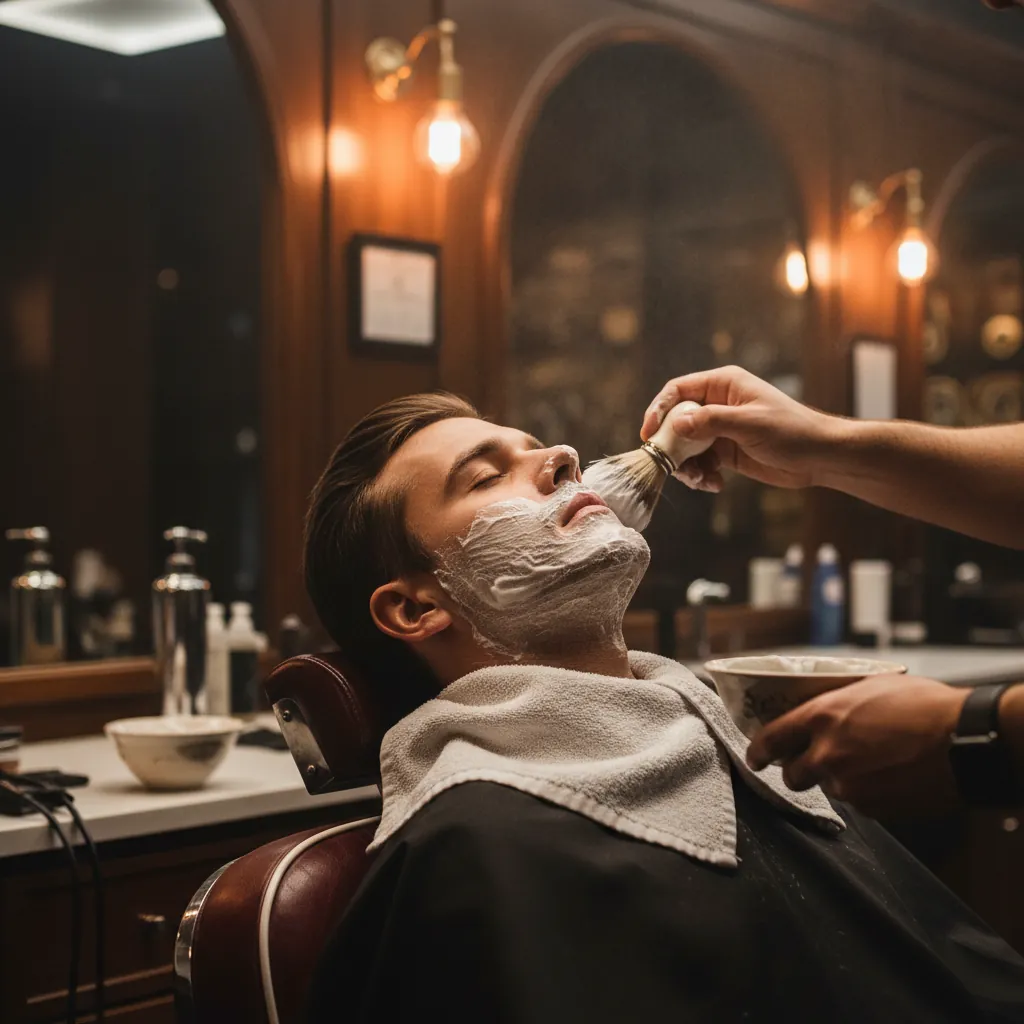
Watch a straight-razor shave at a barbershop and you will notice the barber spends as much time before and after the blade as they do with it. Hot towels, pre-shave cream, a second lather, a cold towel, balm, and a final pat-down. That is not theater. The skin damage from a shave happens almost entirely at the two moments amateurs skip: before the blade touches skin, and right after it leaves. Build those five minutes into your routine and razor burn, ingrowns, and that tight, squeaky post-shave feeling mostly disappear.
Pre-Shave: Get the Hair Ready to Be Cut
Dry, stiff hair fights the blade. Softened, hydrated hair cuts cleanly at the surface instead of being yanked at the root, which is the mechanical cause of irritation. Three steps do the work.
1. Hydrate the hair
The simplest version is shaving after a hot shower, when the hair has already absorbed water and softened. The fuller version is the barber’s hot towel: a warm, damp towel pressed to the face for a minute or two before lathering. Warm water plumps the hair shaft, which makes it cut like wet grass instead of dry straw.
2. Apply a pre-shave product
Pre-shave cream or oil sits between the skin and the lather, adding a layer of slip so the blade glides instead of dragging. On sensitive skin this is the single highest-leverage upgrade. The Proraso Pre-Shave Cream, Oatmeal and Green Tea is the sensitive-skin formula from the brand Italian barbers built their reputation on: oatmeal soothes, green tea calms, and a dime-sized amount massaged in before the lather changes how the first pass feels.
3. Lather properly
A thin, airy foam is decoration. A real lather is dense and slick, built with a brush or worked into the skin with the fingers until the hair is fully coated. Give it a minute to sit on the skin; that dwell time keeps softening the hair while you map your passes.
The Shave Itself: With the Grain First
Shave with the grain on the first pass, with light pressure, rinsing the blade often. Only if the result demands it take a second pass across or against the grain, and only over areas that handled the first pass without complaint. Every pass multiplies friction, so the skin under your jaw and around your mouth, the spots that already took one pass, pay the tax twice. Our guide to straight razor shaving covers blade angle in depth if you shave with a DE or straight razor rather than a cartridge.
If you use an electric instead, the same pre-shave rules apply and the post-shave rules apply even more strongly. Foil shavers run hot against the skin over long sessions, and the published specs of the best foil shavers barbers use plus the bald fade foil technique cover how pros manage heat and skin contact through a full day of heads.
Post-Shave: Calm, Then Rebuild
Post-shave is where most routines collapse. The instinct is to splash something stinging on the face and walk away. The barber’s order is different, and every step has a reason.
1. Close with cold water
Rinse with cool water to remove lather residue and calm the surface. The old cold-towel step at the barbershop does exactly this, and a ten-second cold rinse at the sink gets most of the same effect.
2. Pat dry, never rub
Freshly shaved skin is micro-abraded. A towel dragged across it reopens what the razor just closed.
3. Apply the balm while skin is still damp
Aftershave balm works best on slightly damp skin, where it seals water in. For sensitive skin, the Proraso After Shave Balm, Oatmeal and Green Tea is the matching partner to the pre-shave above: alcohol-free, so it calms instead of stings, with the same oatmeal base. A pea-to-dime amount covers the whole shaved area.
Check the Proraso After Shave Balm on Amazon
If your skin runs oily or you want a lighter finish, the NIVEA MEN Sensitive Post Shave Balm absorbs fast with zero alcohol and zero added fragrance, which is why it has become the default recommendation for men whose faces react to everything. It also works as a light moisturizer on non-shave days, so one tube covers the whole routine.
Check the Nivea Men Post Shave Balm on Amazon
4. Skip the sting unless you want it
Classic alcohol splashes feel like they are doing something because they are causing something. That sting is alcohol deflating the skin barrier, which is the opposite of what shaved skin needs. Splash-based aftershaves have their place for oily skin and for guys who love the ritual, but on irritated or sensitive skin, balm only.
The Two Days After
The 24 to 48 hours after a close shave decide whether ingrowns show up. Keep the area hydrated, avoid scrubbing it, and if you are prone to razor bumps, shave less often rather than closer: letting hair grow just past the skin’s surface before the next shave resets the cycle. Flakes and itching that show up in the beard zone rather than the shaved zone are a different problem entirely, driven by yeast and oil rather than dryness, and they respond to a targeted antifungal routine rather than more moisturizer. For a full kit decision on the electric side, our electric shaver gift guide ranks the foil and rotary options worth owning.
Match the Blade to Your Skin, Not to the Ad
Cartridge razors shave close with minimal technique but multiply passes over the skin. Double edge razors cut more precisely per pass but punish bad angles. If your skin flares after every shave, a milder aggressive-free DE head or a single-blade cartridge often outperforms a five-blade cartridge, which cuts the same hair three times on the way through. Foil and rotary electrics sit gentler on reactive skin but leave a less surgical edge. The razor is a variable you set once; the routine above is the variable you run every day.
Shaving Around Breakouts
Active acne changes the order of operations. Never drag a blade across an inflamed spot: shave around it, or let the electric trimmer take the area down to stubble without touching the surface. Softening steps still apply, and the post-shave balm matters more, not less, because broken skin needs the hydration layer to heal cleanly. If breakouts are frequent along the jaw and neck, the likeliest culprit is the shave itself, and switching to trimming for a couple of weeks while the skin resets tells you quickly whether the blade or the skin is the problem.
When the Blade Stops Being Sharp
Blades dull gradually, and skin pays the bill in irritation long before the shave feels obviously rough. The tells: tugging rather than gliding, needing extra passes for the same result, and redness that arrives faster each week. Cartridge users should change blades on feel rather than a calendar, but a rough rule of five to ten shaves per cartridge keeps most men ahead of the dullness curve. DE blade users typically change every two to four shaves. Pushing a worn blade is the most common self-inflicted cause of razor burn, and no balm rescues a shave done with one.
The Dermatologist’s Sequence, Start to Finish
Everything above lines up with how a board-certified dermatologist actually runs a shave. In the video embedded above, Dr. Daniel Sugai, a derm who treats razor burn and razor bumps (the medical name is pseudofolliculitis barbae) constantly in his clinic, walks through his own routine on camera, and the order of operations is worth copying exactly:
- Cleanse with a salicylic acid wash before anything else. The goal is to clear debris, impurities, and bacteria out of the pores and hair shafts before a blade crosses them. Warm water matters here too: it softens the hair shafts so the blade cuts instead of tugging.
- Lather with a gentle, unscented shaving gel. Dr. Sugai’s pick is deliberately boring on fragrance, because scented gels gave him a red, inflamed rash after many shaves. If a product has ever made your face feel hot, that is your answer about it.
- Start with a fresh blade and use gentle pressure. Even strokes, with the grain, letting the razor’s head follow the contours instead of pressing into them. A multi-blade system helps here because each blade directs the hair shaft for the next one to cut lower.
- Wash again after the shave, gently. A light foaming cleanser with ceramides helps rebuild the skin barrier the blade just scraped, and niacinamide in the formula adds an anti-inflammatory effect that helps keep post-shave breakouts down. Do not exfoliate on top of a fresh shave; that is trauma stacked on trauma.
- Pat dry, then moisturize while the skin is still damp. The damp skin is what holds the water; a moisturizer applied on top of it traps it there.
- Finish with sunscreen. A zinc- and titanium-based formula goes on last, because freshly shaved skin is newly exposed skin.
That sequence is the whole reason this guide runs cleanse, shave, cleanse again. The mid-shave cleanse is the step most guys skip, and it is the one a dermatologist will not.
Why the Blade Itself Causes Razor Burn
The routine can be perfect and the razor can still undo it. A dull blade does two kinds of damage at once. First, it forces more pressure out of your hand to get the same cut, which means more trauma per stroke. Second, as Dr. Sugai points out in the tutorial above, a blade that sits in the shower or drawer between uses collects bacteria, and every stroke then introduces that bacteria into your pores and hair follicles, which is how a routine case of razor burn turns into full bacterial folliculitis of the face and neck.
His practical cadence: change the blade about every three weeks, or sooner the moment it starts to feel like it is dragging. He shaves every three days, so a blade lasts him roughly twenty shaves; someone shaving daily should rotate faster. The cheap habit that follows from this: never share a blade across a bathroom of people, and replace it after any illness.
If your skin flares no matter what, the NIVEA MEN Sensitive Post Shave Balm is the low-irritant starting point most guys can tolerate, and the Proraso oatmeal and green tea balm covers the same job with a slightly richer feel. What matters more than the label is the sequence: calm the skin while it is damp, then leave it alone.
Frequently Asked Questions
Do I need both a pre-shave and a lather?
If your skin tolerates shaving well, no. If it burns, bumps, or tightens after every shave, the pre-shave layer is the first thing to add, not the last, because it reduces friction before the blade ever arrives.
Balm or lotion first, then moisturizer?
An aftershave balm already is the moisturizer. Adding a second layer on top is redundant unless you have genuinely dry skin, in which case a heavier night cream after the balm settles makes sense.
Is cold water enough, or do I need a specific aftershave?
Cold water handles the rinse and the calm-down. The balm handles hydration for the hours after. You can skip the balm on a lazy Sunday, but on any day you shaved close, five seconds of balm is what separates a comfortable evening from a tight, itchy one.
When should I shave, morning or night?
Morning shaves face the day with a fresh edge but expose just-shaved skin to sun and wind. Night shaves let the skin recover overnight with nothing on it. If your skin is reactive, night wins. If your skin is resilient, shave whenever and let the balm do its job.
What should you wash your face with before shaving?
A salicylic acid cleanser, per the dermatologist routine above, because it clears the pores and hair shafts of the debris and bacteria a blade would otherwise drag across your face. After the shave, switch to a gentle foaming cleanser, ideally one with ceramides and niacinamide, so the second wash repairs instead of stripping.
How often should you change your razor blade?
About every three weeks, or the moment it starts to feel dull, whichever comes first. A dulling blade does not just cut worse; it collects bacteria between uses and drags it into your follicles, which turns ordinary razor burn into real folliculitis. Daily shavers should rotate faster than the three-week mark.
Do you need sunscreen after a shave?
If the shaved area sees daylight, yes. Freshly shaved skin has lost its top layer of dead cells, so it is more exposed than the skin around it. A zinc- or titanium-based sunscreen is the standard dermatologist finish, and it goes on after the moisturizer, not instead of it.