As an Amazon Associate, TrustedBarber earns from qualifying purchases.
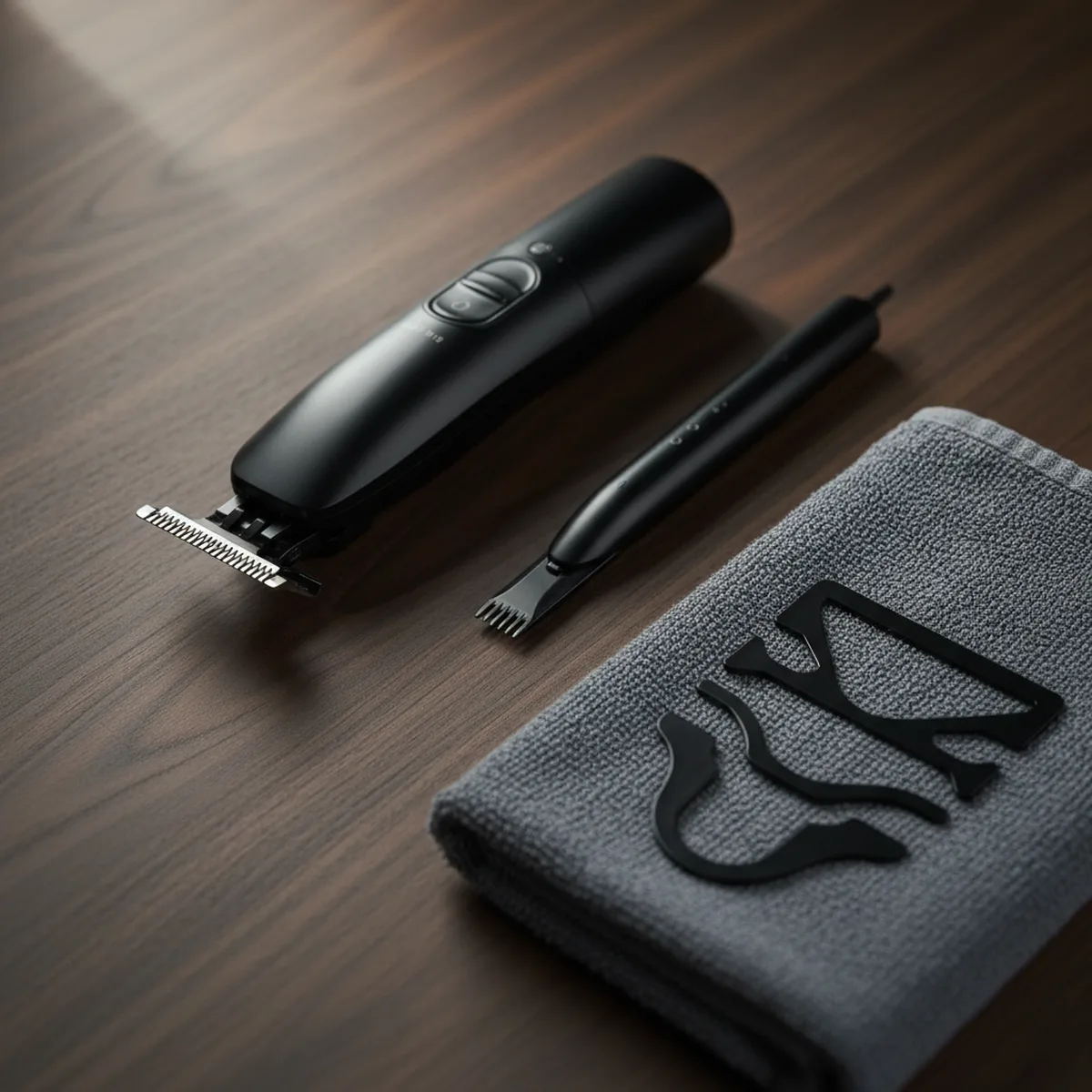
The right beard neckline for a double chin sits lower than most people think: it follows the crease where your neck meets the underside of your jaw, not the edge of your jawbone, and it curves up behind the jaw toward each ear. Trim it too high and the softness under the chin shows more, not less. A detail trimmer with a visible blade edge, like the Philips Norelco OneBlade 360, makes the line easy to see while you cut. Here is where to put the line, how to trim it step by step, and the tools that help.
Top picks
In this guide
Quick answer
Look straight ahead with your head level, find the crease where your neck turns into the underside of your jaw, and make that crease the center of your neckline. Run the line from there in a gentle U shape back toward the spot just behind each jaw corner, below the earlobe. Keep everything above the line, clean up everything below it, and soften the edge rather than cutting a hard shelf. Never set the line with your chin tilted up, because that stretches the skin and the line ends up too high once you relax.
This guide is only about the neckline on a double chin or soft jawline. For the cheek line, lip line and general beard shaping, see our full guide to how to shape a beard: neckline, cheek line and lip line.
Does a beard hide a double chin?
A beard cannot change what is under it, but it can change what people see. Hair under the chin adds a darker, defined shape where the jaw would be, and a clean edge below it reads as a jawline. That is why a well-placed neckline matters more on a double chin than on any other face shape.
The catch is placement. A neckline cut up on the jawbone exposes the full area under the chin, which is exactly what you were trying to frame. A neckline left to grow down the neck erases the edge entirely and makes the face read wider. The goal is in between: enough hair under the chin to create an outline, and a clear stop where the neck starts.
Fuller beard styles help too. A short boxed beard or a medium beard with some length at the chin draws the eye downward and lengthens the face. Very short stubble with a hard neckline is the hardest look to pull off on a soft jaw.
Where the neckline goes on a double chin
The standard advice is to set the neckline about two finger-widths above the Adam’s apple. On a double chin, that rule can land in the middle of the fold, which makes the line look like it is floating. Use the crease method instead.
Find the center point. Stand in front of the mirror with your head level and your eyes forward. Find the crease where your neck meets the underside of your jaw. On many people with a double chin there are two folds; use the lower one. That crease is the center of your neckline.
Find the end points. Feel for the corner of your jaw on each side and follow it back to the spot just behind it, below the earlobe. That is where the line finishes.
Join them with a curve. Connect the center point to each end point in a gentle U. The line should rise as it moves toward the ears, following the shape of the jaw from below. A straight line from ear to ear looks harsh on a soft jaw.
Err low, then adjust. If you are not sure, start a little lower than you think. You can always take more off next time, but a line set too high takes weeks to grow back.
How to trim a beard neckline with a double chin
Start with a dry, combed beard. Wet hair hangs longer and lower, so a line drawn on a wet beard ends up in the wrong place once it dries. Then work through these steps.
1. Keep your head level. This is the step that matters most on a double chin. Lifting your chin to see better stretches the skin under the jaw and moves the crease up. Use a second mirror or a hand mirror to see under the jaw instead of tilting your head back.
2. Mark the center. With a trimmer and no guard, make a small mark at the crease under your chin. A trimmer with an exposed edge like the OneBlade 360 lets you see exactly where the blade is touching.
3. Draw each side. From the center mark, trace a slow line toward the end point behind each jaw corner, curving upward. Do one side, then the other, and do not remove anything below the line yet.
4. Check symmetry. Look straight on, then turn left and right with your head still level. Both sides should rise at the same angle and finish at the same height.
5. Clear below the line. Trim everything under the line down to the skin or to a very short stubble. Work in short strokes, against the direction of growth for a closer finish.
6. Fade the edge. On a double chin, a soft edge looks more natural than a hard shelf. Run a short guard just below the line so the beard steps down into stubble instead of stopping abruptly.
7. Round the corners. Where the line meets the area behind the jaw, curve it slightly so it blends into the sideburn area instead of ending in a sharp angle.
Short beards and stubble
On a short beard, the same crease rule applies, but the edge needs to be gentler. A hard neckline on very short hair draws attention to the line itself. Keep the area just below the line at stubble length and fade it out over a finger-width rather than shaving it bare.
If your beard is short because it is still growing in, do not push the neckline up to make it look tidier. Leave the area under the chin alone for the first few weeks and only clean up the neck below the crease. The line will look better once there is enough length above it to hold a shape.
For stubble, use a trimmer guard of one to three millimeters on the face and a closer setting below the neckline. That two-length contrast gives a defined edge without a shaved strip.
Trimmers that make the line easy
Philips Norelco OneBlade 360: easiest for beginners
The Philips Norelco OneBlade 360 Face trims and shaves with an exposed blade you can watch as it cuts, which is what you want when you are working under the jaw where you cannot see well. It comes with a five-length comb for the beard itself. Expect roughly $25 to $35.
Check Philips OneBlade 360 price
If you also want a body trimmer, the Philips Norelco OneBlade Pro 360 Face + Body is the same idea with more attachments, at roughly $55 to $65.
Wahl Detailer: crispest edge
The Wahl Professional Detailer is a corded trimmer with an adjustable T-blade, the kind barbers use for lineups. Its wide, flat blade draws a clean line in one pass. On a double chin, use it for the line itself and a guard for the fade below. Prices run roughly $80 to $95.
Wahl Edge Pro: corded value
The Wahl Edge Pro corded beard trimmer is a corded trimmer and touch-up groomer that Wahl sells as its “Bump Free” line, so it never runs out mid-line. It is a good middle option at roughly $30 to $40.
Guides, mirrors and finishing tools
If freehand lines keep coming out uneven, a guide helps. The Aberlite FlexShaper 2.0 is a hands-free, flexible neckline guide that bends to follow the curve under your jaw, which suits a soft jawline better than a rigid stencil. Expect roughly $15 to $25.
Check Aberlite FlexShaper price
The Beard Black beard shaping tool is a rigid stencil with a built-in comb and a neckline contour, at roughly $15 to $20. It works best on shorter beards.
Seeing under the jaw is half the job. A ToiletTree fogless shower mirror lets you trim in the shower with the steam on, and The 360 Mirror trifold 3-way mirror shows the sides of your neck without tilting your head back.
For stray hairs once the line is set, Suvorna beard and mustache scissors pick off long hairs without touching the edge.
Mistakes that make a double chin look bigger
Setting the line with your chin up. The most common mistake. The skin stretches, the crease moves up, and the line lands on the jaw once you look straight again.
Following the jawbone. Tracing the line along the edge of the jaw leaves the whole area under the chin bare, which highlights it.
Letting the beard grow down the neck. No line at all removes the edge that creates the illusion of a jaw.
A straight, flat line. A horizontal line from ear to ear looks harsh on a soft jaw. Curve it upward toward the ears.
A hard shelf on a short beard. Fade the edge instead of shaving a bare strip right below it.
FAQ
What is the best beard neckline for a double chin?
A curved line centered on the crease where your neck meets the underside of your jaw, rising toward the spot just behind each jaw corner. Set it with your head level, and soften the edge.
Should the neckline be higher or lower with a double chin?
Lower than you might expect: at the crease, not on the jawbone. A higher line exposes more of the area under the chin.
Does a beard hide a double chin?
It can make it less noticeable. Hair under the chin with a clean edge below it reads as a jawline. It does not change the shape underneath.
What is the double chin method for beard necklines?
It means using the neck-to-jaw crease as your guide instead of the two-finger rule, keeping your head level while you trim, and curving the line upward toward the ears.
What beard style is best for a double chin?
Styles with some length at the chin, like a short boxed beard or a medium beard, tend to lengthen the face. Keep the cheeks neat and the neckline at the crease.
How often should I trim the neckline?
Every few days keeps the edge looking deliberate. Neck hair grows back quickly, so a quick mid-week touch-up below the line helps.
Verdict
For a double chin, put the neckline at the crease, set it with your head level, and curve it up toward the ears. The Philips Norelco OneBlade 360 is the easiest tool for seeing the line, and the Aberlite FlexShaper 2.0 helps if your freehand lines come out uneven.
For more on choosing tools, see our clippers vs trimmers vs shavers breakdown, and our guide to fixing a patchy beard if growth is uneven.