As an Amazon Associate, TrustedBarber earns from qualifying purchases.

A beard trimmer is the most used tool in most men’s bathrooms and the least correctly used, because it arrived without instructions beyond “turn it on.” Used properly, it cuts faster, lasts longer between charges, and leaves a beard that reads deliberate instead of trimmed-in-a-hurry. This guide covers the mechanics that matter: how the guard and blade actually interact, the direction and pressure that produce an even cut, how to keep the blade sharp, and the settings that suit each beard length. The examples use the tools most men own or are about to, from the Wahl Stainless Steel Lithium 2.0+ to the budget-friendly Wahl Color Pro Cordless.
Quick answer
The one rule: cut against the grain with light pressure, overlapping each pass by half the guard width.
Best all-around trimmer: the Wahl Stainless Steel Lithium 2.0+ at about pro money.
Best for wet-dry use: the Wahl Aqua Blade at mid-range pricing, built to run in the shower.
Wahl Stainless Steel Lithium 2.0+ on AmazonWahl Aqua Blade on Amazon
In this guide
How a trimmer actually cuts
A trimmer is two tiny blades sliding past each other, one fixed, one oscillating, with teeth that grab hair and shear it at a fixed length. The guard is a spacer that holds the blade a set distance off the skin, which is why guard work is forgiving and freehand work is not. Three things follow from the design. First, hair must be dry and combed out; clumped, damp hair jams the teeth and cuts unevenly. Second, the trimmer wants to glide, not press: pressing pins the skin up between the teeth and produces nicks and a shorter-than-intended cut. Third, the blade needs oil, because dry sliding teeth heat up, drag, and dull early.
The design also explains why cheap trimmers snag on thick beards: the motor cannot keep the oscillating blade moving under load, so the teeth grab instead of shear. A stronger motor solves it. That is the practical difference between a budget trimmer and the Wahl Stainless Steel tier, and it is the difference you feel most in the back of the jaw where hair is thickest.
Direction, pressure, and overlap
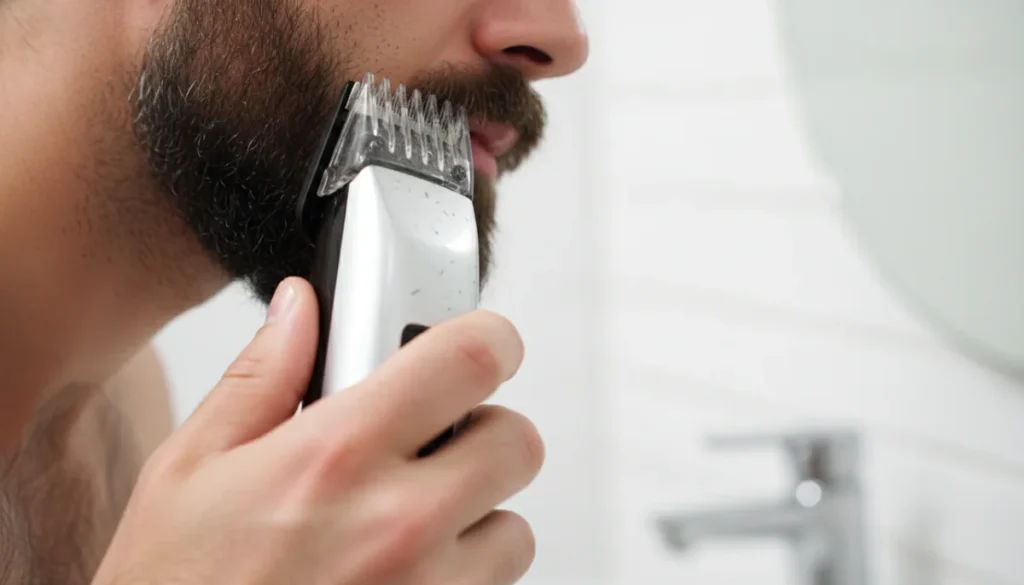
Against the grain, light pressure, overlapping passes: those three cover 90 percent of trimmer technique. Against the grain means moving the trimmer upward on the cheeks and upward along the neck so the guard sits flat on skin with hair rising into it. Overlapping by half the guard width is what stops the stripes a first-time user sees in the mirror, since each pass cut slightly less than the guard’s full height at the edges. Pressure should be what holds the tool against the face, nothing more; the weight of the trimmer does the work.
For the zones that trip everyone up: under the jaw and behind the ears, stretch the skin gently with your free hand so the guard rides flat, and slow your stroke to half speed. The skin there is elastic, and a fast pass on loose skin leaves a stepped edge that takes a week to grow even again.
Settings by beard length
| Look | Guard / setting | Notes |
|---|---|---|
| Stubble | No guard, guarded 1, or the stubble comb | Trimmer-only stubble is a 3-day look; a guarded 1 (3 mm) is a week |
| Short beard | 2 to 3 (6 to 10 mm) | The workhorse zone; trim every 7 to 10 days |
| Medium beard | 4 to 5 (13 to 16 mm) | Even out with the longer guard first, then step down |
| Long beard | 6 to 8 for the body | Shape with guards, detail the perimeter with a shorter one |
Two habits make settings work. Always cut longer than you think you need, because beards read shorter once combed flat. And use a setting dial the same way: start a number above your target, cut the whole beard, then dial down. Adjustable-dial trimmers like the Panasonic Panasonic beard and hair trimmer at about mid-range-to-pro money make this easy, since the dial turns with one hand mid-trim. If your beard is patchy and you want it to read thicker, go shorter on the sides and longer on top; our patchy beard guide covers the shaping logic.
Detail work: lines and corners
Detailing is where the trimmer earns or loses the beard. For the neckline, leave the line itself to the no-guard setting or a dedicated detailer, and take the hair below the curve with the grain first for comfort, then against it for the last pass. For the cheek line, a no-guard pass in short downward strokes cleans the strays without carving a hard edge. Corners, where the jaw meets the neck, are the spot most trims look unfinished; square them with the corner of the blade head rather than the flat, rotating the trimmer slightly. The full line anatomy lives in our neckline shaping guide.
If you do this weekly, a dedicated detail tool is worth having rather than asking your main trimmer to do everything. The Philips OneBlade Pro 360 at about mid-range money handles stubble and soft edges, while a true edger like the Andis T-Outliner squares lines the way a barber does. Keep the edger dry and clean, and the lines stay crisp.
The first-trim checklist
Before the first pass with any new trimmer, five checks prevent most first-trim disasters. Charge it fully, since a slow motor on a half charge tugs. Oil the blade even when the box says pre-oiled; shipping dust settles in the teeth. Snap on the longest guard and run one full pass to feel the tool’s weight and balance before you commit to a length. Check the guard sits flush on both sides; a tilted guard cuts a wedge. And decide the neckline curve on dry skin before anything touches the beard, because a line drawn in hair spray or imagined mid-pass is how necks get shaved too high. Five minutes of setup is the difference between a first trim you keep and one you shave off entirely.
One habit worth borrowing from barbers: cut in the same direction every time, and keep a note of the guard numbers you finished with. Two weeks later, you are trimming to a known recipe instead of re-deciding the beard in the mirror. Consistency is the whole reason a maintained beard looks maintained.
Keeping the blade sharp
Trimmer blades dull from friction and debris, not from use alone, which means maintenance decides the lifespan. After every two or three trims, brush the teeth clear, run a drop of clipper oil across the teeth, run the trimmer for five seconds, and wipe. Once a month, remove the head if it detaches and rinse the debris out. A trimmer maintained this way stays sharp for years; one stored with a beard-choked head feels old within months and gets blamed for cuts it is no longer making.
Battery and charging habits
Lithium trimmers do best with a simple habit: charge fully after use, unplug when done, and avoid leaving them on the charger every day for months. Cordless cutting power also matters for technique, since a trimmer running on a dying battery slows its oscillation and starts to tug. If yours begins to pull mid-trim, it is asking for a charge, not a replacement. Most modern cordless trimmers, the Wahl models above included, deliver 60 to 120 minutes per charge, which is several trims.
FAQ
Should I trim my beard wet or dry with a trimmer? Dry, unless the trimmer is explicitly rated for wet use like the Aqua Blade. Dry hair cuts evenly; damp hair clumps and cuts short.
Why does my trimmer pull hairs instead of cutting? Three usual causes: a dirty or unoiled blade, a battery running low, or a motor too weak for the beard’s thickness. Maintenance fixes the first two; the third is why stronger motors are worth the price.
Can I use a beard trimmer on my head? Many are dual-rated and do fine with guards. The limits are explained in our beard trimmer vs hair clipper guide.
What does zero-gap mean on a trimmer? Adjusting the two blades so they nearly touch, for a tighter cut. It is a barber-level adjustment on certain models; on most consumer trimmers, do not attempt it, since the wrong gap can nick skin.
How do I trim my neckline with a trimmer? Use the no-guard setting below the ear-to-ear curve that dips to the Adam’s apple, with the grain for the bulk and against it for the final pass.
Verdict
Trimmer technique is three habits: dry hair, against the grain, overlapping passes with light pressure, plus one maintenance habit, oiling the blade. Pick a trimmer with a real motor, like the Wahl Stainless Steel Lithium 2.0+ or the Wahl Aqua Blade for shower use, and the tool will outlast the routine you build with it.