As an Amazon Associate, TrustedBarber earns from qualifying purchases.
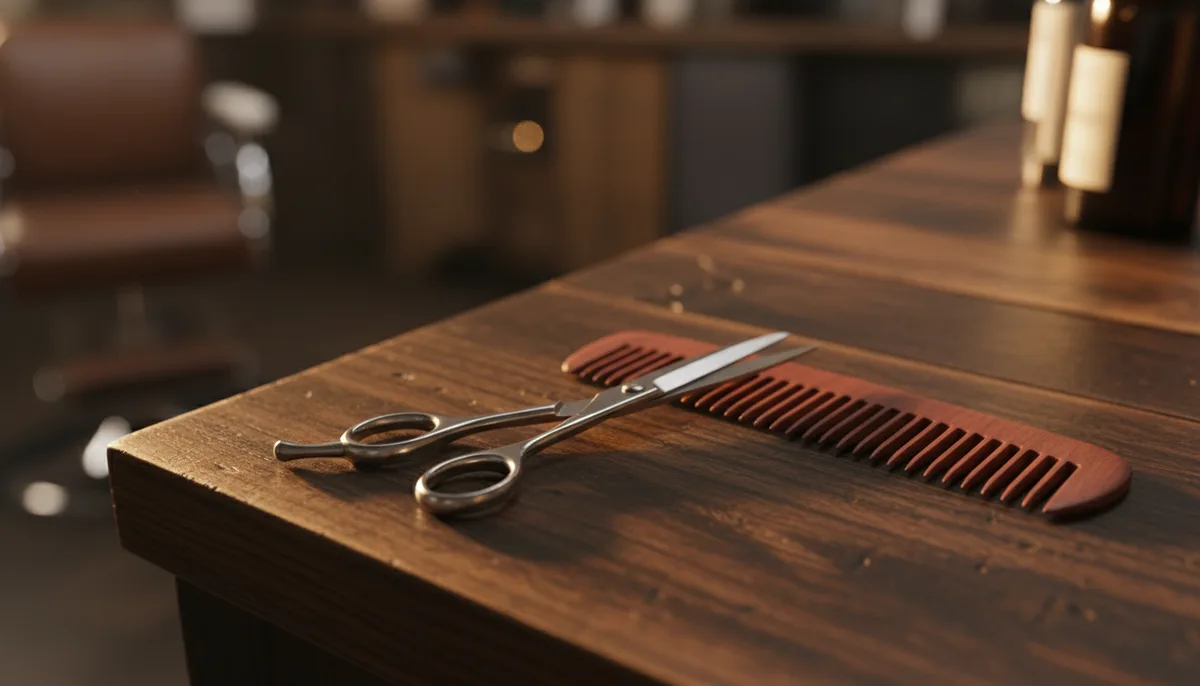
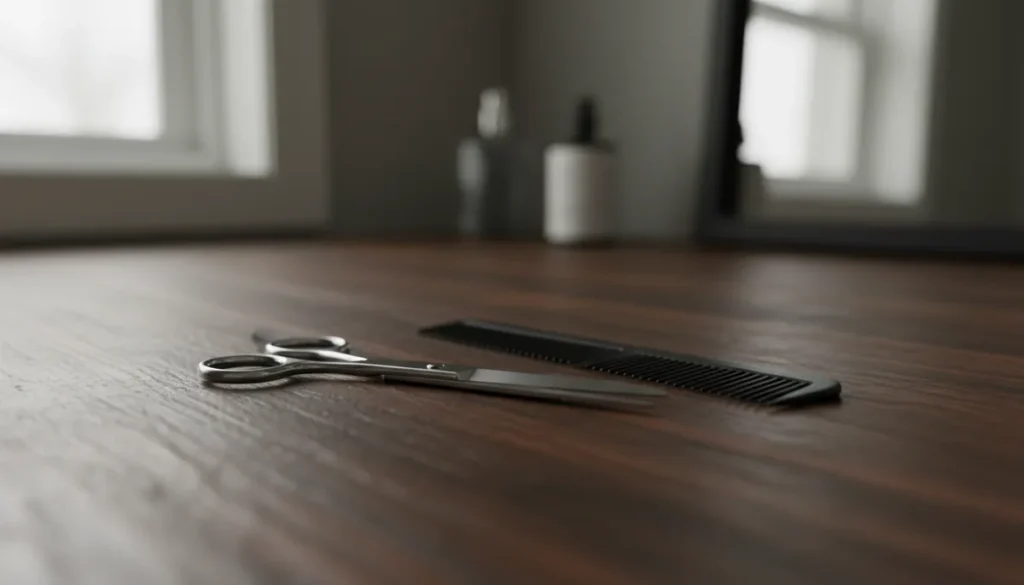
A trimmer buzzes. Scissors decide. When the work is fine, a flyaway hair over your lip, the corner of a chevron, cleaning up the underside nobody sees, scissors do what no guard can. This guide sorts the real options for mustache work, starting with the pair that has quietly become the default: the Tweezerman Moustache Scissors and Comb, a two-piece set that solves the whole job for the price of a dinner.
Quick answer
Mustache scissors are small, sharp, fine-tipped shears for cutting individual hairs. Trimmers cut fast and even; scissors cut exactly where you point them.
Best overall for most guys: the Tweezerman scissors-and-comb set. Best budget multi-use: the PAFASON straight-and-curved set. Best pro-grade: the ULG or Facón full shears.
Scissors first, then comb the mustache down and snip only the hairs that cross the lip line. Never point tips toward your nose.
Blunt tips, not pointed, unless you are trained. Every nick on the upper lip comes from pointed tips and bad angles.
In this guide
Scissors or trimmer: what each one is actually for
A trimmer is the speed tool. It cuts a straight line across a lip in ten seconds and cannot tell the difference between a stray hair and the hair you wanted. A scissors pass is slower and completely different in kind: you comb the mustache, see the shape, and cut only what breaks the line. The result is a mustache that looks deliberate instead of machined.
The real answer for most guys is both, in order. Trimmer for bulk and the big outline, scissors for the detail pass, the corners, the flyaways over the lip, the edges around the nose. If you own only one, the honest call depends on your mustache style: a short boxed mustache lives happily on trimmer alone; anything with length, a chevron, a handlebar in training, needs scissors because length is the point and a guard cannot preserve it.
What to look for in mustache scissors
Four features separate a good pair from a junk drawer pair. Size first: mustache scissors run small, usually around four inches, so your fingers keep control at the tight angles near your nose. Full-size six-and-a-half-inch shears have their place in a kit but are clumsy inside a lip line.
Tips second: rounded, blunt tips are the safety feature that matters. Pointed tips exist because pros use them for precision cuts into dense growth, and pros cut looking at what they are doing from angles a bathroom mirror does not give you. For self-trimming, blunt wins.
Steel and sharpness third: stainless steel with a fine, precise edge cuts hair cleanly the first time. A dull pair pushes and folds hairs instead of cutting, and folded hairs are what snag on the next pass. Tension adjustability fourth, mostly on full-size shears: a screw you can tighten keeps the blades meeting cleanly as the pair ages.
The picks, by job
Tweezerman Moustache Scissors and Comb: the default pick
This set wins on the simplest possible grounds: it contains exactly what the job needs and nothing that gets in the way. The scissors are small, sharp, and blunted at the tips for safe work near skin. The included finger comb is the piece that makes the method work, because combing the hair down before every snip is what separates a shaped mustache from a randomly shortened one.
For a first pair, a travel kit, or a replacement for the cuticle scissors you have been misusing, this is the answer. It also holds up: the steel takes years of bathroom-drawer life without rusting, as long as you dry them after use.
See the Tweezerman Moustache Scissors and Comb on Amazon
PAFASON straight and curved set: the two-shape pick
PAFASON sells facial-hair scissors in both shapes that matter: straight blades for clean lines along the lip, curved blades for following the curve under the nose and around the corners. Having both in one inexpensive set is genuinely useful once your mustache has any length, because the curved blade does the corners without the awkward wrist twist the straight blade needs.
The steel is fine for the job and the price leaves room to not care if one pair ends up in the gym bag. As the budget answer that still does the whole job properly, this is the set.
See the PAFASON straight and curved set on Amazon
ULG professional shears: the kit-builder pick
At the other end of the size scale sit the ULG six-and-a-half-inch shears, which are barber cutting shears, not mustache scissors. They belong in this guide for the guy whose grooming is a whole-head project: these handle the haircuts, the beard bulk, and the neckline work, and the mustache is one more job the same pair does.
The adjustable tension screw and razor-edge steel are the reasons pros pick this category. The reason a mustache-first guy should not start here is control: at lip-line distances, full-size shears are like parking a truck in a parking spot.
See the ULG professional shears on Amazon
ULG thinning shears: the bulk-manager pick
Thinning shears cut a fraction of the hairs in each pass, which is exactly the right tool when the problem is density rather than length: a mustache that reads bushy at any length softens with a thinning pass instead of getting shorter. One gentle pass, comb through, check, repeat only if needed.
Use them on the body of the mustache, never on the lip line itself, where you want every hair cut to the same line. A thinning pass followed by the fine scissors is the combo barbers actually use.
See the ULG thinning shears on Amazon
Facón razor-edge shears: the value pro option
Facón makes the price-accessible version of the pro shear: six and a half inches, razor-edge steel, the same silhouette as pairs costing several times more. For a barber-school student or a home groomer who has moved past the small-scissors stage and wants one serious pair to grow into, this is the sensible entry.
Same guidance as the ULG pair on size: brilliant for head, beard, and bulk, awkward for lip-line detail until you have real practice hours.
See the Facón razor-edge shears on Amazon
The Cut Factory matte black shears: the style-forward option
Functionally a sibling of the ULG and Facón pairs, the Cut Factory six-and-a-half-inch shears stand out on finish and feel: matte black coating, a balanced weight, and a look that would not embarrass a station. If the pair lives on a counter instead of in a drawer, this is the one that earns the display spot.
Buy it for the same jobs as the other full-size picks. Do not buy it expecting mustache-scissors handling; it is a shears pair that happens to be photogenic.
See the Cut Factory matte black shears on Amazon
How to trim a mustache with scissors, step by step
Work after a shower, when the hair is clean and dry. Wet hair stretches and lies longer than it really is, so a wet trim cuts short once it dries. Dry hair tells the truth about length.
Step one: comb the mustache straight down with the finger comb, over the lip. Step two: snip only the hairs that hang below or across the lip line, holding the scissors vertically so the cuts are cross-sections, not longitudinal slices. Step three: comb and check in the mirror from straight on and from each side; asymmetry shows up in the side views first. Step four: for corners, comb outward toward the cheek and trim to the line you want. Step five: for length reduction on a longer mustache, comb down and cut along your target line in small vertical bites, never one long cut across.
Two habits worth building: cut less than you think you need, because hair you cut off today takes weeks to grow back; and clean the pair after every session, one wipe down the blades, dry, done.
“Take your scissors and trim all the mustache hairs around the nose. There should be a small but noticeable 1 mm gap between your nose and mustache. Blending your nasal hair into your mustache is never a good look.”
Video credit: Beardster, on YouTube. The trim order and nose-gap detail in this section come from this video.
Care: keep the pair sharp for years
Stainless bathroom-scissors die of neglect, not use. Water spots rust a fine edge within months. After each use, wipe the blades, dry them, and close them. Once a month, a drop of oil at the pivot screw, open and close a few times, wipe the excess. Store them closed, tips protected, which is what the folding case in the PAFASON set is actually for.
Never use grooming scissors on paper, thread, or packaging. One staple can chip an edge that took a year to earn. If you keep a pair for the mustache and one for everything else, the mustache pair stays sharp for many years; the junk-drawer pair is what the cuticle scissors were for.
FAQ
What size should mustache scissors be? Around four inches is the sweet spot for self-trimming: small enough to control at the lip line, big enough for a comfortable grip. Full-size shears belong in the kit for head and beard work, not lip-line detail.
Are pointed or rounded tips better?
Rounded tips for self-trimming, every time. Pointed tips are a pro-tool feature for working into dense growth with trained angles. At home, pointed tips are the reason upper-lip nicks happen.
Can I just use my beard trimmer instead? For bulk and outline, yes. For detail, no: a guard cannot cut one hair out of a line, which is the entire job of the detail pass. Most well-kept mustaches get both.
How often should I trim a mustache with scissors? A light detail pass every week or two keeps the lip line honest. A growing-out mustache needs almost nothing but flyaway control; a maintained short mustache wants attention about weekly.
Do I need both straight and curved scissors? Not to start. The straight blade does ninety percent of the work. The curved blade earns its spot once you are shaping corners and under-nose curves on a mustache with real length.
The verdict
Buy the Tweezerman set and be done: it is the correct size, the correct tip, and it ships with the comb that makes the method work. If you want the two-shape upgrade later, PAFASON adds the curved blade for pocket change. Keep the full-size shears for the head and the beard, and the lip line will stay sharp for years.