

As an Amazon Associate, TrustedBarber earns from qualifying purchases.
Hair down the collar is the fastest way to lose a client mid-cut. A good barber cape does three jobs at once: it keeps cut hair off clothes and skin, it sheds water during shampoos and hot towel work, and it drapes fast so the chair keeps moving. The FEBSNOW Barber Cape does all three at a budget tier, which is why it anchors this list.
Every cape below was screened for what working shops actually ask for: full shoulder coverage, a closure that survives hundreds of client cycles, fabric that rinses clean and dries fast, and extras such as neck dusters and strips that save a second order. If you are kitting out your first station, pair this with our new-barber basics guide so capes, guards and chairs get ordered in one pass.
Quick answer
Best overall cape: the FEBSNOW full-coverage barber cape, with a neck duster in the box.
Best for tall clients and broad shoulders: the izzycka 64-inch nylon cape.
Best starter kit: the NICEMOVIC 10-in-1 kit with a nylon cape, neck strips and brushes.
Best budget spare: the FaHaner waterproof cape.
FEBSNOW Barber Cape with Neck Duster
izzycka Nylon Barber Cape 64×56
FaHaner Waterproof Barber Cape
In this guide
Why your cape matters more than you think
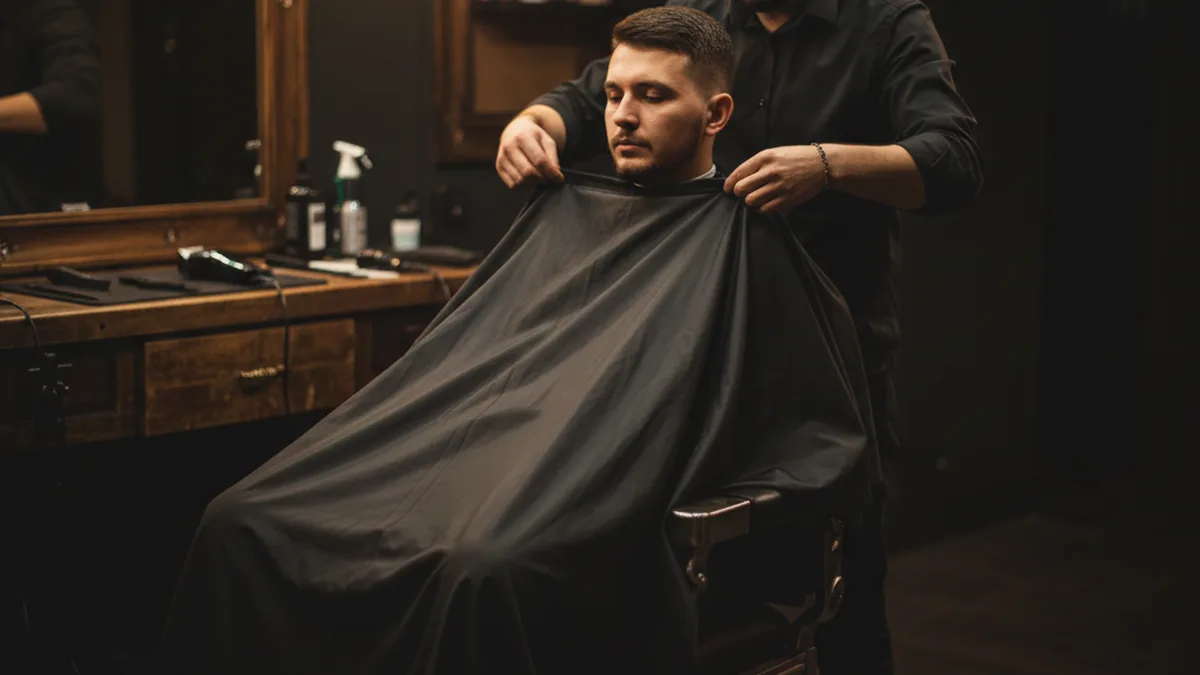
A cape is the first thing the client feels and the last thing you fold, and cheap ones fail in ways clients notice. Thin fabric lets fine hair settle into collars and seat seams. Stiff closures snap mid-cut or pinch the neck. Narrow cuts leave the shoulders exposed on taller clients, and wet fabric from a shampoo or a hot towel shave turns cold and heavy on the chest within minutes.
There is a shop-side cost too. Hair that slips under a cape ends up in chair seams, on the floor mat and down the client’s back after they stand up, which turns a clean cut into a cleanup and a re-seat. A cape with real coverage and a closure that holds cuts that cycle out entirely.
What makes a good barber cape
Material is the first split. Polyester capes are the shop default: light, quick to dry and cheap to replace. Nylon capes glide harder, shed clippings better and feel cooler on the neck, which matters on long services where fabric sits against skin for an hour. Both work; what matters is that the weave is tight enough that fine hair does not needle through it.
Next is the closure. Snaps are the fastest to cycle between clients and the most durable. Velcro is forgiving on neck size but collects lint and hair until it stops gripping. Elastic and tie closures are simple and near unbreakable, and several of the capes below pair an elastic edge with a snap so the fit adjusts without a fight.
Finally, size. Fifty-five inches wide covers most seated clients. Sixty-four inches and up drapes over broad shoulders and taller frames without the shoulders riding out. If you want a single premium upgrade with an elastic snap closure, we cover the Illuzien Solid Black Pro Cape in its own review, and it remains the pick for shops that want one cape to last.
The best barber capes for 2026
FEBSNOW Barber Cape: best overall
The FEBSNOW Barber Cape earns the top slot on coverage and finish. It is cut for full coverage with a generous overlap at the front, the polyester weave keeps clippings on top of the fabric instead of letting them needle through, and it ships with a neck duster brush so the cape and the cleanup tool arrive together. That combination is exactly what a busy station needs on a daily rotation.
It is also the easiest cape here to run as your only one. The fabric wipes down between clients, rinses clean after shampoo work, and the duster handles the neck and shoulders before the cape comes off. Best for: everyday shop use at a budget tier, and any barber who wants a cape-plus-duster setup in a single order.
izzycka Nylon Barber Cape: best for tall and broad clients
The izzycka nylon barber cape is cut at 64 by 56 inches, which is the size that stops tall clients from peeking out at the shoulders. Nylon is the slicker of the two common fabrics, so clippings slide off instead of clinging, and the weave is waterproof enough to stand in for shampoo and color work.
It is the cape to keep folded at the second chair for the client the standard cape will not cover. Best for: tall and broad-shouldered clients, wet services, and shops that want one oversize cape that handles everything.
NICEMOVIC 10-in-1 Cape Kit: best starter kit
The NICEMOVIC 10-in-1 kit is built for new barbers and barber school students: a nylon cape, neck strips, a neck duster brush and the small extras a first station needs, all in one order. Buying the pieces separately usually means three orders and three shipping waits, and this kit clears that in one.
The cape itself is serviceable budget nylon rather than premium fabric, so plan on this being your training and starter set while you decide which single premium cape you want to graduate to. Best for: students, first stations, and mobile setups that want the whole setup in one order.
FaHaner Waterproof Cape: best budget spare
The FaHaner waterproof barber cape is the spare you keep folded in the drawer for the client the main cape missed. It is a straightforward waterproof polyester cut with an adjustable closure, light enough to shake out in one motion and cheap enough to own two without thinking about it.
As a primary cape it does the job, but its real role is backup: color and perm work you do not want near your good fabric, a client who soaks a cape mid-shampoo, or the extra seat on a busy Saturday. Best for: a second and third cape at minimal cost.
YELEGAI Cape with Neck Duster: honorable mention
The YELEGAI cape with neck duster sits right next to the FEBSNOW in value: a large-size cutting cape with its own neck duster brush, at one of the lowest tiers on this list. If the FEBSNOW is out of stock on the day you order, this is the drop-in replacement.
Coverage runs large as advertised, and the fabric handles a full day of dry cuts before it wants a wash. Best for: stocking a second chair or keeping a clean spare in the bag.
Quick comparison
Sizing and closures: getting the drape right
Two sizing details separate a cape clients never notice from one they keep adjusting. First, width across the shoulders: the cape should clear the chair arms on a seated client so hair falls on fabric, not on the armrest. Second, front overlap: a generous left-over-right overlap at the chest keeps clippings out of collars on deep v-necks, which is where most complaints start.
On closures, match the cape to your cycle speed. Snaps win in a shop turning ten or more clients through a chair a day. If you also keep aprons at the station for front-of-chair work, our barber apron guide covers which ones survive laundering alongside capes.
See the drape in action
Drape is a feel skill until you watch someone do it with a neck strip underneath. This walkthrough shows the strip, then the cape, and why the order protects the neck line.
Keeping capes clean between clients
Between clients, shake the cape out over the floor mat, brush the shoulders and lap with the duster, and hang it so air moves through the fold. A cape that gets folded damp into a drawer will smell like a locker by Thursday, and no amount of hot towel work at the chair covers that.
On wash day, follow each cape’s care label rather than one routine. Some capes take a gentle machine cycle without fabric softener, because softener coats the weave and makes clippings cling instead of slide; others, including the FEBSNOW, are hand wash only. Hang dry either way. Keep a station routine for the chair itself on a separate schedule, and check our barber chair guide for the parts of the chair a cape never covers.
FAQ
Are barber capes waterproof?
The polyester and nylon capes on this list shed water well enough for shampoo bowls and rinse work. If most of your day is wet services, start with the izzycka nylon or the FaHaner, both cut for water first.
Snap, velcro or tie closure?
Snaps for speed in a busy shop, velcro for adjustability on a wide range of necks, ties for durability. Most barbers end up preferring snaps once they time a ten-client day.
What size cape covers most clients?
Fifty-five inches wide handles the average seated client. Sixty-four inches is the size that stops complaints from tall or broad-shouldered clients, which is why the izzycka made this list.
How often should capes be washed?
Brush out and shake down between every client, and wash whenever fabric looks dull or after any wet service. Shops running a heavy rotation pull every cape off the line twice a week.
Do capes cause static?
Synthetic fabrics can build a static charge in dry winter shops, which makes fine clippings cling instead of falling. A light mist of water before the cut, or switching to the nylon capes, settles it.
The bottom line
Buy the FEBSNOW Barber Cape as your everyday cape and you have covered the shop standard at a budget tier, duster included. Add the NICEMOVIC 10-in-1 kit if you are building a first station, and keep a FaHaner in the drawer for wet work. That trio outfits a chair for less than a single premium cape from most pro suppliers.


