As an Amazon Associate, TrustedBarber earns from qualifying purchases.
An empty chair at 2 pm on a Saturday can be the most expensive hour a barbershop runs, and a barber no show policy is what keeps that hour from repeating every week. Our guide to proven ways to grow your barber clientele covers the demand side; this one covers the other half: what working barbers in a September 2024 thread and an August 2025 thread actually charge for a missed slot, how they remind clients so the fee rarely fires, and when they waive it for a regular who slipped once. The barbers who run these policies day after day land in very different places: a flat deposit at booking, half the service price, or the full price backed by a card on file. The right level depends on how your books run, and the rest of this guide walks through each one.
The fee levels in those discussions come in three shapes: a small deposit taken at booking, half the service price charged after a no-show, or the full price with a card required to book. Whatever level you pick, publish it before the appointment, send reminders before the slot, and give a genuine first-time miss some grace. Repeat offenders are handled by escalation, not by charging everyone for the sins of a few.
In this guide
What an empty chair actually costs
A no-show is not a canceled appointment you can backfill. The slot was held for one person, the walk-ins were turned away or squeezed around it, and once the hour passes it is gone. A barber in one of the r/Barber discussions described the arithmetic plainly: sitting in the shop waiting on a pair of clients who booked together, knowing that if neither appeared they would burn three appointments in a row as no-shows. Another barber in the same discussion put it as a business framing rather than an emotional one: an empty chair is costing you money.

The pattern matters more than the single event. One barber who tracked it reported the losses compounding quietly across a year: they added up the missed cuts and same-day cancellations over twelve months and called the switch a no brainer. You do not need to reach for a spreadsheet to see the shape of it. If a quarter of your Saturday mornings involve a gap you could not fill, that is a staffing and income problem that a written policy either fixes or at least shrinks.
What barbers charge: the three tiers
Across the two discussions, the fees barbers described fall into three recognizable tiers, and each tier has a logic that fits a different kind of shop. None of them is the universal rule, and the barbers who described their setups in detail tied each fee to how their books actually run.
Tier 1: A flat deposit at booking
The lightest-touch version is a modest deposit taken when the slot is booked, kept if the client does not appear or calls off at the last minute. A barber in the first thread described switching to exactly this and reported that it stopped the flakes, thinned out the worst offenders, and left them satisfied that something was recovered even on the days someone vanished. The deposit is small enough that a genuine client never blinks at it, which is the whole point: it prices the commitment, not the cut. This tier suits shops with steady walk-in traffic, because a deposit does not need a card on file, does not need an invoice sent after the fact, and does not require you to have an uncomfortable conversation after someone has already left the building.
Tier 2: Half the service price
The middle tier is charging half the price of the missed service after the fact, usually as a payment link, and refusing new bookings until it clears. One barber described running this exact loop: charge half, send the link, and if it goes unpaid, decline their next scheduling attempt. Another reported that their shop charges half the service price and that roughly nine in ten of their clients accepted it without argument, which is the most important data point in this whole guide: the fee is not really about collecting money, it is about setting an expectation that the slot has value. Half the price reads as proportionate to most clients. It covers a meaningful share of the lost hour without ever looking like a punishment, and that proportionality is what keeps the policy enforceable without drama.
Tier 3: Full price with a card on file
A barber in the September 2024 discussion moved their policy to the booking app Booksy after eating no-shows as a cash-only shop: every no-show is now charged the full price unless the client calls and reschedules. Their framing of why the fee is fair: the client is really buying the reserved half hour, and the cut itself is incidental to it.
A full-price policy with a card on file fits shops that are booked out weeks in advance, where a missed slot cannot be refilled at any price and the client list is deep enough to absorb the ones who leave. A barber in the second discussion who is booked two to three weeks out runs a hybrid: half the price for a same-day cancellation and the full price inside a three-hour window or for a flat no-show, because the closer to the slot, the less chance there is to resell the hour.
Reminders and the cancellation window
One barber in the discussions pointed to reminders as the core of their setup. The barber running the card-on-file setup sends three reminders before every appointment, by text or email, and pointedly noted that with that many touchpoints there is no reason left to forget. Reminders turn the policy from a trap into a contract: the client was told, repeatedly, in the channel they actually read, and the fee is simply the terms they agreed to being enforced.
The second lever inside this tier is the cancellation window. A barber who charges the full price upfront reported pairing it with a generous rescheduling rule: cancel or move the appointment up to two hours before the slot and it costs nothing, no questions asked. That window is what makes a strict fee feel fair. Under a window like that, the fee applies when the notice condition isn’t met, not to a particular kind of client: someone who is sick, stuck at work, or simply double-booked can still fix the mistake before the window closes. The reminder cycle and the reschedule window exist for exactly that group: clients who would otherwise no-show for an innocent reason, which is who you do not want to fine.
Give regulars a pass the first time
The clearest advice about grace came from barbers who otherwise run the strictest policies. One barber described the rule they say out loud to clients: the first miss is on the barber, the second is on the client, and if the second one is not paid either, there is no third appointment on the schedule at all. The trade-off in a rule like that: the first miss on the barber is a fairness gesture for a regular, and the goodwill it buys is the argument for eating one fee.
“First is on me, second is on you. If it’s not on you then there’s no you in my schedule anymore.”
u/JamminPT, r/Barber, August 2025
The counterexample came from the client side of the second discussion, and it is the cautionary tale for over-charging. A weekly regular described being charged a flat fee after a single missed appointment in a full year of loyalty, and simply never going back. A relationship client who gets charged like a stranger on their first slip takes the entire future value of that chair with them when they leave. Across the counterexample and the pass: built trust earns a pass, new online bookings earn the terms they agreed to, and those are two different populations.
Escalate repeat offenders, do not punish everyone
Several barbers argued against a policy that fires at full force on every first miss, and their alternative was escalation. A salon barber described a loosely enforced policy where an honest first miss costs nothing, but a client who is repeatedly late, cancels repeatedly, or no-shows repeatedly gets asked to put a card on file and pay a partial fee going forward. Their observation was blunt: most repeat offenders simply stop coming back once you ask, and that outcome is the point, because the chair time they were consuming is now free. Another shop that books through a centralized service runs a formal escalation: the first miss is a warning, the second costs the full price of the cut and removes the client’s ability to book online, leaving walk-in availability only.
A third barber described the gentlest version of the same loop. When someone who booked and no-showed wants to come back, they are welcome, but the missed cut is paid on arrival and the new cut is paid upfront before scissors come out, and then the counter resets. Their report: almost nobody has ever needed it twice, the good clients understand immediately, and the ones who argue are the ones the policy was designed to filter out. One-way or another, the books fill with clients who respect the schedule, which is the actual goal.
Tools that make a no-show policy stick
Most of this guide is about words on a page, but a few inexpensive tools make the policy easier to run, especially if you are not ready to move your whole booking flow into an app with built-in deposits.
A paper appointment book you control
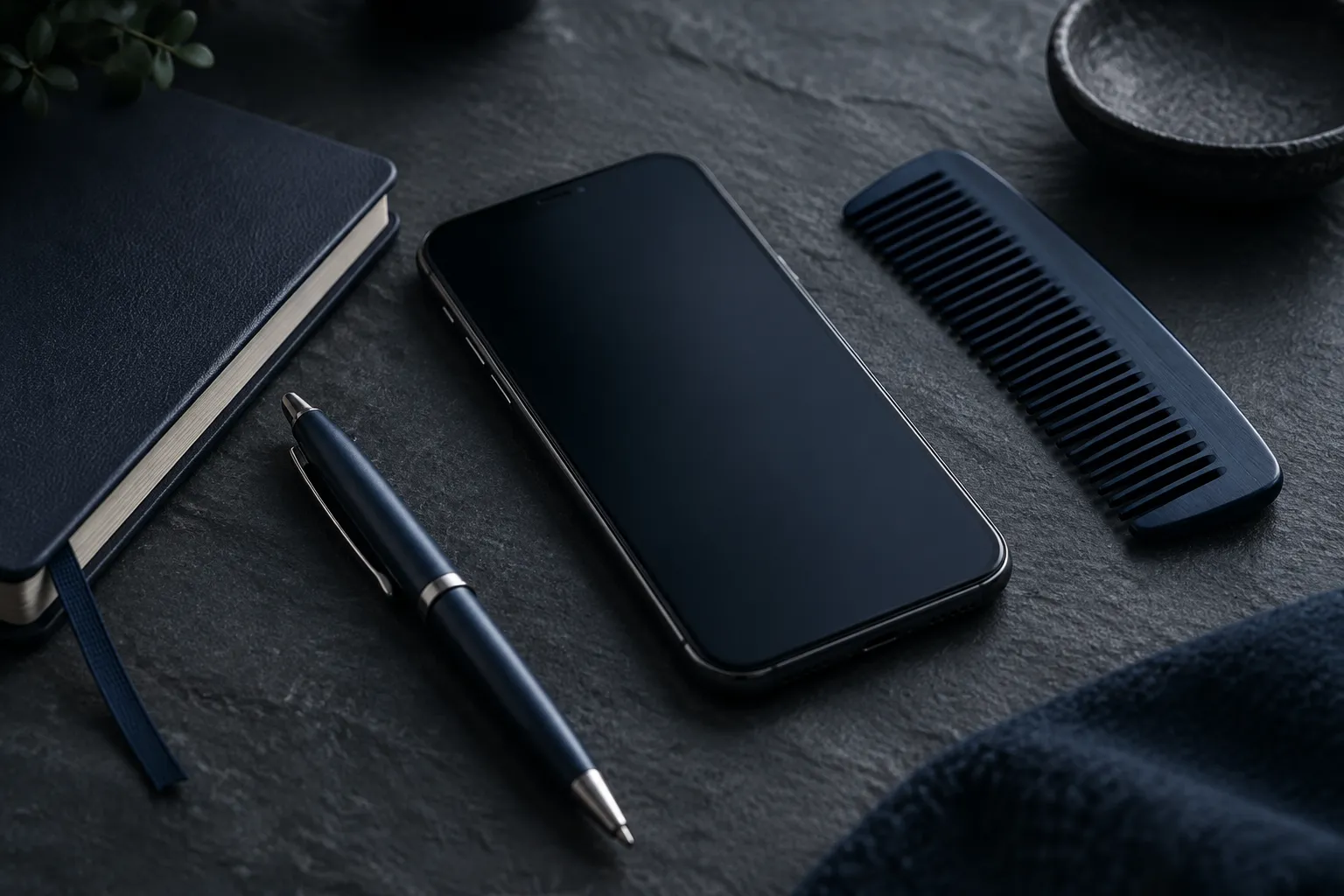
If your booking lives on a phone screen and a text thread, a paper book makes the schedule visible to everyone in the shop and keeps a dated record of who was told what and when. The SCALPMASTER 3 Column Barber Appointment Book has three columns to lay the day out, and it will not send reminders for you, but it gives you something to point to when a client swears they were never told their slot time.
A card reader if you take deposits in person
Tier-one deposits and tier-three card-on-file policies both assume you can actually take a card payment, and a pocketable reader is a simple way to accept one on the spot. The Square Reader for contactless and chip (2nd Generation) pairs with a phone, takes tap and chip payments, and works for deposits at the chair, same-day cancellation charges, or taking payment before the cut from a client working through their reset. It is the hardware half of a booking-app policy for shops that are not ready to run the whole flow through software. Worth knowing before you build the policy around it: the reader takes payments in person, while storing a card and charging it after a no-show is a booking-software feature, the part Square Appointments handles.
Written reminder cards for the chair side
Automated texts cover the week before the appointment, but a physical card handed across the chair puts the next slot, the shop number, and the policy terms in the client’s wallet where a text can get buried. A pack of appointment reminder cards for salons and barbershops gives you a stack of write-on cards for rebooking at the register, and rebooking on the way out is a simple no-show defense, on the theory that a client who has already locked in their next slot in person is more likely to keep it. Hand one over with every booking and the policy conversation starts before it is ever needed.
FAQ
What should a barber charge for a no-show fee?
There is no single standard, and the working barbers in these discussions split across three levels: a flat deposit at booking, half the service price, or the full price with a card on file. The tier that fits depends on how booked you are. Pick the level you can enforce without resentment, put it in writing, and let it do its work.
Should a first-time no-show be charged?
It depends on the policy, and the discussions show both approaches. One barber puts the first miss on the barber and the second on the client, and there is no third appointment if the second one goes unpaid either; the card-on-file setups charge a first no-show, and their justification is the terms: a brand-new client who booked online and vanished agreed to the published terms, and the fee is the terms being kept.
How many reminders should I send before an appointment?
The only named count in the discussions is three: one barber sends three automated texts or emails before every appointment and calls that the reason there is no excuse left to forget.
Do I need a card on file to charge a no-show fee?
Not necessarily, but it changes what you can recover. Without a card you can still take deposits upfront, or invoice a repeat offender after the fact the way one shop does, with the consequence being loss of online booking privileges rather than enforcement. A card on file leaves the choice of when to charge the fee to the shop, which is why the strictest tier pairs full-price charges with required cards at booking.
What about same-day cancellations?
Treat them on a sliding scale tied to notice. The clearest model in the discussions: a same-day cancellation costs half the price, and a cancellation inside roughly three hours or a silent no-show costs the full price. The logic is resale value: the closer to the slot, the smaller the chance anyone fills the hour, so the fee rises as the notice shrinks.
The verdict
A barber no show policy is not one rule, it is a system, and the most complete setup this guide can assemble from the discussions has three parts: a fee level that matches how the books run, a reminder cycle and cancellation window around it, and a grace rule for regulars that keeps the policy humane. Start with a deposit if your books are loose, move to half or full price with a card on file if you are booked out, publish the terms everywhere a client books, and escalate repeat offenders instead of charging the whole shop for them. The chair you protect is your income, and the policy is simply the price of reserving it.