
How Often Should You Get a Haircut? The Cadence Barbers Actually Recommend
Disclosure: this article contains Amazon affiliate links. As an Amazon Associate we earn from qualifying purchases, at no extra cost to you. It does not change what we recommend.
In this article
Ask five barbers how often a man should get a haircut and you will hear the same answer five ways, which is why TheSalonGuy’s breakdown of how often you should get a haircut and Garrick Dixon’s barber’s-eye version (watch it here) keep racking up views years after posting. The honest answer is that haircut frequency is a math problem before it is a preference problem: hair grows at a fixed rate, your style hides or exposes that growth at a fixed point, and your calendar either matches that point or it does not. This guide gives you the cadence for every major cut style, the maintenance moves that stretch the interval, and the cost math that decides whether weekly appointments or home touch-ups make sense for you.
The Growth Math Every Cadence Rests On
Scalp hair grows roughly half an inch per month, about a sixth of an inch every two weeks, on a healthy head. Your style does not care how much hair grew; it cares how much grew before the shape breaks. A skin fade loses its blend the moment the shortest hairs on the fade line gain even a couple of millimeters, because the gradient that makes a fade look professional is measured in fractions of an inch. A classic scissor cut hides half an inch of growth easily. That single fact explains the entire cadence table below: the more architectural the cut, the more often it needs redoing, regardless of how healthy your hair is or how much you paid for it.
The Cadence by Style
Skin fades and hard part styles sit at the top of the maintenance ladder. The blend that defines them starts softening within a week and reads visibly grown out by two, so the men who always look fresh are genuinely in the chair every one to two weeks. That is not barber upsell; it is what the style costs to keep. Buzz cuts and induction cuts sit at the opposite pole: even growth is invisible on a uniform length, so three to five weeks works fine, and the cut looks intentional the entire time. The taper and classic short scissor cut, the most common professional men’s cut, holds a sharp neckline for about two weeks and overall shape for four to six, which is why the three-to-four-week rhythm is the industry’s default answer for most men. Medium and longer styles run five to eight weeks, because growth mostly adds length rather than destroying shape, and the split ends and neckline scruff arrive later. Our breakdown of taper versus fade explains exactly why the fade half of that spectrum ages faster than the tapered half.
Beards follow their own schedule and deserve their own line in the calendar. A beard looked after between cuts with trimmer work at home can stretch the haircut interval, while a beard left wild drags the whole look down regardless of how fresh the cut is, which is why our guide to fading a beard treats the two services as one system.
Stretching the Interval Without Looking Like It
The secret of every man who looks sharp at three weeks is not better hair; it is maintenance between cuts. Three moves carry almost all of the value. First, the neckline: scruff below the natural neckline is the single fastest thing that makes a cut look old, and a two-minute cleanup with a decent trimmer resets it. Second, the area around the ears and sideburns, where stray growth reads immediately. Third, a light trim of the fade line if you run a fade, which buys another week before the blend visibly softens. All three take under ten minutes total at home with a tool that costs less than two barbershop visits.
Barber tip: when you stretch a fade past four weeks, ask your barber for a neckline and edge-up only at the two-week mark. It is usually free or a few dollars, and it keeps the fade looking intentional the whole month.
Between cuts, the neck is what gives you away first, and that is a two-minute fix at home. A OneBlade Pro 360 cleans the neckline and the stubble line without a single nick, which stretches most cadences a full week without anyone noticing.
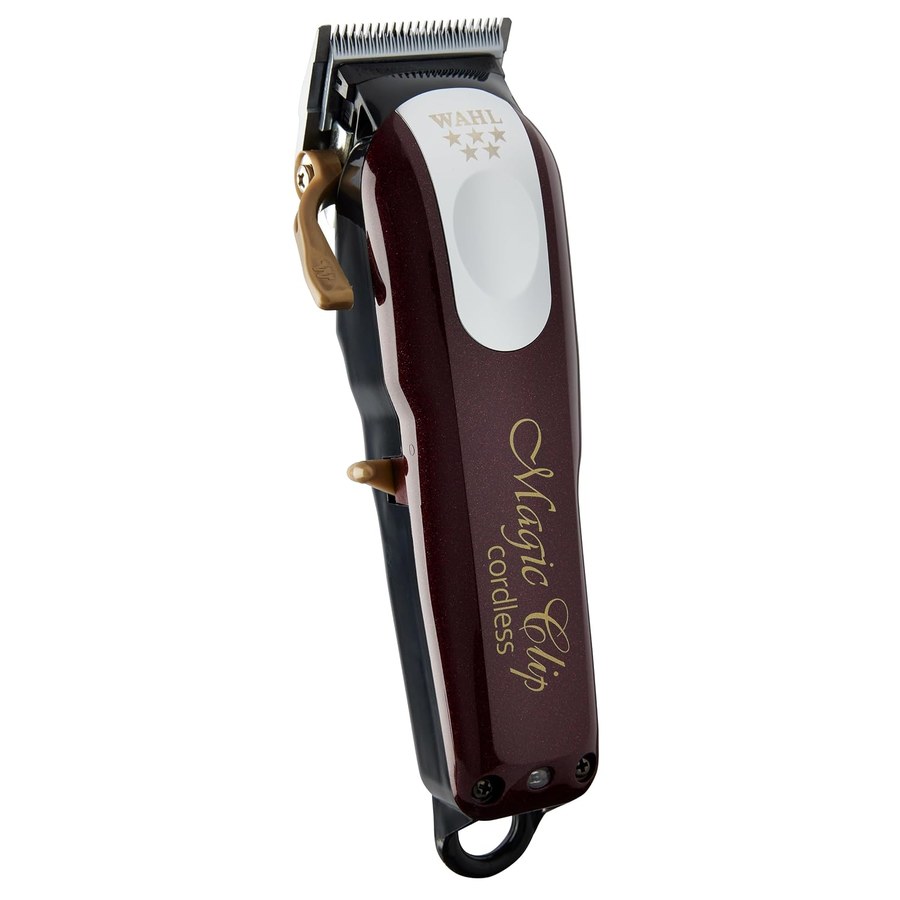
For that job, three tools cover the full spectrum. The Wahl Professional Black Peanut is the ideal between-visit tool: palm-size, powerful rotary motor, and precise enough for neckline and ear cleanup without a full production, which is exactly why barbers keep one on their own stations. For men who run fades and want to refresh the blend at home, the Wahl Magic Clip Cordless is the standard-setting machine, with its stagger-tooth blade softening lines of demarcation and more than 23,000 ratings averaging 4.5 stars behind it; our tutorial on fading hair at home walks the technique. For crisp necklines and edge-ups, the Wahl Detailer Li delivers the T-wide blade barbers use for lineups, and our guide on lining up a hairline covers the method. Owning even one of the three converts the haircut question from a race against the calendar into a schedule you control.
The Cost Math, Honestly Done
Run the numbers on the common cadences. Weekly fades at $40 a visit is over $2,000 a year in cut services, which is why the one-to-two-week fade crowd is disproportionately either professional barbers themselves or men for whom the look is genuinely income-related. Three-to-four-week cuts at the same price run $520 to $700 a year, the range most working men actually spend. The home-touch-up middle path is where the math gets interesting: a five-week barber cadence with a two-minute home neckline cleanup in between costs roughly $420 a year and looks close to a three-week cadence, because the neckline was the tell all along. A one-time tool investment of $65 to $140 pays for itself inside the first year at any cadence, and the tools, unlike the appointments, keep working for a decade.
Money note: compare cadences against your own calendar, not the shop menu. Six cuts a year at a premium shop costs less than twelve at a discount shop that misses your shape, because every visit needs the correction the cheap cut left behind.
Where the math breaks down is the false economy of stretching too far. Arriving at the barber at week six with a grown-out fade means the barber spends the service resetting architecture rather than refining shape, and the cut you receive at week six is not the same cut you would have received at week four; it is a rebuild. The cadence you can actually sustain, with honest home maintenance in between, beats the cadence you keep skipping.
Signs You Are Waiting Too Long
Your hair will tell you before your calendar does. The neckline is scruffy past the natural line. The ears are getting fuzzy. Your fade’s blend shows a step where it used to show a gradient. Your style takes longer to fix in the morning and holds worse through the day, because shape is doing the work your product cannot. Any two of those together mean the interval is too long for your current style, and the fix is either a shorter interval or a lower-maintenance style, which is a real conversation to have with your barber rather than a concession.
What to Ask Your Barber About Cadence
The most underused move in barbershop relationships is asking the person cutting your hair how often you should come back, and then booking it before you leave. Your barber sees your growth pattern, your hair’s behavior at week two versus week four, and the exact point your specific cut breaks, information no generic guide can supply. A good barber will give you a number and a maintenance recommendation, and pre-booking turns that advice into a routine instead of an intention. If a two-week cadence is not realistic, ask for a lower-maintenance version of the style: many fades can be cut slightly longer to survive an extra week, and the trade is a conversation worth having once.
Related: our Wahl Peanut review covers the palm-size clipper worth keeping home between cuts, and the at-home beard shaping guide pairs with the neckline work above.
The Takeaway
Fades want one to two weeks, professional short cuts hold three to four, longer styles run five to eight, and buzz cuts shrug at any of it. Whatever your style demands, the neckline is the tell, ten minutes of home maintenance with a Peanut, a Magic Clip Cordless, or a Detailer Li buys you a week of sharpness, and the sustainable cadence with honest in-between care beats the ambitious one you keep missing. Set the interval your style actually needs, book it standing, and the haircut question stops being a recurring crisis.