Disclosure: this article contains Amazon affiliate links. As an Amazon Associate we earn from qualifying purchases, at no extra cost to you. It does not change what we recommend.
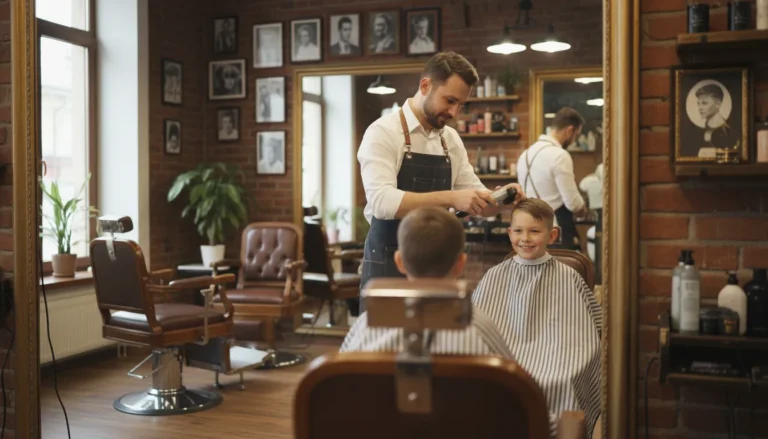
Ask ten people what separates a taper from a fade and you get ten answers, so we went to two working barbers instead. David Rico breaks it down in Suavecito Pomade’s taper-versus-fade explainer, and Cut with Andy demos both cuts side by side on camera. Both cut for a living, and both walk through the blend step by step, so what follows is what they actually do in the chair: where they agree, where they differ, and exactly what to say to get the cut you want.
A note on the sources: Suavecito sells pomade and its video points viewers to the shop, and Andy’s description carries a discount code for a barber supply store along with affiliate links for his tools. The technique in both demos stands on its own, and every product mentioned below is checked against its own Amazon product page.
In this article
What Both Barbers Agree On
Both say a taper is the gentler of the two. In the Suavecito video, David Rico describes a taper as a gradual change from longer hair on top to short hair at the bottom, with a strong hairline kept around the ear. A fade, he says, is a more dramatic change that almost always goes down to a zero or to skin.
Andy makes the same split in different words. In his view a taper only touches two areas, the sideburns and the neckline. A fade goes all the way around the head.
Source: Barber Breakdown: Tapers vs. Fades, What’s the Difference, Suavecito Pomade.
Quick take
A taper is a gentle clean-up at the sideburns and neckline. A fade is a bigger, more dramatic blend that runs around the head.
Where They Differ
The two barbers do not agree on how short a taper goes. Rico says a taper usually goes all the way to a zero at the temple and nape. Andy says a taper looks best at a number one or above, though he also shows a skin taper and mentions that some barbers do a half taper.
That is a good reason to use words and a reference photo in the chair, not just the label. If your barber hears “taper” and pictures a different length than you do, the cut comes out wrong even though nobody made a mistake.
Good to know
The label does not fix the length. Say how short you want the sideburns and neckline to end, and show a photo.
What a Taper Looks Like
Rico says a taper is easy to wear on any hair type. It keeps the hairline strong around the ear, and it is low maintenance, the sort of cut where you sit down and get a trim every few weeks.
Andy points out that a taper grows out in a natural way. Because the hair blends into the longer hair, you do not get a hard line at the sideburn as it grows. He also says the line around the ear is something a barber can sharpen with a liner, but not every client wants it lined up, so you should say which you prefer.
What a Fade Looks Like
In Andy’s demo, a fade starts with a guideline, which looks like a hard line on the head. He tells non-barbers not to panic when they see it. The barber sets a first guideline, then a second, and blends them out until the lines are gone. The result goes all the way around the head and can be low, medium or high, depending on where the blend starts.
Rico says a fade suits someone who wants a sharp, bold look, but it takes more upkeep to stay crisp. For more on the fade itself, see our beginner guide to cutting a fade at home and the best clippers for fades.
Taper vs Fade at a Glance
| Taper | Fade | |
|---|---|---|
| Where it sits | Sideburns and neckline only | All the way around the head |
| How short it goes | Usually a number one or higher, sometimes skin | Almost always down to a zero or skin |
| Blend length | Short and subtle | Long, from skin up to the top length |
| Upkeep | Light, a trim every few weeks | High, stays sharp one to two weeks |
| Grow-out | Soft, no visible line | A hard line appears as it grows |
| Best for | Conservative looks, low maintenance | Sharp, bold, camera-ready looks |
How Each One Is Built
Rico and Andy build both cuts with the same logic, they just stop at different points. A barber works in half-step jumps between clipper guards: zero for skin, then a half, then one, two and three. On a fade, Andy sets a first guideline low on the head, then a second guideline above it, then flicks the clipper outward as he moves up so the two lines dissolve into each other. On a taper, the same flicking motion happens only at the sideburn and the nape, which is why a taper takes less chair time.
The taper lever matters more than most people realize. On a clipper like the Wahl Senior Andy uses in his demo, closing the lever takes a number one guard down close to a skin cut without changing guards. Rico works in that in-between range for the soft blend a taper needs, while a fade usually wants the full guard ladder from skin upward.
Which One Should You Get
Both barbers frame the choice as a lifestyle call more than a style call. A taper is the low-maintenance pick. Rico calls it easy to wear on any hair type, and because the sides keep their hairline, it grows out without a visible shelf. If you sit in an office that reads short-side cuts conservatively, or you go five or six weeks between cuts, a taper holds up better.
A fade is the sharp pick. It photographs well and it reads intentional, but the trade is upkeep: Rico says it takes more work to stay crisp, and most barbers will tell you a skin fade looks its best for about a week and a half. If you like the fresh-out-of-the-chair look and do not mind a visit every two weeks, the fade earns it.
Hair type tips the scale too. Coarse and curly hair shows guard lines harder, so a fade on that hair needs more blending passes, while a taper hides those transitions around the ear. Fine, straight hair is more forgiving on both.
Tools for Cutting at Home
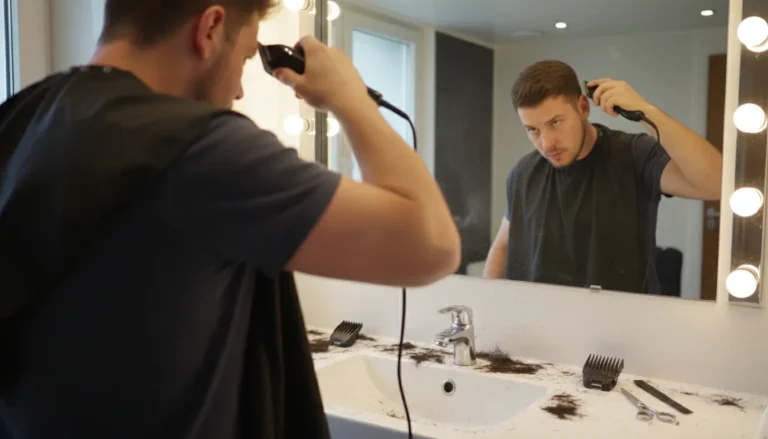
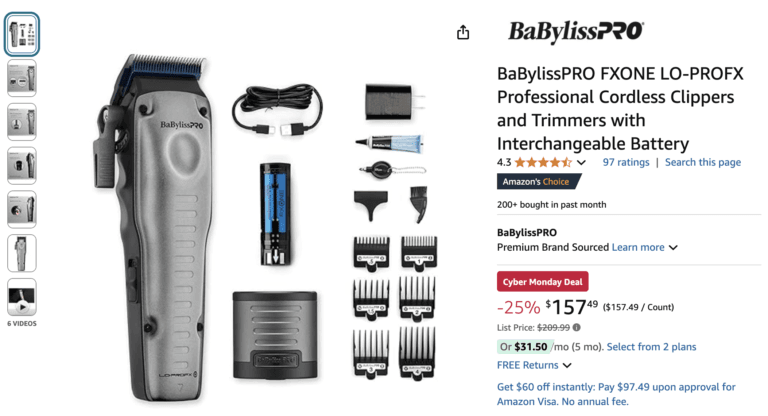
Two tools cover both jobs. The Wahl 5 Star Magic Clip Cordless ($139.99 on Amazon, 4.5 stars across 23,422 ratings, read October 14, 2026) is Wahl’s stagger-tooth blend machine, built for bulk removal and seamless fading, with a taper lever for the soft zones and a 100-plus minute lithium battery. For the lines, the Wahl Cordless Detailer Li ($119.99, 4.6 stars across 7,303 ratings, read October 14, 2026) carries the extended T-wide blade barbers use for sideburns, necklines and edge-ups, with about 100 minutes of runtime and a charging stand.
Andy takes his taper down to skin with a Wahl Senior in his demo. The cordless version in that line is the Wahl 5 Star Cordless Senior, which Wahl Pro describes as built for bulk removal, tapering and fading. If you would rather see the full process first, our beginner guide to cutting a fade at home, the best clippers for fades and our hairline lineup tips cover the guard ladder and the finish work in depth.
What to Tell Your Barber
- Say taper or fade, and say how short the ends should go (skin, number one, number two).
- Say whether you want the sideburns and neckline lined up or left natural.
- For a fade, say low, medium or high, since that decides where the blend starts.
- Bring a photo. Both barbers say the terms confuse clients and new barbers alike.
Andy says it is the barber’s job to know the difference and explain it, so walk in, describe what you want the sides and back to do, and let your barber translate that into the cut.
FAQ
Is a taper a type of fade? No, and the difference is where it sits, not how it is cut. A taper touches only the sideburns and neckline; a fade runs the full circumference of the head. Some shops use the words interchangeably, which is exactly why both barbers say to describe the length you want instead of relying on the label.
Can you get both at once? Yes, and most barbers do it without being asked. A taper fade is a fade around the head with the sideburns and neckline tapered softly, so you get crisp sides and a natural grow-out at the edges.
How often does each one need a touch-up? A taper holds a clean look for three to five weeks. A fade, especially a skin fade, needs a visit every one to two weeks to stay sharp.
The short version: a taper is a cleanup and a fade is a statement. Say which one you want, say how short the ends should go, and bring a photo. A picture settles in thirty seconds what words sometimes cannot.
Pick this if…
You want a clean-up that grows out softly and keeps your hairline: ask for a taper, and say how short the neck and sides should end.