Intro on How to Use Barbicide
How to Use Barbicide: As a
Why Infection Control is Important
When clients step into your barbershop, they trust you with their personal safety. The tools you use, from combs and shears to razors and clippers, come into direct contact with skin and hair. If these tools are not properly disinfected between uses, they can harbor harmful pathogens, leading to infections.
Proper infection control not only helps prevent cross-contamination between clients but also ensures you comply with health and safety regulations. Failure to maintain high standards of hygiene can result in the spread of bacteria, viruses, and fungi, putting everyone in your shop at risk.
This is where BARBICIDE® comes in. Whether it’s disinfecting your tools or surfaces, using BARBICIDE® correctly is key to protecting yourself and your clients.
Porous vs. Non-Porous Surfaces
Before diving into how to use BARBICIDE®, it’s important to understand the difference between porous and non-porous surfaces.
- Porous surfaces are materials that can absorb liquids. Think of towels, neck strips, and your own skin. These items can’t be disinfected and must be discarded after every use to prevent the spread of germs.
- Non-porous surfaces are materials such as glass, metal, and plastic, which don’t absorb liquids. These are the surfaces and tools that BARBICIDE® can disinfect. Examples include combs, shears, razors, and countertops.
In any professional setting, porous items should always be discarded after use, while non-porous items can be reused, provided they are properly cleaned and disinfected.
What is BARBICIDE®?
BARBICIDE® is a disinfectant solution that has been trusted by barbers and salon professionals for decades. It is EPA-registered, meaning that it has been proven to kill the germs most commonly found in barbershops, including:
- Bacteria: Responsible for infections such as staph.
- Viruses: Including more dangerous pathogens like HIV and hepatitis.
- Fungi: Which can cause conditions such as athlete’s foot or ringworm.
For a product to be effective against these pathogens, it must be used correctly. The EPA registration ensures that when BARBICIDE® is used as directed, it will perform its disinfecting function effectively.
How to Use BARBICIDE® for Disinfection
To properly disinfect non-porous items like your tools and surfaces, follow these steps:
- Clean the Item: Before disinfecting, always clean your tools with soap and water or a chemical cleaner like Ship-Shape®. This step removes any debris, dirt, or hair clippings that may be stuck on the surface.
- Rinse and Dry: After cleaning, rinse the item thoroughly with water and dry it completely. This prevents any dilution of the disinfectant, ensuring it works as intended.
- Disinfect with BARBICIDE®:
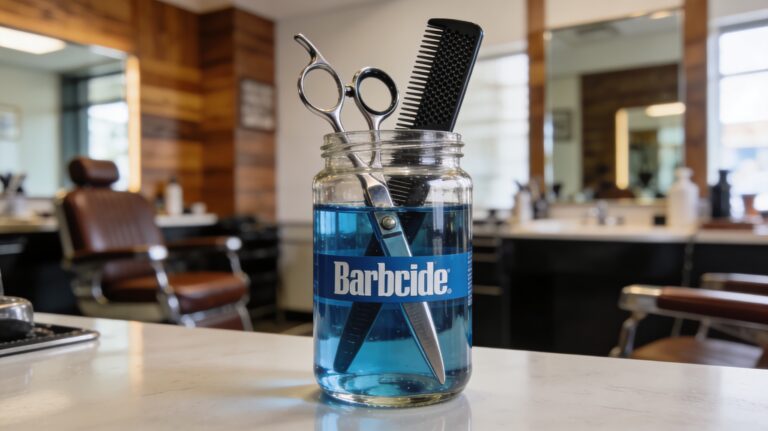
- For immersion disinfection: Immerse your tools (like combs, scissors, and razors) in BARBICIDE® Concentrate for 10 minutes. Ensure the item is fully submerged in the solution.
- For spray disinfection: Spray BARBICIDE® Spray on the item, ensuring the surface is completely wet. The contact time for spray is also 10 minutes.
- For wipe disinfection: Use BARBICIDE® Wipes on non-porous surfaces, ensuring the surface remains visibly wet for 2 minutes.
- Allow to Air Dry: After the appropriate contact time, you don’t need to rinse the tools. Simply let them air dry.
How to Dilute Barbicide
Proper diluation is required.
The proper ratio of BARBICIDE® to water is:
- 2 ounces (or a quarter cup) of barbicide concentrate
- 32 ounces (of 4 cups) of water
How to Make a BARBICIDE® Spray
Many barbers prefer using a spray for quick disinfection of surfaces or tools. Fortunately, you can easily make your own BARBICIDE® spray from the concentrate you may already have on hand.
Here’s how to do it:
- Ingredients:
- 2 oz. (1/4 cup) of BARBICIDE® Concentrate
- 32 oz. (4 cups) of water
- Directions:
- Mix 2 oz. of BARBICIDE® Concentrate with 32 oz. of cold water in a clean spray bottle.
- Shake the bottle gently to ensure the solution is evenly mixed.
- Your spray is now ready to use!
When using BARBICIDE® spray, make sure to follow the same rules for disinfecting non-porous surfaces. Ensure that the surface remains visibly wet for 10 minutes to kill all the pathogens listed on the product’s label. Unlike immersion BARBICIDE® solutions, the spray doesn’t need to be made fresh daily, as long as the bottle is closed and uncontaminated.
Frequently Asked Questions about BARBICIDE®
Here are some common questions barbers have about BARBICIDE® and how to use it effectively:
- How often should I change BARBICIDE® in my jar?
- Immersion solutions should be changed daily, as required by the EPA. Even though it may still look clean, it loses its disinfecting power after prolonged exposure to contaminated tools.
- Can I use BARBICIDE® on porous items like towels or fabric?
- No. BARBICIDE® is only effective on hard, non-porous surfaces. Porous materials like towels, neck strips, and capes cannot be properly disinfected.
- Can I use BARBICIDE® on my skin or hands?
- No. BARBICIDE® is not labeled for use on the human body. It’s designed strictly for use on hard, non-porous surfaces.
- Do I need to rinse my tools after using BARBICIDE®?
- No, you don’t need to rinse your tools after the 10-minute contact time. Simply allow them to air dry.
- Is BARBICIDE® safe for the environment?
- Yes. Diluted BARBICIDE® can be disposed of safely down the drain, but be sure to follow your local and federal environmental regulations when doing so.
- Can I use BARBICIDE® in a pedicure spa tub?
- Yes, but you should follow the proper dilution ratio of 1/4 cup of BARBICIDE® Concentrate to 4 cups of water, and ensure the tub has a 10-minute contact time before draining and air drying.
The Importance of Daily Disinfection
Disinfection should be a daily routine in your barbershop, not just in times of heightened health risks. Every time a new client sits in your chair, they are trusting you to provide a clean and safe environment. Tools and surfaces that aren’t disinfected between clients can harbor germs that may lead to infections.
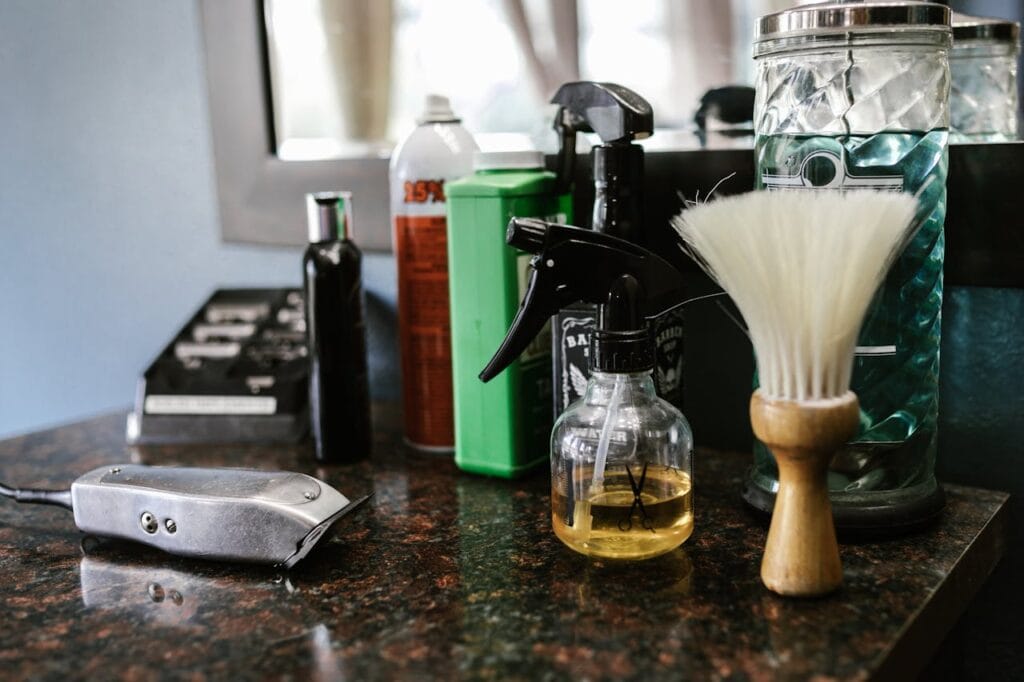
To maintain a high level of hygiene, make BARBICIDE® part of your daily routine. Whether it’s wiping down your countertops, disinfecting your clippers, or immersing your combs and scissors, proper use of BARBICIDE® ensures that you’re adhering to the highest standards of infection control.
Additional Steps to Keep Your Barbershop Safe
In addition to using BARBICIDE®, here are other infection control best practices that you should follow in your barbershop:
- Wash your hands frequently: Use soap and water and scrub for at least 20 seconds. You can also use hand sanitizer with at least 60% alcohol.
- Disinfect high-touch surfaces: Frequently clean surfaces like reception desks, door handles, phones, and payment terminals.
- Stay home when sick: If you’re not feeling well, don’t risk the health of your clients. Encourage your staff and clients to stay home if they’re experiencing symptoms of illness.
- Ventilate your shop: Good airflow helps reduce the spread of airborne pathogens. Open windows and doors where possible, and consider investing in an air purifier.
Conclusion
BARBICIDE® is a trusted name in disinfection, and as a
Don’t forget to make your own BARBICIDE® spray for quick and easy surface disinfection, and remember to change your immersion solution daily. By incorporating these best practices into your daily routine, you can be confident that your barbershop is a safe space for everyone who walks through the door.
This post provides a thorough guide to using BARBICIDE® in a barbershop, along with tips on maintaining a clean, safe, and professional environment.
Disclaimer: Local laws and regulations may apply. This article may not comply with the regulations and guidelines where you live. Barbicide is EPA regulated and should be used with caution and kept from children and pets. Always comply with your local laws and regulations and read all product labels and safety data sheets.