

As an Amazon Associate, TrustedBarber earns from qualifying purchases.
Maintaining a clean station is not just about shop rules; it is about protecting your clients and your professional reputation. Using Barbicide correctly means you are killing pathogens like HIV-1, Hepatitis B and C, and Staph without damaging your expensive shears and guards. This guide walks through the mix, the workflow, what never goes in the jar, and the daily rhythm that keeps a station inspection-ready.
Why infection control is non-negotiable
Every client who sits in your chair trusts you with their skin. Combs, shears, razors and clipper blades all touch it, and any one of them can carry bacteria, viruses or fungi from the last head to the next one. State boards require disinfection between clients for a reason, and shops that get cited for it usually skipped the simple steps, not the expensive ones.
The good news is that doing it right costs almost nothing. A jar, a gallon of concentrate and ten minutes of patience cover an entire booth. The bad news is that doing it wrong is invisible until it is not: a cloudy jar or an unsoaked comb never announces itself. The professional standard is simple to state: clean first, immerse for the full contact time, change the solution daily. Everything in this guide is built on those three moves.
Check Barbicide Concentrate price on Amazon

The perfect mix: ratios matter
Do not just eyeball it. Too much concentrate can damage tools, and too little will not disinfect properly. The EPA label’s directions are one line: “To make a HOSPITAL DISINFECTANT mix 2 ounces of BARBICIDE in 32 ounces of water.” For the standard 32oz glass jar, that is:
- 2 oz (1/4 cup) of Barbicide Concentrate
- 32 oz (4 cups) of cold water
Good to know
Add the water to the jar first, then the concentrate, to prevent excessive foaming.
Mix fresh every morning as part of opening. A jar mixed last night is not today’s disinfectant, it is yesterday’s, and the solution loses strength as it sits with debris in it. Cold water matters too: hot water can degrade the solution faster than the label assumes. The label is just as direct on freshness: “Fresh solution must be prepared daily or more often if solution becomes diluted or soiled.” (Source: EPA master label for Barbicide, Reg. No. 954-11, dated April 22, 2021.)
The 3-step disinfection workflow
You cannot disinfect a dirty tool. Follow this daily “Clean, Soak, Rinse” rhythm between every client:
- Pre-Clean: Wash tools with warm water and soap (or Ship-Shape) to remove hair, skin oils, and product debris.
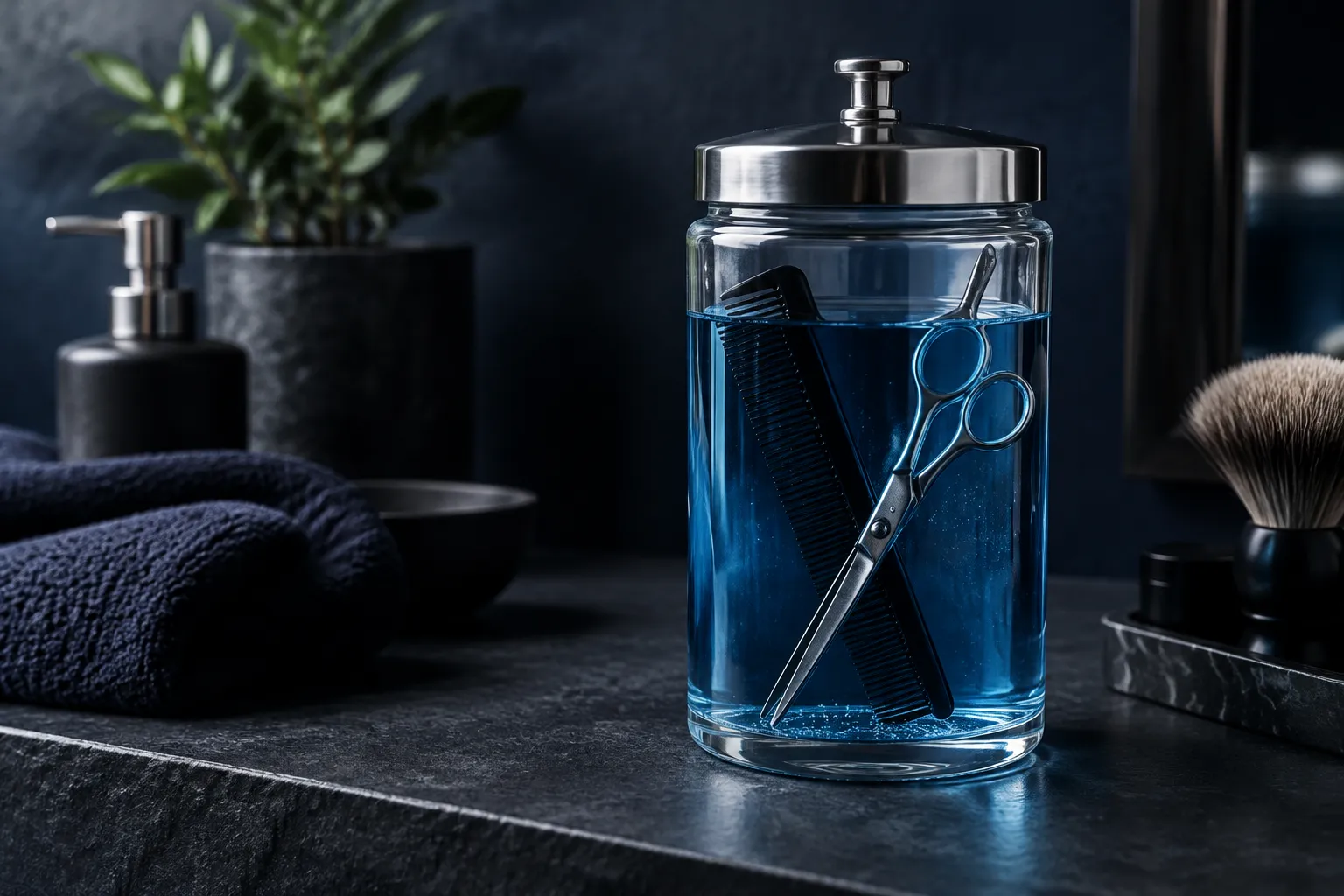
- Immerse: Fully submerge non-porous tools (plastic combs, guards, metal shears) in the blue solution.
- Time it: Leave them for exactly 10 minutes.
The ten-minute clock is where most shortcuts happen, and it is the one rule with no flexible version. A comb that sat in the solution for ninety seconds came out wet, not disinfected. Set a timer on your phone, or better, use two jars in rotation: one soaking while the other is being emptied and refilled, so a busy day never pressures you into a short soak.
Video credit: Chretien Gerada
Heads up
Clean, soak and rinse between every client. Ten minutes is all you need. Leaving shears in the solution overnight or for hours leads to rust and dulls the edge.
What never goes in the jar
Barbicide is for hard, non-porous surfaces: metal, glass and hard plastic. Anything that absorbs liquid cannot be disinfected, only discarded.
- Porous items: neck strips, towels, tissues, cotton, and anything absorbent. These go in the trash after one client, never in the jar.
- Electric tools: clippers, trimmers and dryers have motors and switches that immersion destroys. Disinfect detachable blade heads in the jar, and treat attached blades with a cooling disinfectant spray instead.
- Electrical cords and plugs: keep the liquid away from them entirely.
- Leather or wooden handles: prolonged soaking dries, cracks or swells them. Wipe handles down rather than submerging the whole tool when the handle is not rated for immersion.
Where the UV cabinet fits
UV cabinets sit next to the Barbicide jar in a lot of shops, and the question is always the same: which one does the real work? The answer is that they do different jobs. Immersion in an EPA-registered hospital disinfectant is the standard for implements that have touched a client. A UV cabinet sanitizes what light can reach, quickly and without chemicals, which makes it a strong holding step: tools come out of the jar, get rinsed and dried, then sit sealed in the cabinet until the next client.
What a cabinet cannot do is replace the scrub and the soak. Light only treats what it touches, and hair or product film blocks it. Our full UV sanitizer vs Barbicide comparison lays out where each method belongs, and how to disinfect hair clippers covers the electric tools that never see the jar at all.
Pro tips for tool longevity
- Don’t Over-Soak: Leaving shears in Barbicide overnight or for hours will lead to rust and dull the edge of your blades. 10 minutes is all you need.
- Rinse and Dry: After the 10-minute soak, rinse your tools in plain water and dry them with a clean towel. Storing them wet can cause spotting and corrosion.
- Change Daily: You must replace the solution in your jar every day, or sooner if the liquid becomes cloudy or you see hair floating in it.
- Oil after drying: Steel that just survived a chemical bath and a rinse wants a drop of clipper oil on pivots and screw heads before it goes back in the drawer. The routine in our clipper blade care guide pairs directly with this one.
Video credit: Patterson High School Cosmetology
A Barbicide day from open to close
Tie the routine to the shop clock and it stops feeling like a chore:
- Opening: Mix a fresh jar, water first then concentrate, and set it on the station with a clean towel and a timer beside it.
- Between clients: Used tools go straight into pre-clean, then the jar, and you work the front of the house while the timer runs. Ten minutes later: rinse, dry, drawer or cabinet.
- Lunch: Glance at the jar. Cloudy, discolored, or floating hair means dump, rinse, and remix even if the morning was light.
- Close: Empty the jar, rinse it, dry it upside down, and restock concentrate and neck strips for tomorrow. Oils and blade care come last so tools sit overnight protected.
The two products that run the routine
The whole system runs on two purchases, and both last a shop for months.
The concentrate. The gallon jug of Barbicide concentrate in the block above is the EPA-registered hospital disinfectant everything in this guide assumes (EPA Reg. No. 954-11). The label’s front panel describes it exactly: “Hospital Germicide, Pseudomonacide, Fungicide and Virucide,” with an anti-rust formula, which is why it is safe for daily immersion where generic disinfectants are not. One gallon of concentrate makes many gallons of working solution at the 2-to-32 ratio, so the per-day cost of running a jar comes out to pocket change.
The jar. The large glass immersion container in the closing block is the standard 37oz jar with a stainless steel lid and tray. The tray matters more than it looks: it lifts combs, guards and shears out of the solution at the ten-minute mark without fishing around in blue liquid, and the lid keeps debris out between soaks. Glass also shows the solution’s color honestly, so a tired mix is visible instead of hidden inside colored plastic.
Buy both once, then the only recurring line item is concentrate refills and the ten minutes of attention a day. Shops that keep a spare jar on the shelf never lose the rhythm when one cracks, which is the only equipment failure this routine really has.
Common mistakes that cost money
- Eyeballing the mix. Off-ratio solution either burns tool coatings or under-performs. Use a measuring cup, every time.
- Short soaks on busy days. Ninety seconds in blue water is not disinfection. Rotate two jars instead of cutting the clock.
- Skipping the rinse. Residual disinfectant on shears irritates skin and corrodes finishes. Rinse and dry after every soak.
- Stretching the solution. A jar that looks blue can still be loaded with debris. Change it daily regardless of how it looks.
- Storing tools wet. Water left in a closed drawer does the rusting that the jar got blamed for.
FAQ
How long do tools need to stay in Barbicide?
Ten minutes, the label contact time for the standard working solution. Use a timer rather than guessing.
Can I leave shears in overnight?
No. Prolonged soaking corrodes steel and dulls edges. Immerse for the contact time, rinse, and dry.
How often should the solution be changed?
Every day, and sooner if it turns cloudy, discolored, or collects visible debris.
What about clippers and trimmers?
Never the whole tool. Detached blade heads can be immersed; attached blades get a cooling disinfectant spray. The walkthrough is in our clipper disinfection guide.
Do combs and brushes count?
Hard plastic combs and guards can be immersed once they are clean. Natural-bristle brushes and anything absorbent should not go in the jar.
By following these steps, you stay compliant with state board regulations and keep your shop running safely. Grab your fresh supply below to keep your station ready for the next chair.
Buy Barbicide Concentrate on Amazon


