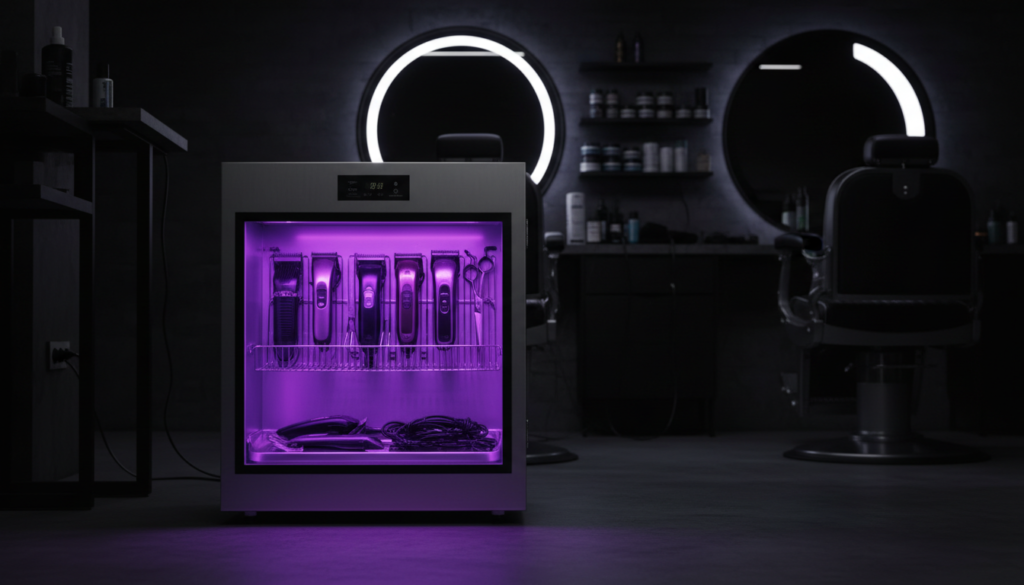
If you run a station, you already know the two tools everyone argues about for disinfection: the blue jar of Barbicide and the glowing UV cabinet. The claims on both sides get loud, so here is the clear version. Barbicide is a hospital-grade disinfectant that kills germs, fungi and viruses by immersion, and it is what professional barbers actually use for proper tool disinfection. UV cabinets use ultraviolet light to sanitize surfaces without chemicals, and they shine as a between-clients holding step. Used correctly, each has a job. Used incorrectly, neither protects anyone. This guide follows a proper Barbicide setup from a working barber and lays out exactly where each method belongs in your day.
Key Takeaways
- Barbicide is a hospital-grade disinfectant that kills germs, fungi and viruses by immersion. It is the professional standard.
- The mix is simple: two ounces of Barbicide concentrate in 32 ounces of water, mixed to a light blue tint.
- Cleaning comes before disinfecting. Scrub off hair, pomade and gel first, because disinfectant cannot penetrate debris.
- UV cabinets sanitize without chemicals and are great for quick turnaround, but they are a supplement, not a replacement for proper immersion disinfection.
- Never submerge the whole clipper. Disinfect blade heads and non-electrical tools; use a cooling disinfectant spray on attached clipper blades.
Setting up Barbicide the way pros do
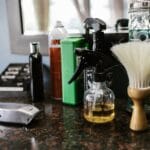
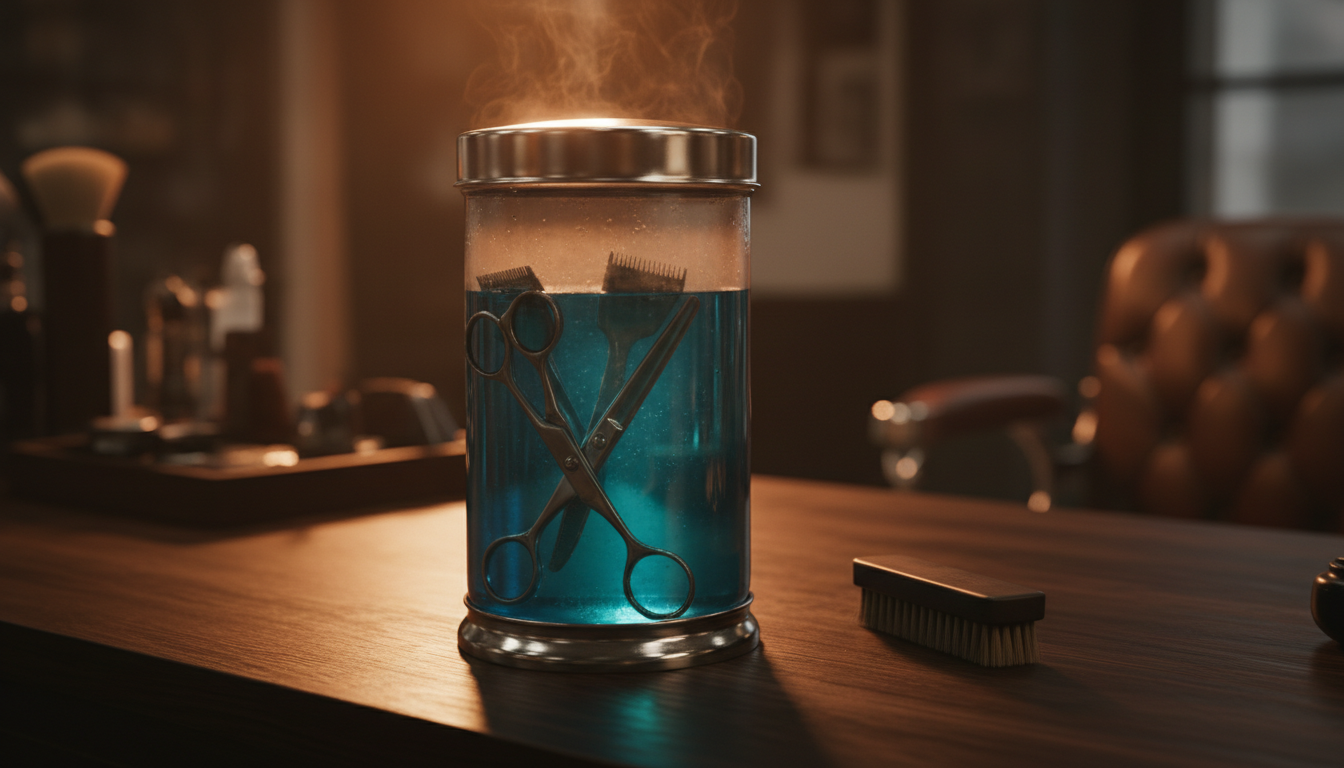
The setup shown in the video below is the standard one. Water is measured into the jar first, 32 ounces of water, then two ounces of Barbicide concentrate go in from a measuring cup and the two are mixed. The solution should settle into that familiar light blue tint. Follow the label’s listed contact time for full disinfection, which for Barbicide is typically around ten minutes of immersion.
One step people skip is the one that matters most: tools go into the jar clean. Before disinfection, every soil tool has to be cleaned and stripped of debris, all hair, pomade, gel, whatever is sitting on the surface. The barber in the video puts gloves on for this part, since the tools are dirty, and works through them with a cleaning brush and soap and water. Only then do the tools go into the solution. Disinfectant kills what it touches, not what is hidden under a film of product, so skipping the scrub turns the whole jar into theater.
Where the UV cabinet fits
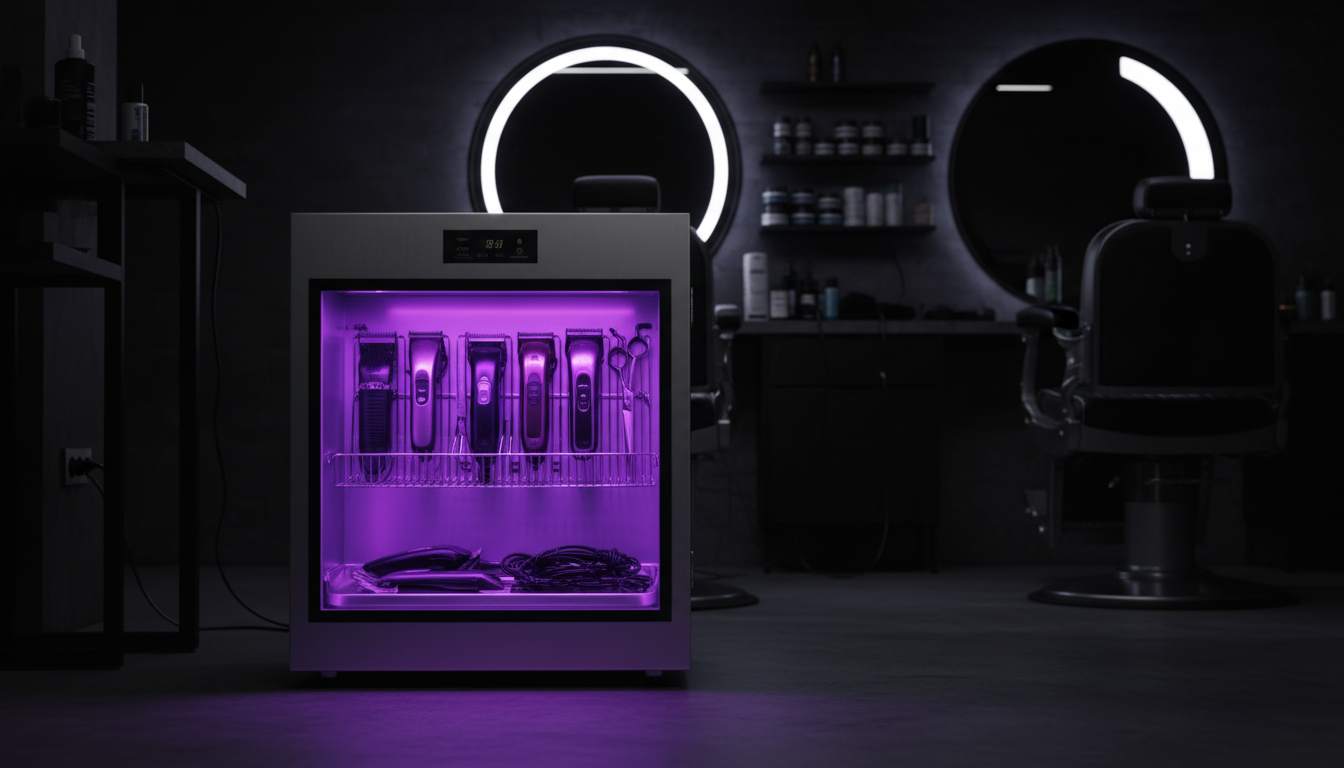
UV cabinets have earned a place in salons because they solve a different problem: speed between clients. UV-C light sanitizes surfaces in minutes with no chemicals, no rinse and no residue, which makes a cabinet ideal for the quick turnaround between two clients, for tools that should not get soaked, and for keeping freshly cleaned implements sanitary while they sit on the tray. Good cabinets run on a simple timer, and larger ones hold a full set of shears, guards and clipper heads at once. One option is the BLUETOP 12L UV tool cleaning cabinet, with a timer and a replaceable lamp.
What a cabinet does not do is replace proper disinfection. Line of sight matters with UV light; anything in shadow is not being sanitized, and the contact time required depends entirely on the machine. A honest setup uses both: scrub and immersion disinfection for tools that have touched a client, then the cabinet to hold them clean until the next service.
What never goes in the jar
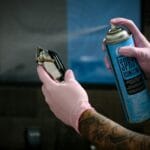
The classic mistake is dunking an entire clipper. Motors, batteries and switches are electrical and water kills them, so immersion is for blade heads you have detached, shears, guards and non-electrical implements. For the clipper blades left attached, a cooling disinfectant spray does the job: it cleans, lubricates and disinfects the teeth in seconds and cools the metal between cuts. Our guide on how to disinfect hair clippers walks through that routine step by step, and the products that make it easy are covered in our clipper maintenance supplies rundown.
The three methods, side by side
| Method | What it does | Time | Best for |
|---|---|---|---|
| Barbicide immersion | Hospital-grade disinfection of clean implements | Label contact time, typically about 10 minutes | Shears, detached blade heads, combs, guards |
| UV cabinet | Chemical-free surface sanitizing | Minutes, machine dependent | Quick turnaround, holding clean tools sanitary |
| Disinfectant spray | Cools, cleans and disinfects blades | Seconds | Attached clipper blades between cuts |
What to buy
- Barbicide Disinfectant, pint concentrate. The standard itself; one pint makes gallons of working solution.
- BLUETOP 12L UV tool cleaning cabinet. The between-clients step this guide describes: timer, replaceable lamp, room for a full set of implements.
- Andis Cool Care Plus. Five-in-one cooling spray for attached clipper blades between cuts.
For the full Barbicide routine, the complete guide in how to use Barbicide covers mixing, soaking times and daily changes, and the daily Barbicide schedule breaks down what to change and when.
FAQ
Does UV light kill the same germs Barbicide does?
A quality UV-C machine sanitizes surfaces well, but immersion in a registered hospital-grade disinfectant is the standard for implements that have touched a client. Use UV to supplement, not to replace.
How often should Barbicide solution be changed?
Daily, and sooner if it turns cloudy or discolored. A dirty solution is not disinfecting anything.
Can I leave shears in Barbicide overnight?
No. Prolonged soaking corrodes steel and damages handles. Immerse for the label contact time, rinse and dry.
Do I still need to clean tools if the UV cabinet runs a full cycle?
Yes. UV only reaches what light touches, so debris in shadows stays. Scrub first, every time.