

As an Amazon Associate, TrustedBarber earns from qualifying purchases.
Hot blade? Loud motor? Here is what the clipper makers say about it, and what you can do.
Heat
Keep the blade cool
- Oil the blade (Wahl: reduces friction, stops pulling)
- Check blade heat often (Andis)
- Use the maker’s cooling product, then oil
Noise
Quieter clippers: what makers claim
- JRL calls the Onyx and the Ghost ultra-quiet
- StyleCraft says its metal housing dampens noise
- No maker page we read lists decibels
Oil first, brush second, check the blade before it touches skin.
Our top picks
In this guide
- Quick Answer
- Why Clipper Blades Get Hot
- What the Makers Tell You to Do
- Cooler-Running Blade Claims
- Why Clippers Are Loud
- Easy Ways to Cut Heat and Noise
- What to Check Before You Buy
- Too Noisy? Wahl’s Power-Screw Fix
- Check the Blade Alignment
- A Simple Cool-Down Routine
- Cooling Sprays, Dips and Oils Compared
- When Heat or Noise Means Service
- Verdict
- FAQ
Quick Answer
We stuck to what the makers print in their own manuals and product pages. For which clippers owners call quiet, see our quietest cordless clippers guide. For blade life, see clipper blade care. Runtime is the other spec owners get wrong – see how long cordless clipper battery life really lasts.
Why Clipper Blades Get Hot
Two big makers say nearly the same thing. Wahl says oiling the blades reduces friction and keeps the clippers from pulling and snagging. Andis says that, because its clippers run at high speed, you should check blade heat often, especially on close cutting blades.
Wahl’s home guide on oiling is at wahlusa.com. Andis’ manuals carry the blade temperature note.
Quick take
Oil and brushing come first. Wahl says oiling the blades reduces friction, and a dry, dull or hair-clogged blade will still run hotter, coated or not.
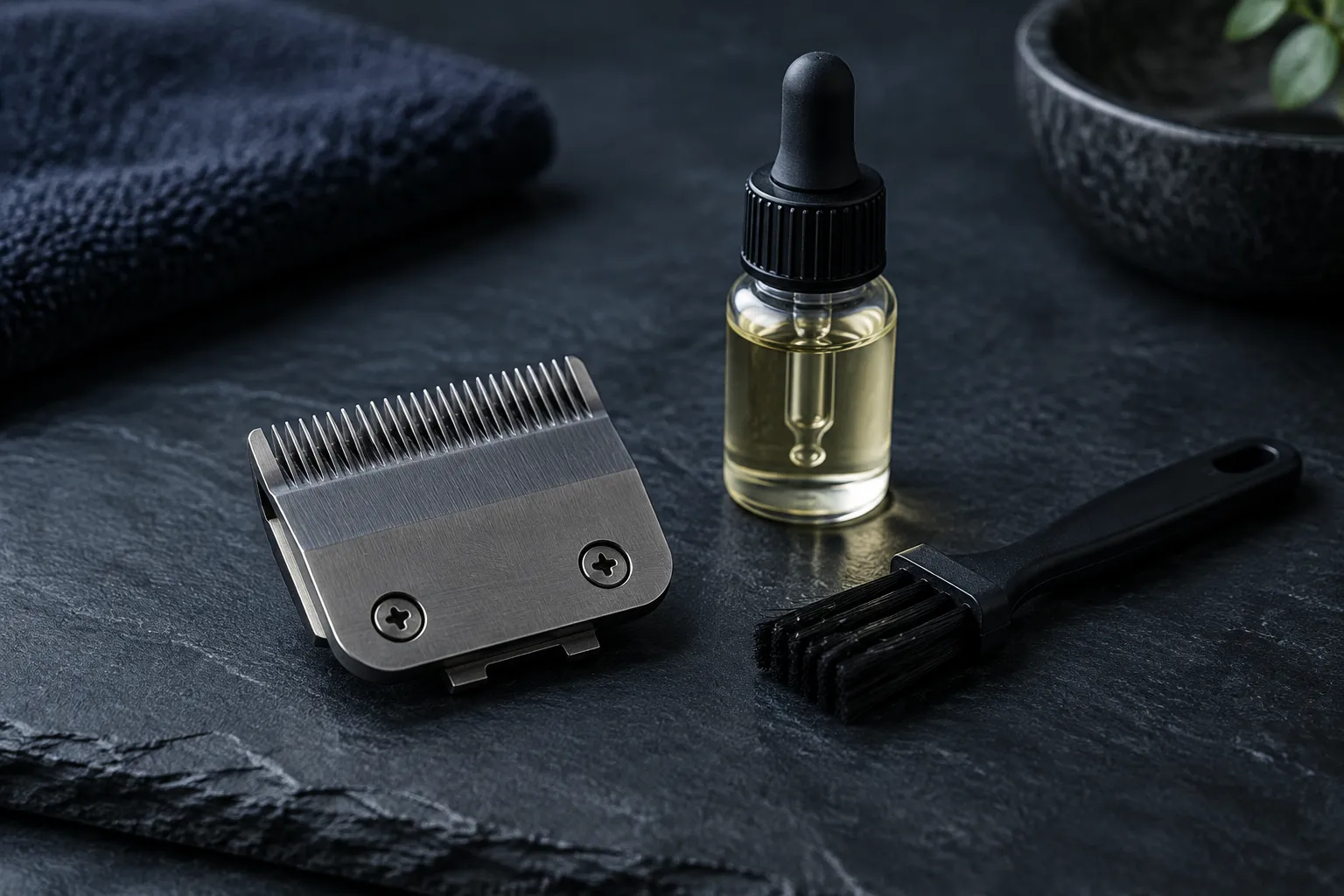
What the Makers Tell You to Do
| Maker | Guidance in its own materials |
|---|---|
| Andis | If blades are too hot, dip only the blades in Andis Blade Care Plus, or apply Andis Cool Care Plus and then Andis Clipper Oil (use-and-care manuals). |
| Wahl | Use Wahl Blade Ice to cool, lubricate and clean blades instantly. Wahl’s manual says to lubricate with Wahl clipper oil only (for example Wahl Premium Blade Oil), and warns that certain sanitizing solutions and spray lubricants may cause stress-crack damage to clippers. |
| Suprent | Lists a 7,800 RPM brushless motor it calls powerful and quiet, and ships the Mecha with a brush and oil. |
Sources: Andis and Wahl use-and-care materials and the Suprent Mecha product page, read October 13, 2026.
Cooler-Running Blade Claims
Several makers market their blade coatings as cooler running. These are maker claims, not measurements.
- JRL lists patented Cool Blade Technology on the Onyx and the JRL Ghost.
- Suprent lists a DLC blade on the Mecha that it calls rust-free and cool-running.
- Gamma+ lists DLC-coated blades on the Boosted UP, the Gamma+ Shorty and Cyborg. The Gamma+ Shorty is a different model from the Cyborg. Check the selected model and availability on the listing.
Coatings may help, but a dry, dull or hair-clogged blade will still run hotter. Oil and brushing come first.
Good to know
“Cool” and “quiet” are maker claims. We found no measurements, and makers rarely publish decibel figures.
Why Clippers Are Loud
Makers rarely publish decibel figures. JRL calls the Onyx (currently unavailable on Amazon) and the JRL Ghost ultra-quiet and vibration dampened. StyleCraft says the metal housing of the StyleCraft Instinct Metal dampens noise and absorbs vibration, and rates the noise level of both Instinct versions as moderate. A spec sheet cannot tell you how loud a clipper feels in the hand, so owner reports are more useful than a motor label.
Easy Ways to Cut Heat and Noise
- Oil the blade before every use with the maker’s oil.
- Brush hair out of the blade after each cut.
- Check blade temperature on your wrist before it touches a scalp.
- Replace a dull or damaged blade. See our blade care guide for signs.
- Do not use sprays the manual warns against. Wahl lists certain sanitizing solutions and spray lubricants as a risk to the housing.
Heads up
Use the maker’s own oil. Wahl’s manual warns that certain sanitizing solutions and spray lubricants may stress-crack the clipper housing.
What to Check Before You Buy
- Look for the maker’s own cooling and oil recommendations in the manual.
- Treat “quiet” and “cool” as claims unless a source measures them.
- Check that cleaning sprays are approved for your model.
Too Noisy? Wahl’s Power-Screw Fix
Many corded Wahl home clippers have a small adjustment called the power screw, and Wahl’s own home products quick start guide treats a loud clipper as something you can usually fix in a minute. Wahl’s first step for a clipper that’s “too noisy” is to oil the blades. Its second explains the rest: the power screw is set for peak efficiency at the factory, but if the voltage in your home is too high or too low, the screw may need adjusting.
Wahl’s steps for reducing noise (what it calls excessive clattering):
- Peel back the soft grip sleeve on the right side of the clipper to expose the power screw.
- Turn the clipper on.
- Use the end of the detail brush or a screwdriver to turn the power screw counterclockwise until the clatter goes away.
Wahl also gives a “max power” setting: with the clipper on, turn the screw clockwise until you hear clattering, then turn it back counterclockwise until the clattering stops. That puts the motor at its strongest quiet point. Not every clipper has a power screw, so check your own manual before you go looking for it.
Good to know
Wahl’s guide says the power screw may need adjusting when home voltage runs high or low. That’s why the same model can sound different from one house to the next.
Check the Blade Alignment
A blade that has shifted after a drop or a cleaning can feel harsher on the skin. Wahl’s pro blog post on aligning a 2-hole blade sets out the check:
- Slightly loosen both blade screws, just enough to shift the blade, and move the blade adjustment lever to the full forward position.
- Line the bottom blade up with the top blade. Wahl says the points of the top blade’s teeth should sit 1/32 to 1/16 inch back (about the width of a dime) and parallel to the points of the bottom blade’s teeth.
- The far-left tooth of the top blade must sit on the first small tooth of the bottom blade.
- Tighten the screws.
- Plug the clipper in, switch it on and off a couple of times, and recheck the alignment.
Wahl gives the reason in the same post: the setback stops the clipper cutting too close and keeps the moving top blade from touching the skin. If you’d rather not adjust a blade yourself, our clipper blade care guide covers when a replacement makes more sense.
A Simple Cool-Down Routine, Step by Step
Put the makers’ advice together and you get a short routine for any clipper, before, during and after a cut.
- Brush first. Wahl says to brush away trapped hair with the cleaning brush. A tool like the Andis 12415 Blade Cleaning Brush reaches between the teeth.
- Oil. Wahl’s method is a drop of oil at each top corner of the blade and one at the foot, then run the clipper so the oil spreads along the blade, and wipe off the excess with a clean cloth.
- Feel the blade during the cut. Andis’s manuals say to check blade heat often, especially on close-cutting blades.
- Cool it with the maker’s product. Andis’s manuals name its Cool Care Plus spray or a Blade Care Plus dip, followed by clipper oil. Wahl sells Blade Ice for the same job.
- Clean, oil and store dry. Wahl suggests oiling after you clean the blade so it’s lubricated in storage, which helps avoid corrosion.
Cooling Sprays, Dips and Oils Compared
Each of these comes from a clipper maker and does a slightly different job. Here’s what each maker says about its own product.
| Product | What the maker says | Type |
|---|---|---|
| Wahl Blade Ice | Cools blades instantly, dries quickly, reduces friction, heat and blade wear; safe on most plastics | Spray |
| Andis Cool Care Plus | 5-in-1: disinfects, cools, lubricates, cleans and prevents rust | Spray |
| Andis Blade Care Plus | Jar you dip a detachable blade into to rinse away hair and buildup | Dip |
| Wahl clipper oil | Lubricates, prevents rust and helps the clipper run cooler | Oil |
Sources: Wahl’s Blade Ice page and how-to page, Andis’s Cool Care Plus page, and Andis’s Blade Care Plus listing, read October 31, 2026.
A spray suits an all-in-one clipper whose blade stays on, like the cordless clippers above. The Andis Blade Care Plus jar suits detachable blades you can lift off and dip. Neither replaces oil, so finish with a few drops of Wahl Premium Blade Oil after either one.
When Heat or Noise Means Service
Most heat and noise problems come down to oil, hair buildup or setup. Wahl’s own FAQ answer is blunt: if you don’t oil a clipper, over time it can slow down, get a little noisy and even start to rust. A few signs point past the basics:
- The clatter stays after oiling and adjusting. On a power-screw clipper, if Wahl’s counterclockwise turn doesn’t settle it, the problem is likely inside the motor.
- The housing is cracked. Wahl’s manual warns that some sanitizing solutions and spray lubricants can stress-crack the housing. A cracked body can rattle, and it’s a sign to stop using that spray.
- The blade stays hot even when clean and oiled. Re-check the alignment above, then compare the blade with a new one. A worn or damaged blade is a cheap part to replace.
For a clipper still under warranty, contact the maker’s service department before opening anything up. Our guide to clippers pulling hair covers the closely related snagging problem.
Verdict
Heat is mostly a maintenance problem, and noise is often one too. Brush the blade, oil it the way Wahl describes, check the temperature on your wrist, and cool it with the maker’s own product: Wahl Blade Ice for Wahl clippers or Andis Cool Care Plus for Andis. If a Wahl power-screw clipper still clatters, turn the screw counterclockwise until it stops.
If you’re shopping for a quieter clipper, treat “ultra-quiet” as a maker’s claim. The StyleCraft Instinct Metal and JRL Ghost are both marketed on low noise, but no maker page we read publishes decibels.
FAQ
Why does my clipper blade get hot? Friction. Wahl says oiling reduces friction and helps the clipper run cooler, and Andis says to check blade heat often because its clippers run at high speed.
Can I spray my clipper with any coolant? Use the maker’s product. Wahl’s manual warns that certain sanitizing solutions and spray lubricants may stress-crack the clipper housing and says to use Wahl clipper oil only for lubrication. Andis names its own Cool Care Plus and Blade Care Plus.
Do DLC blades run cooler? Makers such as JRL, Suprent and Gamma+ market coated blades as cooler running. We found no measurements, so treat it as a claim.
Which clippers are quietest? See our quietest cordless clippers guide for what owners report. Makers rarely publish decibel levels.
Why is my Wahl clipper suddenly so loud? On Wahl home clippers that have a power screw, Wahl’s quick start guide says excessive clattering can come from household voltage that is a little high or low, and the fix is a counterclockwise turn of the power screw with the clipper running until the clatter stops. Oil the blade first, because Wahl also says a clipper that isn’t oiled can slow down and get noisy.
How often should I oil clipper blades? Wahl’s how-to page suggests oiling before you use the clipper or after every use. Its home quick start guide gives a lighter minimum for household clippers: three drops on the front of the blade and one on each side every few haircuts.
Can I use WD-40, olive oil or hair oil instead of clipper oil? Wahl says it doesn’t recommend WD-40 or olive oil, and its quick start guide says not to use hair oil, grease or any oil mixed with kerosene or a solvent. A 4 oz bottle of Andis Clipper Oil or Wahl’s own oil lasts a long time.
Can I rinse a hot blade under the tap? Only if the blade is sold as rinseable. Wahl’s quick start guide says not to clean its corded home clippers with running water; use the brush instead. Wahl’s how-to page says a rinseable blade should be removed, rinsed and dried thoroughly to prevent rust.
Does a quieter clipper cut worse? Not necessarily, and no maker page we read links noise to cutting power. On Wahl’s power-screw clippers, the “max power” setting is the point just before the clatter starts, so a well-adjusted clipper is both as strong and as quiet as that motor gets.


