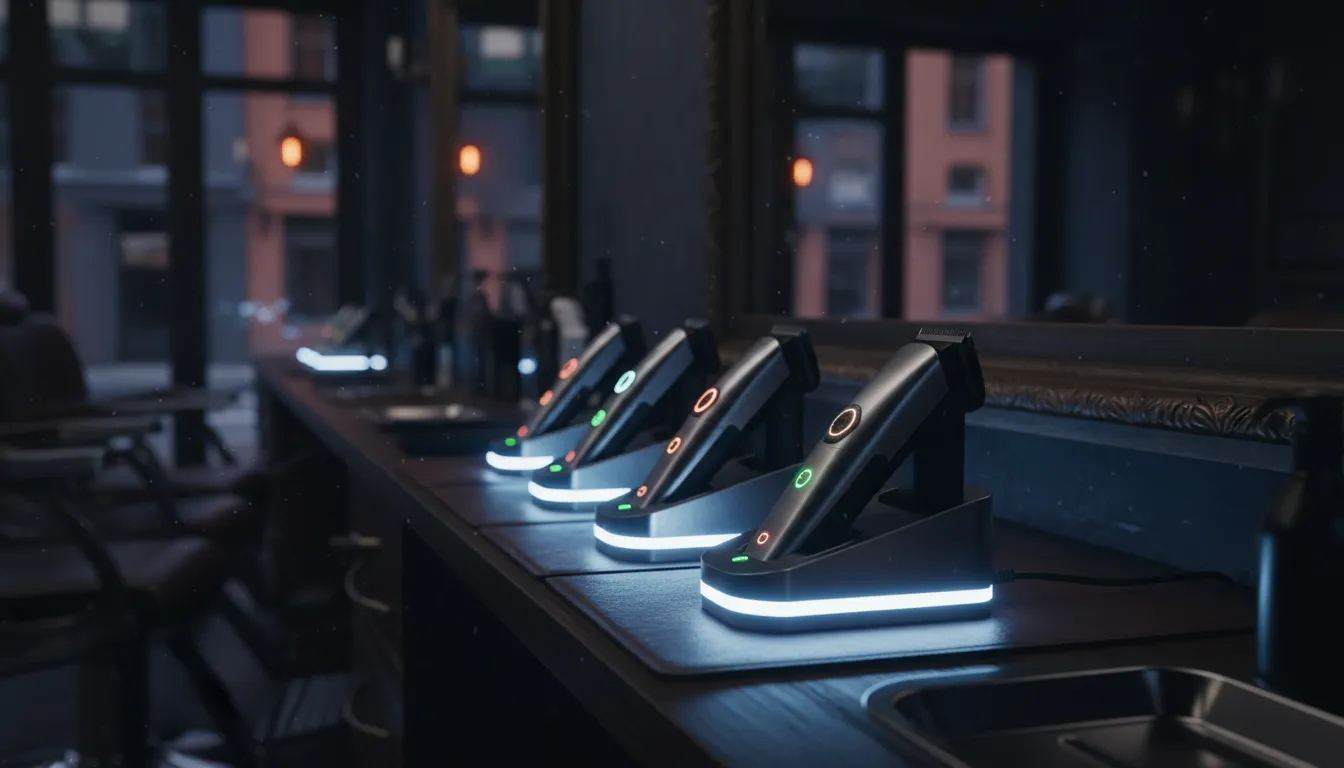
Every cordless clipper box promises the same dream: hours of runtime, a full day of cuts on one charge. The reality behind the chair is different, and it matters when you are picking your daily driver. A recent brushless clipper from Gamma and StyleCraft advertises six hours of runtime, and the barber who tested it daily for two weeks reported getting closer to four or five in real use. That gap between the sticker and the chair is normal, and understanding why it happens is the difference between a clipper you trust and one that dies mid-fade. Here is what those numbers actually mean and how to get the most out of every charge.
Key Takeaways
- Advertised runtime is measured under ideal conditions. Expect roughly two thirds of the claim in daily shop use.
- Brushless motors hold their torque as the battery drains, so the cut stays strong until the charge is nearly gone.
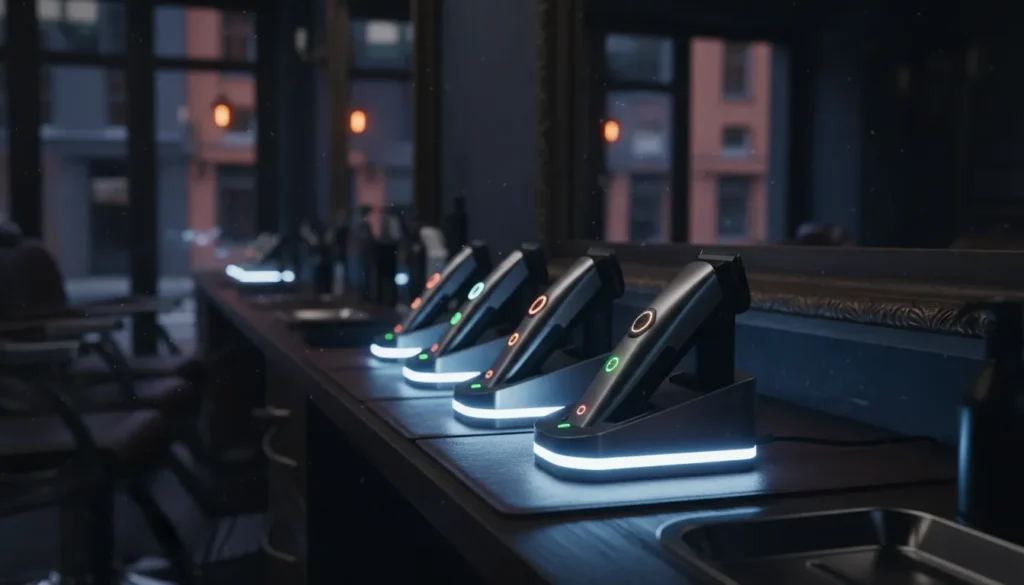
- Rapid charge features matter more than headline hours. 75 minutes on a dock buying you three hours of work saves a whole service.
- Heat, thick hair, high speed settings and a tired battery all shorten real runtime.
- Lithium packs age. Plan on replacing the tool or its battery after two to three years of daily professional use.
In this article
Why the advertised number never matches your day
Runtime figures are measured with the motor running continuously at moderate load, no hair, no resistance. A barbershop day is the opposite: short bursts, heavy load, thick sections, the lever working. Real-world testing on the Gamma clipper in the video below bore this out. The package claimed six hours of runtime from a 180 minute charge, with a rapid charge option of 75 minutes for three hours of use. In day-in day-out cutting, the barber saw more like four to five hours. That is still excellent, enough for a full day of appointments, but it is not six, and budgeting for the sticker number is how clippers die mid-cut.
The same pattern holds across brands. Treat any advertised runtime as a ceiling, and mentally divide by about 1.5 for real work.
What actually drains a clipper
Load is the big one. Coarse, dense hair makes the motor work harder and pulls the battery down faster than fine hair ever will. Speed settings matter too: running at max RPM all day burns charge you often do not need, so use the highest setting only when the hair demands it. Cold is underrated, lithium chemistry delivers less capacity when the tool sits in a cold car overnight. And age is inevitable: after a few hundred charge cycles the pack simply holds less, which is why a clipper that ran five hours in year one runs three and a half in year three.

Charging habits that extend battery life
Lithium batteries are happier in the middle of their range than at the extremes. Three habits cover it. First, avoid running the pack to zero every single day; deep discharges age the cells faster than topping up. Second, do not store the tool on a hot charging dock at 100 percent for weeks; if you are away from the shop, leave it around half charged. Third, use the rapid charge feature for top-ups between clients rather than full recharges, since shorter, shallower charges are gentler on the pack. Most modern pro clippers include charge protection, so leaving them docked overnight is fine, but the habits above still stretch the pack’s useful years.
Three proven cordless options
- Wahl 5-Star Magic Clip. The most popular cordless clipper in barbershops for a reason: interchangeable battery system, solid all-day cadence when paired with a charged spare.
- Wahl 5-Star Vanish. A brushless trimmer-style tool with fast charging, and a favorite for barbers who want quick top-ups between services.
- Wahl 5-Star Cordless Senior. The heavyweight for full days of fades, with the strongest motor in this trio and runtime to match a serious book of business.
For a deeper dive on how these stack up head to head, see our professional cordless clipper roundup and the Magic Clip vs Senior 2.0 comparison.
What to look for, at a glance
| Clipper | Motor | Real-world expectation | Charge feature | Price |
|---|---|---|---|---|
| Wahl Magic Clip | Rotary | Most of a workday with a charged spare | Quick charge on dock | See listing |
| Wahl Vanish | Brushless | Full day of trimmer work, fast top-ups | Rapid charge | See listing |
| Wahl Cordless Senior | High-torque rotary | Full day of heavy fading | Standard dock charge | See listing |
Prices are not listed here; check the current listing.
Keep a backup, not a panic
The professionals’ answer to battery anxiety is not a bigger battery, it is redundancy. Keep two tools on docks so one is always at full charge, and rotate them through the day. If your book is heavy on coarse hair or you run high speed settings, a third tool or a corded backup for walk-ins covers the worst case. Quiet operation is a bonus worth checking when you expand the rotation, and our quietest cordless clippers guide ranks the options that will not rattle a waiting room.
FAQ
Is it bad to leave my clipper on the charger overnight?
Modern pro clippers have charge management that stops overcharging, so overnight docking is fine. What ages the pack faster is heat, so avoid charging in direct sun or on a warm appliance.
Can I replace the battery in my clipper?
On some models, yes. Wahl’s interchangeable battery system is the easiest example, and a few brands sell service packs. On sealed tools, battery replacement means a service center or a new unit, so factor longevity into the purchase.
How many years will a clipper battery last?
With daily professional use, expect two to three strong years before capacity loss becomes noticeable, longer for home users who cut a few times a month.
Why does my clipper die fast even after a full charge?
That is the signature of an aged pack or a motor dragging against dirty, dry or misaligned blades. Clean, oil and check the blade first, because mechanical drag masquerades as battery failure. If the blade is clean and it still collapses quickly, the pack has reached the end of its life.