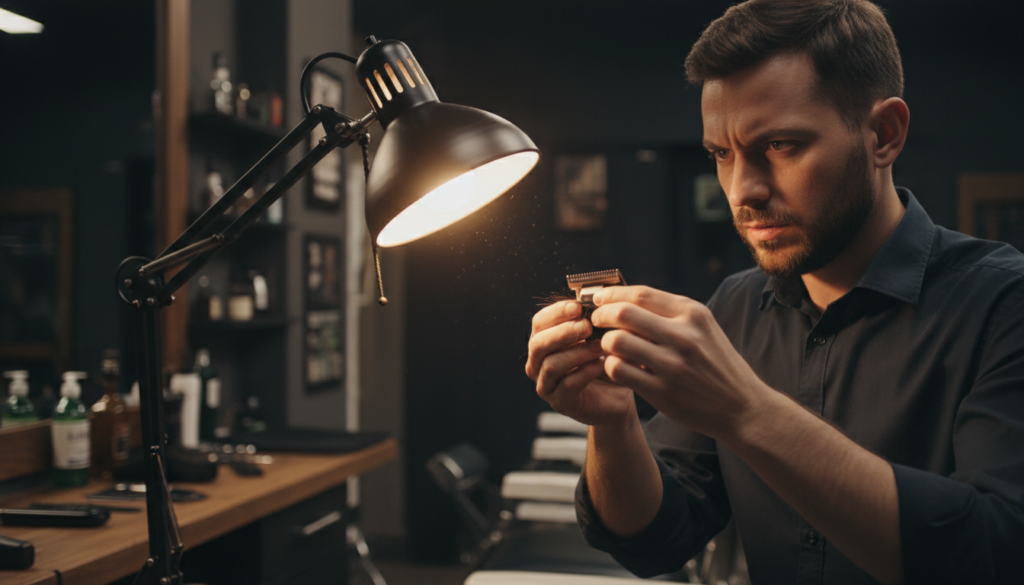
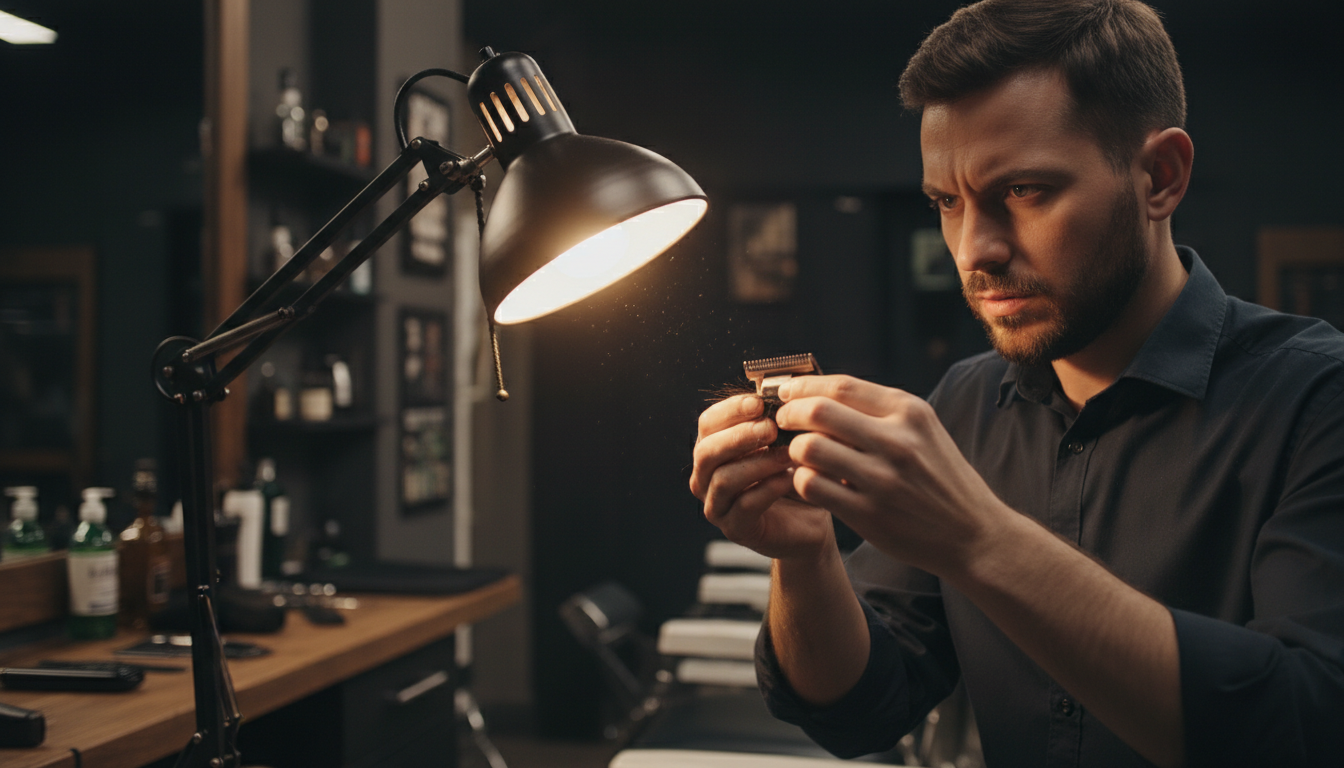
A clipper that pulls hair instead of cutting it is the most frustrating failure in the shop: it tugs, it snags, it leaves patchy lines, and it hurts the person in your chair. The good news is that pulling almost always has a mechanical cause you can find and fix yourself in under twenty minutes. Professional barber Larry the Barber Man demonstrated the full diagnostic on a Wahl Senior that was pulling and cutting patchy, working through every suspect by process of elimination until the real culprit, blade tension, turned up. This article walks through the same sequence so you can fix yours.
Key Takeaways
- Pulling has a short list of causes: dirty or dry blades, low power, slanted or misaligned blades, worn parts, or incorrect blade tension.
- Diagnose by elimination. Clean and oil first, because those free fixes solve most cases.
- Blade tension is how tightly the cutting blade is squeezed against the comb blade. Too loose lets hair in; too tight stops the blades from moving.
- On many clippers the tension is adjustable with a screwdriver and about two pounds of pressure on the armature.
- If cleaning, oiling and tuning do not fix it, the blade or drive is worn and replacement is cheaper than endless frustration.
Start with the free fixes
Before you open anything up, eliminate the boring causes. Run the blade teeth across a stiff brush until no hair is packed between them, then check the underside of the cutter too. Hair compacted in the blade gap is the number one reason clippers tug. Next, oil: two or three drops at the teeth and one on each side rail, run it for five seconds. A dry blade drags instead of slicing, and the fix costs about six dollars: Wahl Premium Blade Oil is the bottle most pros keep at the station. If you are oiling properly already, good, but also check you are using real clipper oil, not anything that came in a kitchen drawer.
Then power. A cordless clipper at a low battery sags in torque long before it dies, and sagging torque feels exactly like pulling. Charge it fully and test again. Corded units can lose power from a damaged cord or a power screw that has drifted out of spec.
For the free fixes
A brush and a few drops of oil are the first things to try.
What blade tension actually is
Tension is the word barbers use for how tightly the cutting blade is pressed against the comb blade. If the tension is too low, hair gets in between the blades and impairs cutting, which feels like tugging. If the tension is too tight, the blades cannot move at all and the clipper stalls. The performance sweet spot is in the middle, and on a clipper like the Wahl Senior it is set by the position of the armature, the arm that drives the cutter left to right.
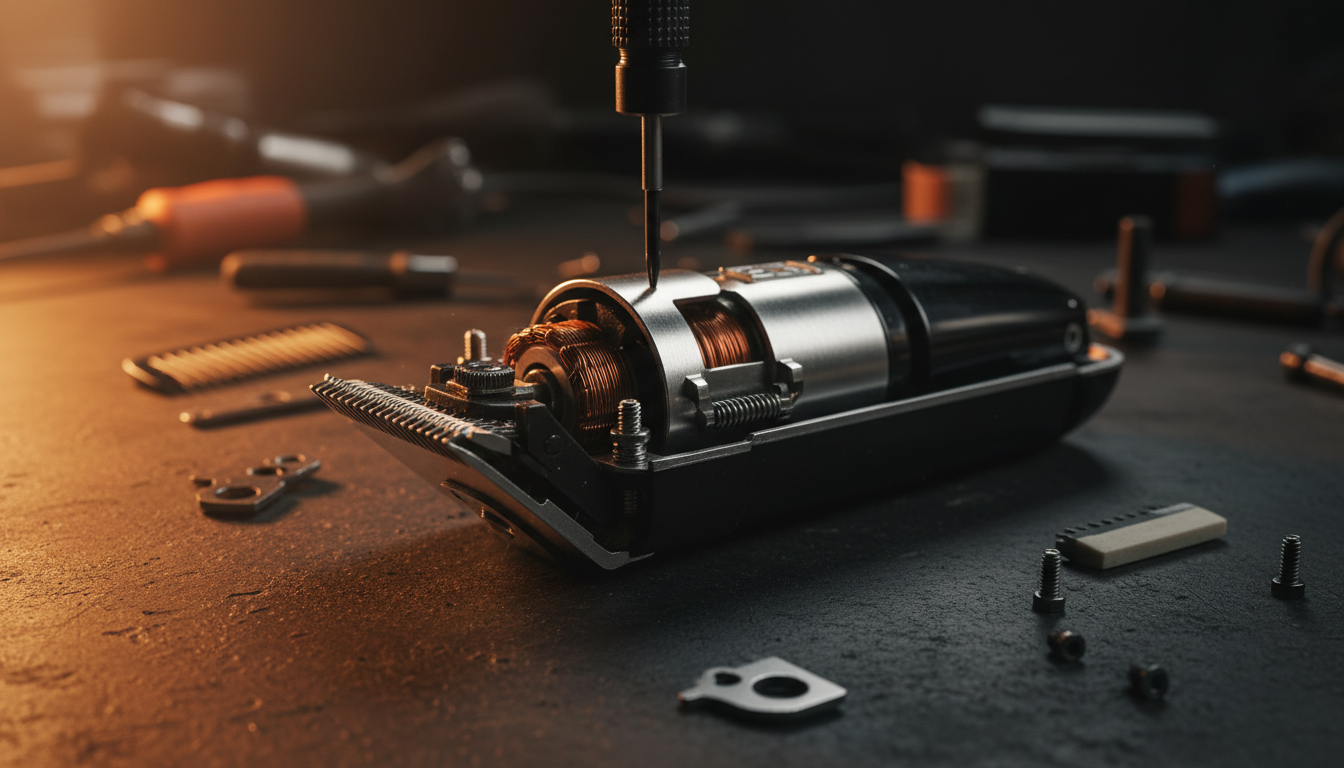
The tension fix, step by step
This is the adjustment Larry made on the pulling Senior, and the same principle applies to most similarly built clippers:
- Open the housing. Remove the case screws and set them on a corrugated rubber mat so they do not wander off.
- Expose the armature screws. On the Senior these are two star, or Torx, screws down the side of the drive assembly. Important detail: these turn opposite to normal screws. Clockwise loosens, counterclockwise tightens.
- Loosen both. Just enough to free the armature.
- Re-apply tension. Press down on the right-hand part of the armature with about two pounds of pressure. If the armature were a kitchen scale, you would be pressing to the two-pound mark.
- Hold and retighten. Keep the pressure on while you snug the screws back down. You will feel the spring fighting you. Do not overdo the final tightness, because too much tension locks the blades.
- Reassemble and test. Bolt the housing back on and run it through some hair. On the clipper in the demo, the before test tugged noticeably and the after test glided.
Work over a mat, take your time, and photograph each stage on your phone so reassembly is painless.
If tension was not the problem
There is a short list of remaining suspects. Slanted blades: both the cutting blade and the comb blade need to sit flat and parallel. A blade that has taken a knock can ride at an angle and pluck hair at one end of the stroke. Worn drive parts: the fork, lever or bearing that converts motor motion into blade motion wears out, and the symptom is exactly this, weak stroke and pulling. At that point a replacement blade or drive kit costs a fraction of a new clipper. Wrong tool for the hair: a light-duty clipper on coarse, dense hair will always drag. If your clients skew coarse, step up to a machine built for it.
Symptom to fix, at a glance
| Symptom | Likely cause | Fix | Cost |
|---|---|---|---|
| Tugging everywhere, blades look dry | No oil / hair packed in teeth | Brush out, oil, retest | Low |
| Pulls worse as the haircut goes on | Battery sag | Full charge, or keep a spare charged | Free |
| Pulls at one end of the blade only | Slanted or misaligned blade | Realign, replace if bent | Varies |
| Weak stroke, patchy cut, freshly oiled | Low blade tension | Armature tension adjustment | Free |
| Loud clacking, no cutting | Worn drive or broken fork | Replace blade drive kit | Low |
Keep it from coming back
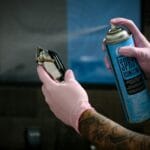
Pulling is mostly a maintenance failure. Oil every two to three cuts at home, daily if you cut for a living, and deep-clean the blade when you do. Our guides on how often to oil hair clippers and clipper blade care, oil types and replacement cover the schedule in detail. Keep a cooling disinfectant spray at the station too, since heat built up in a dry blade makes dragging worse; a can of Andis Cool Care Plus covers cooling and disinfecting in one step, and a blast of Wahl Blade Ice brings a hot blade back down mid-cut, and take care of the machine in the chair: the same tune-up logic applies to the Wahl Senior 2.0 and most pro clippers, and if your machine is beyond tuning, the Wahl 5-Star Cordless Senior is the dependable replacement. For coarse hair clients, pair the routine with the advice in our coarse hair clipper guide.
Keeping blades cool and clean
The cooling disinfectants named above.
FAQ
My brand new clippers pull hair. Is it defective?
Sometimes, but more often the factory blade set is slightly off or the blades shipped with a protective film still in place. Clean, oil and check alignment before returning them. If a bad batch slipped out, exchanging them is the right call.
Can pulling damage the clipper?
It is the other way around. A dry or mistuned blade pulls first and then wears faster. Fixing the cause early protects the blade steel.
How often should clipper blades be replaced?
With daily oiling and cleaning, pro blades often run a year or more. Replace when sharpening no longer restores the cut, or when teeth are chipped or corroded.
Does pulling mean my clipper needs sharpening?
Often, yes. A dull edge tugs instead of slicing. Try cleaning and oiling first, and if it still pulls, sharpen or replace the blade.