Wahl Peanut Review: The Palm-Size Clipper That Earns Its Spot on Professional Stations
Disclosure: this article contains Amazon affiliate links. As an Amazon Associate we earn from qualifying purchases, at no extra cost to you. It does not change what we recommend.
In this article
The Wahl Peanut has been quietly winning second-place votes in barber tool conversations for two decades, and Brio Product Group’s hands-on test and review of the Peanut shows exactly why: a tool the size of a lighter that cuts like a legitimate clipper. Wahl’s own channel demonstration (watch it here) makes the same case from the manufacturer’s side. This review puts the Wahl Professional Black Peanut Trimmer through its paces as a working tool, because that is the only context where its odd size makes sense, or fails to.
What the Peanut Is
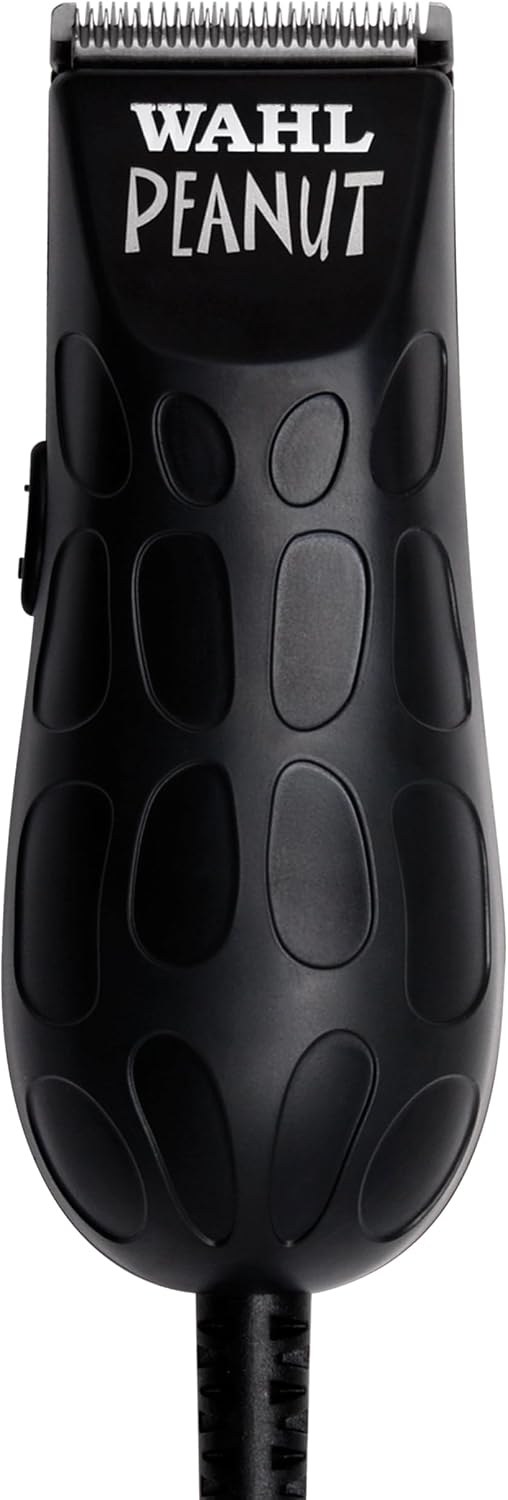
The Peanut is a four-inch clipper-slash-trimmer powered by a full rotary motor, the same motor class that drives full-size professional machines, packed into a housing smaller than a deck of cards. It weighs almost nothing, runs corded, and takes a detachable snap-on blade that pops off for cleaning and swaps in seconds. The kit includes four attachment combs, blade oil, a cleaning brush and a blade guard, which is a complete working setup rather than a sample pack. In a category where “mini clipper” usually means a toy-grade motor in a cute body, the Peanut’s premise is the opposite: full motor, minimal housing.
Cutting Performance
The surprise for anyone who has not used one is how un-mini the cutting feels. The rotary motor holds speed through dense hair without the bogging that plagues hobbyist trimmers, and the snap-on blade cuts close enough to serve as a genuine detailing tool on necklines, sideburns and edge-ups. Brio’s test highlighted the same trait working barbers report: the Peanut does not replace a full-size clipper for bulk work on a thick head of hair, but for the majority of detailing, beard shaping and touch-up work, the cut quality is indistinguishable from machines three times its size. On facial hair it is arguably better than a full-size clipper, because the compact head sees around the chin and jaw hinge without the bulk fighting your hand.
Barber tip: the Peanut loves tight spacing. Zero-gap it, run it as your edger, and keep a full-size clipper for bulk. Trying to make the Peanut a one-clipper tool is the only way people end up disappointed in it.
As a clipper, the four attachment combs take it from close-crop through longer guard lengths, and it will happily buzz a full head of average-density hair. Where it meets its limit is volume: a dense growth or a full bulk-removal service on long hair asks more passes than a Magic Clip would spend, and that is the honest boundary of the form factor, not a defect.
The Ergonomics Case
Holding a Peanut explains its cult following. It grips between the fingers like a pen, which changes how you approach detail work: pin-line detail around the ear, the tight corner behind a sideburn, the neckline curve where a full-size clipper head is physically too wide to see what it is doing. Barbers describe it as the tool that finishes what the big machines started, and home users describe it as the tool that finally made neckline maintenance between barber visits something they actually do. The low weight also makes it the natural travel tool: it drops into a dopp kit, runs off any outlet, and covers beard, neckline and touch-up duty on a trip where carrying a full kit is absurd.
Where It Fits on a Professional Station
For working barbers, the Peanut is not a primary clipper and does not pretend to be. It is the second or third tool that pays for itself in speed: the detail pass that no longer requires switching to the T-blade trimmer for light work, the beard service that flows without a tool swap, the kid’s cut where a full-size machine intimidates and a palm-size one does not. Its snap-on blade system also makes it a practical backup: a spare blade in the drawer and the Peanut in the bag is a serviceable emergency clipper if a primary machine dies mid-shift, which every barber eventually experiences. Our best barber tools under $100 guide places it in exactly that role, and it is one of the few tools in that price bracket that is genuinely professional grade.
For the bulk work the Peanut hands off, the full-size counterpart is the Wahl Magic Clip cordless, and for pure line detail the Detailer Lithium Ion completes the trio. Peanut plus those two covers everything a mobile kit needs.
Against the dedicated detailers, the honest comparison is with the Andis T-Outliner Cordless and the Stylecraft Saber, both of which out-cut the Peanut on hard lineups and crisp edges because their T-blades are built for that single purpose. The Peanut’s counter-argument is versatility: it cuts like a light clipper and a trimmer in one palm-size body, which neither T-blade machine does. Station-wide, they are complements, not competitors.
Maintenance and Durability
Care is standard Wahl discipline: oil the blade before use, brush out the teeth, and pop the snap-on blade off for a proper clean weekly. The detachable blade is the maintenance advantage here, because removal makes cleaning and replacement trivial; replacement blades are inexpensive and stocked everywhere, and keeping one spare converts a worn blade into a two-minute fix. Durability reports from long-term owners are strong for the price class, with the usual corded-tool caveat: the cable is the failure point to treat gently, as it is on every corded machine in the industry.
Care note: the Peanut is one of the few clippers barbers still run a decade in, and the failure point is almost always the cord, not the motor. A ten-dollar cord replacement buys another ten years, so retire the cord before the clipper.
The Corded Trade-Off, and the Peanut Family
The Peanut is corded, and that is worth thinking about honestly. A cord means infinite runtime and a tool that never loses power mid-service, which is why the Peanut has survived the cordless era intact. It also means a cable at the station, which is a non-issue at a barber chair and occasionally an annoyance on a bathroom counter. Wahl now also sells the cordless Peanut Bullet for buyers who want the form factor untethered, but the original corded machine remains the value anchor of the family and the version the professional reputation was built on. For a tool this small, “always ready, never charging” is a feature, not a limitation.
The Peanut family has quietly grown into a small ecosystem: the classic and black versions share the same snap-on blade platform, replacement blades are available in multi-packs with guards, and the blade interchangeability means one investment covers every Peanut you ever own. That is the kind of parts continuity barbers usually associate with the big-name clipper platforms, and it is one more reason the Peanut keeps showing up in working stations long after flashier launches have come and gone.
Related: see how the Peanut fits a full rotation in our three-clipper setup guide, and our Andis GTX-EXO review covers the cordless trimmer most shops run against it.
Who Should Buy It
Buy the Peanut if you are a barber who wants a fast, light detail tool that lives beside the main clipper, or a home user who wants one compact tool that genuinely handles beard trims, necklines and short haircuts without hobbyist-grade compromise. It is also the standout pick for mobile barbers and house-call work, where every cubic inch of the kit matters. Skip it as your only clipper if you regularly cut thick, long growth, and skip it if hard lineups are your service signature, because a dedicated T-blade does that better. For everyone else, the Wahl Black Peanut is one of the highest value-per-cubic-inch tools in barbering, a machine that has outlasted a dozen trendier competitors precisely because it does one clever thing extremely well: full-size cutting in a pocket-size body.
For home users weighing it against the budget kits, the honest framing is this: a $50 all-in-one kit like the ones in our budget clipper guide gives you more tools, and the Peanut gives you one tool that actually lasts. Barbers do not buy the Peanut because it is cheap; they buy it because it is small, sharp and reliable, and home users who value those three things over box contents end up in the same place.