Disclosure: this article contains Amazon affiliate links. As an Amazon Associate we earn from qualifying purchases, at no extra cost to you. It does not change what we recommend.
Fading your own hair is the hardest thing you can ask a clipper to do, and the internet’s advice splits into two camps: “it’s all technique” and “buy the right tool.” Both are half right. The technique camp is correct that no clipper fades for you. The gear camp is correct that a beginner feels the difference between a $25 clipper and a fade-capable one on the very first pass.
This guide is built from what self-faders and barbers actually report, with current retail pricing checked when we wrote this. The picks run from about $36 to $130, and each one is here because it does the specific things a fade demands.
- Budget starter: Ufree Clipper and Trimmer Set, usually $36 to $40
- Mid-range workhorse: TPOB Slime 2, usually $65 to $70
- Pro build, lower price: Andis Envy II, usually $100 to $120 depending on sales
- The pro pick: Wahl 5 Star Magic Clip Cordless, usually $120 to $145
What a fade actually needs from a clipper
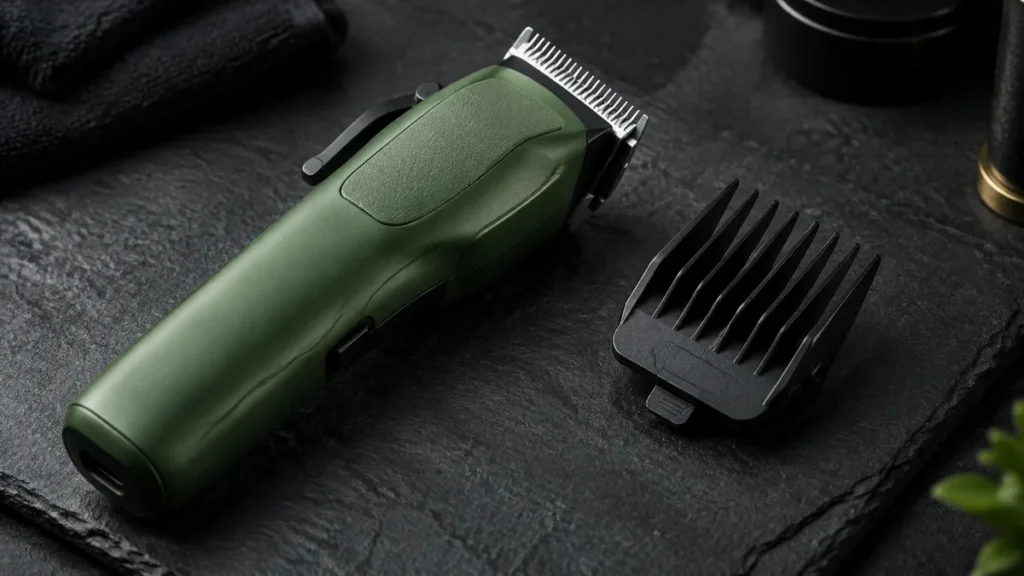
Three things separate a fade clipper from a buzz clipper. First, a taper lever: the little side lever that opens and closes the blade, giving you the half-steps between guard lengths where blends actually happen. Second, a blade that cuts close at zero: if the blade’s shortest setting leaves visible stubble, the bottom of your fade will never melt into skin. Third, consistent torque: a motor that bogs in dense patches leaves the lines you can never quite erase.
Guards matter less than marketing says. Any decent set of guards works; the blend lives in the lever and the corners of the blade, not in owning twelve combs. If your clipper ships with flimsy guards, a color-coded Wahl-style set is the one accessory actually worth adding, because guards that flex or wobble change length mid-pass.
Weight and balance are the quiet factors. A self-fade means holding the clipper upside down, sideways and behind your head for twenty minutes. A light, well-balanced body keeps your wrist honest through the last blend; a heavy, head-forward one has you rushing exactly when the cut needs patience.
Ufree Clipper and Trimmer Set: the budget starter
The Ufree set gets a beginner fading for about $36 to $40 at the maker’s own store: a cordless clipper with a taper lever and LED battery display, plus a T-blade trimmer for the neckline and edges. At this price the compromises are real, mostly in blade steel and fine lever feel, but the fundamentals are all present.
The included trimmer is doing real work in this kit: necklines, sideburns and the outline around the ears are where home fades usually look homemade, and a dedicated T-blade cleans them up in a way a full-size clipper cannot.
Buy it to learn on. If fades become a habit, you will outgrow it in a year, and by then you will know exactly what you want next.
TPOB Slime 2: the mid-range workhorse
The TPOB Slime 2 comes up by name in self-fade threads, and usually sells for $65 to $70: a 6800 RPM motor, a five-position click lever, and a form factor modeled on the pro clippers it undercuts. The community verdict is split but informative: fans call it the best sub-$100 clipper, while a few buyers report duds out of the box, and the recurring middle-ground advice is to swap the stock cutting blade for an aftermarket one.
Who it fits: the self-fader a few months in who has outgrown the budget kit and likes tuning gear. The click lever alone, with its repeatable half-steps, teaches faster than a free-floating lever at this stage.
Andis Envy II: pro build, lower price
The Andis Envy II is a genuine pro-line clipper, Andis’s adjustable-blade workhorse with a proper fade lever and a light, balanced body, and the standard black version has been selling for $100 to $120 at pro suppliers, with sale pricing at the low end. That puts real shop hardware in reach of a home budget.
The trade at this price: it ships with the standard adjustable blade rather than a dedicated fade blade, and it runs corded in most configurations, so check the listing details before buying. For someone cutting weekly who wants pro bones without the Magic Clip’s price, this is the value play.
Wahl 5 Star Magic Clip Cordless: the community standard
Ask self-faders what to buy and the top answer is remarkably consistent. One r/SelfBarber thread’s first reply is simply: “Wahl Magic Clip (Cordless).” The Magic Clip earns that with its stagger-tooth blade: alternating long and short teeth that feed hair evenly and blur weight lines other blades leave visible. It is Wahl’s pro fade staple, and it usually sells for $120 to $145.
The honest caveat, also from the community: it is a blending specialist, not a debulker. If you are dropping from long hair to a fade, clear the bulk with guards first, then blend. Buy this when you know fades are a permanent skill, not an experiment.
The technique half
The gear is maybe half of it. The r/SelfBarber regulars are blunt about the other half: one called fading:
“mainly a game of technique”
- User, r/SelfBarber
and pointed out that a good barber can produce a clean fade with a $20 clipper, while a beginner with premium gear still produces stairs. Another noted the flip side: beginners feel the jump to a proper clipper immediately, because consistent cutting removes one variable while they learn the rest.
The method the community converges on: set your shortest guideline low, open the lever and work up in half-steps, erase each line with the corner of the blade instead of the full width, and check both sides constantly in a second mirror. Expect the first three fades to be practice. The clipper picks above all forgive practice differently: the Magic Clip forgives the most, which is exactly why it costs the most.
A large double-sided mirror for seeing the back of your own head – the setup the technique section says matters as much as the clipper.
FAQ
Can I fade my own hair as a total beginner? Yes, but start with a high, conservative fade and expect a learning curve of a few cuts. The mirror setup matters as much as the clipper.
Do I need a separate trimmer? For the neckline and around the ears, it helps a lot, which is why the budget pick is a set. A clipper alone can do everything else.
Corded or cordless for fades? Cordless, for the free wrist angles. The full corded-versus-cordless trade-off comes down to how and where you cut. Every pick here except some Envy II configurations is cordless.
How often do fade blades need attention? Oil before every cut, brush out after, and expect to realign or replace blades with heavy use. A dull or misaligned blade is the first thing to check when blends stop melting.