

As an Amazon Associate, TrustedBarber earns from qualifying purchases.
A station holds the chair, the mirror and the clippers, but everything that should be within arm’s reach ends up scattered across it. A salon trolley cart like the TASALON lockable metal trolley fixes that: trays and drawers on wheels that roll to whichever chair needs them and park out of the way when they do not. We rounded up five in stock right now, from lockable metal stations with a drawer for everything to light three-tray trolleys for a single chair, plus what to check before the wheels hit the floor.
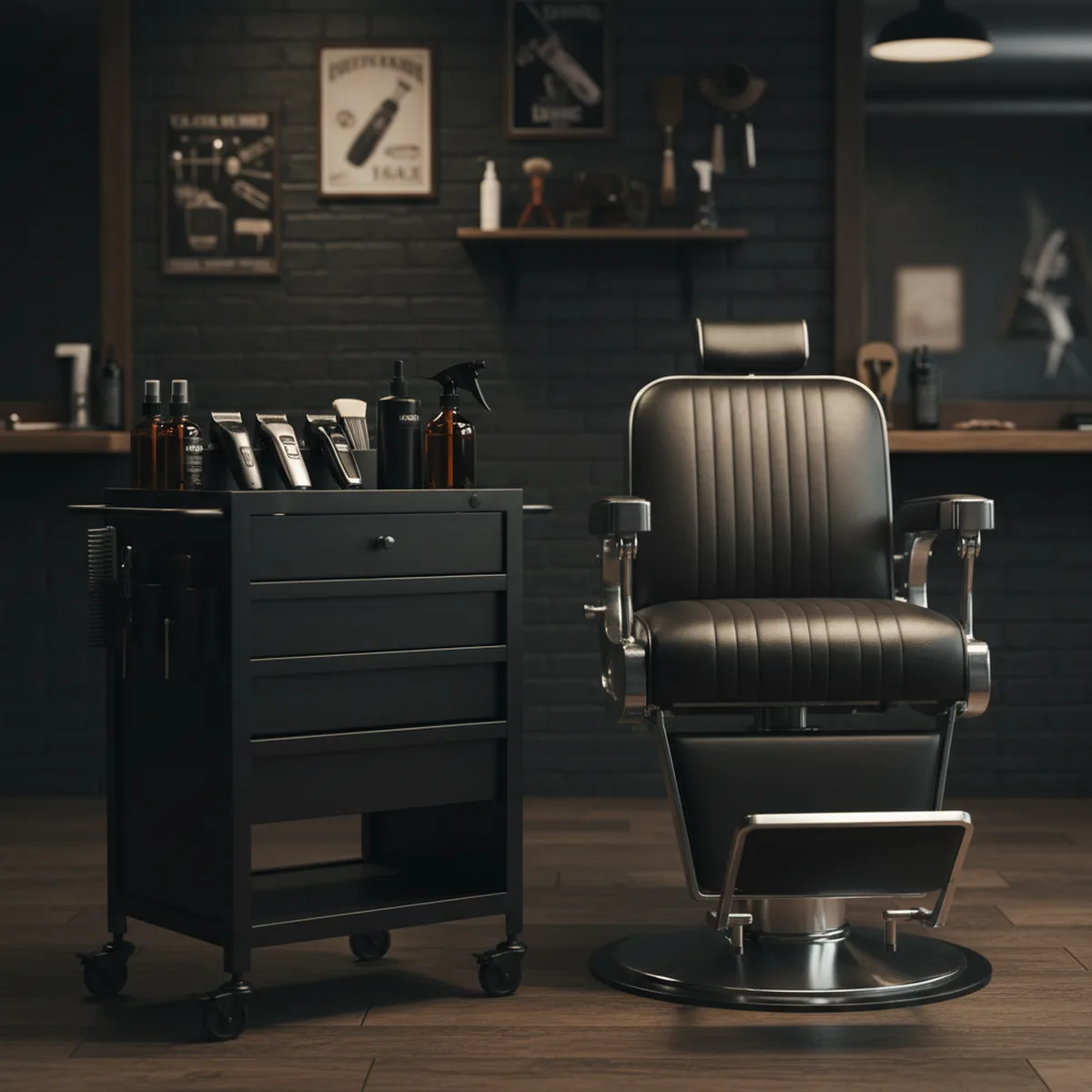
Quick answer
Best overall: the TASALON lockable metal trolley. Drawers, wheels and a lock at a mid-range tier.
Best for tools: the TASALON six-drawer cart. Tool holders plus a drawer for every category.
Budget pick: the Winado four-tray trolley. Open trays and dryer holders at a low tier.
In this guide
How we chose these trolley carts
A good cart is judged in the first hour of a shift. It rolls where it is pointed, holds what the station actually uses, and does not tip when a drawer opens fast. That breaks down into four things. Wheels first: large casters that swivel freely matter more than almost any feature on the top, because a cart that fights the floor never gets moved. Storage second: drawers for the private kit, open trays for the sprays and combs that get grabbed all day. Third, footprint, since a cart that blocks the chair is worse than no cart. Fourth, a place for the hot tools, because a dryer or iron resting on a stack of capes is how accidents happen.
Every pick below was checked on Amazon and is in stock at the time of writing. The list runs from a full lockable station down to a compact two-drawer trolley, so a two-chair shop and a booth-renter can both find their size. Pair the cart with a proper seat from our guide to the best barber stool and the working triangle of chair, cart and mirror finally closes.
TASALON lockable metal cart: best overall
The TASALON lockable metal trolley cart is the pick for a shop that wants one cart to do everything. The build is metal with a lock, per the listing, which turns the drawer space into real security for razors, shears and anything else that walks off when the shop is busy. Wheels carry it between chairs, and the drawers give each category its own place instead of one catch-all tray.
What the lock changes day to day is the end-of-shift routine. The station gets closed once instead of being packed into a cabinet, and a booth-renter can leave tools on the cart overnight without wondering. The tradeoff is weight and price: metal builds sit at a mid-range to pro tier and take more effort to move than plastic trays, which is the right trade for anyone keeping expensive tools on the cart. Between clients it rolls close, the top tray holds the working sprays, and the drawers stay shut.
TASALON six-drawer cart: best for tools
The TASALON lockable six-drawer salon trolley is the organizer of the list. Six drawers plus tool holders, per the listing, means clippers, guards, shears, combs, blades and the odds-and-ends drawer each get a home, and the holders on top keep the irons and dryers off the working surface. It is also lockable, so the six drawers double as the shop’s secure drawer space.
This is the pick for a shop that keeps a deep kit: multiple clipper lines, a guard set per clipper, and the small parts that vanish into a single-tray trolley in a week. The cost is footprint and setup time, since six drawers need real sorting on day one and the cart is one of the bigger units here. Do the sorting once with a label maker and the drawer you need opens without looking, which is the whole point of a trolley in a busy shop.
Winado four-tray cart: the budget play
The Winado salon trolley cart covers the basics at a low tier: four trays, three hair dryer holders and a lockable build, per the listing. The open-tray layout is fast to work from, since everything in a tray is visible and reachable with one hand, and the dedicated dryer holders are the feature budget carts usually cut first.
Where it gives ground is organization depth. Four trays sort a light kit fine, but a shop with several clipper lines will run out of separation quickly, and open trays show the clutter if the cart is client-facing. As a first cart for a new shop, a home setup or a second trolley for color and chemicals, it does the real job: tools off the station, within reach, and out of the walkway. Lock it before the weekend and nothing grows legs.
Compact two-drawer cart: the small-space pick
The Dresgor esthetician cart with two drawers is the compact option. A smaller footprint, two drawers and a top tray, per the listing, fit beside a single chair or in a corner of a suite where a full station cart would block the door. The lighter build also moves one-handed, which matters when one person is running the whole room.
The tradeoff is capacity, and it is an honest one: two drawers hold a working kit, not a whole shop’s supply. Suite renters, mobile barbers and anyone sharing a station with a partner get the most from it, since the cart holds the personal kit while the shared shelf holds the rest. It is also the easiest of the five to break down and move to a new space, which matters more than it sounds for anyone not on a long lease.
Three-drawer station: the middle path
The JOYMOR three-drawer rolling salon trolley splits the difference. Three drawers on wheels in a mobile styling-station layout, per the listing, gives enough separation for a working kit without the footprint or the price of the six-drawer build. It reads as a small station rather than a cart, which suits shops that want the trolley to look like part of the furniture.
In practice it is the pick for a single chair that wants drawers without a lock: the drawer space sorts the daily kit, the top holds the working tools, and the wheels keep it repositionable through the day. It also serves well as the second cart in a two-chair shop, holding the items the first cart does not. It solves most of the same problem as the lockable metal build, minus the drawer lock.
Setup and daily use tips
Two setup decisions decide how a cart works for years. Put the heaviest drawer at the bottom so the cart never wants to tip when a drawer opens fast, and check every caster for spin before the first client, since one sticky wheel turns a rolling cart into furniture. If the floor is tile, a mat under the parking spot stops the cart from wandering during a cut.
The daily habit is as simple as the setup. Working sprays and combs live on the top tray, not in drawers, so nothing gets opened mid-cut. Close and lock the drawers at close of business, and wipe the trays down during the same pass as the chair, using a disinfectant from our guide to the best barber disinfectants. Store the blade cases and spare guards in a hard case from our guide to the best barber clipper case and the drawer stays uncluttered for good.
FAQ
Do salon carts need to be locked?
Any shop that leaves tools on the cart overnight wants the lock. Shears, razors and clippers are the first things to disappear in a busy space, and a lockable cart turns the end-of-day routine into one click instead of a pack-up.
Drawers or open trays?
Both, in the right place. Open trays hold the tools that get grabbed every few minutes, drawers hold everything else. A cart with only trays turns into a junk pile inside a week, which is why most of the picks above pair trays with drawers.
How much weight can a trolley hold?
Check the listing for the rated load before loading a cart with a dryer, an iron and a full kit, and put the heavy items in the bottom drawer either way. The weight rating is the number that decides whether the cart survives daily use, so read it before buying rather than after.
What goes on a barber cart?
The working layer: sprays, combs, neck strips, the current clipper and guards. Drawers hold shears, blades, clips and the private kit. Hot tools get holders or a heat-safe mat, never a stack of capes.
The verdict
For a working shop the TASALON lockable metal cart is the one to buy: wheels, drawers and a lock at a mid-range tier, with the capacity to be the only cart the chair needs. Go for the six-drawer version when the kit is deep, the Winado when the budget is the point, the compact two-drawer build for suites and small rooms, and the three-drawer station for a single chair that wants a drawer for everything. Set the heavy drawer low, check the casters, and the cart earns its floor space from the first day.


