As an Amazon Associate, TrustedBarber earns from qualifying purchases.
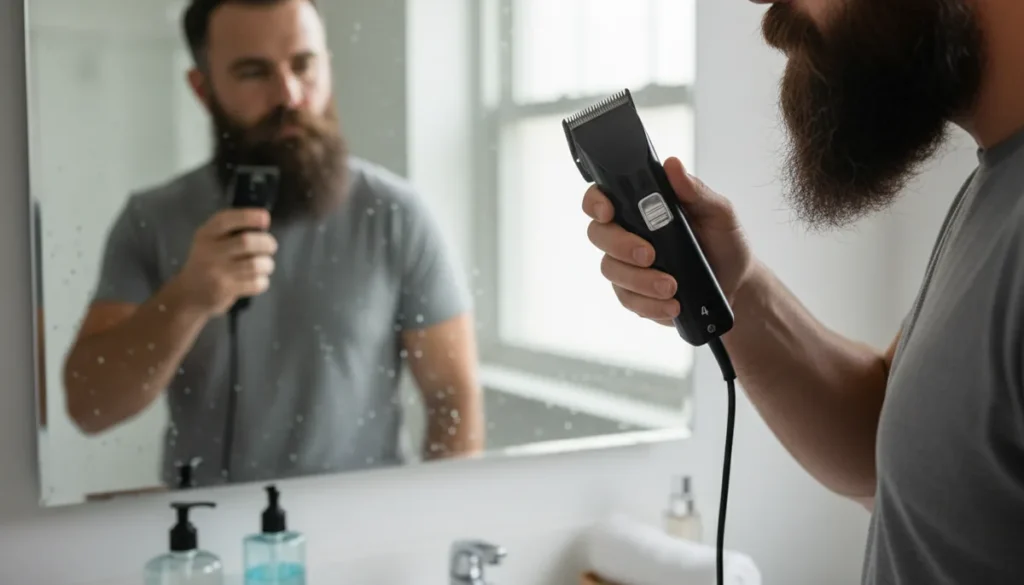
Yes, you can use hair clippers on your beard, and barbers do it every day for the first pass of a cut. Clippers and beard trimmers share the same cutting principle, so the honest answer is yes with two qualifiers: clippers are the fastest way to remove bulk from a longer beard, and they get clumsy once the job moves to fine edges. A full-size clipper like the Wahl Magic Clip takes a grown-out beard from trim-ready down to shape-ready faster than a dedicated trimmer can manage.
This guide covers where clippers win, where a trimmer is the smarter tool, and how to run a clipper pass without wrecking the lines you already have. If you are starting from zero on technique, our how to trim a beard at home guide pairs with this one, because guard choice and grain direction are the same skills in both jobs.
Quick answer
Yes for bulk: guards turn a clipper into the fastest way to drop a long beard to a working length.
No for edges: the Andis T-Outliner is the tool for cheek lines and the neckline, not a full-size clipper.
Dry beard only: clippers load up and skip on wet or product-heavy hair.
Finish by feel: a few drops of Honest Amish Beard Oil after the cut softens the regrowth edge.
Check the Wahl Magic Clip Price on Amazon
Check the Andis T-Outliner Price on Amazon
Check Honest Amish Beard Oil Price on Amazon
Check Cremo Shaving Cream Price on Amazon
In this guide
- What clippers and beard trimmers actually do differently
- When hair clippers are the right tool for a beard
- When a beard trimmer is the better choice
- How to use hair clippers on your beard the right way
- Tools that make the clipper pass easier
- After the cut: keep the skin happy
- Watch the guard lengths on a real beard
- FAQ
- The bottom line
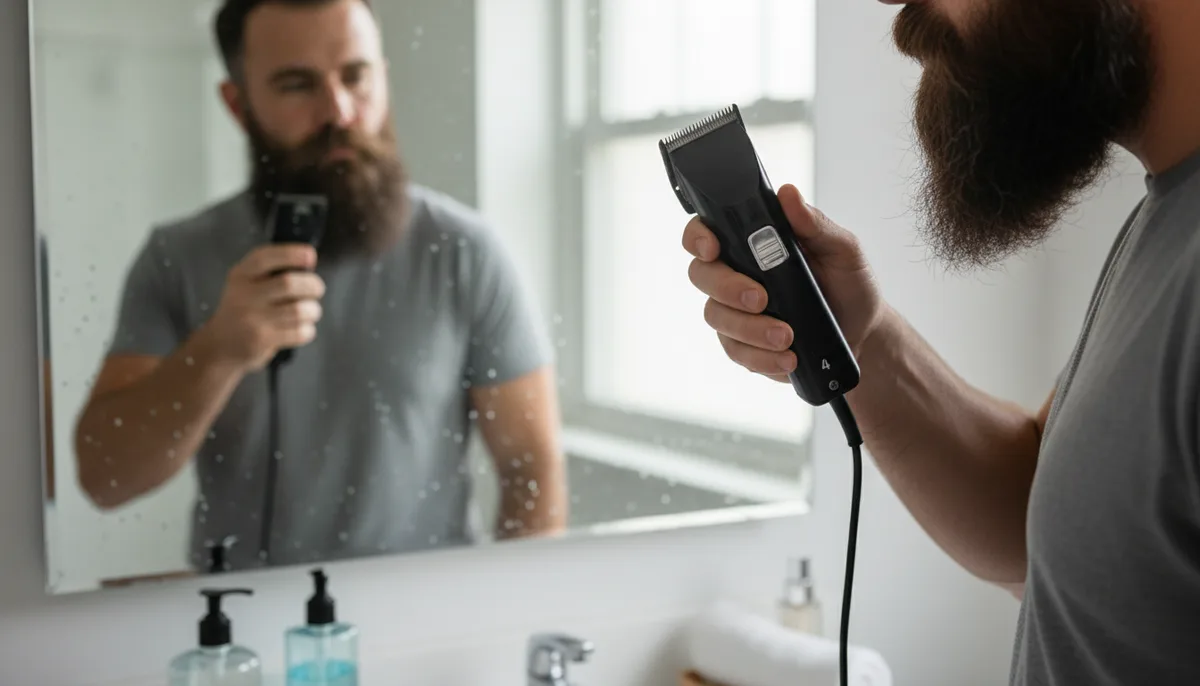
What clippers and beard trimmers actually do differently
Both machines cut the same way: a stationary blade and a moving blade shear hair between their teeth. The difference is scale. A hair clipper blade is wide, roughly forty millimeters across, with tooth spacing built for scalp density and speed. A beard trimmer blade is narrower with finer teeth, and most sit on a T-shaped head that reaches into corners the wide blade cannot turn into.
Guards are the second split. Clipper guards climb from about one millimeter up past twenty-five, which makes a clipper the right machine for any beard you are shortening in visible steps. Trimmer guards stop shorter and step finer, which is why the same machine that buzzes stubble to three millimeters is useless for taking two inches off a December beard.
Motor and blade speed matter less than people expect. Beard hair is coarser strand for strand than scalp hair in most men, but a professional clipper motor was built to push through a dense head of hair all shift long, so beard density does not scare it. Where the clipper shows its limits is geometry, not power: the wide blade rides smoothly across flat planes like the cheek and the neck, and it rounds off over the curves of the jaw and chin unless you slow down and work them deliberately.
When hair clippers are the right tool for a beard
Clippers are the right tool whenever the job is shortening, not shaping. Taking a winter beard down to a working length, matching both sides after weeks of uneven growth, and cutting back a beard that has outgrown its shape are all bulk work, and bulk is what clippers were built for. A guard pass with a full-size clipper does in minutes what a narrow trimmer would do slowly and unevenly.
The same logic holds for barbers handling a beard as part of a haircut. The client is already caped, the clippers are already on the station from the cut above, and the beard needs two guards off the sides. Running the clipper pass on the beard costs no extra setup, and it keeps the finish consistent with the taper you just cut.
Clippers also earn their place on beards with patchy density. A wider blade evens out thin spots better than a narrow trimmer, because it averages the length across a bigger footprint instead of carving around every sparse patch. That is also why the guard pass should always come before any detail work: even the field first, then shape the border.
When a beard trimmer is the better choice
Below about two millimeters of length, a trimmer is the better tool and it is not close. Finer teeth cut closer to the skin with less contact area, which is what stubble work needs. Run a full-size clipper with no guard over stubble and you get an uneven, scratchy finish, plus a real chance of snagging longer hairs instead of cutting them.
Edges are the other case. Cheek lines, the neckline, the mustache corners and the border around the ears all need a narrow blade that can pivot. A T-blade detail trimmer like the Andis T-Outliner is the standard for this work, and per Andis’ own spec sheet the T-blade runs deep-tooth for reach and close-cutting at the same time. Trying to draw a neckline with the corner of a wide clipper blade is how lines end up crooked and chins end up nicked.
One warning belongs here. Some barbers zero-gap a clipper for skin-tight finishing on hairlines. On the beard that habit costs more than it returns: a zero-gapped wide blade against stretched neck skin is the fastest way to draw blood, and the cut it leaves is no cleaner than what a proper detail trimmer gives you on the first pass.
How to use hair clippers on your beard the right way
Step one: wash the beard and dry it completely. Product, oil and water are the three things that load clipper teeth and make the blade skip. Shampoo or rinse the beard, towel it dry, and give it a few minutes of air before any blade touches it. A damp beard also cuts longer than it looks, because wet hair lies flat and clumps.
Step two: start two guards longer than your target. Comb the beard against its grain so the hairs stand up, then run the clipper with the grain under a guard two steps above the length you want. The first pass should remove less than you plan to keep. You can always step down; you cannot step back up, and the mistake shows for weeks.
Step three: work in an order, not in circles. Cut the cheeks first, then the jawline and chin, then the neck, and leave the mustache for last so its reference length stays put. Overlap each stroke by about half the blade width so no guard lines survive between passes. Flick the clipper away at the end of each stroke instead of pressing into the skin.
Step four: check symmetry before you refine anything. Face a mirror straight on, then check both sides at three-quarter angle. Most beards grow denser on one side, which reads as one side sitting higher after a clipper pass. Even that out at the current guard before you drop a guard, not after, or you will chase the difference all the way to stubble.
Step five: finish the edges with a trimmer, not the clipper. Once the length is set, swap to the detail trimmer for the cheek line, the neckline and the corners. If you shave below the neckline, a fresh blade and a sensitive-skin cream like the Cremo Shaving Cream let the razor glide under the line instead of dragging. Our neckline cleanup guide covers where that line sits and how to keep it honest between full trims.
Tools that make the clipper pass easier
The Wahl Magic Clip is the clipper most working barbers reach for on beard bulk work. The wide standard blade chews through coarse beard hair without stalling, the adjustable lever adds mid-guard lengths without swapping guards, and the cordless version runs long enough to cover a full beard service and the haircut behind it.
Pair it with the Andis T-Outliner and you have the two-machine setup the whole method above assumes: clipper for length, T-blade for edges. Add a guard set that steps in single millimeters if yours jumps, because the two-guards-longer rule only works when the steps between guards are small.
Check the Wahl Magic Clip Price on Amazon
Check the Andis T-Outliner Price on Amazon
After the cut: keep the skin happy
A fresh clipper pass leaves the cut ends blunt and the beard drier than it looks. Rinse the face with warm water, pat it dry, give it five minutes, and then work in a beard oil. The Honest Amish Beard Oil is a good default: seven natural carrier oils, no mineral-oil slick, and a scent that does not fight the rest of your routine. Our beard oil application guide covers how much to use and when.
If you choose to shave below the neckline, use the Cremo Shaving Cream according to its directions. A razor finish is a separate choice from a guarded beard trim, not a required final step.
Check Honest Amish Beard Oil Price on Amazon
Check Cremo Shaving Cream Price on Amazon
FAQ
Can hair clippers damage your beard?
Not with a guard on. The guard holds the blade off the skin and shears at an even length. Damage claims mostly come from three habits: pressing the bare blade into the skin, running a hot blade over the same patch repeatedly, and cutting wet hair that bends instead of cutting clean. All three are technique problems, not machine problems.
What guard should I start with on a beard?
Two guards longer than your target length. A grown-out beard always cuts shorter than it looks with the hairs standing up, and the two-guard buffer is what keeps that surprise from turning permanent. Drop one guard at a time and only when the previous length reads even all the way around.
Can I use clippers on a wet beard?
You can, but you should not. Wet hair clumps, loads the teeth, and cuts longer than it measures, which is how guard lines appear a day later. Every professional beard trim starts on hair that is fully dry for the same reason a haircut does.
Will hair clippers give me stubble?
Short stubble, poorly. A clipper with no guard or the lowest guard reaches stubble range, but the wide blade and coarse teeth leave an uneven finish at that length. A dedicated beard trimmer does stubble cleanly, and the trimmer’s finer steps let you hold a specific stubble day after day instead of guessing.
Do I still need a razor for the neckline?
Only below the line. The neckline itself is a trimmer edge, but the strip between the line and the Adam’s apple reads cleanest when it is actually shaved. A razor pass under a well-placed line is what separates a maintained beard from a trimmed one, and it is the part of the routine most often skipped at home.
The bottom line
Hair clippers are not just acceptable on a beard, they are the right first tool for any beard that needs length removed. Set the bulk with a clipper like the Wahl Magic Clip and its guards, then hand the detail work to a T-blade trimmer, and finish with beard oil. The only place the order breaks is short stubble and edge work, where the trimmer was always the correct machine. Build the habit around those roles and one clipper and one trimmer cover every beard you will ever grow.