As an Amazon Associate, TrustedBarber earns from qualifying purchases.
Blades do not usually go dull mid-shift, they go dirty. Hair, dander and grease pack between the teeth until a clipper starts dragging and heating up, and the quick fix is a blade wash that lifts all of it out in seconds. We rounded up five that are in stock right now: the Oster Blade Wash pour can most shops grew up with, a 5-in-1 disinfectant spray, two dip jars and a budget coolant spray, plus the routine that keeps blades running cool between clients.
Quick answer
Classic pick: Oster Blade Wash. The 18-oz pour can that cleans and lubricates, the industry standard for decades.
Shop pick: Clippercide 5-in-1. Cleans, lubricates, cools and disinfects per the listing, in one spray.
Dip pick: Andis Blade Care Plus Jar. The dip formula for a dedicated dip station.
Budget pick: Andis Cool Care Plus. A 15.5-oz coolant spray that cools, cleans and lubricates at a low tier.
Rust pick: H-42 Clipper Cleaner. A water-free jar that keeps water off the blade steel.
See the Oster Blade Wash on Amazon
See the Clippercide 5-in-1 on Amazon
See the Andis Blade Care Plus Jar on Amazon
In this guide
How we chose these blade washes
Three things separate a blade wash that earns station space from one that collects dust. First, what it actually does: a true solvent dissolves dried hair product and grease out of the blade teeth, while a care spray adds lubrication on top, and a disinfectant formula covers the between-clients step. Second, the format. A can you pour into a dip tray, a jar you dip the blade straight into, and an aerosol you spray on are three different workflows, and the right one depends on how many chairs are running. Third, value over time, because a wash that lasts months per bottle beats a can that empties in a few weeks.
Every pick below is in stock on Amazon at the time of writing, and each pairs with the routine at the bottom of this guide. Blade wash is only one layer of blade care: after the wash dries, the blades still need oil, which our guide to the best clipper oil covers in detail, and a full cleaning week needs a disinfectant from our guide to the best barber disinfectants. The wash is the step that makes both of those work faster.
Oster Blade Wash: the classic
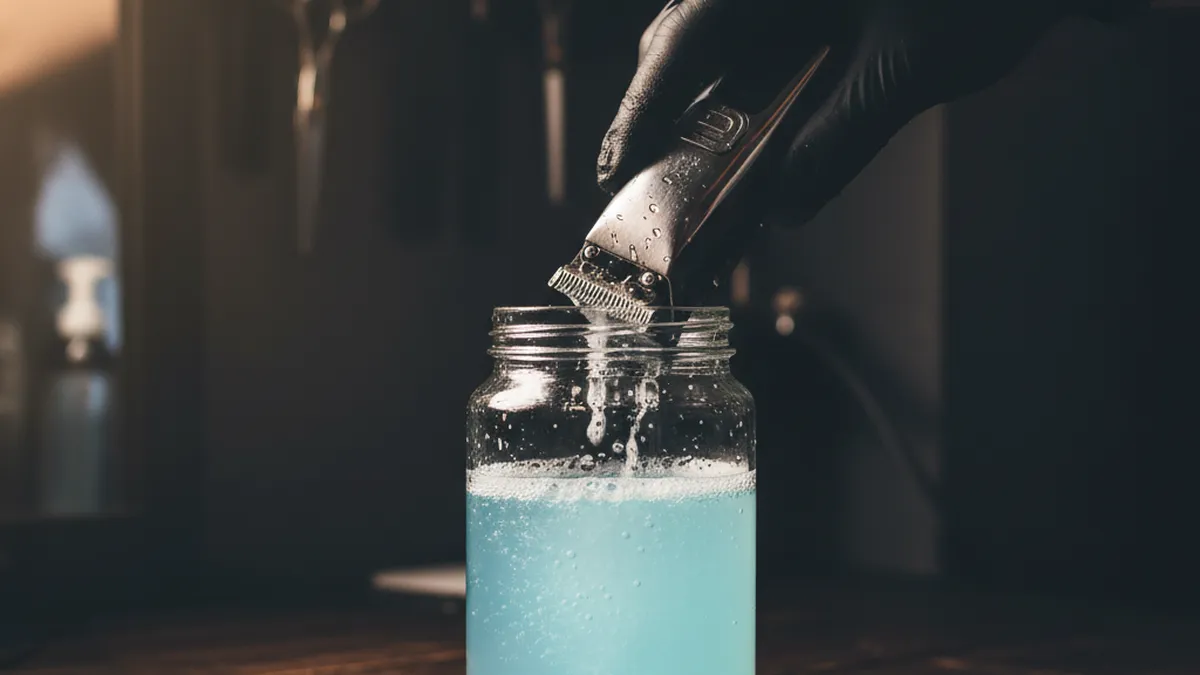
The Oster Blade Wash cleaning solution is the pour can most barbers picture. An 18-ounce can made for clipper and trimmer blades, per the listing it cleans and lubricates, and it is the dip standard: pour a shallow pool into a tray, run the clipper in it for a few seconds and the debris that never comes out with a brush lifts away. The formula is thin on purpose, so it flows between the teeth instead of sitting on top.
Value is where it wins long term. One can covers weeks of daily dips for a single chair, and because it is made for clipper and trimmer blades generally, it works across clipper brands rather than being tied to one maker’s line. The routine that comes with it is simple enough to run between clients: dip, run, wipe, and let the blade dry before oiling. If a shop buys one blade wash and nothing else, this is the one that has survived every trend in barbering for a reason.
Clippercide 5-in-1: the shop pick
The Clippercide 5-in-1 clipper spray is the disinfectant step of this list, made by Barbicide. Per the listing it cleans, lubricates, cools, disinfects and prevents rust, which collapses the between-clients routine into a single step: spray on, run the clipper briefly, wipe, done. For a busy chair that does not want a separate disinfectant bottle next to the wash, that one-spray workflow is the appeal.
It is the pick for shops that process a lot of clients back to back, where the between-clients step has to be fast enough to actually happen every time. The 15-ounce can lasts a solid stretch of daily use, and because it also lubricates, the blade comes out of the step ready to cut rather than needing a separate oil pass every single time. The tradeoff is format: an aerosol covers fewer dips per can than the Oster pour, so a full shop may run this can for the between-clients step and keep a pour can for the end-of-day deep clean.
Andis Blade Care Plus Jar: the dip pick
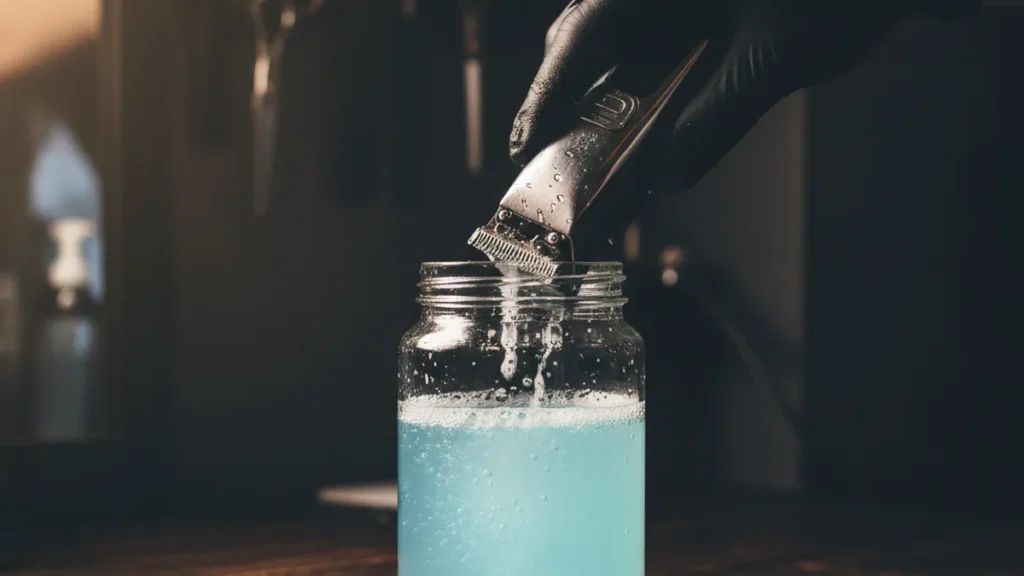
The Andis Blade Care Plus jar is the dip form of the Andis care line. The wide jar takes a clipper blade straight in, so the debris flushes out the moment the blade runs, and the jar doubles as the station’s dip station with no separate tray to fill. Per the listing it cleans, lubricates, cools and helps prevent rust in one 10-second dip.
Barbers who like dipping tend to stay with it, because the jar method reaches debris a spray can miss. It also sets the workflow visually: the jar sits at the back of the station, the blade goes in, ten seconds of run time and the wipe happens before the cape comes off. Keep the lid on between clients so the solution stays clean, and top it off rather than replacing the jar, which keeps the cost per use low.
Andis Cool Care Plus: the budget pick
The Andis Cool Care Plus spray is the budget coolant of the list. Per the listing it is a five-in-one can: coolant, disinfectant, lubricant, cleaner and rust preventative, which makes it the fastest between-clients step possible: spray on, run the blade for a moment, wipe off. The cooling effect is the point: on long fades where the blade runs warm by the third client, the spray cools it between clients.
The tradeoff is coverage over time. A 15.5-ounce can of spray covers fewer dips than a pour can or a jar, so a full shop burning through several cans a month will find the pour format cheaper per use. For a single chair, a home setup or a second station that only needs occasional cleaning, the can is the right size, and it rides in a tool roll or travel case for mobile work where an open jar is a spill waiting to happen.
H-42 Clipper Cleaner: the water-free jar
The H-42 clipper cleaner and blade wash takes a different approach: an 8-ounce water-free cleaning jar that you dip the blade into. Water-free formulas are aimed at the rust question, since water left in a blade seam is what starts the corrosion that no amount of oil can undo afterward. The jar format makes it a one-handed step at the station.
This is the pick for damp shops and for barbers who have watched a favorite clipper rust from the inside out. The small jar also travels well in a tool roll for booth renters and mobile work. The tradeoff is size: 8 ounces covers less time than the 18-ounce pour can, so a busy shop refills more often, which is the fair price for a formula built around keeping water off the steel. Pair it with an oil pass after the wipe and the blade stays dry, clean and protected.
The blade wash routine that actually sticks
The routine only works if it takes under a minute, so here is the version that fits between clients. Brush the blade teeth out first with the clipper brush, because loose hair soaks up wash and turns to paste. Dip or spray the blade, run the clipper at speed for two to three seconds so the solution flushes the debris out from under the teeth, then wipe the blade down with a clean towel. Let it air dry for a moment before the oil pass, since oil on a wet blade traps the moisture underneath.
Two habits protect the blade long term. Never store a clipper wet or leave a blade sitting in liquid overnight, because that is where rust starts; dry it, oil it and case it in a hard case from our guide to the best barber clipper case. And keep the between-clients step honest: a quick dip or a spray from the best clipper spray lineup keeps the deep clean from ever becoming an emergency. Barbers running thick hair all day should also match the wash routine to the clipper, since our guide to the best cordless clippers for thick hair notes which blades run hottest under load.
FAQ
How often should you wash clipper blades?
Between clients is the standard in a working shop, with a deeper dip at the end of the day. A blade that only gets washed when it starts pulling is already a blade that has been dragging for days, which is what overheats a motor and makes every pass drag.
Is blade wash the same as clipper oil?
No, and both steps matter. The wash cleans debris and, in care formulas, lubricates; the oil protects the blade and drive after the wash dries. A blade that gets washed but never oiled wears fast, and one that gets oiled but never washed just glues the debris in.
Can you leave a blade soaking in blade wash?
Only for the seconds it takes to flush it. Blades are not meant to sit in liquid, overnight least of all: the liquid works into the seams and the blade never dries properly. Dip, run, wipe, dry, oil, case.
Does blade wash disinfect?
Only the formulas labeled for it, such as the Clippercide spray and the Andis Cool Care Plus spray above. The Oster blade wash cleans and lubricates per its listing but is not labeled a disinfectant, which is why shops pair it with a proper disinfectant for the between-clients step. Check the label on the bottle you buy rather than assuming one product covers both jobs.
The verdict
For most shops the Oster Blade Wash is the backbone: an 18-ounce pour can that lasts months and does the one job a dirty blade needs, with the Clippercide 5-in-1 spray as the one-step upgrade for the between-clients routine. The Andis dip jar suits a dedicated dip station, the Cool Care Plus covers a budget coolant or a mobile kit, and the H-42 jar is the answer where rust is the enemy. Wash, dry, oil, and the clippers last years instead of seasons.