As an Amazon Associate, TrustedBarber earns from qualifying purchases.
To become a barber in Arkansas, you need 1,500 hours at a barber college (or 550 if you’re already a licensed cosmetologist), then the State Board of Barber Examiners’ written and practical exams, and $125 in exam and certificate fees. Barber colleges in Little Rock list average completion times of 11 to 13 months. Budget for tools too: a corded workhorse like the Andis 01815 Master Adjustable Blade Clipper is a solid first clipper.
Arkansas is one of the few states that still licenses barbers through its own barber-only board, separate from cosmetology, and its barber law was rewritten in 2025 by Act 436. Below is the full path, drawn from the board’s rules in the official Code of Arkansas Rules, the 2025 Act and the schools’ federal data.
Quick answer
- Training: 1,500 clock hours at a barber college; 550 hours for licensed cosmetologists
- Exams: Written and practical, given under the State Board of Barber Examiners
- Fees: $75 exam + $50 certificate; $50 annual renewal
- Minimum age: 16½, with at least an eighth-grade education (per the board’s rules)
- Renewal: Every year; late after September 1
Barber school kit picks
- Corded workhorse clipper: Andis 01815 Master Adjustable Blade Clipper, about $90–110 · Check Andis 01815 Master Adjustable Blade Clipper Price
- Outliner for line-ups: Andis 04780 T-Outliner, about $60–80 · Check Andis 04780 T-Outliner Price
- Jar disinfectant: Barbicide Disinfectant Concentrate (16 oz), about $12–18 · Check Barbicide Disinfectant Concentrate (16 oz) Price
- Shaving razor: Feather Standard Styling Razor Kit, about $50–60 · Check Feather Standard Styling Razor Kit Price
Who licenses barbers in Arkansas
Barbers answer to the Arkansas State Board of Barber Examiners, a division of the Department of Labor and Licensing in Little Rock. Cosmetologists are licensed by a completely different agency, the Department of Health’s Cosmetology Section, which is why barber colleges and beauty schools in Arkansas run under separate rules.
The board issues a few credentials:
- Registered barber: the full license this guide covers.
- Barber technician: a certificate to assist a barber with tasks such as shampooing and sterilizing. A technician cannot cut hair. The exam, certificate and annual renewal are $35 each.
- Teacher Manager Instructor: for barbers who want to teach, after a 600-hour instructor course.
One rule surprises newcomers: students can’t practice in a barbershop. The board’s shop rules say plainly that “no student in any school is authorized to barber in any barbershop for pay or without pay.” Your hands-on hours happen on the school’s clinic floor.
Steps to an Arkansas barber license
- Meet the basics. The board’s rules describe Arkansas’s qualifications as being at least 16½ years old with at least an eighth-grade education (stated in its rules for out-of-state applicants), so confirm enrollment requirements with your barber college or the board.
- Enroll in a barber college and complete 1,500 clock hours (550 if you already hold a cosmetology license). By statute, students can log no more than eight hours a day.
- Apply for the exam through the board and pay the $75 exam fee.
- Pass the written and practical exams.
- Pay the $50 certificate fee, then renew every year.
We found no apprenticeship route in Arkansas’s current barber law or rules: training is school-based. If you’re hoping to train in a shop, check with the board first.
The 1,500-hour curriculum
Arkansas spells out exactly how barber college hours are spent. Here’s the board’s required curriculum from its school rules:
| Subject | Hours |
|---|---|
| Haircutting | 425 |
| Chemical services | 345 |
| Styling and waving | 300 |
| Related science | 175 |
| Hygiene and sanitation | 80 |
| Shop management | 65 |
| Shaving and beard trimming | 50 |
| Salesmanship | 50 |
| Shop deportment | 10 |
Source: Code of Arkansas Rules, State Board of Barber Examiners, barber school curriculum, checked Oct 2026.
Two details are worth knowing before you enroll. First, up to 50% of the curriculum may be completed online or on a distance-education platform, so ask schools how much of their theory work is remote. Second, chemical services and styling together are almost as many hours as cutting, so this is broader training than a “clippers only” course.
Cosmetologist to barber: the 550-hour crossover
If you already hold an Arkansas cosmetology license, the statute as amended in 2025 sets the barber college course at not fewer than 550 hours. The board’s crossover curriculum puts most of that time on the clippers:
| Crossover subject | Hours |
|---|---|
| Haircutting | 405 |
| Shaving | 70 |
| Implements | 30 |
| Sanitation | 20 |
| Arkansas barber law | 15 |
| History | 10 |
Source: Code of Arkansas Rules, Cosmetology Crossover Program curriculum, checked Oct 2026.
The Arkansas barber exams
Since Act 436 of 2025, the law requires candidates to pass “an examination approved by the State Board of Barber Examiners.” The board’s testing page says exams include “a practical demonstration and a written and oral test.” We found no national testing vendor such as PSI listed for Arkansas barbers; the board handles exams, so contact its office for dates and locations. The board’s rules use a minimum passing score of 75% on the practical and written exams for out-of-state applicants who must test, and New Tyler Barber College tells students the state exam fee is $125 (the $75 exam plus the $50 certificate).
The board doesn’t publish a practical supply list online that we could find. Your barber college prepares you for it; given the curriculum, expect cutting, shaving and sanitation to be front and center, and ask your instructors for the current list.
Arkansas barber fees
| Fee | Amount |
|---|---|
| Registered barber exam | $75 |
| Barber certificate | $50 |
| Annual renewal | $50 |
| Restoration (late renewal) | $75 per year delinquent |
| Reciprocity and license | $150 |
| Student license | $20 per year of school |
| Barber technician exam / certificate / renewal | $35 each |
Source: Code of Arkansas Rules, Board of Barber Examiners fee rule, checked Oct 2026.
Renewal: every year, by September 1
Arkansas barber certificates renew annually, which is less common than the two-year cycles most states use. Under the board’s fee rule, a renewal not postmarked by September 1 owes the $75-per-year restoration fee instead of the $50 renewal. Renewals can be done through the board’s online renewal page. We found no continuing education requirement in the board’s rules; confirm on your renewal notice.
Moving to Arkansas with a barber license
Out-of-state barbers with a substantially similar license can apply by reciprocity for $150. Under the board’s reciprocity rule, if your original training was under 1,500 hours, you must have been practicing in a barbershop for at least one year. Act 436 says the same in the statute: practice continuously for at least a year, or complete the 1,500 hours.
“If the currently licensed barber had less than fifteen hundred (1,500) hours of training, the barber must have been practicing at least one (1) year in a barbershop.”
Code of Arkansas Rules, Board of Barber Examiners reciprocity rule
Barbers licensed in another country must pass a practical exam. Coming from a state that doesn’t license barbers? The board’s separate rule requires a practical and written exam with at least 75% on each.
What changed in 2025
Act 436 of 2025 (HB1673, approved April 3, 2025) amended the barber law in several places. It rewrote the application and reciprocity section, set the exam as one “approved by the State Board of Barber Examiners,” wrote the 550-hour cosmetologist and 1,500-hour general course lengths into the school section, exempted public and state-supported barber schools from the $10,000 surety bond, and changed school rules on chairs and student enrollment filings. For students, the practical effect is that the training standards are now clearer in the statute itself.
What barbers earn in Arkansas
The Bureau of Labor Statistics’ May 2025 OEWS data shows about 170 barbers on payrolls in Arkansas, with a median wage of $12.33 an hour (about $25,600 a year) and a mean of about $28,300. The lowest-paid 10% earned under about $24,200 a year and the top 10% more than about $33,800.
Those employee figures are low, but they leave out the self-employed barbers and booth renters who make up much of the trade, along with most of their tips. Shop ownership and a full book change the math considerably.
Barber colleges in Arkansas
All the schools below are verified on College Navigator or the school’s own site (checked Oct 2026), and most are federal-aid eligible. Our best barber schools guide explains how to compare them.
New Tyler Barber College (North Little Rock)
New Tyler’s Barber-Stylist program is 1,500 clock hours, about 13 months, with classes Tuesday to Saturday from 8 a.m. to 2:30 p.m. The school is ACCSC accredited and has operated since 1979 (program page). College Navigator lists tuition and fees of about $16,800 plus about $1,100 for books and supplies (2024–2025), and it’s federal-aid eligible.
GoodFellas Barber College (Little Rock)
At 4306 Asher Ave., GoodFellas offers a 1,500-hour program with a 13-month average completion time. College Navigator lists tuition and fees of about $17,400 and books and supplies of about $1,000 for 2024–2025, and the school is federal-aid eligible.
Washington Barber College (Little Rock)
Washington Barber College, at 5300 W 65th St., lists a 1,500-hour program with an 11-month average completion. Per College Navigator, tuition and fees are about $17,000 and books and supplies about $1,500 (2024–2025); it’s federal-aid eligible.
SAU Tech (Camden)
Southern Arkansas University Tech offers a Barbering Technical Certificate and a Barbering Instructor Certificate of Proficiency through its Academy of Professional Cosmetology, in person, and says graduates are eligible for the board exam (program page).
Designer Barber & Stylist School (Fort Smith)
At 4803 Rogers Ave., this school runs a 1,500-hour barbering program with a 12-month average completion and is federal-aid eligible (College Navigator). Check with the school for current tuition.
Barber school kit: what students need
Arkansas barber colleges list books and supplies at about $1,000 to $1,500 on College Navigator, on top of tuition, and the curriculum covers cutting, shaving and chemical work. These are the tools students most often add to or upgrade from the school kit. For more clipper options, see our best clippers for barber school roundup.
Andis 01815 Master Adjustable Blade Clipper
With metal housing and an adjustable blade, the Andis 01815 Master Adjustable Blade Clipper is the classic barbershop clipper; its listing puts it at 14,000 strokes per minute. It plugs in, so a long Arkansas board practical never has you checking battery life. About $90–110 on Amazon as of this writing.
Check Andis 01815 Master Adjustable Blade Clipper Price
Wahl Professional 5 Star Cordless Magic Clip
For a cordless fade clipper, the Wahl Professional 5 Star Cordless Magic Clip is a sensible first buy: its stagger-tooth blade is designed for blending, and going cordless means you aren’t tethered to the station on busy clinic days. Price: about $135–155 on Amazon at the time of writing.
Check Wahl Professional 5 Star Cordless Magic Clip Price
Andis 04780 T-Outliner
The Andis 04780 T-Outliner is a corded trimmer with a wide T-blade for hairlines, necklines and around the ears. Clean outlines are part of almost every cut you’ll do, and it’s one of the cheaper tools here. Price: about $60–80 on Amazon at the time of writing.
Check Andis 04780 T-Outliner Price
Feather Standard Styling Razor Kit
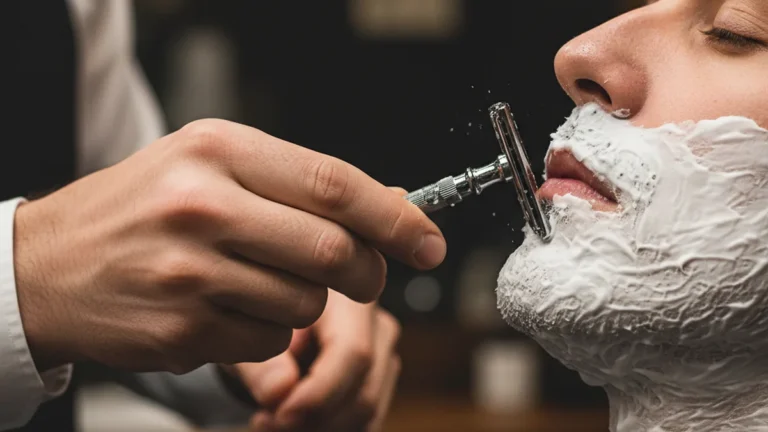
Shaving gets real attention in Arkansas (the crossover curriculum alone assigns it 70 hours), and a razor with swappable blades beats a fixed blade for it. Many students go with the Feather Standard Styling Razor Kit, built around disposable blades. Listed around $50–60 on Amazon at last check.
Check Feather Standard Styling Razor Kit Price
Barbicide Disinfectant Concentrate (16 oz)
Sanitation is graded everywhere, and the Barbicide Disinfectant Concentrate (16 oz) is an EPA-registered disinfectant concentrate for immersing combs and tools. A pint makes many batches; mix it as the label directs. Price: about $12–18 on Amazon at the time of writing.
Check Barbicide Disinfectant Concentrate (16 oz) Price
Equinox Razor Edge Thinning Shears
Thinning shears soften lines and remove bulk. The Equinox Razor Edge Thinning Shears is a low-cost pair that works with your cutting shears. Price: about $12–18 on Amazon at the time of writing.
Check Equinox Razor Edge Thinning Shears Price
GAMMA+ Magnetic Barber Mat
On a crowded station, a magnetic mat stops clippers from sliding off. The GAMMA+ Magnetic Barber Mat doubles as a station organizer, handy at an Arkansas barber college, where hands-on hours happen on the school’s own clinic floor. Listed around $60–75 on Amazon at last check.
Check GAMMA+ Magnetic Barber Mat Price
Bottom line: pick a barber college, not a beauty school
Arkansas’s barber license runs through its own board, so the path is a 1,500-hour barber college (or the 550-hour crossover for cosmetologists), the board’s exams, and a renewal every year. Compare College Navigator costs, ask how much theory is online, and start your kit with a reliable clipper like the Andis 01815 Master Adjustable Blade Clipper. Our barber starter kit guide covers the rest at three budgets.
FAQ
How long is barber school in Arkansas? 1,500 clock hours. Little Rock barber colleges report average completion times of 11 to 13 months on College Navigator, and the law caps students at eight hours a day.
Can a cosmetologist become a barber in Arkansas? Yes. Licensed cosmetologists can complete a 550-hour crossover at a barber college, most of it (405 hours) on haircutting, then take the barber exam.
Does Arkansas have a barber apprenticeship? We found no apprenticeship route in the current barber law or rules; training is done in a barber college. Ask the board if you have a specific shop-training situation.
How much does a barber license cost in Arkansas? The board charges $75 for the exam and $50 for the certificate, then $50 a year to renew. Tuition at private barber colleges runs about $17,000 per College Navigator.
How often do Arkansas barbers renew? Every year. A renewal not postmarked by September 1 owes a $75-per-year restoration fee.
Sources
- Arkansas State Board of Barber Examiners
- Code of Arkansas Rules: barber fees
- Code of Arkansas Rules: barber school curriculum
- Code of Arkansas Rules: reciprocity
- Code of Arkansas Rules: applicants from non-licensing states
- Act 436 of 2025
- BLS OEWS: Barbers (39-5011), May 2025
Licensing rules, fees and hours can change. This guide is general information, not legal advice. Always confirm current requirements with your state barber board before you enroll or apply.