As an Amazon Associate, TrustedBarber earns from qualifying purchases.
Razor bumps and ingrown hairs are mostly a technique problem with a few technique-sized solutions. Shave with the grain, keep pressure light, and give the skin a real after-shave routine, and most bump-prone shavers can shave regularly again. This guide follows the causes Barber Style Directory explains in their video and turns them into a repeatable routine.
The single highest-impact swap for bump-prone skin is a single-blade razor: the Merkur 23C safety razor cuts at the skin line instead of below it, which is where multi-blade shavers start the whole cycle.
Top picks
Check Price on the Bevel Pre-Shave Oil
Check Price on the Proraso Pre-Shave Cream
Check Price on the Merkur 23C Safety Razor
In this guide
What actually causes razor bumps
A razor bump forms when a cut hair curls back and re-enters the skin instead of growing out of it. Curly and coarse hair does this most often because the hair’s natural curve sends the regrowing tip sideways, and once the tip pierces the skin the area around it reacts the way skin reacts to any embedded irritant: red, raised, tender.
Shaving method decides how often that happens. A multi-blade razor’s first blade pulls the hair and the blades behind it cut it below the skin line, which leaves the regrowing tip buried under skin and pointed in exactly the wrong direction. Shaving against the grain has the same effect even with a single blade, because it cuts the hair shorter than the skin line in the direction hair least wants to grow.
The third contributor is friction and dryness. Dry skin, dull blades, and aggressive pressure all make the shave itself rougher, which leaves more micro-irritation for a returning hair to inflame. For most men, a different shaving routine makes a real difference, and that is what the rest of this guide lays out. Bumps that keep coming back are worth raising with a dermatologist.
The barber explains the causes
In this short explainer, a working barber walks through the bump cycle from the chair-side view: which clients get them, why the multi-blade habit makes them worse, and what he tells his own clients to change first. It runs a few minutes and pairs well with the routine below because it follows the same sequence: prep, single blade, with the grain, and a calm-down period after.
What the video emphasizes that most guides skip is patience between changes. Skin needs one or two full growth cycles to show the difference a technique change makes, so the routine below is a commitment of several weeks, not one shave.
Pre-shave prep that changes the shave
Shave after a warm shower, or hold a warm, damp towel against the area for a minute. Warm, wet hair cuts cleanly with less drag, which means less tugging on the skin and a cut closer to the surface. Dry, cold hair fights the blade and gets cut at odd angles, and odd angles are what turn into embedded tips.
Then lubricate before the lather goes on. A few drops of Bevel pre-shave oil on damp skin gives the blade a glide layer that keeps it from scraping, which matters most along the jaw and neck where skin moves. It runs about $10-15 a bottle.
Check Price on the Bevel Pre-Shave Oil
If you prefer a cream texture, Proraso pre-shave conditioning cream does the same job with oatmeal and green tea for sensitive skin, at about $10-15. Work it in for thirty seconds, then build your lather on top of it. The layering is the point: oil or cream under lather is the difference between the blade riding and the blade dragging.
Check Price on the Proraso Pre-Shave Cream
Why one blade beats five for bump-prone skin
A single-edge cut leaves the hair tip level with or just above the skin, so the regrowing hair has an open path out. A five-blade cartridge cuts two or three layers deeper by design, and every layer below the skin is a layer the hair has to punch through on the way back up. For straight, fine hair that is a non-issue; for curly, coarse hair it is the bump factory.
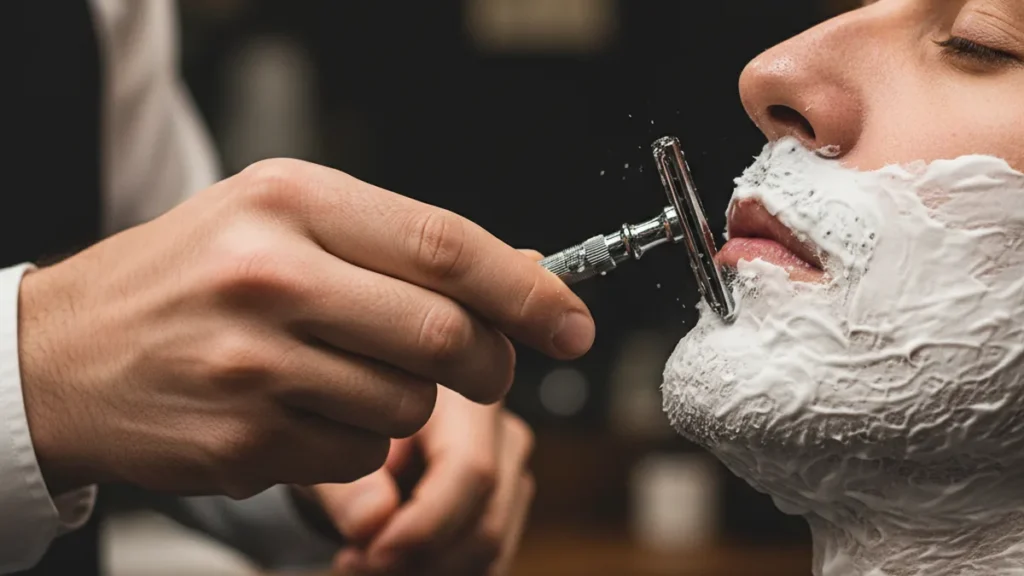
The Merkur 23C double-edge safety razor is the standard entry point for this switch, around $40-45, with a classic handle and a forgiving geometry for beginners. Pair it with a fresh blade every three to five shaves; a dull single blade is worse than a sharp multi-blade, because it drags and scrapes instead of cutting.
Check Price on the Merkur 23C Safety Razor
The transition takes a handful of shaves. Hold the razor with a light three-finger grip, use zero pressure, and let the blade weight do the cutting. Expect a slightly longer shave at first and a noticeably calmer neck by week three. If a cartridge razor is your only option for now, use a fresh cartridge, keep the pass count to two maximum, and shave with the grain only.
Shaving technique: direction, pressure, passes
Direction is the whole game: first pass with the grain, always. For most men the neck hair grows downward, so that means short downward strokes on the neck and downward-to-sideways strokes on the cheek. If you need a closer finish, re-lather and take a second pass across the grain, and stop there. Never take a pass against the grain on the neck if bumps are part of your life.
Pressure should be light enough that you are aware of the blade’s weight, not pressing your hand’s weight into it. Stretch the skin gently with your free hand where it is loose, especially under the jaw, but never pull skin taut enough to flatten the hair. Taut skin cuts the hair below its natural skin line, which is the ingrown setup again.
Rinse the blade between strokes. Hair and lather packed between blades turn a clean cutter into a scraper, and scraping is irritation. Short strokes, frequent rinses, and a rinse-and-check at the end of each pass keep the pass count honest.
The after-shave routine
Rinse with cool water, pat dry with a clean towel, and let the skin settle for a minute before anything goes on it. Then one product, not five: a soothing balm for daily use, or a targeted liquid if you are prone to bumps in specific spots.
The daily pick is Proraso after-shave balm in the oatmeal and green tea formula, about $10-15, alcohol-free and built for sensitive skin. It calms the surface without the sting of a splash, and calm skin is less reactive to a regrowing hair.
Check Price on the Proraso After Shave Balm
On a budget, NIVEA MEN Sensitive post-shave balm does the same soothing job at $6-10, and it is easy to find in every drugstore aisle.
For the spots that keep acting up, a targeted solution earns its price: Tend Skin solution is a long-standing aftershave liquid many men keep for bump-prone areas (follow the label directions), around $25-30 for the 8-ounce bottle. Use it on the trouble zone only, not the whole face, and follow it with the balm so the skin does not dry out.
Check Price on the Tend Skin Solution
Skip alcohol-heavy splashes and heavily fragranced aftershaves during a bump-prone stretch. Stinging does not mean working; it means irritating skin that is already reacting.
Between shaves: keeping skin calm
Give the skin at least a day between shaves when you can, and stretch to two or three during a bad patch. Every extra day lets the hairs you cut grow back out through the surface instead of tangling with freshly irritated skin. If length matters for work, a trimmer set to leave a hint of stubble is kinder to bump-prone skin than a blade shave.
Wash the shaved area daily with a gentle cleanser and warm water, and exfoliate lightly twice a week with a soft washcloth rather than a harsh scrub. The goal is keeping the surface clear enough for hairs to exit, not sanding it. Our after-shave routine guide covers the full week-by-week version, and if you are deciding between blade and electric, our straight razor at home guide covers the closest single-blade option.
Replace blades on schedule and store the razor dry. A blade left damp in a shower grows a film that turns the next shave into a scrape. Rinse, shake, and stand it upright outside the shower.
FAQ
Is it better to shave or let it grow when you have razor bumps?
Let it rest. If bumps are active, stop shaving that area for a week or more so the trapped hairs can grow out. Shaving over active bumps cuts them and drives the cycle deeper. Once the area is calm, restart with the full routine, not just the razor change.
Do electric shavers prevent razor bumps?
Often, yes. A foil shaver with a lift-and-cut action cuts at or just above the skin line, which avoids the below-skin cut that starts the cycle. It is not as close as a blade, which is exactly why it tends to be calmer on bump-prone skin. A trimmer-with-guard routine is the gentlest option of all.
How long until a razor bump goes away?
A minor bump that is left alone usually settles within a few days to a week as the hair works its way out. A bump that keeps swelling, warming, or draining after two weeks is worth showing to a dermatologist; do not pick at it or dig for the hair, which is what turns a small problem into a bigger one.
Should I shave against the grain for a closer shave?
Not on the neck, and not if bumps are part of your shaving life. Against the grain is the single strongest technique cause of embedded hairs. The close-shave trade is a sharp single blade, good prep, and a light second pass across the grain.
Verdict: bump-prone shaving is a system, and the parts reinforce each other: warm prep under a pre-shave cream, a single blade cutting with the grain, a calm after-shave, and rest between shaves. Change all of it at once and give it three weeks; that is how long the barber in the video gives his own clients before judging the results.