
Few faces stop a room the way a handlebar mustache does. YouTuber Matt Tastic spent four months growing one, documented every stage of the process, and then shaved it off on camera. His walkthrough is short, practical, and refreshingly honest about what the style costs you socially as well as what it pays back. This guide follows his method step by step: the timeline, the grow-out rule most men get wrong, the daily wash-oil-style loop, and the twist-and-wax technique that turns two wispy strands into a pair of deliberate curls.
The tools involved are minimal. You need patience, a light oil, and a proper wax. If you want the wax we would reach for first, Firehouse Moustache Wax is the classic tin behind the style, and it comes in Dark, Light, and Tacky for different hair colors and hold levels.
Why the Handlebar Changes How People See You
Matt opens with the observation that shapes the whole article: when you have a handlebar mustache, everybody notices your face. Grocery stores, bars, work meetings. You become a mustache in other people’s memories. He calls that fun, and it is, but he is equally direct about the tradeoff. If there is ever a time you do not want to be noticed, this is not the style for that season of your life.
That framing matters more than it sounds. A handlebar is not a low-commitment experiment like a fade tweak. It demands months of grow-out and daily maintenance, so going in with clear eyes about the attention is part of doing it well.
Key theme: the handlebar is a commitment style. The grow-out rules matter more than the styling tricks, because the curl only exists if the length survives.
The Timeline: How Long It Actually Takes
Matt grew his from November 4th to March 19th, about three and a half months, before shaving it off for the video. But the style announces itself much earlier than that. You can start to get a little bit of a flip after about six weeks. That is when the ends have enough length to hold a bend, and it is also when the middle phase gets tempting: the mustache is long enough to look unruly but not yet long enough to style into anything deliberate.
Plan for both dates. Six weeks is when the work begins. Three and a half months is a realistic target for a full, photographable handlebar, and every week beyond that simply adds length to work with, which is the raw material the curls are made from.
Step One: Do Not Trim the Mustache
The single biggest mistake, in Matt’s words, is trimming. Many growers trim the center of the mustache over the lip and leave the sides long. It looks tidy for about a week. The problem is what it costs you: you lose a lot of body, and what remains is wispy. Body is exactly what a handlebar needs, because the curls are thick clusters of hair twisted into shape, not two thin threads bent at the ends.
So the rule is simple and absolute: let the whole thing grow. Everything over the lip, everything at the corners. You are farming material. Every hair you cut is a hair the curl cannot use.
Key theme: the handlebar is grown, not cut. Trimming the center early is the most common way growers accidentally cancel their own style.
Step Two: Oil It From Day One and Train It Outward
The second-biggest problem in early growth is mechanical: long mustache hair finds its way into your mouth, and it is genuinely annoying. Matt sidestepped almost entirely with one habit. He oiled his mustache from the start. A dedicated mustache oil, he says, is a huge thing, because it makes the hair soft and manageable, and soft hair can be trained.
Training means exactly what it sounds like. Even when the hair was barely past his lip, he pushed it to the sides every day. Over weeks, the hairs learn to lie outward instead of downward. That habit does double duty: it keeps the mustache out of your mouth during growth, and it lays the foundation for the later curl, which is essentially the same push taken to its conclusion. A light beard oil works for the job too; Honest Amish Beard Oil is the one many growers keep in the rotation for exactly this kind of daily softening.
Check Honest Amish Beard Oil Price
Step Three: The Wash, Oil, Style Loop
Here is where Matt’s routine gets specific, and it is the part most style guides skip. He noticed that once his mustache was waxed into a shape, it fought him the next morning. Restyling is hard when the hair is already held in certain positions. The fix is to reset it daily.
His loop: wash it every day before you style, oil it, then style. The wash matters as much as the oil, and he is particular about the shampoo. It needs to be non-abrasive. You do not want a harsh formula stripping everything out of the hair, because a dried-out mustache is brittle and harder to twist. A gentle wash, a few drops of oil worked through, and then the styling of the day.
He repeats the sequence like a mantra, and it is worth adopting the same way. Wash, oil, style. Every morning. Miss the wash and yesterday’s wax memory wins. Miss the oil and the hair fights the twist.
Key theme: a handlebar is reset daily. The style lives or dies on whether you wash out yesterday’s hold before applying today’s.
Step Four: Wax It and Twist Toward the Ends
At some point, homemade solutions stop working. Matt got by for a while on the pomade he used for his hair plus coconut oil, but once the mustache hit a certain length, that combination was not enough and the style got wild. That is the moment to invest in real mustache wax, and the length of your mustache determines how much of it you will go through.
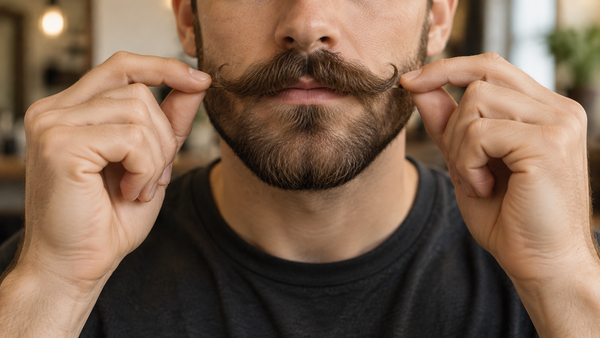
The application is specific. Rub the wax through the mustache so every hair is coated, because the goal is no stray hairs anywhere in the curl. Then you twist. And the direction of the twist matters: twist toward the ends more than the middle, because the tips are where the hair wants to fray and fly away. A tight twist at the ends is what makes the curl look deliberate instead of accidental.
His personal technique: pull the mustache out to the sides, then twist each half upward into the handlebar shape. He skips the full circle some growers do and sticks to the bars. The motion takes practice, and he is honest that the first attempts will not look like the finished style. Keep twirling until the shape sets, and remember that trained hair from Step Two is what makes this step fast instead of a fight.
Check Firehouse Moustache Wax Price
Key theme: wax is a coating, not a spot treatment. Every hair in the curl needs product on it, and the ends need the most.
Step Five: Cleanup With Scissors, Sparingly
Everything above says do not trim, and that holds for the body of the mustache. Strays are the exception. Once the style is set, the occasional wiry hair escaping the curl gets a snip, and that is precision work for small, sharp scissors. Sanguine Professional Mustache Scissors are built for exactly this: fine Japanese steel at a length made for detail work around the lip, and they come in a presentation case that survives a dopp kit.
The discipline is in the restraint. Snip the stray that breaks the silhouette. Leave everything that the curl can still absorb. A month of careful single-hair cleanup beats an afternoon of enthusiastic reshaping that costs you three weeks of length.
Check Sanguine Mustache Scissors Price
The Social Ledger: What You Gain and What You Pay
Matt closes with an honest accounting, and it is more useful than any styling tip because it tells you whether the style suits your life. The upsides, in his experience: people think you are sophisticated, people come up and talk to you, people give you compliments constantly, and you are remembered. Distinct is the word he keeps reaching for. You also get to talk to other guys about facial hair all the time, which he reports as genuinely great.
The downsides get one blunt line and one real one. The blunt line: you have a handlebar mustache, and people see it. The real one is the stigma problem he did not expect. In his experience, people regularly told him they were glad he also had a goatee, because a mustache on its own carries a “creepy” reputation he does not love but has learned to work around. If you are considering the pure stache look, know that the goatee pairing is what most people read as friendly.
Key theme: the handlebar buys recognition and conversation, at the price of being recognizable everywhere, including the days you would rather not be.
Where the Style Fits in a Broader Grooming Routine
A handlebar dominates a face quickly, which makes the surrounding grooming matter more, not less. A clean neckline and tidy cheek lines keep the rest of the beard reading deliberate; our guide to shaping the neckline and cheek line covers that framework in detail. And because the mustache is washed daily in this routine, it pairs naturally with the wider habit of proper beard cleansing covered in our thicker-beard guide.
If you are weighing mustache styles against each other first, the general techniques live in our mustache trimming guide, and the bigger question of which beard shape suits your face is handled in our face-shape breakdown.
The Four Month Reset: Why Matt Shaved It Off
The video ends with a twist worth planning around. After roughly four months of documenting the grow, Matt takes the whole thing off on camera. His own summary is honest: his face is cold and he is having an identity crisis. The lesson is not that handlebars fail. It is that he grew his as a documented season, not as a permanent identity, and the daily work never changed either way.
That distinction matters before you start. A mustache you plan to keep indefinitely needs the same six-week patience and the same wash, oil, style loop, but it never gets a finish line, so the motivation has to come from routine rather than novelty. A seasonal grow has an end date, which makes the awkward middle weeks easier to commit to because you know exactly when the story ends. Decide which one you are running before week one, because the answer changes how you respond to the itchy, unruly phase rather than the styling itself.
One more planning note from his experience: pairing counts. He says people told him they were glad the goatee was there, because a bare mustache alone reads as a statement some people are not ready for. If you are starting from a clean face, think about whether the handlebar is the whole plan or part of a larger beard shape, and shape accordingly. Our guide to shaping the cheek and lip line covers where those boundaries land.
Key theme: grow it with an end state in mind. A keeper and a season-long grow need the same daily loop, but only one of them has a finish line.
Pomade and Coconut Oil: The Interim Kit Before Real Wax
You do not need to buy wax on day one, and Matt is proof. For a while he got away with using the pomade already sitting on his shelf and plain coconut oil. That works while the hair is short because there is nothing to hold yet. The pivot point is length: once the mustache reaches a certain stage, it goes wild, and the interim kit stops being enough. That is the moment real mustache wax earns its place, not the moment you decide to grow.
The practical read for a new grower is simple. Spend the first month on oil and training, not products. Keep pushing the hair out to the sides every day so it learns a direction away from your mouth, and let the length come in. When the corners start to curl and fight the training, add wax and begin the twist. His exact words on the transition: once you get to a certain length, it is going to be pretty wild, and you are going to want to wax that down.
One habit pairs with this and carries through the whole grow: he washes the mustache every day before styling with a non-abrasive shampoo, so it restyles clean instead of fighting residue, and nothing in that routine strips the natural oils the hair needs. A dedicated beard and mustache oil covers the daily softening side, and when the wax stage arrives, Firehouse Moustache Wax is the all-weather hold option many growers settle on.
Check Firehouse Moustache Wax Price
Key theme: the expensive product arrives late, not early. Oil does the first month of work, and wax takes over when length forces it.
FAQ
How long does it take to grow a handlebar mustache? About three and a half months for a full, photographable handlebar. The ends usually have enough length to start flipping after about six weeks.
Should you trim your mustache while growing a handlebar? No. Trimming the center over the lip costs body and leaves the mustache wispy, and body is what the curls are made of. Snip only the occasional stray once the style is set.
How do you keep mustache hair out of your mouth while growing it? Oil it from day one and push the hair to the sides every day. Over a few weeks the hairs learn to lie outward instead of downward.
When should you start using mustache wax? Once the mustache gets long enough that pomade and coconut oil stop holding it. Before that, oil and daily training do most of the work.
How do you twist a handlebar mustache? Coat every hair with wax, pull the mustache out to the sides, then twist each half upward, twisting tighter toward the ends than in the middle.
How often should you wash a handlebar mustache? Every day before styling, with a gentle, non-abrasive shampoo. Washing out yesterday’s wax lets you restyle cleanly instead of fighting the old shape.
The Routine on One Card
- Commit to the timeline: roughly three and a half months to a full handlebar, with the first flip around six weeks.
- Do not trim. Body is the raw material of the curl.
- Oil from day one and push the hair to the sides daily. Training early keeps it out of your mouth.
- Wash, oil, style, every morning, with a gentle shampoo that does not strip the hair.
- Wax fully and twist toward the ends once pomade stops holding at length.
- Snip strays only, with fine scissors, and never reshape out of boredom.
Matt Tastic’s four-month run makes the path clear: the style is built through daily repetition, not one dramatic styling session. Grow patiently, train relentlessly, and the twist will hold when the wax goes in.