As an Amazon Associate, TrustedBarber earns from qualifying purchases.
A fresh cut looks sharp for about a week, and then the neckline fuzzes, the sides puff out, and the whole shape drifts. That drift is not the barber’s fault and it is not time passing. It is what happens between cuts, when washing habits, sleep friction, and skipped styling slowly undo the lines. The good news is that most of the fade-out is preventable with a five-part between-cut routine that starts with an honest wash schedule, using something light like Batiste Powder Dry Shampoo on the off days.
Quick answer
A haircut lasts when the shape is maintained, not rebuilt: wash on a schedule instead of daily, blow dry the shape back in each morning, clean up the neckline at home around week two, refresh flat roots with a little powder, and book the next cut before the current one collapses. Five small habits beat one heroic rescue.
Top picks
Check Price on the Batiste Powder Dry Shampoo
In this guide
Why cuts fade faster than they grow
Hair grows about half an inch a month, which cannot explain a cut that looks gone in three weeks. What actually happens is that the shape’s weakest lines fail first: the neckline where the taper meets the collar, the edge around the ears, and the part where the weight of longer hair pulls the style off its axis. Once those drift, the whole cut reads as overgrown even though most of it is intact. Maintaining a cut is therefore targeted work on the failing edges, not a global re-style.
The second reason is styling drift. Day one’s shape exists because the barber dried and styled it in a specific direction. Every morning after, hair dries in whatever direction the pillow and your hands left it, and small differences compound into a different silhouette by week two. The men whose cuts “hold for six weeks” are re-setting the shape daily, which is a two-minute habit rather than a talent.
Wash less, rinse cooler
Every full wash costs the cut a little structure, because freshly washed hair is fluffy, weightless, and hardest to style into the barber’s shape. Men who wash daily are styling against a reset every morning. Dropping to every two or three days, with cooler water, keeps the natural oils that help hair sit in place and cuts the daily styling burden in half. Our washing frequency guide covers how to find your own number without the grease phase most men fear.
Between washes, water alone is a legitimate tool. A quick rinse and a towel press removes sweat and dust without the full stripping cycle, and hair re-styles more easily on a light rinse than on a full wash. If the roots genuinely need it, the powder route in section five handles the oil without touching the structure at all.
Re-set the shape every morning
Morning styling is where cuts live or die, and the honest technique is smaller than it looks. Dampen the hair lightly at the sink so it is workable, then blow dry it into the barber’s shape using the directions the cut was built on: front up and back for a quiff, straight up for volume on top, down and back for a slicker shape. Our quiff styling guide breaks down the directional logic for one style, and the principle transfers to all of them. A brush like the Diane 7-Row Boar Brush pulls the hair in the drying direction while spreading oil, which is why barbers never style with fingers alone.
Finish with product only after the hair is dry, because pomade and paste lock in whatever shape exists when they go on. A fingertip of the water-based Suavecito Original Pomade over a correctly dried shape holds the lines all day and reworks easily at night. Product on wet hair, by contrast, traps water and collapses by lunch, which is the “my pomade stops working” complaint in a sentence.
The neckline, handled at home
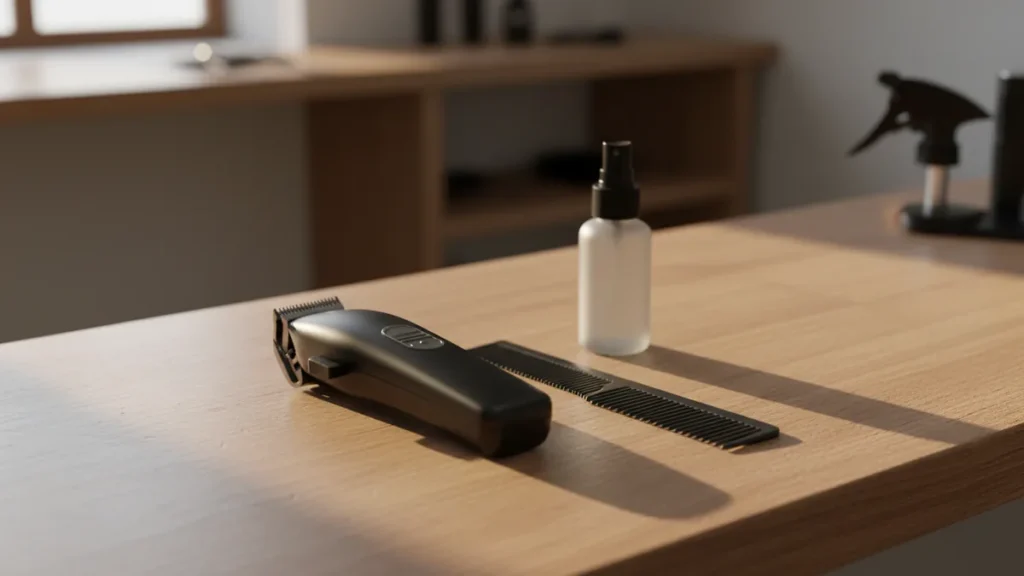
The neckline is the first thing that betrays a cut and the easiest to maintain. At week two or three, the hair below the taper starts reading as fuzz against the collar, and trimming that strip at home buys the cut another week and a half. Use a trimmer with a guard to knock down the growth below the natural neckline, the line that runs from ear to ear across the nape, and leave the line itself to the barber at the next visit. Our neckline cleanup guide walks the whole job with the two techniques that avoid the classic mistakes.
The same logic applies to the edge in front of the ears, where hair grows forward and fast. A single pass with the trimmer’s edge, following the line the barber left, keeps the perimeter reading sharp. What home maintenance should never touch is the taper or the top: those need the chair, and over-trimming them is how men end up needing a corrective cut instead of a routine one.
Refresh the roots without a wash
Flat roots are the mid-week problem that makes a good cut look tired. A small amount of powder at the roots restores the grip the style was built on without any water. Tap a puff of OSiS+ Dust It Volume Powder or the L3 Level 3 Texture Powder at the crown and work it in with fingertips: the powder adds friction between strands, which is what “volume” actually is. Thirty seconds, and the day-one silhouette is back for another day.
Dry shampoo plays the same role from the oil side, absorbing what makes hair clump and lie flat. The two are covered head-to-head in our texture powder versus dry shampoo guide; the short version is powder for grip and shape, dry shampoo for oil, and the two stack fine when the week demands both. Neither replaces a real wash forever, but both stretch the schedule that keeps a cut intact.
Sleep, hats, and the quiet saboteurs
Eight hours of friction flattens a styled cut against a pillowcase every night, and there is no product that undoes it after the fact. The practical answers are cheap: loosely re-set the front section with damp hands in the morning, and accept that bedhead calls for the two-minute re-set from section three rather than a fresh wash. A hat on styled hair does the same compression in an hour, so hats go on after the shape is locked with product, not before.
One more quiet saboteur is the skipped trim. Every week past the cut’s designed lifespan, the shape degrades non-linearly: weeks two through four look maintained with modest effort, and week six looks overgrown no matter what you do. The barbers’ own answer is to book the next cut from the chair before leaving, on the interval the cut actually needs, usually four to six weeks for most short styles. A cut maintained on schedule costs less per year than cuts rescued too late.
FAQ
How long should a men’s haircut actually last?
Four to six weeks for most short and medium styles, with the neckline going fuzzy around week two or three. A routine that maintains the shape can stretch the look to the full interval, but no routine changes the hair growth that defines the limit.
Does washing hair less really make a haircut last?
Yes, for two reasons. Fewer washes mean fewer full restyles, and the natural oil that helps hair sit in place survives. Men who drop from daily to every other day usually report the cut holding its shape noticeably longer within the first two weeks.
Can I use pomade on consecutive days without washing?
Water-based pomades rinse out with water alone, so a nightly rinse removes the day’s product before the next application. Buildup complaints usually come from oil-based formulas or from layering product over unwashed hair for a week straight.
What is the cheapest single upgrade?
A boar bristle brush. It re-sets shape, distributes oil, smooths frizz, and costs less than most styling products. Combined with a two-minute morning dry, it does more for cut longevity than any bottle.
The verdict
Making a haircut last is a maintenance skill, not a shopping decision: wash on a schedule, re-set the shape dry each morning, handle the neckline at home, refresh roots with powder, and rebook on the interval the cut needs. Keep a light texture powder like the L3 Level 3 Texture Powder on the shelf for the mid-week slump and the four-week cut starts reading as fresh at week five.