As an Amazon Associate, TrustedBarber earns from qualifying purchases.
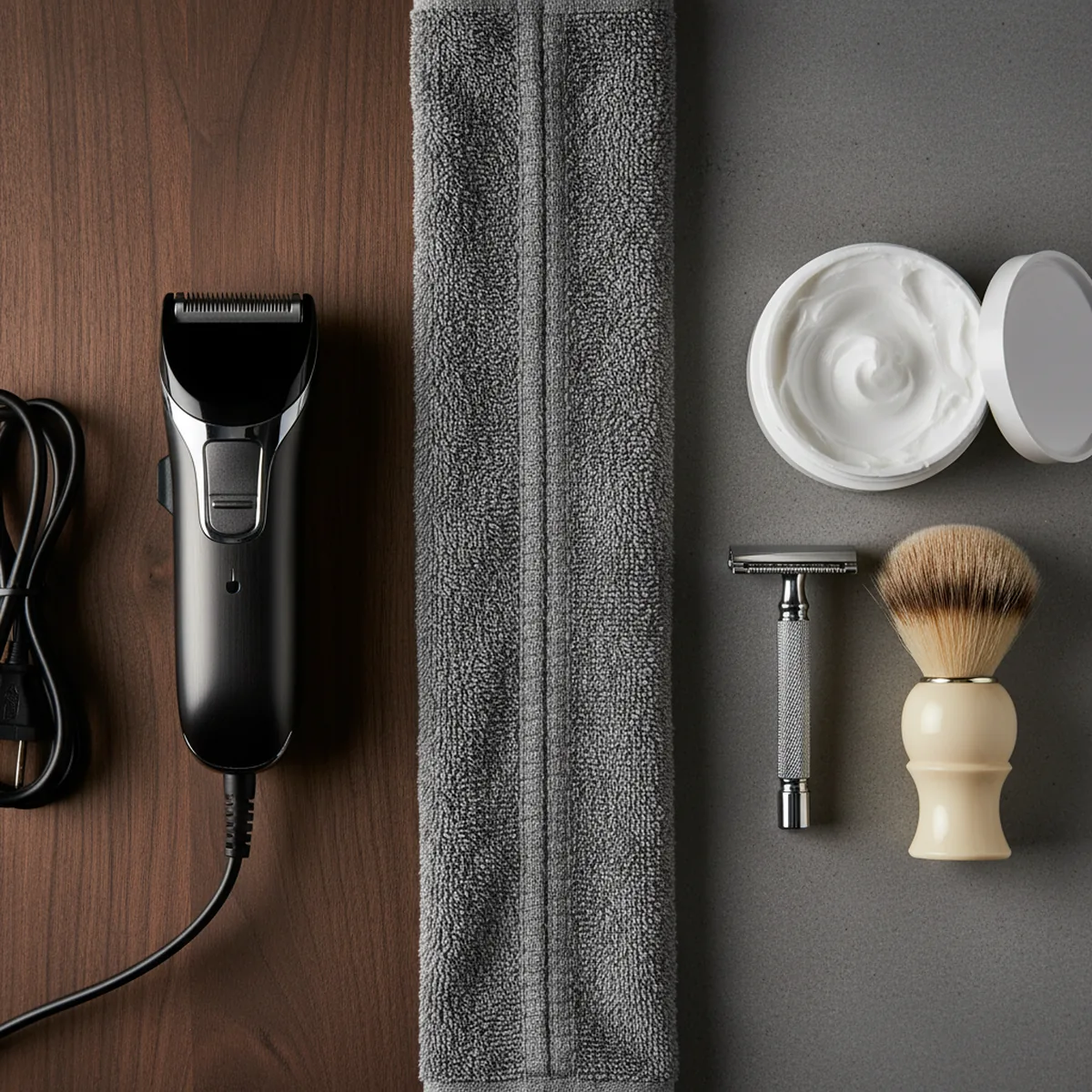
The wet shave vs dry shave debate is older than either of the tools doing the debating, and both camps are right for somebody. A wet shave with a razor and lather gives the closest finish and costs pennies per shave; a dry shave with an electric gives speed, forgiveness, and a shave you can take at the sink in ninety seconds before a call. This guide walks through what each actually involves, who each one suits, where electric and blade shaves overlap, and what to buy for whichever side you land on. Every product below was checked in stock on Amazon in early November 2026, with prices as ranges rather than fixed numbers, because blade and shaver pricing moves weekly.
Quick answer
Choose a wet shave when closeness matters most and you have ten unhurried minutes; choose a dry shave when speed and skin forgiveness matter more. For the dry side, the Panasonic Arc5 is the benchmark foil shaver at about $170 to $190. For the wet side, Cremo Sensitive Shaving Cream and Proraso Sandalwood Shaving Cream are the two creams that work for almost every skin type at about $8 to $11, and Gillette Sensor3 disposable razors in a four-pack covers travel shaves at about $6 to $8.
In this guide
What each method actually is
A wet shave means water, lather, and a bladed razor, whether that razor is a cartridge, a double-edge safety razor, or a straight razor. The hair is soaked, softened, and cut at or slightly below the skin line by a fresh edge. A dry shave means an electric shaver on dry skin, no lather, no water, with either a foil or rotary head lifting and cutting the hair at the skin line. Electric shavers designed as wet-dry models can also be used with foam in the shower, which blurs the line a little, but the two styles still produce a different finish and a different feel on the skin.
The split matters most for the face. Head shaving works well both ways, and our head-shaving guide covers that in depth. For most men the practical question is not which method is universally better; it is which one fits the mornings you actually have.
Closeness: where the blade wins
Nothing an electric shaver does matches a sharp blade on soft, well-prepped skin. A wet shave cuts the hair flush to the skin and often a hair-width below it, which is why the glass-smooth standard is associated with barbershop straight-razor work. The catch is that closeness is earned with preparation: warm water, a real lather built with a brush or worked hard by hand, and a blade sharp enough to glide rather than scrape. Our shaving creams and soaps guide covers the lather side of that equation. Skip the prep and the closeness advantage collapses into irritation, which is how many men end up blaming the blade for what was really a dry, rushed pass.
The safety razor route deserves a specific note. With a double-edge razor, a blade change costs pennies, so you can realistically shave on a fresh edge every time, and fresh edges are the single biggest closeness factor. Our when to change razor blades guide gives the exact shave counts to aim for.
Skin: where the electric wins
Foil and rotary shavers lift the hair before cutting, never go below the skin line, and cause far fewer of the micro-cuts that a blade leaves on uneven skin. Men with razor-bump-prone skin, sensitive necks, or coarse curly hair that tends to curl back into the skin usually do better with electric for that reason, and our razor bump prevention guide builds a whole routine around it. The trade is finish: an electric shave looks clean from conversational distance but rarely passes the fingertip test. Sensitive-skin buyers should also see our sensitive-skin electric shaver picks, which go deeper on foils and head design.
Electric also forgives neglect. A blade punishes a bad night, a bad angle, or a rushed pass immediately; a foil shaver keeps the damage modest. For a lot of men that forgiveness is worth more than closeness, and that is a legitimate answer, not a consolation prize.
Time, cost, and mess
Time: a dry shave runs one to three minutes with no prep and no cleanup beyond a rinse of the shaver head. A wet shave with real prep runs ten to fifteen minutes start to finish. That difference is why most electric converts do not convert back, whatever they think of the finish.
Cost: a wet shave is cheap per session once owned, with blades at roughly 10 cents to $2 a shave depending on system. An electric is expensive once, cheap after: a quality foil shaver runs about $130 to $250, and foil and cutter replacement every 12 to 18 months adds $30 to $60. Over three years the two routes land surprisingly close.
Mess: dry shaving scatters tiny clippings that a sink rinse handles; wet shaving produces lather that needs a quick rinse too, plus a brush and bowl if you use them. Neither is a real burden, but wet shaving occupies more of the bathroom.
The gear for each side
The dry side: a foil shaver that earns its price
The Panasonic Arc5 is the five-blade foil shaver most reviewers use as the reference point, priced around $170 to $190. It shaves fast, handles flat-lying hairs with its lifting combs, and can be rinsed under the tap as a wet-dry model. Pair it with a pre-shave powder or a light splash and it closes most of the gap to blade territory for stubble-length growth. Its downsides are noise and bulk, both manageable, and the replacement-foil cost noted above.
Check Panasonic Arc5 Price on Amazon
The wet side: two creams that fit nearly everyone
The Cremo Sensitive Shaving Cream is a concentrated brushless cream, about $7 to $10 for six ounces, built for sensitive skin and long enough that one tube outlasts two months of daily shaves. The Proraso Sandalwood Shaving Cream in the sandalwood formula, about $9 to $11, is the classic Italian soap-in-a-tube, richer in lather and friendlier to a brush. Together they cover the two most common skin situations: reactive skin that wants minimal ingredients, and beards so coarse the lather has to carry the pass.
Check Cremo Sensitive Price on Amazon
The travel and backup pick
Whichever side wins at home, a pack of Gillette Sensor3 disposable razors disposables, about $6 to $8 for four, covers hotel mornings and gym bags. They are not the closest shaves you will ever get, and that is fine; the job is not shaving badly on the road, and a clean three-blade disposable beats a forgotten razor every time.
Check Sensor3 Disposables Price on Amazon
Switching between the two without wrecking your skin
Men who keep both methods in rotation should expect an adjustment week. Skin that has been electric-shaved for months reacts to a blade differently: the first wet shave back usually feels harsher, not because the blade got duller but because the skin surface was not used to it. Reverse the order, going blade to electric, and the usual complaint is that the electric feels like it is missing hair until your expectations reset. Plan the switch at a time when a less-than-perfect finish is acceptable, and give each method at least a week before judging it. Alternate daily only after both feel normal again, and keep whichever aftershave routine you trust on both sides of the switch, since the aftercare matters more than the tool in the week you change habits.
There is one more crossover worth naming. Electric users who want a closer finish without abandoning the shaver can trim to stubble with the foil and follow with a single careful blade pass on the flattest parts, usually the cheeks. Barbers do a version of this in reverse, finishing a wet shave with a foil for polish. It is a hybrid, not a compromise, and it works best when each tool is doing the job it is best at rather than both fighting for the same pass.
FAQ
Is a wet shave always closer? With good prep and a fresh blade, yes, and the gap is real. A dry shaver on two-day stubble over soft skin comes closest to matching it, and the fingertip test will still usually favor the blade.
Can electric shavers be used wet? Wet-dry models can, with foam or gel, and some men get the best of both that way. Check the rating on the shaver itself; standard models are dry-use only.
Which is cheaper long term? Roughly a tie over three years: an electric costs more up front, blades cost more per shave. The honest number is whatever gets used correctly; a $180 shaver used daily beats a $30 blade setup abandoned in month two.
Which is better for sensitive skin? Electric, in most cases, because it never cuts below the skin line. Sensitive skin that prefers blades should lean on creams built for the purpose, like the two picks above.
Can I do both? Most shavers eventually do: electric on workdays, a wet shave on slower mornings. The gear list for that is short, since the disposables above already cover travel.
The verdict
Pick the method that fits your mornings, not the one that wins on paper. If closeness is the point and you can spare ten minutes, build a wet-shave routine around a fresh blade and a cream that suits your skin. If speed and forgiveness are the point, the Arc5 is the dry-shave benchmark and worth its price. The best routine, for a lot of men, ends up being both, each on the days it suits.