As an Amazon Associate, TrustedBarber earns from qualifying purchases.
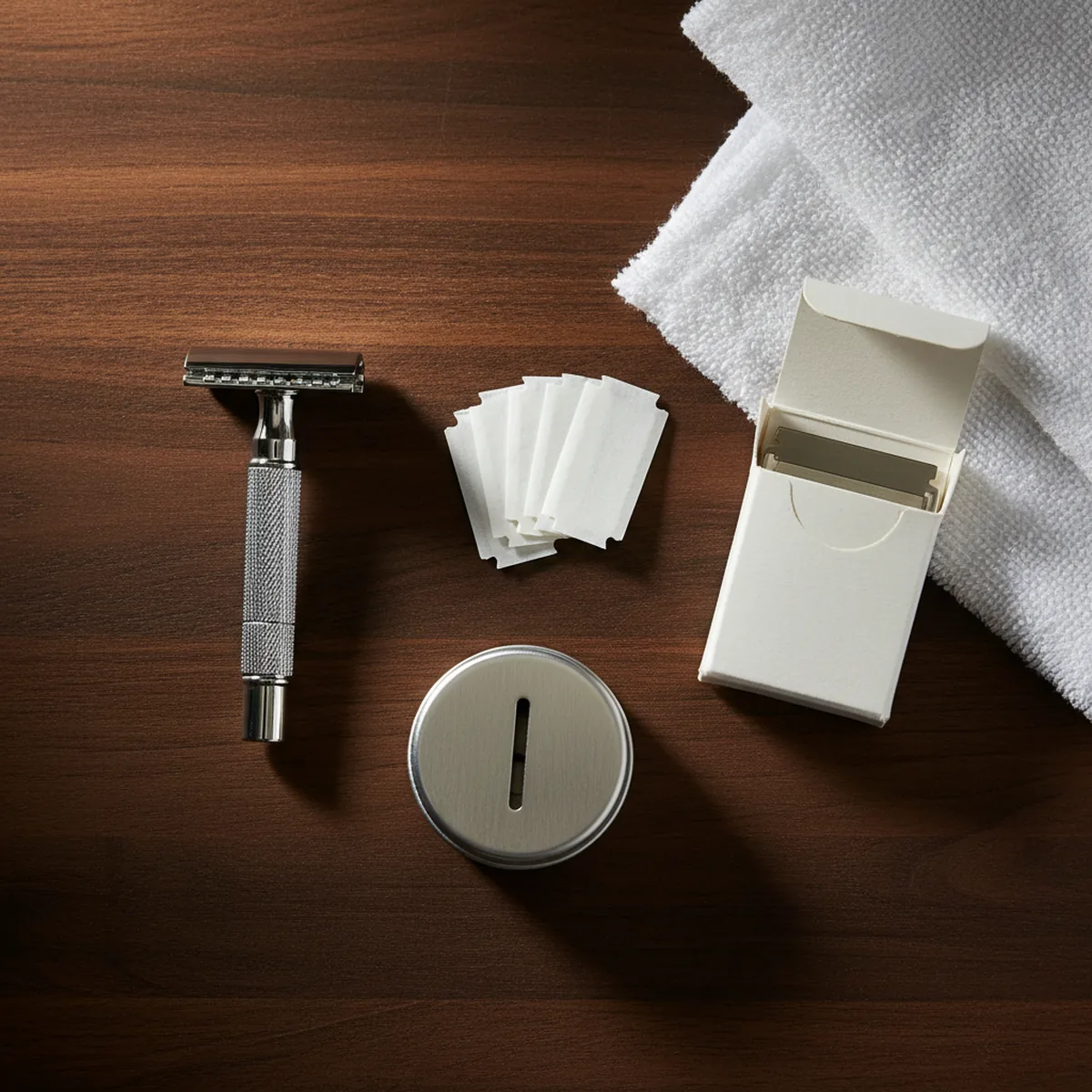
Most shavers keep a blade long past the point it stopped helping them. The signs are easy to miss because they build slowly: the pass takes more pressure, the neck pays for it later, and the blade starts tugging hairs you used to cut without thinking. Knowing when to change razor blades is mostly a matter of reading those signs instead of pushing through them. This guide covers how long each blade type actually lasts, the tells that a blade is done, what dull blades cost your skin, and what to stock so a fresh edge is always within reach. Prices below run from about $6 for a small blade bank to about $40 for cartridge refills, and every listing was checked in stock in early November 2026.
Quick answer
Change cartridge and disposable blades after five to eight shaves, and double-edge razor blades after three to seven, or sooner if you feel tugging. Stock up on Gillette Fusion5 refills if you shave with cartridges, Harry’s blade refills for the same idea in a smaller pack, Feather DE blades and Astra Platinum DE blades for safety razors, and a ZOMCHI blade bank to store used blades safely until you throw the can away whole.
In this guide
Why blade age matters more than most men think
A dull blade does not shave closer with more pressure; it scrapes. The edge, instead of slicing a hair at the skin line, bends it, pulls it, and snaps it below the surface, which is exactly how ingrown hairs and razor bumps start. Our razor bumps and ingrown hairs guide covers the aftermath, but the cheapest prevention is boring: retire blades on schedule. Dull edges also drag rather than glide, and dragging is what turns a routine shave into two days of neck burn. If your shave quality changes from week to week and you cannot explain it, count the shaves on the current blade first. It is the most common variable nobody tracks.
There is a cost angle too, and it surprises people. A cartridge that lasts eight good shaves costs a few dollars; stretching one to twenty bad shaves still costs the same money and buys irritation on top. Blades are the cheapest consumable in grooming. Treating them as disposable, as they were designed to be, is the whole point.
The lifespans, blade type by blade type
Cartridge razors: five to eight shaves is the honest range, with lower mileage for thick or coarse hair and higher for fine hair and light stubble. The lubricating strip on a cartridge is a rough odometer; once it is visibly faded, the blade is usually close behind. Rinsing after every shave and storing the razor dry, blade up, keeps you in the top of that range.
Double-edge safety razor blades: three to seven shaves is the common experience, and it varies more between brands than cartridge users expect. Aggressive blades such as Feather feel superb on shaves one and two and fade fast; middle-sharpness blades hold their feel longer. Because a hundred-pack costs about $9 to $35, changing blades this often costs pennies per shave, which is one of the quiet reasons our safety razor guide recommends them to beginners. There is no shame in a new blade every two shaves; the math still favors you.
Disposable razors: three to five shaves is realistic, even for the two-blade hotel-style ones nobody expects much from. Sealed in plastic they stay sharp for years, but once in rotation their thin blades dull quickly.
Straight razors and shavettes sit outside this guide; a straight razor is honed rather than replaced, and our straight razor technique guide touches on where the two overlap. Shavette blade holders, which take the same double-edge blades as a safety razor, follow the DE replacement schedule.
The signs a blade is done
The first sign is feedback you can feel: tugging on longer hairs or a rasping, dry sound on the second pass. The second is what your skin says afterward, a red or stinging neck that a fresh blade never caused. The third is positional: if you find yourself changing your stroke angle or pressing harder to get the same result, the blade has lost its edge, not your technique. A fourth sign only applies to shavers who look at the edge under bright light; visible nicks, corrosion spots, or a dark film along the edge mean the blade is done regardless of shave count.
One habit that quietly shortens blade life is leaving a razor in the shower. Water sits on the edge for hours, micro-corrosion sets in, and a blade that would have lasted eight shaves turns ragged in three. Rinse, shake, wipe the blade gently against a towel, and store it dry and upright. It costs nothing and buys shaves.
What to stock so you never shave on a dull blade
Cartridge refills: Fusion5 and Harry
For cartridge shavers, the Gillette Fusion5 refills in the 12-count pack covers about two months of daily shaving at around $36 to $42, which works out to roughly $1.50 to $2 a blade. The Harry’s blade refills in the 10-count lands in the same per-blade neighborhood at about $22 to $28 and suits men who like a simpler handle. Buy in packs of eight or more and the per-shave cost stops being a reason to stretch a blade.
Check Fusion5 12-Count Refills Price on Amazon
Double-edge blades: Feather and Astra Platinum
Safety razor users should keep two brands on hand, because a sharpness change mid-pack is a better signal that it is time to change than any calendar. The Feather DE blades in the 100-count box is the famously sharp option at about $28 to $35, best for men whose technique is settled. The Astra Platinum DE blades in the 100-count is the friendly middle at about $8 to $12 and the usual beginner recommendation, and at that price changing blades every three or four shaves costs almost nothing. Two shaves a blade on Feathers is still under 40 cents a shave.
Check Astra Platinum 100-Count Price on Amazon
The blade bank: where used blades go
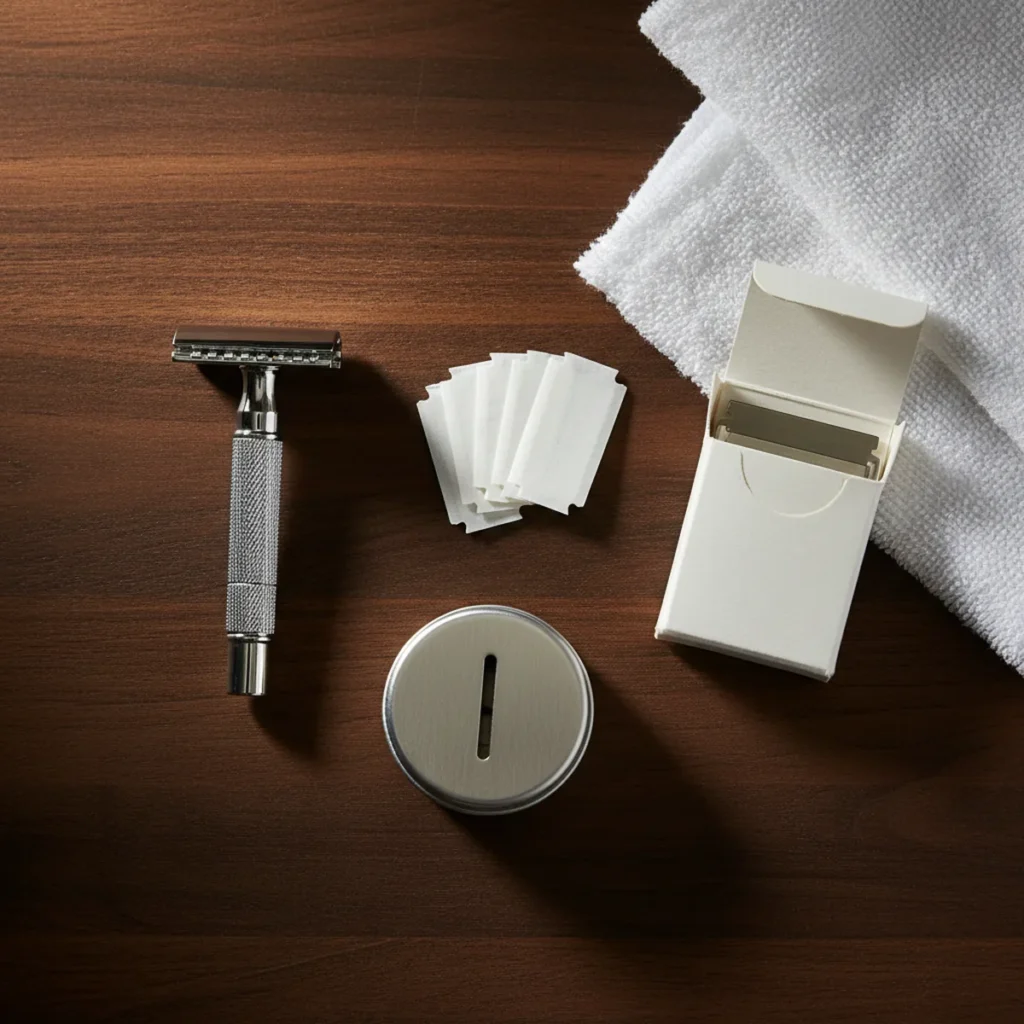
Used blades should not go loose into the trash, where they work their way out of bags and into hands. A ZOMCHI blade bank is a small metal can with a slot for about $6 to $8; drop each blade in, and when it fills you throw the whole sealed can away or take it to a scrap-metal drop-off. It is the least glamorous product in this guide and the one you will be glad to own after the first plastic-bag incident.
Check ZOMCHI Blade Bank Price on Amazon
Disposal and safety
The blade bank covers it: collect, seal, dispose whole. If you have been collecting blades in an old jar or the cardboard slot of the blade wrapper, fine; decant them into the bank with a towel over the pile. Never try to cut open a filled bank. Some municipalities accept sealed blade banks in regular trash and some ask for scrap metal, so if the question matters to you, a quick search of your city waste page settles it. The same discipline applies to barbershop-style disposal, which our tool-hygiene coverage handles elsewhere on the site.
FAQ
How many shaves does one razor blade last? Three to seven for double-edge blades, five to eight for cartridge refills, three to five for disposables. Thick, coarse hair lands at the low end of each range, fine hair at the high end.
Do wet blades dull faster? Water, not air, is the bigger enemy. A blade rinsed and stored dry lasts noticeably longer than one left in a wet shower caddy, whatever the brand.
How much should blades cost per shave? Double-edge blades work out to roughly 10 to 40 cents a shave depending on brand and shaves per blade; cartridges run about $1.50 to $2.50 per blade in refill packs.
Can I sharpen a cartridge blade at home? Denim-stropping tricks exist, and they buy a shave or two at most. They do not restore the edge, and a blade worth a dollar is not worth the experiment.
Are expensive blades better? Not always. Feather is premium and unforgiving; Astras are cheap and forgiving. The best blade is the one that matches your technique, which is why the two-brand trick above works.
The verdict
Track shaves, not months. Change cartridges at five to eight shaves and double-edge blades at three to seven, sooner if you feel tugging, and keep a blade bank on the shelf so retiring a blade is always easy. Stock the refills in multipacks, rotate two DE brands, and your shaves stay sharp, your neck stops paying for stale edges, and the whole habit costs less per month than the specialty coffee you drink while you do it.