TrustedBarber is reader-supported. If you buy through links on this page, we may earn a commission from Amazon at no extra cost to you.
Barber pick
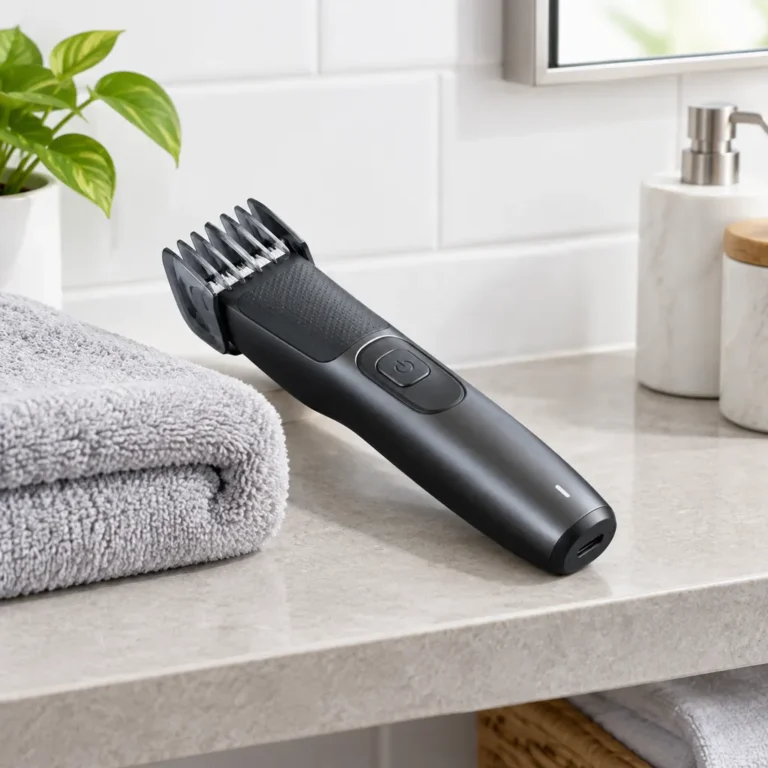
Wahl Detailer Li. the precision trimmer for crisp lines no matter your face shape.
The face-shape pairings here draw on Matty Conrad’s beard styles breakdown below (watch it here), which matches each style to the face it flatters.
Video: Matty Conrad on YouTube
- Why Face Shape Decides the Beard, Not Trend Lists
- Identify Your Face Shape in Two Minutes
- Oval Faces: The Most Forgiving Canvas
- Round Faces: Build Vertical, Cut the Sides
- Square Faces: Round the Jaw, Keep the Strength
- Long Faces: Width Is the Whole Mission
- The Eight Styles, Mapped to Real Faces
- The Neckline and Cheek Line Do More Work Than the Style
- The Maintenance Stack That Keeps the Shape
- Heart and Diamond Faces: Volume With a Ceiling
- Grow First, Decide Second
- Frequently Asked Questions
Why Face Shape Decides the Beard, Not Trend Lists
Every few months a new beard style trends, and half the men who copy it look worse than they did before. The style was not the problem. The style was built for a different face. Beard styling is compensation: a beard’s job is to add length where your face is short and structure where it is soft. Once you know which dimension your face lacks, every style choice stops being taste and starts being geometry.
Barbers on YouTube make this point constantly when they walk clients through shape-ups on camera: the same beard that makes a long face look gaunt makes a round face look chiseled. The hair did not change. The canvas did.
Identify Your Face Shape in Two Minutes
Stand in front of a mirror with your hair off your forehead and take three measurements with a soft tape or a phone photo you can trace over:
- Length: hairline to chin.
- Cheekbone width: the widest point across your cheekbones.
- Jaw width: the widest point across the jaw, just below the ears.
Compare them against the four profiles below. Most men fall close to one, and nobody is a perfect template. If you sit between two shapes, borrow the advice for both and favor the shape you hear strangers guess.
- Oval: length is noticeably greater than width, jaw slightly narrower than cheekbones, with soft, rounded corners.
- Round: length and cheekbone width are close to equal, with a soft jawline and full cheeks.
- Square: length and width are close, with a hard, angular jaw at roughly the same width as the forehead.
- Long or rectangular: length is dramatically greater than width, with a fairly even jaw and cheekbone width.
Oval Faces: The Most Forgiving Canvas
Oval faces carry nearly every beard style, so the strategy is not compensation, it is amplification. A full, well-maintained beard with a natural cheek line and a squared-off neckline works, and so does a trimmed short beard. The one mistake oval faces make is chasing extreme shapes built to fix problems they do not have: a sharply tapered chin-strap beard on an oval face over-lengthens an already long proportion and reads narrow.
Keep the cheek line natural, keep the neckline tight, and let the beard fill out. If you want a signature, a light stubble-to-medium beard with defined edges keeps an oval face looking intentional without fighting its balance.
Round Faces: Build Vertical, Cut the Sides
A round face needs the beard to add length and remove width. That means two things happen at once:
- Grow the chin longer. Extra length at the chin stretches the face vertically. A ducktail or an extended goatee shape puts that length exactly where a round face needs it.
- Keep the sides tight. Heavy volume on the cheeks widens the face. Fading the cheek area short, or at minimum keeping cheek hair trimmed well below maximum density, stops the beard from turning a round face into a rounder one.
Avoid the boxy, full-everywhere beard. On a round face it does the opposite of what the style promises. The Wahl Detailer Li is the right class of tool for this job, because a T-wide detail blade lets you carve a tight cheek line and fade the side area without leaving guard lines on a surface that faces the camera in every photo.
Square Faces: Round the Jaw, Keep the Strength
A square jaw is an asset, and the beard’s job is to soften its corners without erasing them. The play is a full beard with gently rounded corners at the jaw and a modest amount of length under the chin, enough to add a curve but not enough to droop. Skip razor-sharp right angles at the corners; a straight-edge beard on a square face doubles the angularity until the whole lower face looks armored.
Keep cheek lines low and natural. A square face with heavy cheek coverage and hard lines becomes a square within a square. Softer edges up top and a rounded foundation below is the combination that reads strong rather than severe.
Long Faces: Width Is the Whole Mission
The long face is the inverse of the round face: grow the sides, restrain the chin. Full cheek density, full volume through the moustache, and a chin kept shorter than the cheeks would naturally run. The worst possible style for a long face is the long, pointed chin-strap, which is a round face’s best friend and a long face’s worst enemy, for the exact same reason.
Barbers sometimes describe it as building the beard like a shield: wide across the cheeks, flat across the chin. If your chin hair grows in a natural point, square it off slightly rather than following the point, and let the cheeks do the talking.
The Eight Styles, Mapped to Real Faces
The face shapes above say where the mass goes. The tutorial embedded above, from barber Matty Conrad, runs through the eight styles that fill it, and what each one costs in upkeep. Here is the short version of his rundown:
- The tapered beard. Faded down to zero at the sides, it narrows a wide face, which is exactly why Conrad calls it the pick for broad face shapes. It is the wrong answer for patchy growth, because short sides expose the sparse spots, and for long beards, since cutting the top area short cuts the bulk of everything below it. It is also the highest-maintenance style on the list: plan on a barber visit about every two weeks to keep the taper tight.
- Shaped stubble. Hair kept short with a clipper set between a 1 and a 1.5 guard, and the outline is what makes it read as a beard rather than an unshaved week. Results show in two to three weeks, it works on any face shape, and it sharpens the jawline. One rule from the video: no beard oil on stubble. Oil is formulated for longer beards that draw moisture away from the skin, and on short stubble it tends to cause breakouts. A guard-capable clipper like the Wahl Color Pro holds those stubble lengths without fuss.
- The brogue. Cheeks, chin, and neck cut short while the mustache grows full, so the face reads a little like the pattern on a brogue shoe. Conrad recommends it for guys who already have a strong jaw and a mustache that grows dense, since the mustache carries the style. Care is a decent beard wash and a mustache wax to keep the upper lip under control.
- The long beard. Wider at the sides and bottom, groomed with scissors rather than clippers and guards. It is the strongest cover for a weak jawline and suits narrow or standard faces, less so round or fuller ones. It also demands the most from your counter: a dedicated beard wash, daily oil, and a pick or brush to detangle, every day.
- The Van Dyke. A pointed chin shape with a disconnected mustache, and the classic answer for patchy cheeks, because it only needs the growth that actually shows. It works at short or longer lengths, needs a good trimmer and a bit of mustache wax, and is a poor trade for very dense growth, since keeping the cheeks that clean approaches the work of shaving.
- The goatee. Conrad calls it a training beard: growth that circles the mouth, maintainable with a trimmer alone, and growable in two to three weeks. It lengthens the chin, which flatters fuller faces and works against narrow ones. Several goatee shapes exist, so it pays to try a couple before committing.
- The sole patch. The small triangle under the lip. Conrad’s verdict is blunt: it is a garnish, not a beard.
- The full beard. It comes in three shapes: the Garibaldi with a round base, the square-based style most people call the lumberjack, and the pointed ducktail. All three suit nearly every face shape but need medium-to-thick density, semi-regular grooming, and a serious care regimen to stay deliberate rather than feral.
The practical read: match the style to both your face shape and your growth pattern, not just one of the two. A style that flatters a round face fails fast if it exposes your patches, and a style that hides patches fails if it demands barber visits your schedule will not fund.
The Neckline and Cheek Line Do More Work Than the Style
Whatever your shape, two lines carry more visual weight than any styling choice. The neckline belongs just above the Adam’s apple, not under the jaw, and not on the neck. The cheek line stays natural or gets cleaned up in small increments, never carved into a hard, high block that makes the beard look painted on. Our walkthroughs of the beard neckline, cheek line, and lip line and the barber framework for shaping a beard at home cover both in detail, with the exact landmarks to feel for.
The Maintenance Stack That Keeps the Shape
Shape is set by the trim; texture is set by the routine. Coarse, wiry, or patchy hair fights every silhouette above, so the daily work is softening and training the hair to lie where the shape wants it.
- Wash without stripping: a dedicated beard wash two to four times a week beats face wash or shampoo, which dries beard hair into bristle. The Viking Revolution tea tree beard wash is a solid everyday pick for normal skin.
- Oil daily: a few drops worked into the skin under the beard keeps the hair soft enough to hold a line. The Honest Amish Classic Beard Oil is the oil we point to here, and our breakdown of beard oil vs balm vs butter explains when each one belongs in the routine.
- Detail weekly: edge the neckline and cheek line once a week with the Wahl Detailer Li so the shape survives between full trims.
Check the Viking Tea Tree Beard Wash on Amazon
Check the Honest Amish Beard Oil on Amazon
Heart and Diamond Faces: Volume With a Ceiling
Two shapes round out the map. A heart-shaped face (wider at the temples and cheekbones, narrowing to a pointed or narrow chin) does best with a beard that fills the chin area and keeps the cheeks moderate: the beard is literally adding mass to the half of the face that lacks it. A diamond face (wide cheekbones, narrow forehead and chin) wants the opposite balance, so keep the chin length modest and let a fuller moustache and slight cheek coverage widen the narrow points.
Both shapes share one trap: a long, narrow beard turn below the chin. Any style that tapers hard into a point steals width from faces that are already short on it. Square the chin off, even slightly, and both shapes read more balanced.
Grow First, Decide Second
Every barber has watched a client pick a style on day zero of growth and then fight it for two months. The honest sequence is to grow the beard past the awkward stage, four to six weeks of genuine length, then choose the style based on what the growth actually does: where it fills in, where it patches, which direction the hairs at the jaw grow. The style you plan before growing is a guess; the style you choose after growing is a decision. Trim only the neckline during that window and leave the rest alone.
Frequently Asked Questions
Can a beard fix a weak jaw?
It can disguise one. Full density at the jaw corners with slight length below adds the mass a recessed chin lacks, and a short boxed beard is the most common version barbers build for exactly this.
What about patchy growth?
Shape around it. Choose a style whose silhouette depends on the lines, not the density: a tight stubble or short beard hides patchiness better than a long full beard, where gaps become visible geometry. If you are working on density itself, keep the style choice based on what fills in today, and give any growth routine months, not weeks, before you judge it.
Does hair on top count?
It counts enormously. The beard balances the face against the haircut, not in isolation. A high fade on top effectively lengthens the face, which is why barbers will shorten a planned beard style for a client with a high, tight cut. Decide both together.
Which beard style hides patchy growth best?
The Van Dyke and the goatee, per the tutorial above, because both concentrate what growth you have into the chin and mustache and cut the cheeks out of the picture. Shaped stubble can also work at low commitment, though Conrad notes extremely low-density beards struggle to hold the solid outline the style needs.
How long until shaped stubble looks deliberate?
About two to three weeks from a clean shave, depending on your density. What makes it look intentional during that window is the outline, so edge the neckline and cheek line with a trimmer as it fills in rather than letting it blur.
Can you put beard oil on short stubble?
No. Beard oil is made for longer beards, where the hair pulls moisture away from the skin underneath. On shaped stubble the video’s guidance is that it tends to cause breakouts instead of helping, so hold the oil until the beard actually has length.
What are the three full beard shapes?
The Garibaldi, which rounds at the base; the square-based full beard most people call a lumberjack; and the ducktail, which tapers to a point. The face suits all three; your growth density and how much daily maintenance you will actually do pick between them.