TrustedBarber is reader-supported. If you buy through links on this page, we may earn a commission from Amazon at no extra cost to you.
A receding hairline does not actually take your options away. It takes away one option: the hairstyle that pretends nothing is happening. Every other direction, cutting shorter, going matte, lifting the front with texture instead of covering it, reads as a deliberate choice, and the men who look best with a receding hairline are almost always the ones who made that choice early. The styles below are the ones barbers reach for when a client sits down and says the front is going, ranked from the least change to the most, each with the reason it works and the one trap to avoid.
Before the styles, the one rule they all obey.
- The one rule: shorter beats covered
- The buzz and the crew cut: the zero-friction answer
- The textured crop: the modern default
- The slick back and the quiff: for the hairline that still has front
- The clean-shaven pivot: the option nobody regrets as often as they expected
- What to stop doing this week
- Products that make thin hair read as deliberate
- Talking to your barber about it
- How a Barber Actually Reads a Receding Line
- The Modern Mullet Move
- Common questions
Barber pick
Slick Gorilla Hair Styling Powder. the matte powder that gives a short style lift without shine.
The direction here, keeping the cut short and working with the hairline instead of fighting it, is the same approach the barbers at Regal Gentleman take in the consultation below (watch it here).
Video: Regal Gentleman on YouTube
The one rule: shorter beats covered
Thinning hair does not fail at the follicle level first; it fails at the contrast level first. Sparse hair under a long style creates visible gaps between strands, and the eye reads those gaps as loss. Cut the hair shorter and the gaps shrink visually, because what the eye sees is density per square inch of silhouette. This is why the same hairline looks dramatically better in a two-week crop than under three inches of swept-over length. Shorter also moves the eye to the strongest features, jaw and brow, instead of framing the forehead. Every style below is a version of that principle with different maintenance budgets.
The buzz and the crew cut: the zero-friction answer
The buzz cut is the cleanest reset available, and at #1 or #2 guard length it removes the thinning question entirely because there is no length to part, thin, or betray. The full guard-by-guard breakdown is in our clipper guard sizes explainer; for a receding hairline the specific pick is #2 on top with a faded or zero side, which keeps a shadow of shape while the forehead’s V reads as intentional. One guard shorter, and the hairline’s shape stops mattering at all.
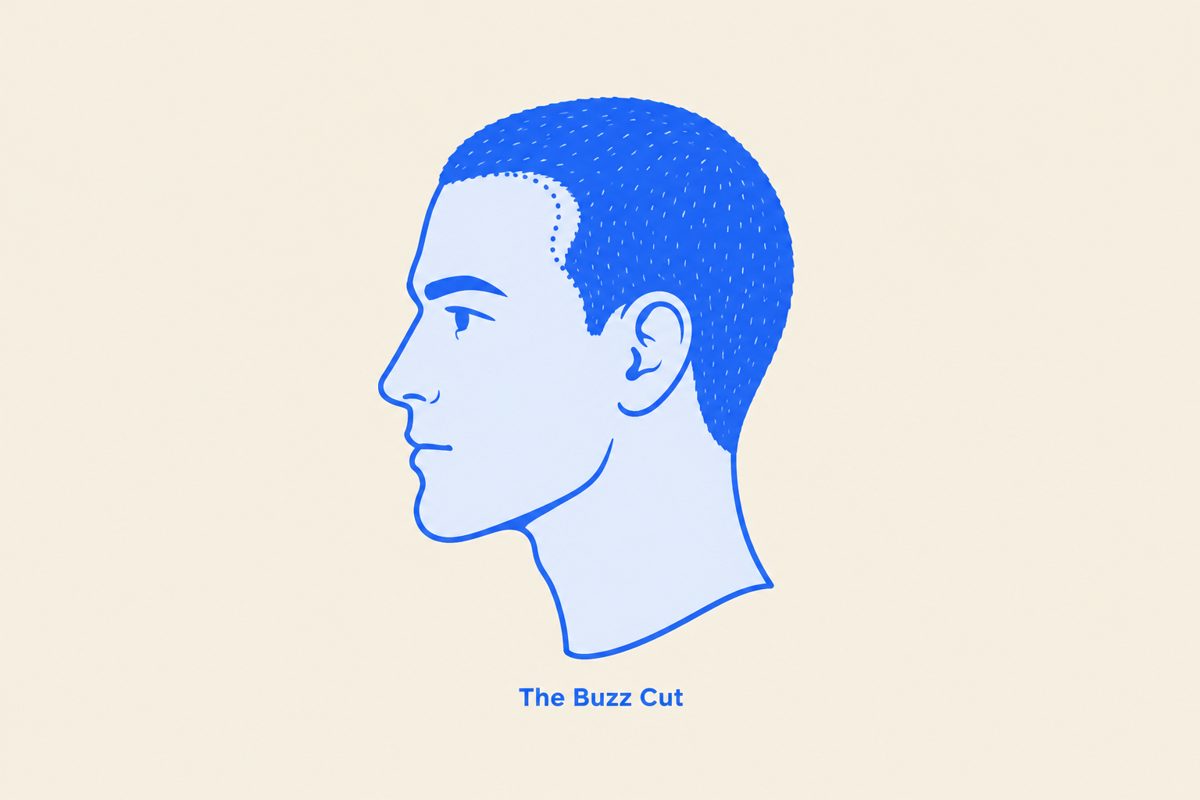
The crew cut is the version for men who want hair that still looks like a haircut. Short sides, a cropped top with the front slightly upright, and the front’s lift draws attention upward and away from the temples. The method is in our crew cut guide, and the cut pairs naturally with a skin fade on the sides for men who want the modern read. Between cuts, the neckline keeps the whole thing sharp, which is the two-minute fix in our neckline cleanup guide.
The textured crop: the modern default
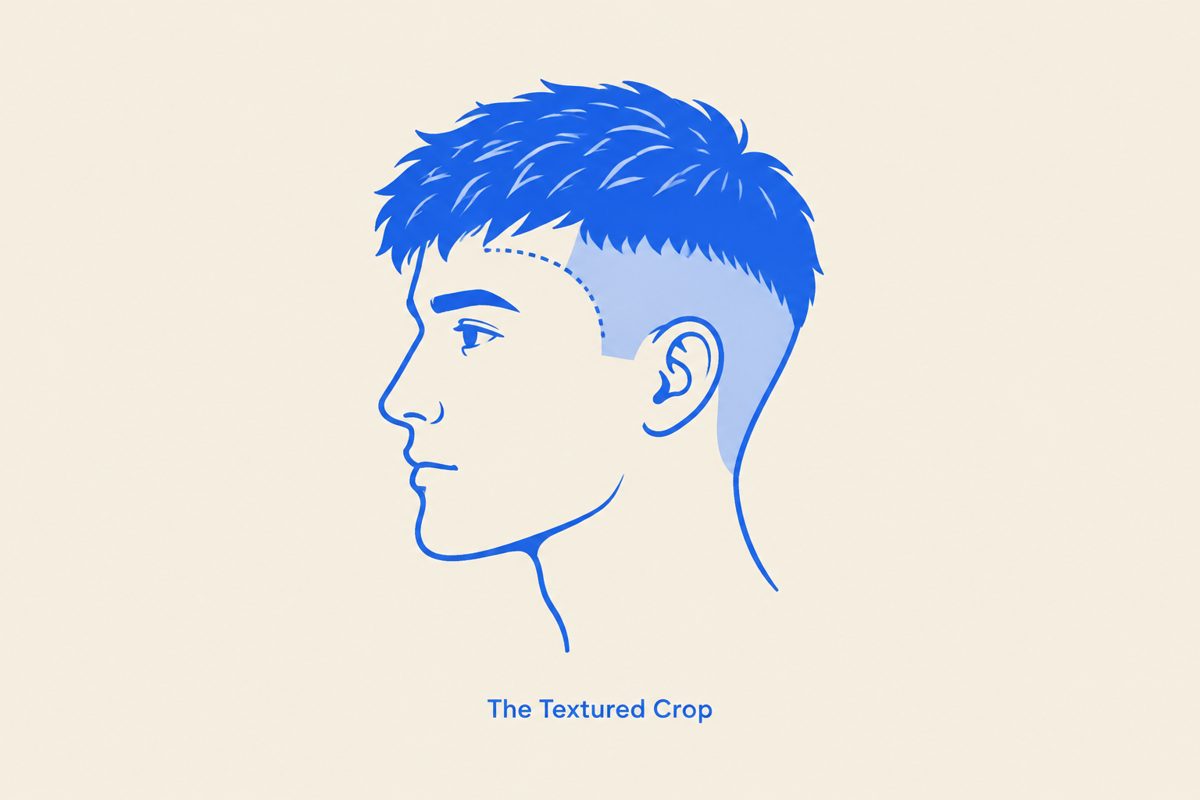
The French crop and its messier cousins are the most requested answer to a receding hairline for good reason: the fringe sits forward across the hairline and turns the recession into a styled feature instead of a problem. Two conditions make it work. First, the fringe must be cut as a fringe, blunt and heavy, not left as “grown-out hair in the front,” which is where the look collapses into the thing it was supposed to replace. Second, the top needs matte texture, not shine, because shine on fine hair reads as thinner. The execution is the crop method covered in our Edgar cut guide, adapted: keep the fringe line straight and slightly heavy, and texture the body with point cutting rather than a uniform clipper pass.
The slick back and the quiff: for the hairline that still has front
Not every receding hairline needs to hide. If the recession is at the temples and the front line is still solid, a slick back or a quiff leans into it: the style’s whole logic is height and direction, and a strong front section reads as confidence rather than coverage. The quiff, specifically, lifts the front and leaves the temples exposed, which works best when the temple recession is symmetric; the eye forgives symmetry. The hold requirements are real, and they belong to the strong-hold classes, so the product logic in our pomade, clay, and paste picks guide is the short version: water-based pomade or wax, emulsified, combed once.
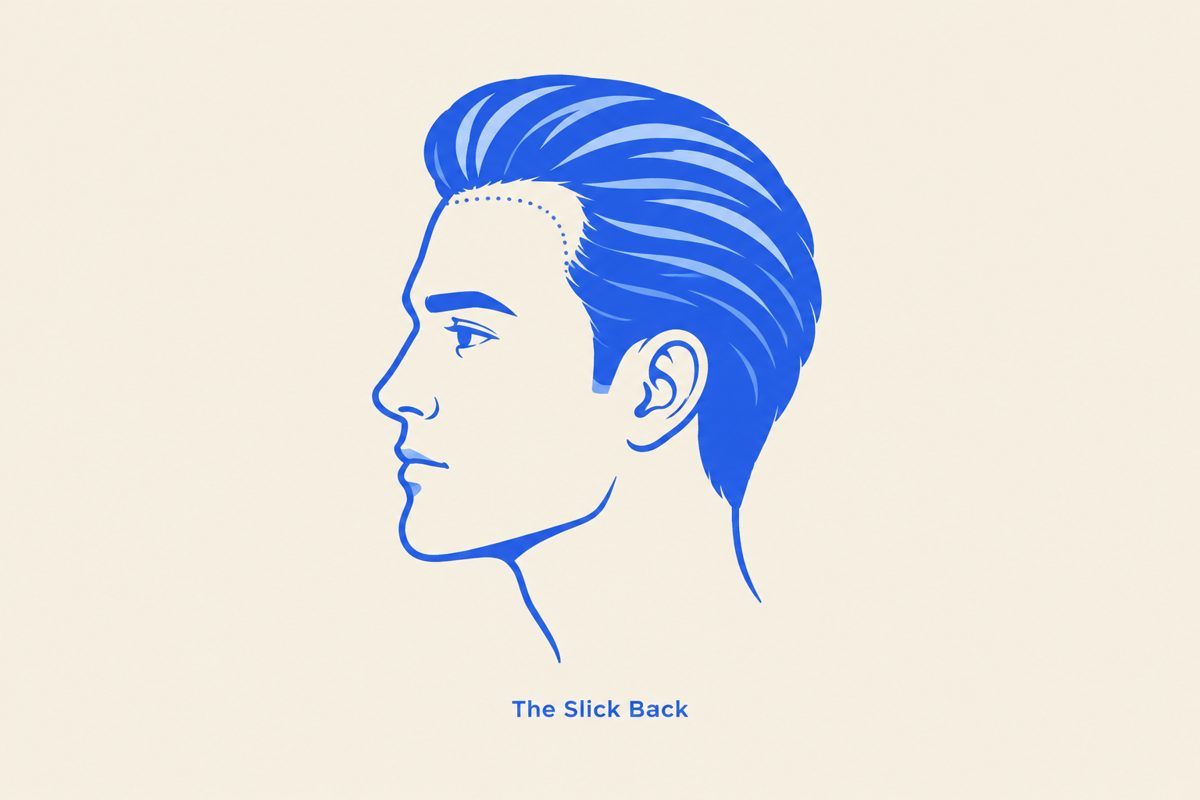
The trap in this tier is the comb-over’s weaker sibling, the sweep: hair grown long at the front and pushed diagonally across the recession from one side. It reads as coverage, it moves in wind, and it is the single style that makes a hairline look worse, because the diagonal line draws the eye exactly where the loss is. If you are going to keep the front long, commit to the full slick back and own it.
The clean-shaven pivot: the option nobody regrets as often as they expected
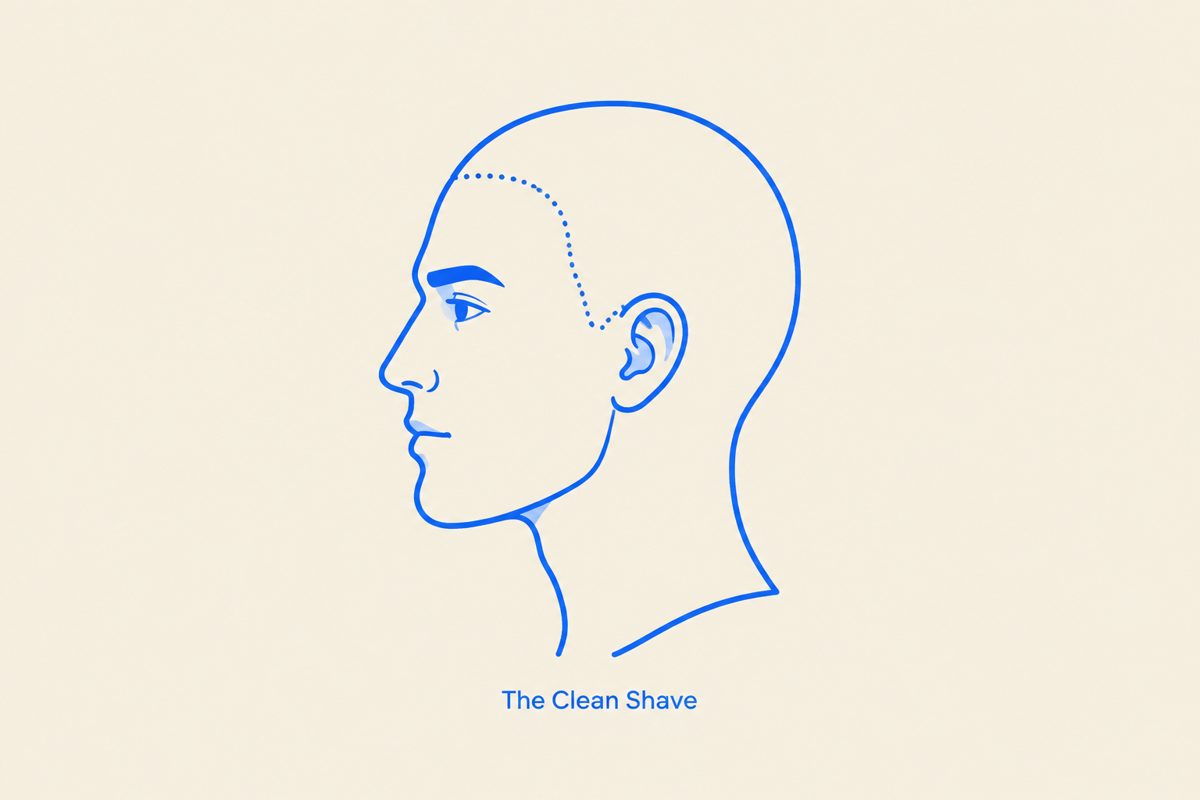
For a NW3-and-beyond hairline, the head shave is not surrender; it is the style with the strongest jaw-and-brow focus of everything on this list. The logistics matter more than the courage: invest in a real head-shave routine, decide on the beard question at the same time (a full head shave with no beard is a strong look that needs strong features; a short beard softens the transition), and moisturize, because a shaved scalp is skin now. The tooling overlaps heavily with the gear in our bald head clippers guide, and the foil shaver technique is the same one covered in our foil shaver bald fade guide.
What to stop doing this week
- Stop the comb-over in every form, including the short-variety sweep and the hat-with-grown-out-sides compromise.
- Stop stacking shine product on fine hair. Pomades with gloss visually subtract density; the matte classes add it.
- Stop growing it out to “see how it looks.” It always looks worse at length, and the growth phase is four weeks of the worst version.
- Stop shampooing aggressively against thinning. The scalp loses what it loses; the fix is styling and, where relevant, the medical conversation below.
Products that make thin hair read as deliberate
Three picks carry most of the weight. For matte texture and real grip on fine hair, Slick Gorilla Hair Styling Powder is the texture powder that built the category: a few taps at the roots, ruffled in, and the hair gains visible volume with zero shine and no product feel. It holds 4.4 stars across more than thirty-three thousand reviews, and it is the product barbers sell clients who say their hair “lies flat and shows the scalp.”
For the crop and crew cut tiers, the all-day matte hold comes from Baxter of California Clay Pomade, the reference matte clay with a strong hold that never reads as product; the full reasoning is in our barber-recommended pomade, clay, and paste guide, and for a receding hairline the short version is that clay is the default class.
Check the Baxter Clay Pomade on Amazon
The third pick is scalp care, because thinning scalps get ignored until dandruff or irritation makes them worse. A weekly ketoconazole wash with Nizoral Anti-Dandruff Shampoo keeps the scalp clean of the inflammation and flaking that compound thinning, and it carries one of the strongest review histories in hair care at 4.6 stars across more than one hundred thirteen thousand ratings. Two washes a week is the standard protocol; it is a scalp-health tool, not a styling one, and it slots into the shower rather than the routine.
Check the Nizoral Shampoo on Amazon
On the medical side, honesty beats hedging: finasteride and minoxidil are real, evidence-backed treatments that a dermatologist can put in front of you in one appointment, and no hairstyle or powder replaces that conversation. The styles above make the hair you have look its best; what you do about keeping it is a separate decision with a real doctor.
Talking to your barber about it
Bring the direction, not the diagnosis. “The temples are going, I want to cut shorter and make it look intentional” gives a barber everything they need, and the answer will almost always be one of the cuts above. The one conversation worth having explicitly is the sides: on thinning hair, skin fades and hard parts need a lighter touch, because a hard part carved into thinning hair reads as a wound rather than a line, and the detail-work logic in our hairline lineup guide covers the edge discipline that keeps short styles looking sharp rather than stressed.
How a Barber Actually Reads a Receding Line
The first video above is a live consultation at Regal Gentleman Studio, and its opening minutes are worth studying because they show the decision being made rather than described. Matt sits down having covered his recession with longer hair for a while, and his own framing is the one most men eventually reach: “am I that guy that’s holding on?” The barber’s first move is not a style pitch. He combs the hair straight down and looks at where the recession actually sits and where the thinning is, notices the disconnected longer section hanging over a short crown from the previous cut, and then checks the one thing worth keeping: the texture still moving through the front. His plan follows from what he sees, not from a menu: a very short crop, cut shorter toward the front, with just enough length on top to run a bit of product through and leave it slightly ruffled.
Two details in that exchange transfer straight to your own chair visit. First, the barber works with the hair that is still behaving, building weight where the texture is good instead of mourning the temples. Second, Matt’s reaction to the plan, that it looks like “embracing what we’ve got,” is the emotional shift this whole guide is about: the cut stops apologizing for the hairline the moment it stops trying to hide it.
The Modern Mullet Move
The second video, from a series where men talk openly about their hair loss, handles the earlier stage of the same problem, and it adds a style most guys would never associate with thinning: the modern mullet. Char is young and early in his journey, with recession at the corners, and the barber’s read is precise. The length at the back looks good and shows real texture, but the corners have gone too heavy, and all that weight behind them makes the recession more visible, not less. His fix keeps the messy, wavy fringe at the front doing the covering work, and takes everything behind the fringe shorter so the hair stops dragging on the corners and the texture carries the style instead.
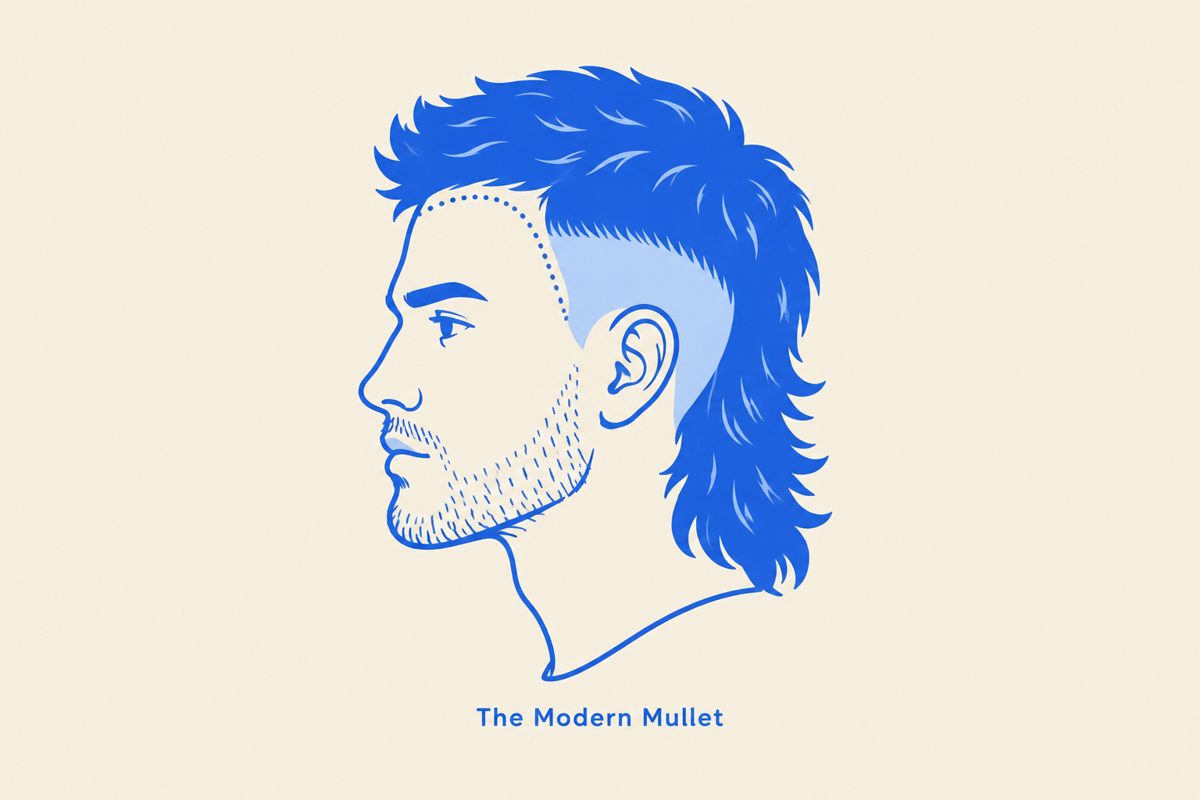
The modern mullet version of that, popular right now, is the same architecture: a fringe and front that keep their length and coverage, sides and back cut short and textured rather than flicking out. It works for a receding hairline for the reason the whole video argues: the eye goes where the texture and movement are, and a deliberate, textured shape reads as a style choice while a long, flat blanket of hair reads as a cover-up. Men at the corner-recession stage who are not ready for a crop have this lane, and it is a genuinely current one rather than a compromise.
Common questions
Do hats make thinning worse?
No; that myth has survived decades without evidence. Traction (constant tight pulling) is the real hair-stressor, so tight caps daily are the only version worth moderating.
Is shorter really better if my hair is fine, not thinning?
Fine hair benefits from the same move: shorter, matte, textured. The difference is fine hair usually has full coverage, so the crop and quiff tiers fit without the buzz-tier urgency. Our fine and thick hair clipper guide covers the cutting side.
What if the recession is uneven, one temple worse?
Asymmetry is the strongest argument for the buzz or crop tiers, because a uniform short length removes the comparison the eye would otherwise make. A fringe-heavy crop also masks asymmetric temples better than any slick style.
Should I grow a beard to balance it?
It works when the beard is kept short and structured: strong lower third, clean neckline, and the eye balances top recession against beard density automatically. An unkempt beard under a thinning top reads as decline on both ends, which is the combination to avoid.
Should I keep length to cover a receding hairline?
A little, in one place. Both barbers in the videos above keep length at the front, a fringe or the front fringe-line, because that is where coverage actually reads. Everywhere else, length works against you: weight behind the fringe drags the corners down and makes them more visible, which is why the fix in the second video is shorter behind the fringe rather than longer over it.
What is a modern mullet?
A mullet cut for the current decade: short, textured, and tidy at the back instead of flicking out at the neck, with the length and attitude kept through the top and front. For early corner recession it is a smart lane, because the textured front keeps the coverage while the short, textured back adds style credit that makes the whole cut read as chosen.
How does a barber decide what will suit my hairline?
The same way the consultation above does it: comb the hair down and map where the recession and thinning actually sit, check which areas still have texture worth keeping, then choose the shortest cut that keeps that texture working. If the answer ends up being a short crop with product length on top, that is the same plan Matt left with, and it came from his head, not from a trend chart.