Disclosure: this article contains Amazon affiliate links. As an Amazon Associate we earn from qualifying purchases, at no extra cost to you. It does not change what we recommend.
Stubble and short beards live or die by fine length control. At this range a 1mm mistake is the difference between clean and patchy, so the tools that matter are the ones with tight step ranges, sharp small combs, and blades that stay comfortable when they pass over the same spot twice a week. Every pick below was checked live on Amazon today, with current pricing at the time of checking.
- Best for stubble: Philips OneBlade 360 Face – $29.96, 4.4 stars across 14,000+ ratings
- Best precision dial: Panasonic ER-GB42 – $59.99, 19 length settings, wet/dry
- Best all-in-one: Wahl Stainless Steel Lithium-Ion – $67.48, shaver and detail heads included
- Why stubble needs its own trimmer
- Philips OneBlade 360 Face
- Philips OneBlade 360 Face+Body
- Panasonic ER-GB42
- Wahl Stainless Steel Lithium-Ion
- Philips Norelco All-in-One 3000
- Wahl Groomsman
- Choosing your stubble length
- Common stubble mistakes
- The weekly routine
- Trimming with and against the grain
- FAQ
- Philips OneBlade 360 Face Check price
- Wahl Groomsman Check price
Why stubble needs its own trimmer
Short facial hair punishes blunt tools. Long clipper guards and wide clipper blades are built to clear volume, which is the opposite of what a 3mm beard needs, and full-size razor foils bite when they cross stubble twice a week. The tools that work at stubble length share three traits: fine steps of 0.5mm to 1mm, a narrow blade that follows the jaw, and a shave-quality edge for the neckline. That is also the range where the trimmer does the most contact work per session, so blade comfort matters more here than anywhere else in grooming. Our neckline cleanup guide shows exactly where that edge gets used.
There is a second reason stubble deserves its own tool: maintenance frequency. A long beard gets a serious session once a week. Stubble gets touched up every two or three days, which multiplies the contact your blade has with your skin and multiplies the value of a comfortable, small, easy-to-rinse head.
Stubble is a length you hold, not a stage you pass through. Buy for the 1 to 5mm range and you will use this tool three times a week for years.
Philips OneBlade 360 Face
The OneBlade 360 Face is the cheapest credible stubble setup on Amazon and the easiest to recommend: $29.96 for the hybrid blade that trims to a comb length and shaves to a clean stubble line in one pass. Its 4.4-star average across 14,315 ratings is one of the deepest in this guide, and the 360-degree blade flex follows the jaw without the digging a foil can do on short hair. For a first stubble tool, this is the pick.
- Hybrid blade trims and shaves in one tool
- $29.96
- 4.4 stars across 14,315 ratings
- Best for: first stubble trimmers
Philips OneBlade 360 Face+Body
Step up to the OneBlade 360 Face+Body and the same hybrid system adds body attachments for $39.96, with a stronger 4.5-star average across 8,008 ratings. If your chest and neck stubble matter as much as your face, this is the version that covers both without a second device. Our full pass on the Pro version of this line, the OneBlade Pro 360 review, covers how the blade behaves over months of use.
- Same hybrid blade system with body coverage
- $39.96
- 4.5 stars across 8,008 ratings
- Best for: face and body stubble in one tool
Panasonic ER-GB42
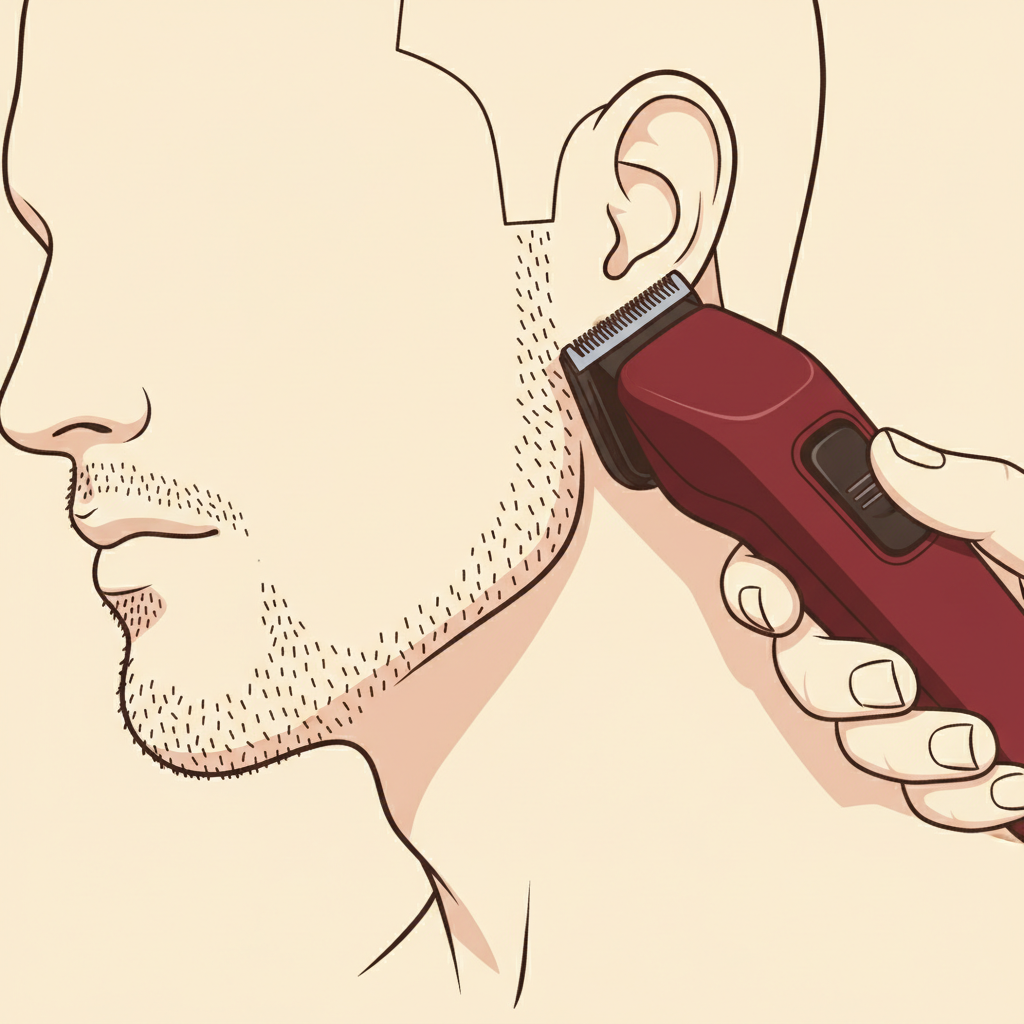
The Panasonic ER-GB42 is the precision pick: a wet/dry facial hair trimmer with 19 length settings, built around the narrow blade Panasonic uses across its grooming line. At $59.99 it is the trimmer for a man who holds one stubble length religiously, because a 19-step range lets you land on the exact millimeter and stay there. The 4.3-star average spans 13,985 ratings, and the wet/dry rating means you can use it with gel or rinse it under the tap after a session.
- 19 length settings for exact stubble lengths
- Wet/dry: works with gel, rinses clean
- $59.99
- 4.3 stars across 13,985 ratings
- Best for: holding a precise length every day
Wahl Stainless Steel Lithium-Ion
The Wahl Stainless Steel Lithium-Ion Cordless covers the man whose stubble is one stop on the way to a short beard. It is the cordless stainless trimmer with the electric shaver and nose and ear heads in the kit, currently $67.48 against a $74.99 list, with 4.2 stars across 10,567 ratings. The stubble work rides on its fine lower settings and the detail head for the neckline, and the shaver head handles the cheek line. When your 3mm becomes a 10mm, the same tool keeps working.
- Trimmer plus shaver and nose/ear heads
- $67.48 now against a $74.99 list
- 4.2 stars across 10,567 ratings
- Best for: stubble that grows into a short beard
Philips Norelco All-in-One 3000
The Philips Norelco All-in-One 3000 is the budget kit pick: a 13-in-1 grooming set with steel blades for face and hair, currently $27.96 against a $34.96 typical, with 4.3 stars across 1,354 ratings. For stubble specifically, the small combs in the set hit the short lengths well, and the kit means nose, detail and hair work ride along for the price of a dedicated trimmer elsewhere. It is the best value per attachment on this page.
- 13-in-1 kit with steel blades
- $27.96 now against a $34.96 typical price
- 4.3 stars across 1,354 ratings
- Best for: maximum kit per dollar
Wahl Groomsman
The Wahl Groomsman Rechargeable Kit is the floor of the market and a surprisingly honest one: $29.67 for a rechargeable beard trimmer kit with a bonus battery-powered nose trimmer, carrying 4.3 stars across 65,837 ratings, the deepest review base in the category. Its lower settings hold stubble acceptably, and the price makes it the spare in a gym bag or travel kit. Our gifts under $50 guide has leaned on it for the same reason.
- Rechargeable beard trimmer kit plus nose trimmer
- $29.67
- 4.3 stars across 65,837 ratings
- Best for: budget and backup use
Choosing your stubble length
Stubble runs from about 1mm to 5mm. Heavy stubble, the length most men mean when they say stubble, sits around 3 to 5mm and needs a beard dense enough to fill the cheeks evenly; below that you are in designer stubble territory, where evenness matters more than length. Two rules keep any length looking deliberate. First, define the neckline: it sits about two fingers above the Adam’s apple, and everything below it goes. Second, keep the cheek line just above where growth would look unkempt, a straight or slightly curved line you repeat every session. The face shape guide covers which jaw lines flatter which faces.
Where stubble ends and the short beard begins matters for tool choice too. Somewhere around 6 to 10mm, the look shifts from stubble to a short beard: coverage becomes continuous, the outline becomes the style, and a trimmer with a wider comb range and a bit more motor starts earning its keep. If you are drifting toward that line, the all-in-one picks above hold their value longer than a pure stubble tool would.
If your stubble grows patchy on the cheeks, hold 3mm rather than chasing 5mm. Density shows at shorter lengths; gaps widen at longer ones.
Common stubble mistakes
Four mistakes account for most bad stubble. No neckline: letting growth run down the neck turns even the best 3mm into a shadowy mess; two fingers above the Adam’s apple, then clear everything below. One length everywhere: the strongest stubbles are actually two or three lengths, slightly shorter on the cheeks and slightly fuller at the chin, which reads as intentional. Trimming dry skin: dead skin and dry hair cut unevenly; wash your face first and trim damp, not dripping. Skipping the weekly clean: short hair packs into blade teeth faster than long hair, and a clogged blade stops cutting cleanly long before it stops cutting at all. The skin side matters as much as the blade side, and our razor bumps routine covers the aftermath when a session goes wrong.
The weekly routine
A stubble routine is a two-session week for most men. Session one, early in the week: set the comb to your length, run with the grain over the whole beard, then drop to no comb and outline the neckline and cheek line with the bare blade. Session two, midweek: touch up the neckline only, which is the part that betrays you first. Between sessions, wash the area with the same routine as the rest of your face; short beard hair is sharp enough to cause ingrowns when the skin is dry, and our pre-shave and post-shave guide covers the skin side.
Tool care slots into the same rhythm: rinse the blade head after each use, and once a week add a drop of oil to the blade after cleaning so it stays fast and does not drag on short, coarse hair. A dry blade at stubble length is where pull and snag complaints start.
The verified video below is built specifically for stubble length, and the second one walks a short beard trim step by step for beginners.
Video: “How To Trim and Shape a Stubble Beard” by Pierre Soares (YouTube).
Video: “EASY Step-by-Step Short Beard Trim for Beginners” by UBarber Academy (YouTube).
What the spec numbers actually mean
Stubble trimmer marketing lives in millimeters, so a quick decoder helps. Step size: a 0.5mm step changes the look noticeably at stubble length, while a 1mm step is fine above 5mm; the OneBlade and Panasonic picks both land in the fine-step zone where it counts. Guard numbering: comb sizes are not standardized across brands, so trust the printed millimeters on the comb rather than the number molded into it. Battery runtime: listed minutes assume light comb work, and stubble sessions are short anyway, so runtime rarely decides this purchase. Blade material: steel blades hold an edge through coarse stubble better than softer alloys, which is why the Wahl stainless and Philips steel-blade picks above keep their cut quality over months of short-hair contact.
One more number worth knowing: the difference between trimming length and shave length. Hybrid tools list both, and the gap between them is exactly how much stubble the bare blade removes in one pass. If you want a defined line under a held length, that gap is the feature.
Trimming with and against the grain
Grain direction decides whether a short beard looks even an hour after the trim. Cheek hair usually grows downward and slightly outward, while the hair under the jaw often grows at an angle or in a whorl, so one pass direction never covers the whole face. The working rule is simple: length work runs with the grain, because cutting against it at a held length takes off more than the comb promises. Detail lines, the neckline and cheek line, run against the grain with the bare blade, because there the goal is going to skin and you want the cleanest edge the blade can make. When a patch under the jaw refuses to lie flat, do not chase it against the grain at length: take it with the grain, accept the shorter result, and let the outline do the styling work.
FAQ
Will a OneBlade irritate like a razor? Much less, because the blade does not cut to skin level the way a razor edge does. Sensitive skin is where the hybrid design earns its ratings.
Do I need a dedicated stubble trimmer if I own clippers? A clipper can hold 3mm with the right guard, but its wide head is clumsy at the jaw and neckline. A narrow trimmer with fine steps is the better daily tool, and the clippers take over again when the beard grows out.
How fast does stubble need trims? At 3mm, roughly every two to three days to hold the line, because stubble grows visibly in a day. The sessions are short: five minutes with the right tool.
Can I use stubble trimmers on my head? The clipper-side attachments in the kits above handle short haircuts, and the OneBlade shaves a head cleanly. If you are fully bald, our head shaving guide covers the dedicated approach.
Does wet trimming change the length? Slightly: hair lifts and dries shorter than it looks wet, so when you trim in the shower, go one step longer than your target and check in the mirror after you dry off.
Should stubble be trimmed before or after a shower? After: warm water softens the hair and the skin underneath, the blade glides instead of snagging, and cleanup happens in the same room. A dry trim gives slightly more length precision, which is why some men split the session: wash first, dry the face, then trim.