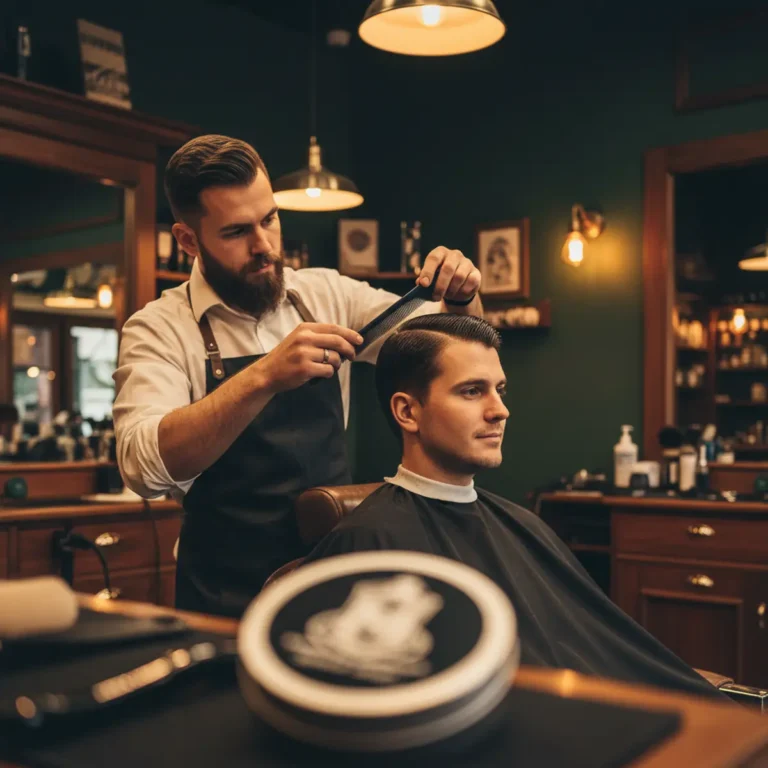

Hair loss conversations usually happen in one of two places: internet forums full of panic, or product pages full of promises. Almost never in the barber chair, which is odd, because the barber is the one person who sees a hairline evolve cut after cut. Sam Rascals, a Manchester barber, is changing that with a series called Talking Halos: honest conversations with guys at different stages of losing their hair, cut included. The first episode features Char, 24, early in his own hair loss journey, and the haircut that comes out of it doubles as a masterclass in managing early corner recession.
Before the specifics, the framing Sam offers is worth holding onto: hair loss is something very common, and lots of guys are dealing with the same issues in silence. Talking about it openly, client to barber, is step zero.
The Problem With Growing It Long to Hide It
Char’s instinct, like most guys in his position, was length. He kept his hair long specifically to cover the recession, and he says so plainly in the chair. Sam’s response is the single most useful insight in the video, because it is counterintuitive: growing it long often exposes the recession rather than hiding it.
The mechanism is weight. Long hair carries more of it, and as the weight pulls the hair down, it separates into strands, and separated hair reveals the corners it was supposed to cover. The fix is not maximum length and not a buzz cut. It is the in-between: enough length to cover, without the weight that makes it split apart. On Char, that meant keeping the length at the front and taking everything behind the fringe shorter, so the front still reads full while the bulk stops working against him.
Key theme: coverage is a weight problem, not a length problem. Hair that is too heavy separates, and separated hair shows corners.
Reading the Cut: What Sam Actually Changed
The consultation is worth reproducing because it shows how a barber diagnoses recession. Sam looks at the corners and calls them a little too heavy, fine to keep some length toward the front for coverage, but the length at the back is not doing anything except adding weight. His plan: keep the messy, wavy fringe and the corner length that ties into it, then take everything from behind the fringe shorter and add texture, plus a taper through the sides.
The execution order matters too. He cuts the fringe first and uses it as the guideline for the rest of the top, so the front keeps as much thickness as possible. That is a small sequencing decision with a big payoff: cut the fringe last and every measurement upstream has already disturbed it.
The finished cut keeps Char’s style intact, the messy front with a slight flip, while the sides come up tighter, the crown loses its dead weight, and texture takes over behind the fringe. Sam’s own summary: the top stands out more because the area below it is no longer competing with it.

One Side Almost Always Recedes Faster
One exchange in the video will sound familiar to a lot of readers. Char notes that his left side goes back more than his right. Sam’s reply, from working with clients: when people start receding, one side is usually definitely worse than the other. If you have been staring in the mirror wondering why one corner looks different from the other, the answer is that asymmetry is the norm, not a sign that something is uniquely wrong with you.
The same section covers the paranoia question, which may be the most relatable part of the whole conversation. Hair loss moves very gradually over time, not in visible jumps, so it is genuinely hard to know whether it is going back or whether you are being paranoid. That ambiguity is what messes with guys’ heads, and it is another argument for having one barber who sees your hairline on a schedule: they catch what a mirror cannot.
Key theme: gradual change defeats the mirror. A barber who sees you every few weeks reads your hairline the way a scale reads weight.
The Shampoo Conversation Men Skip
Sam is direct about the first practical step, and it is not a treatment. It is the bottle in the shower. A lot of men use whatever is around, including body-and-hair combinations, and Sam points out that the chemicals in standard shampoos can be rough on hair that is already vulnerable. His starting recommendation for guys conscious of hair loss: a shampoo that is sulfate and paraben free. He also mentions caffeine shampoos as a category he works with, aimed at supporting regrowth.
The admission from Char’s side is equally instructive: until the last two years he was using a body-and-hair wash, and only got conscious about products once the recession started. The lesson is not to panic-buy serums. It is to stop treating scalp hair with shower gel.
The Towel-Drying Habit Worth Breaking
Mid-cut, Sam flags a habit almost everyone shares: towel drying with pressure. Wrapping a towel around the head and screwing it around puts real stress on the hair, and hairs come out in the process. On a full head of thick hair nobody notices. On a hairline already receding at the corners, every hair counts, and aggressive towel work works directly against you. Pat dry, or blot, and leave the twisting to the gym clothes.
Key theme: the small daily frictions, shampoo choice and towel pressure, are the part of hair loss you actually control.
On Treatments: Sooner Rather Than Last Resort
Sam’s position on treatment is measured and worth hearing in full. He believes hair transplants should be a last resort, and his reasoning comes from what he has watched happen in his own chair. Clients on treatment plans, without ever announcing it, came back cut after cut with hairlines that were easier to box in at the fringe. The corners that used to be light and hard to line up kept thickening, until the barber was the one to say it first: your hair is getting thicker.
Char’s own take matches the series tone: he had never tried anything but was open to it, and had become noticeably more conscious about what he was putting on his hair. The episode’s overall arc, from denial-adjacent styling to an actual plan, is the template for any guy in the same stage.
Styling for a Thinning Hairline
The video ends on the part Sam says is his favorite: styling. His point applies doubly to thinning hair, because a high-quality haircut that is not styled is only half delivered. For Char’s textured, messy style, Sam works in a sea salt spray first, for hold and volume that stops the hair flying away and revealing the corners, then a styling product on top. The messy, textured approach is doing structural work here: it reads as intentional, and it does not part cleanly along a recession line the way a combed style would.
Keeping the sides tight enough to maintain the shape takes a reliable clipper, and the Wahl 5 Star Magic Clip is the tool barbers reach for when texture and taper have to coexist. For the crisp edge work around a changing hairline, the Wahl Detailer corded trimmer with its adjustable T-blade handles soft lines without over-defining them.
Where Fibers Fit
For the visual gap itself, cosmetic aids exist and can be part of the plan on confident days. Toppik Hair Building Fibers are the best-known option: keratin fibers that cling to existing hair and make the corner read fuller in photos and under indoor light. They are a styling layer, not a treatment, and they work best when the underlying cut already follows the weight logic above.
The Mirror Problem: Gradual Change You Cannot See
The hardest part of early hair loss is that it never looks different day to day. The barber puts it plainly: it is not jumping back constantly, it is moving very gradually over time, which is exactly what makes it hard to know whether it is going back or whether you are just being paranoid. Char noticed his recession a couple of years before this conversation and, by his own account, wore long hairstyles partly to hide it. The delay was not vanity, it was ambiguity.
The asymmetry confuses the picture further. Char’s left side recedes noticeably more than his right, and the barber says he sees that same pattern in most clients who are starting to thin: one side is almost always ahead of the other. A single corner looking worse than its twin is normal, not automatically a crisis, but it is also the thing men stare at in the mirror trying to decide if it changed since last month.
Scale helps put it in proportion. The barber cites the commonly shared figure that around 80 percent of men deal with some form of hair loss at some point in life, and his point lands: it is normal, which means the panic is the unusual part, not the recession.
Key theme: gradual change hides in the mirror. The same slowness that makes recession hard to judge is what makes it catchable early.
Talking About It Out Loud Changes the Math
The series this cut comes from is called Talking Halos, and its premise is the point: put guys at different stages of hair loss on camera so that anyone struggling stops assuming they are the only one. Char, 24, has already worked out one side of it himself. He talks to his own clients about hair loss because he knows they are dealing with the same thing, and the barber’s observation from the chair is that it makes clients visibly more comfortable opening up.
That matters for a practical reason beyond comfort. The conversation moves men toward acting earlier. In this same session, the barber’s advice is that the main thing to do now is try to slow the process before it gets worse, and the treatment discussion happens because the topic was already on the table, not because a crisis forced it. Silence is what turns early recession into late recession.
The grooming side of the talk matters too. Char admits that until recently he was using a body-and-hair wash in the shower, which the barber treats as the giveaway habit, and that conversation leads straight into the shampoo ingredients worth knowing. Worth naming: the guy cutting your hair is usually thinking about the same thing you are.
Key theme: silence is the expensive part of hair loss. Men who talk about it act earlier and stress less about the mirror.
The Finish: Salt Spray, Volume and a Fuller Fringe
The styling at the end of the session is worth copying because each step answers a thinning problem. Sam adds a little salt spray first, and his stated reason is precise: it gives a bit more hold and volume, which stops the hair from flying away. Fly-aways are where a thinning hairline reads loudest, so volume is not a cosmetic flourish here, it is coverage management. Product goes in after the salt has done its work.
The cut order matters as much. Sam cuts the fringe first so it sits fuller, then uses it as the guideline for everything behind it, which keeps as much thickness as possible at the front where Char needs it. The final shape keeps the front exactly as it was, takes the sides tighter with a fade, leaves length through the back for texture, and removes the bulk sitting below the crown so the top stands out more.
Char’s own styling habit explains why this works on him specifically. He ruffles it with his hands and keeps it messy, and Sam agrees the messy style is an advantage: when the wind blows the hair up, a textured style does not expose the corners the way a combed-flat style would. The style and the hair loss plan are the same plan.
One more detail from the end of the session carries the lesson home. Sam calls styling his favorite part of any trim, and his reasoning is blunt: the styling is how you finish, and if you are giving someone a high quality haircut you need to style it, because otherwise you might as well not have bothered. Char looks at the result and says it simply, honestly really good, back in the game. A cut built around a receding hairline does its work in how it finishes, not just how it is sectioned.
Key theme: every step of the finish serves coverage. Volume, texture and a fuller fringe are the plan, not the decoration on top of it.
Related Reads
The cut strategy here builds directly on our receding hairline haircut guide, and the product-first advice pairs with our scalp care roundup. For getting the brief across without awkwardness, see how to tell your barber what you want, and for the shampoo side of the routine, our shampoo guide covers what separates a proper hair wash from a body wash.