TrustedBarber is reader-supported. If you buy through links on this page, we may earn a commission from Amazon at no extra cost to you.
- The fade family, decoded
- “A little bit of a fade” is not a thing
- Guard numbers and why they lie
- Blocked nape and outlines
- Blended vs disconnected vs undercut
- Side part vs comb over, hard part
- Lineup and edge up
- Volume vs lift, spiky vs textured, fine vs thinning
- Three tools that make the ask easier
- FAQ
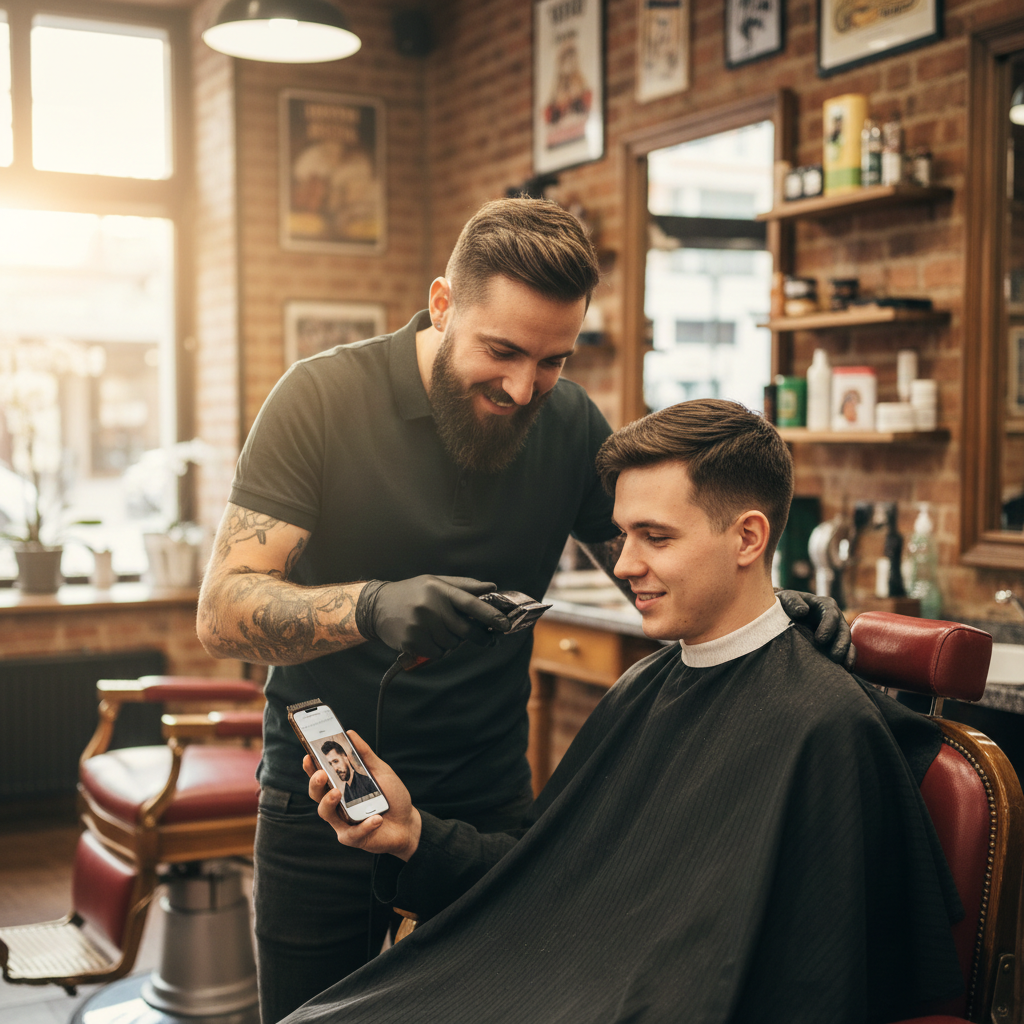
Ask five men what they want from a haircut and you will hear the same five words: a little bit of a fade. Ask the barber what that means and you get a silent judgment and a haircut that may or may not be what you pictured. The gap between what clients say and what barbers hear is one of the most common causes of a cut going wrong, and it is fixable with vocabulary, not talent. Barber Matty Conrad walked through the terms barbers actually use in a GQ video, term by term, and the decoding below comes straight from that breakdown.
The fade family, decoded
Conrad starts with the fade because it is the term most people use and least people can define. A fade means the hair goes from long to skin, all the way down to bare skin. The positioning word in front tells the barber where that bare point sits. A mid fade reveals the skin area through the middle of the side of the head. A low fade slopes backwards with a very low skin line. A high fade rides really high up into the corner of the ridge of the head.
Then comes the tightness ladder, and this is where most requests go wrong. The tightest variation is a bald fade: the skin area has been shaved down with a straight razor or a shaver, so there is absolutely no stubble left and it looks completely bald. One step up is the skin fade, where the skin area is set with a trimmer. A trimmer gets very close but you still see a slight amount of stubble. The loosest is the shadow fade, cut with just a closed clipper, which is still close but leaves a much more noticeable amount of stubble. His guidance is simple: if you want it really tight, tapered and laced up, ask for a bald or skin fade. If you want something faded but with a more lived-in, casual feel, you are describing a shadow fade.
Our taper vs fade breakdown covers the structural difference in depth; here the question is what to say out loud in the chair.
“A little bit of a fade” is not a thing
This is the phrase Conrad singles out. A little bit of a fade does not exist, because you either see skin or you do not. What that phrase usually wants is a tight taper: a haircut where the temple area and the nape area are blended down to zero but a strong outline is left around the ear. He calls it a mini fade for one area of the head, and notes that barbers know the shorthand JT: just a taper. If that is the look you are circling around, saying tight taper gets you there; saying “a little fade” gets you a coin flip.
Guard numbers and why they lie
The next trap is asking for a number. Guard numbers refer to the guards barbers snap onto their clippers, and each number corresponds to how wide or narrow that guard is when it sits against the head. The problem Conrad raises is that they do not translate between people. A number two on the sides of a man with very thick dark hair still looks thick and dark. The same number two on a man with finer hair can disappear and read like a fade. So the same request produces two different-looking cuts on two different heads.
He suggests translating the number into a description instead: you want a little outline left on the sides, kept short, slightly longer on top, with a bit of texture. That is a better ask than a number because it describes the result rather than the tool. If you want to learn the system properly, our clipper guard size guide lays out every length, and the buzz cut guard numbers guide covers the all-over case where numbers actually do most of the talking.
Blocked nape and outlines
Not every haircut is faded, and Conrad argues fewer and fewer are. Many modern styles, and some classics, are grown full in the sides with no gradient at all, just a strong outline. That is called a blocked nape, and the Don Draper cut on Mad Men is his example: not faded, not tapered, just a strong line. The two most common blocked outlines are the natural outline, which is a little rounded and follows the natural growth pattern of the hair, and the linear squared outline, which is longer and leaner.
The pairing rule he gives is the useful part. If the shape already looks long and lean, choose a rounder outline, because it makes the shape look fuller. If the shape feels wide and heavy, choose the squared outline, because it makes the whole thing appear leaner. That is a two-second decision in the chair that changes the read of the entire cut.
Layered haircuts and flowback
Haircuts left a little longer on the sides and swept back are layered haircuts. Conrad’s references run from Leonardo DiCaprio in The Great Gatsby to Jude Law in The Talented Mr. Ripley, or Bradley Cooper. Layering creates texture and shape on the outside of the haircut instead of a short gradient, and its practical advantage is that it leaves you enough hair on the sides to push back, which he calls a flowback.
He is also blunt about the word feathered. Feathered hair was a late-70s and early-80s look: layered and heavily textured to read soft and blended, flowing backwards but soft. A modern flowback is different: longer on the sides, sometimes tucked behind the ear or swept back with product, textured and natural. If you ask for feathered you are asking for a vintage finish most shops have not done in decades.
Blended vs disconnected vs undercut
Three terms that describe the relationship between the sides and the top, and people swap them constantly. When the hair on top does not match the length of the hair on the sides and hangs over it in little overhanging pieces, that is a disconnected cut: the top and sides never meet. When you want the hair to transition smoothly into the top with no overhang, that is blended. Our guide to styling a disconnected undercut covers the styling side of that family.
The undercut is the one with the sharpest definition. Conrad’s examples are the Peaky Blinders cuts and Brad Pitt in Fury: the top left substantially longer than the sides, and whether it is swept back or forward, none of it blends. If you sweep it back and there is a noticeable ledge, that is an undercut. His maintenance warning is memorable: an undercut grown in almost always resembles a muffin top, and nothing on a man’s head should. If you want the Beckham sweep-back where everything blends as you push it back, that is disconnected, not an undercut.
Side part vs comb over, and the hard part
Conrad calls this the most common mix-up and settles it flatly: hair worn to the side in a parted style is a side part. A comb over is what a bald man does to hide a bald spot, glued down with gel and permanently afraid of wind. Ask for a side part unless that is genuinely what you are going for.
The hard part is different from a clean part line: it is a line actually shaved into the haircut. It was popular in the 1920s and 1930s and had a brief resurgence in the mid-2010s. The benefit is real if you wear parted hair: your part is straight every single time. The cost is maintenance, because the line tends to widen into a gap and sprout little pieces around it unless you stay on top of it. Placement matters too: a hard part worn toward the outside of the haircut can look sharp because the hair next to it is kept very short, but with center-part styles coming back, he says avoid a hard part down the center unless you are chasing a specific 1930s gangster look. Our hard part guide shows the cut being built.
Lineup and edge up
An edge up or lineup means the barber creates a stronger looking outline across the forehead and into the recession area, squaring off the front. Conrad calls this boxing out a client: it creates a more square profile inside the haircut, and it is genuinely flattering on rounder face shapes. His examples: Michael B. Jordan and Barack Obama.
The warning he attaches is about the widow’s peak. Never ask for a lineup if you have one, because the lineup cuts the widow’s peak square across, and when that hair grows back in it sticks straight up. If your hairline has a peak, ask the barber to work with it rather than erase it. More on hairline work in our hairline lineup guide.
Mullet vs flowback
Conrad’s read is that mullets are cool again, but the word has drifted. The one identifying factor of a mullet is that the sides are much shorter than the back. If the sides are short and the back is long, you have a mullet. If the sides are long enough to sweep back and blend into the back, that is a flowback with more action behind the ears, not a mullet. Business in the front, party in the back is a length relationship, not a vibe. Our mullet guide covers the real thing.
Volume vs lift, spiky vs textured, fine vs thinning
Volume means hair with a fuller appearance that pushes away from the head shape in all directions. Lift is volume that goes straight up, not out. Most guys who say they want volume actually want lift in the front, because it stretches out the face. Ask for lift.
Spiky is not a haircut, it is too much product. Hair that sticks up like that is over-styled; the look people actually want is textured, a subtle, rough, separated finish that does not depend on a tub of product. He adds that textured styles are almost always fairly short, because the longer hair gets the more it flows.
Fine hair is not thinning hair. Fine refers to the diameter of each strand: skinnier strands, floppier hair, less rigidity, hair that lies flat against the scalp. Thinning means fewer hairs growing per square inch. You can have thick hair that is thinning and fine hair that is thick. And when people ask to get their hair thinned out, Conrad says what they usually want is texture: pieces that separate. Thinning shears will not always produce that; asking to be texturized usually will. Our thinning shears guide and curly hair routine cover the texture side in more detail.
Haircut vs hairstyle
The last distinction is about commitment. A haircut is utilitarian: short, easy, low maintenance, like a crew cut, see our crew cut guide. A hairstyle requires styling: product, a blow dryer, tools, and time every morning to recreate the shape. His advice is to ask the barber before committing to a celebrity hairstyle how much maintenance it actually takes, and ask for styling tips while you are in the chair. Barbers are usually good at that, and the honest answer might change what you order. The styling products guide is the place to start if the answer is “more than you expected.”
Three tools that make the ask easier
None of this vocabulary requires new gear, but three inexpensive tools make it easier to practice the language at home and arrive with references that hold up.
Wahl Color Pro: learn guard numbers on your own head
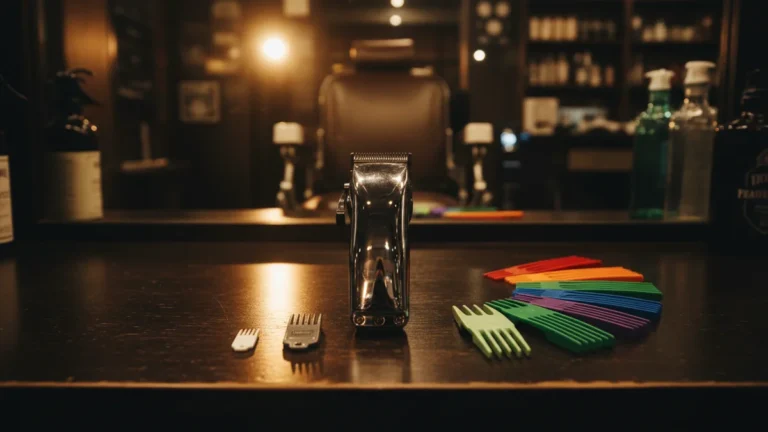
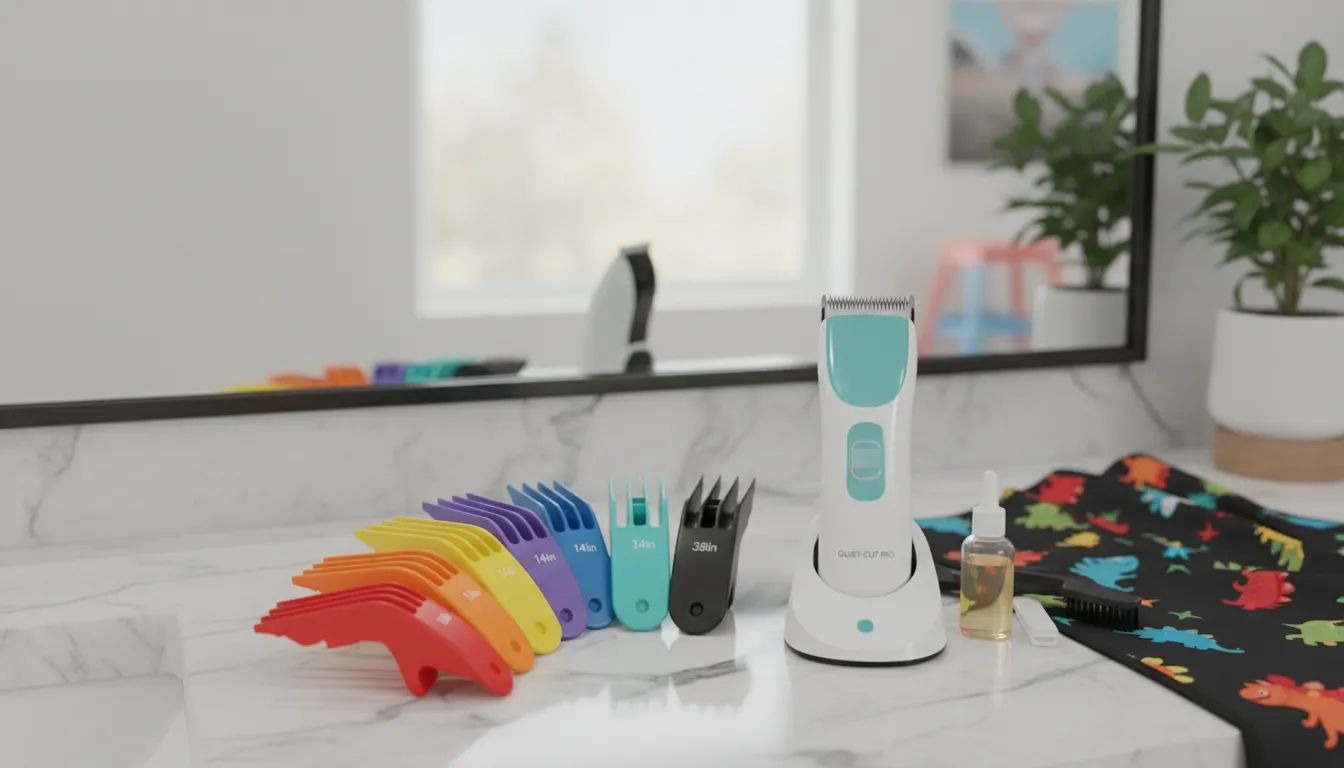
The fastest way to understand what a number two actually means is to see it on your own head with color-coded guards. The Wahl Color Pro Cordless Combo uses the same guard system professionals use, with each guard color-coded so you can map number to length visually instead of guessing. It is the same reference system Conrad describes, just in your bathroom instead of the shop.
Bardeau carbon cutting comb: practice your part
Whether the right answer for you is a side part or a hard part, a proper cutting comb is how you find out. The Bardeau 8.75-inch carbon cutting comb is the anti-static, heat-resistant kind barbers keep at their station, fine teeth on one end for parting and wider on the other for volume work. Part your hair where it naturally falls, brush it back, and you will know within a week whether a parted style is even in your hair’s vocabulary.
Slick Gorilla texturizing powder: the textured look, no tub of product
Conrad’s whole argument is that the look men want is textured, not spiky. The Slick Gorilla Texturising Powder does exactly that: a small amount roughs the hair up into separated pieces without shine or hold so heavy the hair goes stiff. It is the cheapest experiment in this guide and the one that teaches you what “textured” looks like on your own hair.
FAQ
What do I say instead of “a little bit of a fade”?
Ask for a tight taper. That is the haircut where the temples and nape blend down to zero but a strong outline stays around the ear, which is what that phrase almost always means.
Is a skin fade tighter than a bald fade?
No, the reverse. A bald fade is shaved to bare skin with a razor or shaver with zero stubble. A skin fade is set with a trimmer, which leaves slight stubble. A shadow fade, cut with a closed clipper, is the loosest of the three.
Can I ask for a number two?
You can, but know what it does not guarantee. Guard numbers describe the tool, not the result, and the same number looks different on thick versus fine hair. Describe the outcome instead: short with an outline on the sides, longer and textured on top.
Should I get a hard part?
Only if you wear parted hair and want the part locked straight every day, and only if you accept the maintenance. The shaved line tends to widen and sprout stray hairs around it as it grows.
What is the difference between disconnected and undercut?
Both leave the top longer than the sides. Disconnected means no deliberate overhang ledge and things blend when you sweep the hair back. An undercut means nothing blends at all, and it grows out into a ledge you have to manage.
Related reading: the haircut cadence barbers recommend, the best haircuts for a receding hairline, and the beginner’s guide to barber tools.