Disclosure: this article contains Amazon affiliate links. As an Amazon Associate we earn from qualifying purchases, at no extra cost to you.
Japanese-steel shears are sold across different alloys, sizes and handle designs. This guide focuses on the model-specific details a buyer can compare, rather than treating a steel name as a guarantee of cutting feel or edge life.
This guide compares the Saki Grand Master, Kotaro and Katana with the Kamisori Sword, and explains which published details to check before choosing Japanese-steel shears. For a wider selection, see our barber shears guide.
In This Guide
- Why Japanese Steel Dominates Barbering
- How We Picked
- Watch: Inside Kamisori
- How to Spot Genuine Japanese Steel
- The Best Japanese Steel Shears
- Quick Comparison
- Who Each Pick Is For
- FAQ
- The Bottom Line
Our Top Japanese Steel Picks
Best overall: Saki Grand Master 6″ VG10 Shears, the workhorse of the VG10 tier .
See Prices on the Saki Grand Master
The dream blade: Kamisori Sword 6.0″ Shears, Kamisori’s flagship built for barbers who cut all day and want the last shear they will buy for years.
See Prices on the Kamisori Sword
Best value: Saki Kotaro 6″ Shears, premium 440C Japanese steel the right entry into real Japanese blades.
Why Japanese Steel Dominates Barbering
Steel designation is one part of the specification. Compare it with blade geometry, size, handle and the maker’s care and service information. An alloy label by itself does not tell you how often your shears will need sharpening.
440C: Look at the exact product specification rather than assigning one hardness figure to the alloy. Saki lists the Kotaro as 440C with a Japanese-style convex blade and 60-61 HRC hardness. That is a model-specific specification, not a claim about every 440C shear.
VG-10: Saki lists the Grand Master as Japanese VG10 with a convex sword blade and 61-62 HRC hardness. Compare those details with the size, handle and care instructions rather than choosing on alloy name alone.
Blade geometry matters too. The Saki Grand Master and Kotaro pages both specify Japanese-style convex blades. That does not mean every Japanese shear has the same edge, or that every non-Japanese shear uses a flat bevel. Check the exact model before choosing a sharpening service. For maintenance, read our shear care and sharpening guide.
How We Picked
The maker pages linked below establish specifications for the Grand Master and Kotaro. The current Sword 2.0 maker page is a different generation from an older Sword listing, so do not assume that a shared name proves identical specifications or pricing. Confirm the exact model and included size before ordering.
Watch: Inside Kamisori
Kamisori’s own brand film gives a look at the craft standard behind the Sword and the rest of their line.
Video credit: KAMISORI, Worlds No1 Hairdressing Shears via YouTube
How to Spot Genuine Japanese Steel
Steel type, place of manufacture and blade geometry are separate details. Ask for the alloy and the exact model’s specifications, then check any claim about where the shear was made. A vague marketing phrase alone does not establish its alloy or country of manufacture.
The useful rule: buy the tier you can verify. Every pick in this guide names its alloy on the listing, and Kamisori and Saki both publish full steel specifications on their own sites.
The Best Japanese Steel Shears for Barbers
1. Saki Grand Master 6″ — Best Overall
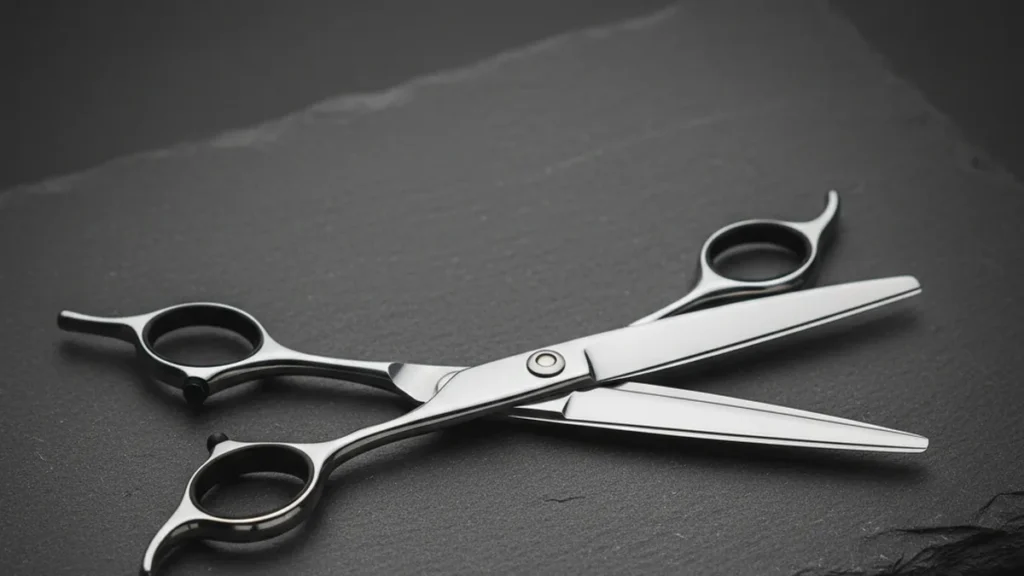
Saki describes the Grand Master as a 6-inch VG10 shear with a convex sword blade and 61-62 HRC hardness. It is the model to compare if that combination of size and blade design fits your work. Confirm the selected model and service terms on the listing before ordering.
Check Price on the Saki Grand Master
2. Kamisori Sword 6.0″ — The Premium Pick
The Sword name appears on different product generations. Compare the exact listing with the maker’s matching specifications before assuming a Sword and a Sword 2.0 have identical materials, included accessories or warranty terms. Check the selected generation before comparing its kit with the current maker page.
Check Price on the Kamisori Sword
3. Saki Kotaro 6″ — Best Value
Saki specifies Japanese 440C, a convex blade, an offset handle and a removable finger rest for the Kotaro. Its maker page lists 5.5-inch, 6-inch and 6-inch left-handed options. Confirm which size and hand orientation the linked listing supplies.
Check Price on the Saki Kotaro
4. Saki Katana 7″ — The Long-Blade Pick
The Katana entry is the long-blade option in this comparison. Confirm the selected 7-inch version and the current maker specifications before ordering, especially if the same listing offers several lengths.
Check Price on the Saki Katana 7″
Quick Comparison
| Pick | Steel | Size |
|---|---|---|
| Saki Grand Master | VG-10 | 6″ |
| Kamisori Sword | Premium Japanese | 6.0″ |
| Saki Kotaro | 440C | 6″ |
| Saki Katana | 440C | 7″ |
Who Each Pick Is For
Start with the size and handle you want, then compare the published alloy and blade specifications. The Grand Master and Kotaro have distinct maker-listed materials and hardness figures. Treat the Sword generation and the Katana variant as exact-model checks, not details that a shared brand name settles. Related guides: shear care guide; main shears guide; thinning shears guide.
FAQ
Is VG-10 worth it over 440C?
The exact tool matters more than a blanket ranking of alloys. Saki specifies VG10 for its Grand Master and 440C for its Kotaro; compare their size, handle, blade geometry and service terms for the work you do. Include the maker’s service route in the comparison.
What does HRC mean on shear listings?
HRC is hardness on the Rockwell C scale. Use the figure for the exact shear: Saki lists 60-61 HRC for the Kotaro and 61-62 HRC for the Grand Master. Hardness alone is not a complete performance comparison.
Do I need a convex edge?
If you slide cut or want the smoothest possible draw through a section, yes, and every pick in this guide is ground that way.
How should Japanese shears be maintained?
Use the care instructions for your model. Kamisori specifies daily cleaning, drying, lubrication with its supplied scissors oil and tension checks for its own shears, plus professional sharpening when needed. Use your own model’s instructions for service timing.
What about left-handed barbers?
All four picks here are right-handed. Kamisori and Saki both list left-handed models on their own sites if you cut left-handed.
The Bottom Line
Choose the exact model, size and hand orientation, then check its care and service terms. The Grand Master and Kotaro maker pages give concrete specifications to compare. Do not substitute a current Sword 2.0 specification for an older Sword listing without confirming the model match.