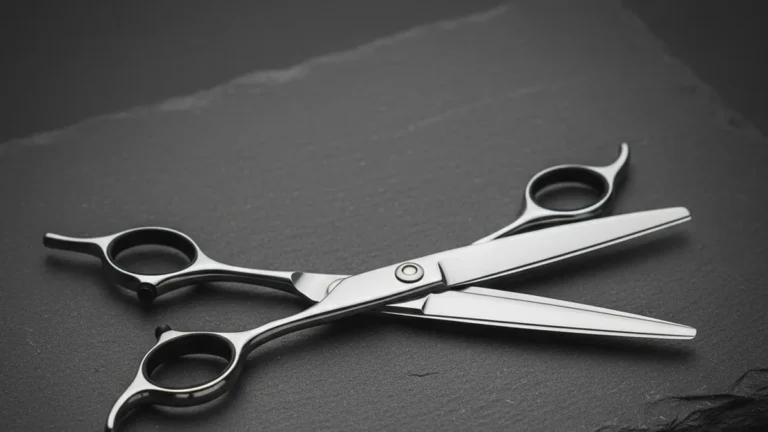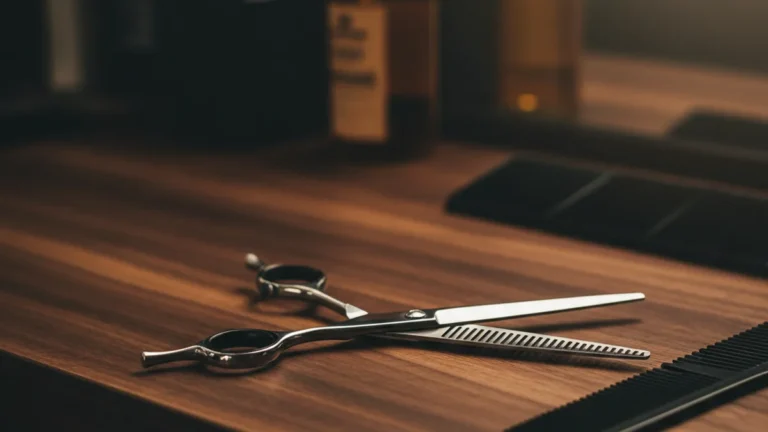
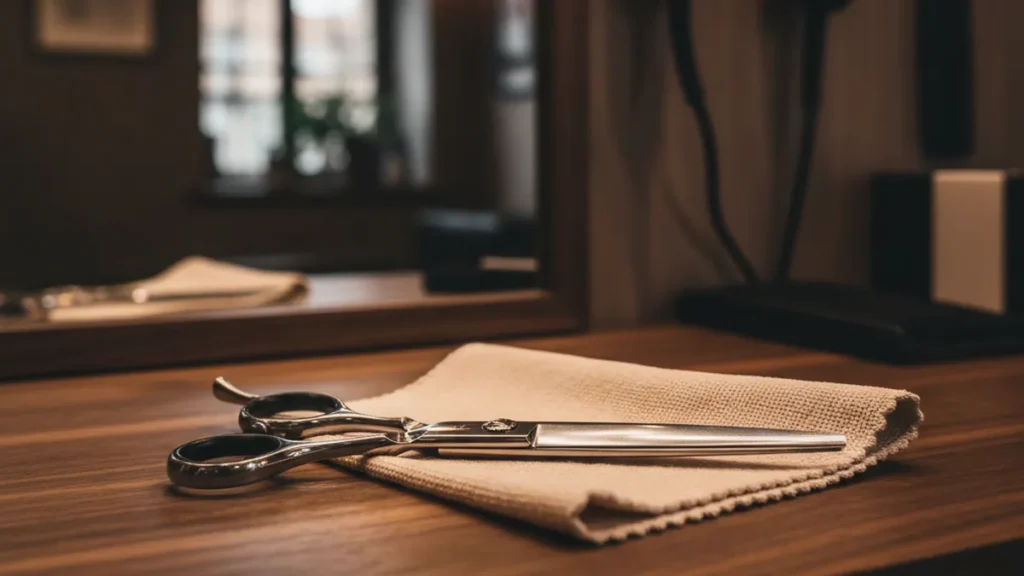
Choosing shears starts with the cut you want to make and the handle you can control. Compare blade length, handle shape and the exact model’s service options before paying for a pair.
This guide compares cutting and texturizing pairs, along with the size, handle and service checks that matter before buying. For the difference between straight and toothed blades, start with our barber shears: straight vs thinning and which length to use.
As an Amazon Associate, Trusted Barber earns from qualifying purchases.
Quick Picks: Best Barber Shears at a Glance
- Best overall value: Equinox Professional Razor Edge Series 6.5″, Japanese stainless steel with a fine-adjust tension screw
- Best premium long blade: Kamisori Sword 6.0″, the long barber sword blade for scissor-over-comb
- Best mid-range workhorse: Kamisori Diablo 5.5″, salon-grade comfort at a working price
- Best budget kit: Facón 6.5″ Razor Edge Shears, precision cutting feel at starter prices
- Best Japanese steel upgrade: Saki Shears Musashi 6″, 440C steel for wet or dry cutting
- Best thinning companion: ULG Professional Thinning Shears, pairs with any cutting shear on this list
Why Your Shears Matter More Than You Think
Clippers get the marketing and the unboxing videos. Shears get the results. A dull or badly tensioned pair crushes the hair shaft instead of slicing it, which reads as frayed line-ups, split-looking ends on every blunt cut, and that customer complaint you cannot quite diagnose: “it just does not look as clean as last time.” A sharp convex blade with correct tension slices the shaft clean, and the difference is visible from three feet away.
Handle fit matters during repeated cutting. Compare ring size, finger-rest position and balance in your own grip rather than choosing by alloy name alone.
What Separates a Real Barber Shear From Costume Jewelry
Four things, and only four, matter when you are comparing listings that all claim “professional grade.”
Steel. Compare the maker’s specification for the exact model. A named alloy is one useful detail, but it does not establish the finished edge, balance or service life on its own.
Edge geometry. Check the edge listed for the exact model and the work the maker recommends. Ask about a compatible sharpening service before choosing an unfamiliar blade.
Tension control. A hand-adjustable tension screw, ideally with a click or fine-adjust dial, lets you set the blade pressure for wet versus dry cutting. Fixed-tension shears force you to adapt to the tool instead of the reverse.
Balance and handle geometry. Offset handles take the angle off your thumb. Crane handles go further. Whatever your grip, the shear should sit neutral in your hand with the finger rest actually reachable.
The Picks
Equinox Professional Razor Edge Series 6.5″: Best Overall Value
The Equinox Razor Edge 6.5-inch pair is the starter option in this list. Compare the selected model, handle and tension adjustment before ordering, and keep its maintenance instructions with the tool.
Check Price on the Equinox 6.5″ Shears
Kamisori Sword 6.0″: Best Premium Long Blade
When scissor-over-comb is your bread and butter, blade length stops being a preference and becomes the job. The Kamisori Sword 6.0″ carries the long, lean barber blade profile that made Kamisori’s reputation: a sword-shaped blade that reaches deep into a section without the hand crowding the head, cut after cut. The steel is Japanese high-carbon, the convex edge comes finished and stays finished, and the tension system holds its setting through a full day instead of drifting loose by the third client.
Check Price on the Kamisori Sword 6.0″
Kamisori Diablo 5.5″: Best Mid-Range Workhorse
The Kamisori Diablo 5.5″ is the shorter, lighter sibling in the same family, and for detail-heavy cutting it is arguably the better tool. A 5.5-inch overall length puts the blade right where precision work lives: perimeter lines, around the ear, point cutting into fringe. The offset handle keeps the thumb low and the wrist straight, and the weight distribution sits toward the pivot, so the shear feels planted rather than tip-heavy during slow, fine work.
Check Price on the Kamisori Diablo 5.5″
Facón 6.5″ Razor Edge Shears: Best Budget Kit
Facón 6.5″ Razor Edge shears is another cutting-shear option in this list. Check the selected size, grip and sharpening support rather than assuming a low-priced pair is disposable or suitable for unrelated materials.
Keep hair-cutting shears for their intended job. Do not treat an inexpensive pair as permission to cut synthetic material or use it for animal grooming; follow the maker’s stated applications.
Check Price on the Facón 6.5″ Shears
Saki Shears Musashi 6″: Best Japanese Steel Upgrade
The Saki Shears Musashi 6″ is the step up for barbers who have outgrown mid-range steel and want a genuinely premium edge without going full-custom. The steel is Japanese 440C, the convex edge is finished for wet or dry cutting, and the whole package is built around the kind of glide that makes you slow down and notice your own tool: the blade separates the hair shaft cleanly enough that dry cutting stops producing that dry-hair crunch.
Expect What you are buying over the budget picks is edge retention measured in months of daily cutting rather than weeks, a finishing standard that survives sharpening without geometry loss, and balance tuned for eight-hour days. If your shears are your livelihood, this is the tier where the math starts working in your favor.
Check Price on the Saki Musashi 6″
ULG Professional Thinning Shears: Best Texturizing Companion
No cutting shear on this list completes a station by itself. The ULG Professional Thinning Shears handle the texturizing half of the pairing: a hand-sharpened toothed blade in Japanese stainless steel, available in a 6.5-inch size The teeth remove weight without leaving the harsh, stepped texture you get from cheap thinners, which matters the moment a client asks for a blended taper rather than a visible thinning line.
For the technique side, our walkthrough of how to use thinning shears covers the moves that make a texturizing pair earn its place, and it pairs cleanly with the length guidance in our straight-vs-thinning guide. Buy the ULG as a complement to any shear above; there is no version of a working kit that should not include one.
Check Price on the ULG Thinning Shears
How to Choose: The Decisions That Actually Matter
Blade length. Shorter shears (5.0 to 5.5 inches) favor precision: perimeter work, detail lines, point cutting. Longer shears (6.0 to 7.0 inches) favor scissor-over-comb and bulk cutting because each stroke covers more hair. Most working barbers land on a 5.5 or 6.0 as their primary and add length as their technique demands it. Our length guide breaks down the full sizing logic.
Steel. Check the published alloy for the exact shear, alongside its blade geometry and service options. Do not assume every model from one brand uses the same material.
Edge type. The edge and cutting purpose belong to the exact model. Check those details rather than assuming a shared brand name means every pair is ground alike.
Handle geometry. Compare straight, offset and crane handles for their ring positions and your grip. Pick the arrangement you can control comfortably rather than treating one shape as a medical solution.
Left-handed barbers: stop buying right-handed shears and adapting. A right-hand convex edge in a left hand pinches hair instead of cutting it, and no amount of skill fixes physics. Kamisori and several other makers ship true left-hand pairs; the Kamisori line specifically carries left-handed options like the Diablo II in left-hand configuration.
Caring for Barber Shears
Kamisori’s care instructions call for regular cleaning, drying and oiling, with the shear stored closed in its case. Use the instructions for your exact pair when adjusting tension; do not copy a fixed turn count from another model.
Use a sharpening service familiar with the exact edge. Kamisori offers care and service guidance for its own shears. Arrange service when the cutting performance calls for it rather than applying one sharpening interval to every pair.
Video credit: Best Shears for Barbers and Stylists ✂️ Fresh Shears (YouTube).
Frequently Asked Questions
Are expensive shears actually worth it? Compare the exact blade, handle, warranty and sharpening route. Price alone does not establish edge life or comfort, and a more expensive pair is not automatically a better fit for your work.
What size should a beginner buy? In the embedded video, Seancutshair uses a smaller pair for standard cutting and texture, and longer pairs for scissor-over-comb. Compare the reach against your hand and the work you want to do; his setup is an example, not a universal size rule.
Can I use barber shears for beard and mustache work? Absolutely, and many barbers keep a dedicated shorter pair for detail beard shaping alongside their beard trimmer lineup. Just clean the blades between uses, especially after product-heavy work.
How often should I replace shears? Inspect the blades and pivot, follow the maker’s maintenance guidance and ask a qualified service provider about worn or damaged parts. Replacement is a condition check, not a universal number of years.
Do I need a left-handed pair as a lefty? Yes. See the handle section above. This is the single most common mistake left-handed barbers make, and it quietly costs them edge life and cutting quality every day.
The Verdict
Compare the cutting shear and texturizing tool as separate purchases. Choose the size and handle for the work you actually do, check compatible service and replacement options, then compare the selected offers. A thinning shear is a choice for the techniques you use, not a required purchase for every kit.
And while you are kitting out the station, check our running barber supply deals page for current coupon codes on clippers, trimmers, and everything else that shares the drawer with your shears. The tool you cut with matters; the money you do not waste on it matters just as much.