TrustedBarber is reader-supported. If you buy through links on this page, we may earn a commission from Amazon at no extra cost to you.
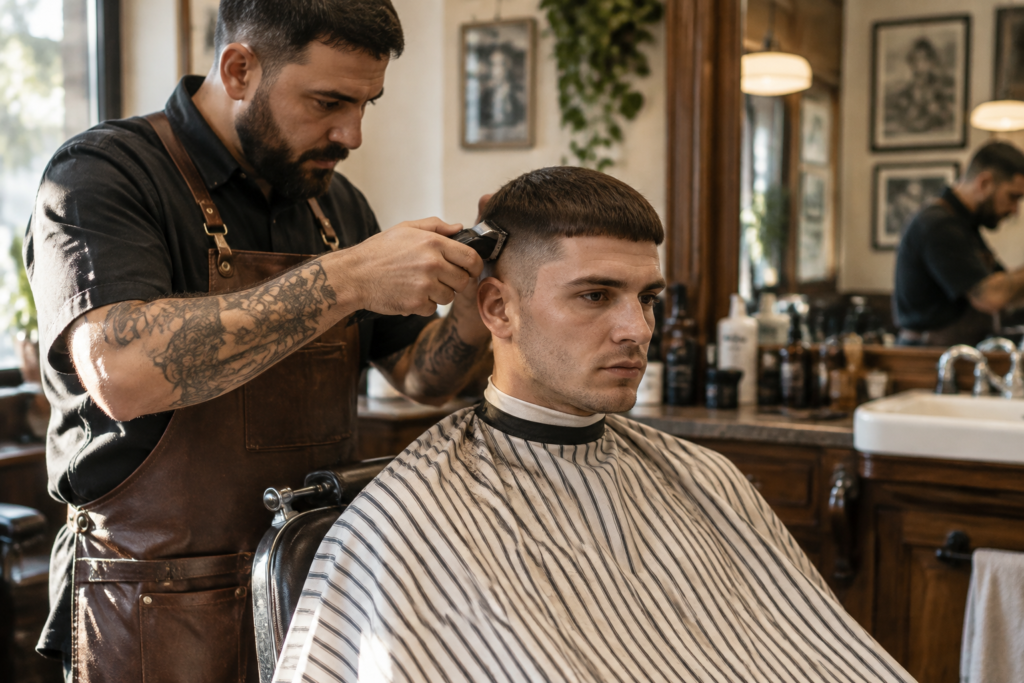
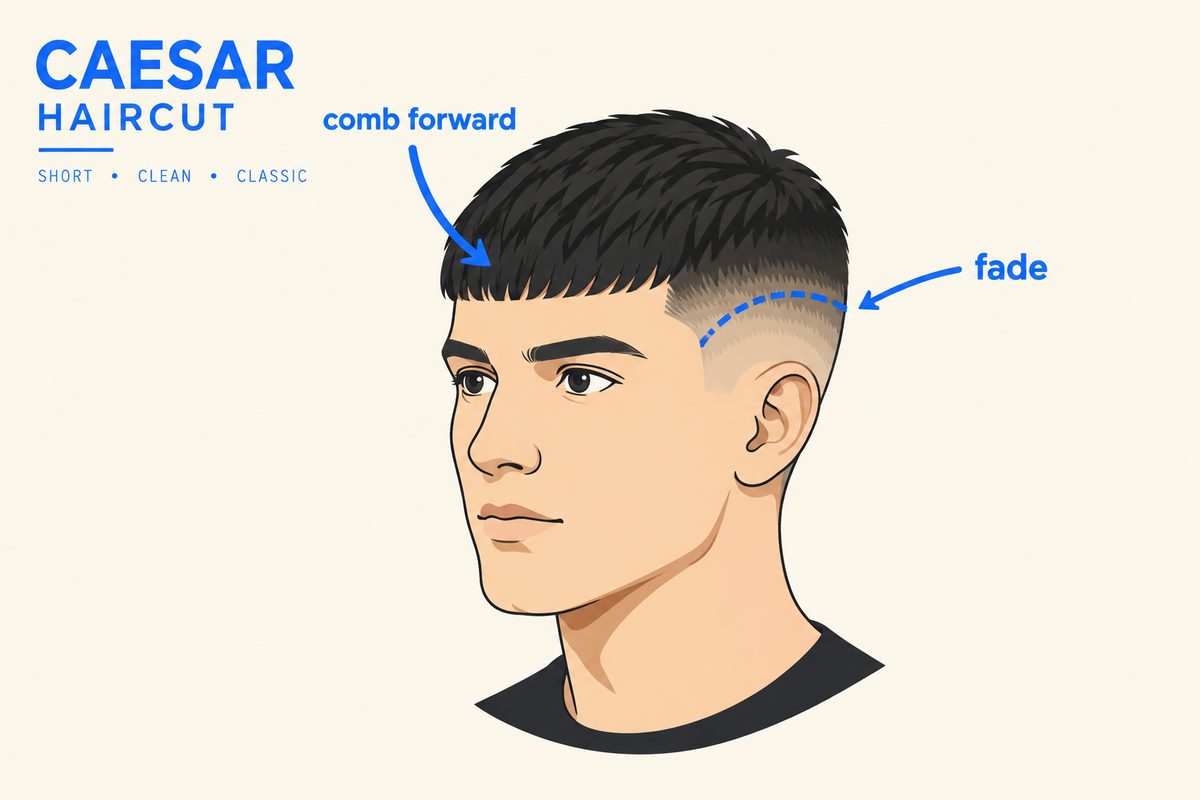
The Caesar is one of the oldest cuts in the book: short and even, with the fringe pushed forward. Keev at The Barber’s Table walks through a light Caesar step by step, and his version is full of the small habits that separate a clean cut from a rough one. Here is the method.
The first rule: clipper as a comb
Keev’s most repeated point is about how the clipper moves. Use the clipper as a comb: push the blades through the hair the way a comb moves, and do not dig in. That single habit is what keeps the surface even, whether you are cutting, fading, or cleaning up. Digging the blade in is how you get steps and gouges; combing through is how you get a finish that reads intentional.
The setup for a light Caesar
For the light Caesar, his setup is an Andis Master with the lever all the way open, which he calls pretty standard for this cut. Fully open gives you the longest setting the adjustable blade offers, and that even, longer pass is the base of the whole style.
Check the Andis Master on Amazon
Keep the head clean while you work
One habit he stresses: keep cutting and brushing off the loose hair as you go. The reason is practical. You need to see what the haircut is going to look like after a shower, and loose clippings hide the real result. Clearing them constantly means you are always judging the actual cut, not the debris on top of it.
The line: where the cut is won
Before any edge work, Keev sprays alcohol on the hairline. It dries the scalp and the hair, and that dry surface is what you need for a crisp line. His order of work: he starts from the back, does each side, and then connects the sides. And when the sharp edges come out, pressure is off the table. On the back especially, he uses light touches, dabbing the line in rather than dragging it. A classic edger like the Andis T-Outliner is the tool built for exactly this pass.
Check the T-Outliner on Amazon
One more pro habit worth stealing: he wears gloves while he cuts. His reasons are sanitation for the client and no hair splinters in his own hands. Both apply at home too.
A second barber’s method: guidelines and texture
Andy FadePRO, the barber educator behind AndyFadeMaster, builds his Caesar on a strict guideline system. He starts with a number one guard, lever closed, and sets a guideline up to the temple that runs straight and consistent all the way around the head. His second guideline sits about an inch higher, cut with the lever rolled back so the hair above falls into place instead of being taken too short. From there he closes the lever slightly and works between the two lines, then lifts the line with a one-and-a-half guard.
Two of his details are worth stealing. First, shape: he works the sides with a straight up-and-down motion rather than a C-motion, specifically to remove the round look and square the cut off. Second, the blend: he feeds the hair into his comb up to the guideline, pulls the comb out slightly, and slides the clipper across, which is what transitions the shorter sides into the longer top without a step. For the back taper he raises the line about a quarter inch at a time, using the small notches on the side of the clipper as his lever guides, one dot at a time.
On top, he trims in consistent sections starting from the back, then cuts vertically into the hair rather than straight across. That texture is deliberate: it creates movement that hides a cowlick and makes the fringe read natural instead of blunt. His finish is a small amount of a medium-hold matte fiber, applied to the top only.
Video credit: Andy FadePRO on YouTube.
Self-cutting a Caesar: ears and C-cups
A barber at LipFi’s BarberShop demonstrates the self-cut version with a 360 mirror, and his honest verdict on the hardest part will surprise most beginners: it is not the front line or the back line, it is the C-cup and the area behind the ear. His reasoning: drawing a straight line with a straight edge is basic. Free-handing a curve with just the point of the blade is the actual skill, and it is where home cuts fall apart.
His working tips: comb everything out first and go over the whole head with a one guard open, following your own growth pattern (his has two crowns spinning in opposite directions, so he works with them rather than against them). Around the ear, pull the ear in whichever direction you are cutting. And if you are nervous, just go slow. The front lineup, he notes, is the easiest connection of all, because it is one straight edge drawing one straight line.
The tools, up close
Andis Master (01557). Per its Amazon listing, this is the corded adjustable-blade Master with an unbreakable carbon steel blade. The adjustable lever is the feature this cut leans on: fully open for the long, even base pass, then closed down as you refine. The Master has been a barbershop fixture for decades, and the adjustable carbon steel blade is why.
Andis T-Outliner (04710). The corded original: a T-blade trimmer the listing describes with bump-free trimming and a carbon steel T-blade. The wide T-blade is what lets you dab a line in with light touches instead of dragging, which is exactly the pressure discipline Keev calls for on the back of the head.
Watch the full cut
Video credit: The Barber’s Table on YouTube.
FAQ
How do I keep the sides of a Caesar from looking round?
Change the direction of your clipper strokes. Andy FadePRO works the sides with a straight up-and-down motion instead of curving around the head in a C-motion, and he calls out that switch as the thing that squares a Caesar off.
Why do barbers cut texture into the top of a Caesar?
For movement and camouflage. Cutting vertically into the top rather than straight across lets the hair fall with a natural flow, and Andy uses that movement to make a cowlick disappear into the style instead of fighting it.
What is a Caesar cut?
A short, even haircut with a small forward fringe, named for its Roman profile. The light Caesar Keev demonstrates keeps a bit more length than the skin-tight versions, which makes it one of the more forgiving cuts to attempt at home.
What is the difference between a Caesar and an Edgar?
Same family, different attitude. The Caesar is subtle: short, even, forward fringe. The Edgar pushes the contrast with a much sharper, straighter fringe line and usually a harder fade. Our Edgar cut guide shows how a barber builds that version.
Why spray alcohol on the hairline before edging?
It dries the scalp and the hair. A dry surface is what lets the trimmer draw a crisp, sharp line instead of snagging on damp skin.
Why dab the line in instead of dragging the trimmer?
Pressure is how lines go crooked and skin gets irritated. Keev uses light touches, especially across the back, dabbing the blade against the line so each pass takes only what it should.