A beard comb is the tool people buy last and use most. Brushing gets the shine, but the comb is what gets a tangle out at the skin, sets a part line, spreads oil through the hair and holds a shape in place after styling. Our benchmark is the Kent A 81T pocket comb: small, handmade and fine-toothed, still in production after decades because it simply does the job. The catch is that beard combs are not interchangeable: tooth spacing, material and size decide whether a comb glides through your growth or yanks it out at the root. Below are the picks we would hand someone based on beard length, hair type and how the comb gets carried, all with live Amazon listings at the time of writing.
Everything else on this list earns its spot by doing something the 81T does not: a wooden everyday comb, a budget alternative, two comb-and-brush sets at different tiers, and a mustache detail tool. The list works whether this is your first comb or your fifth.
Quick answer
Best overall: Kent A 81T fine-tooth pocket comb
Best wooden comb: Premium sandalwood comb with travel case
Best budget wood: White Naturals sandalwood comb
Best comb and brush set: Viking Revolution grooming set
Best premium set: Kent BRD5 brush and comb set
Best for mustache detail: Tweezerman scissors and comb
In this guide
The picks
Kent A 81T: the best overall pick
The Kent A 81T is a hand-made pocket comb, saw-cut and hand-polished, with fine teeth set close enough to run through a mustache and a short beard without grabbing. It is small enough to live in a jeans pocket or a dopp kit, which is the real reason it gets used daily: a comb at home is a comb you own, a comb in your pocket is a comb you use.
Fine teeth do two jobs well: they detangle short to medium growth without tearing through knots, and they set clean lines along the cheek and neckline before a trim. What they do not do is punch through a long, dense beard, so treat this as the everyday carry pick rather than the only comb you own. It is the easiest yes on this list.
Check the Kent A 81T Price on Amazon
Premium sandalwood comb: the best wooden pick
The sandalwood beard comb with the PU leather case is the upgrade pick for two reasons. First, wood moves through beard hair with almost none of the static that plastic combs generate, so it does not make a freshly oiled beard frizz up the moment you run it through. Second, the dual-tooth design puts fine teeth on one end and coarse teeth on the other, which covers everything from a mustache to a three-inch beard in one tool.
The included protective case is what makes it the travel pick: the teeth survive being dropped into a bag, and the comb slides out clean at the hotel mirror. If you are buying one comb for yourself and want it to feel like a proper tool rather than an accessory, this is it.
Check the Sandalwood Comb Price on Amazon
White Naturals: the best budget wooden comb
The White Naturals sandalwood comb covers the same ground as the pick above at a budget tier: natural wood, dual fine and coarse teeth, and a finish that does not snag on the way through. It also ships with a PU leather case, and it is the pick when you want a wooden comb to keep in the bathroom drawer.
Wooden combs in this range are cut rather than molded, so check the teeth on arrival for any rough edges; a quick pass with fine sandpaper smooths one if it is there. At this tier it is a sensible second comb, and a lot of people end up preferring the wider coarse end for a dense beard after a shower.
Check the White Naturals Comb Price on Amazon
Viking Revolution comb and brush set: the kit pick
The Viking Revolution comb and brush set pairs a double-sided wooden comb with a boar bristle brush in a travel pouch, which is the right pairing if your routine involves oil or balm. The comb does the detangling and the line work; the brush spreads product from the skin outward and trains the hair in one direction. A comb alone leaves product sitting on the surface, and this set fixes that for not much more than a single comb costs.
It is also the natural gift pick from this list: it comes in a velvet travel pouch, it suits anyone from a first beard to a decade of growth, and nothing in it needs sizing or shade choices. If the person you are buying for already owns an oil or balm, this set is the tool half of that routine. Our beard care gifts guide covers more picks in that direction.
Check the Viking Revolution Set Price on Amazon
Kent BRD5 set: the premium pick
The Kent BRD5 set is the one to buy when the beard is long enough to have opinions. It combines Kent’s handmade 81T and FOT combs with a horse hair and nylon bristle brush, so you get the same fine-tooth pocket comb from our overall pick plus a second comb with wider spacing and a brush built for dense growth. The combs are handmade and saw-cut, and the difference shows in the finish: saw-cut teeth that are polished smooth, no molding seams, no snag points.
This is the set for a big, established beard where the grooming session is a real part of the day. It is priced like a premium tool and it behaves like one, and it is the pick we would suggest to someone who has outgrown starter kits. Pair it with a quality oil and the routine is complete; the best beard oils guide covers that half.
Check the Kent BRD5 Set Price on Amazon
Tweezerman scissors and comb: the mustache detail pick
The Tweezerman moustache scissors and comb solves a different problem: keeping the mustache and beard line trimmed between cuts. The set pairs stainless steel moustache scissors, with large finger loops for control, with a matching comb: comb the hair in the direction it grows, trim small amounts at a time, and you get a more even line than freehand snipping. It is the tool a barber would hand you for exactly this job.
It is not a detangling tool and it is not a styling tool, which is why it sits last rather than first. As a companion to any comb on this list it earns its place, especially if your mustache wants shaping or your neckline drifts scruffy between trims. The mustache trimming guide walks through the technique this tool is built for.
Check the Tweezerman Comb Price on Amazon
How to choose: teeth, material and size
Teeth spacing is the decision that actually matters. Fine teeth, like the ones on the Kent 81T, grip short hair, set lines and detail a mustache. Coarse teeth push through density without forcing every strand to pass through the same gap, which is what a long or thick beard needs. Dual-tooth combs split the difference, and they are the right single purchase for most people because the beard you have in November is not the beard you had in June.
Material is the second decision. Wood, usually sandalwood or pear wood, glides without static and feels better in the hand; plastic combs generate static that lifts and frizzes hair, and cheap molded ones carry seams that snag. Metal combs are durable and easy to clean but can feel harsh on the scalp side of a mustache. Carbon fiber sits between wood and plastic: light, anti-static, and virtually unbreakable, which is why travelers like it.
Size is the last call. A pocket comb gets used; a full-size comb stays home. The honest answer for most beards is two combs: a small fine-tooth one that lives in a pocket or desk and a dual-tooth wooden one for the bathroom, which is exactly the sandalwood comb and case plus the Kent pocket comb pairing. Our brush versus comb guide explains where the brush finishes the job the comb starts.
How to comb a beard properly
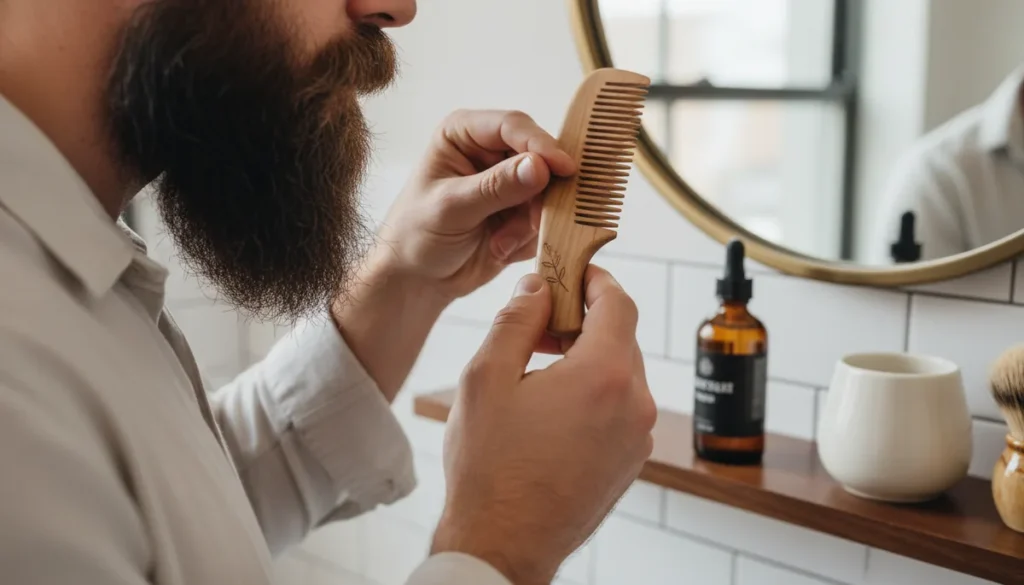
Start at the skin, not the ends. Put the teeth against the skin under the chin and comb upward with the coarse end first, which lifts the hair and loosens tangles. Then comb back down with the fine end to lay everything in its natural direction. Working ends-first from the top is how knots get pulled out at the root instead of worked out.
Comb damp, not wet. Right after a shower the hair is at its weakest, and aggressive combing then is how split ends and breakage happen. Towel dry, or comb in the shower with conditioner in and rinse through it. If you are combing after oil, give the Viking Revolution set style boar brush the spreading job and let the comb handle the detangling before the oil goes in; the beard oil application guide covers the order.
Comb before every trim and before styling, not instead of them. A comb sets the part line, evens out the shape and shows the barber or the trimmer guard exactly where the hair actually sits. If your beard drifts sideways during the day, a two-second pocket-comb fix at lunch beats reapplying product. And wash the comb itself: hair, oil and dead skin build up between the teeth, and a dirty comb re-deposits all of it. A drop of gentle shampoo and warm water once a week, dry it thoroughly, done.
Watch how the pros comb
This walkthrough shows the up-then-down method on a full beard, and the part worth copying is the grip: he holds the comb at an angle against the skin instead of dragging it flat across the surface. Note how little force it takes once the coarse end has done the first pass.
FAQ
Are wooden combs actually better than plastic? For beards, usually yes. Wood produces almost no static and has smooth, saw-cut teeth, while molded plastic combs often carry fine seams that catch hair. Plastic is fine for a spare, and carbon fiber is the exception worth paying for. If you want the wood experience at a budget tier, the White Naturals comb is the test case.
Can a comb fix a patchy beard? No comb grows hair, but regular combing trains the direction the hair lies, which helps the hair you have look its fullest. For the longer project of filling gaps, our patchy beard guide is the place to start.
How often should I comb my beard? Once or twice a day is plenty for most beards: morning after oil or balm, and a quick pass before bed. More than that mostly adds friction. Long beards benefit from a detangle every wash day too, since sleep tangles accumulate.
Comb before or after beard oil? Detangle first, then apply oil, then brush it through. Oil on a tangled beard coats the knots instead of spreading evenly. The full order, wash, detangle, oil, brush, style, takes about three minutes and is the routine the Kent BRD5 set is built around.
What tooth spacing does a short beard need? Fine teeth. Under about an inch of growth, coarse teeth slide over the surface without gripping much, while fine teeth actually contact the hair. That is why the Kent 81T works so well as a first beard comb, and why dual-tooth designs earn their keep as the beard gets longer.
The bottom line
Buy the Kent A 81T if you want one dependable comb you will actually carry, and the sandalwood comb with case if you want the nicest single wooden comb for travel.
The White Naturals comb covers the budget tier, so nobody has to pay up to find out whether wood suits them.
For a set that covers combing and product work together, the Viking Revolution kit is the value pick and the Kent BRD5 is the premium one.
And for mustache detail that no comb on its own can handle, the Tweezerman scissors and comb earns its place beside any pick above.
Whichever you pick, use it the way it is meant to be used: coarse end up from the skin, fine end down to set the shape, damp hair rather than soaked, and a weekly wash of the comb itself. A good comb is the tool in a beard routine that gets used most.