
TrustedBarber is reader-supported. If you buy through links on this page, we may earn a commission from Amazon at no extra cost to you.
Barber pick
Honest Amish Classic Beard Oil. the oil that keeps a grey beard soft instead of wiry.
The routine here follows Born Bearded’s gray beard care video below (watch it here), from the wash to the oil.
Video: Born Bearded on YouTube
- Grey Hair Grows Different, So Treat It Different
- Washing: The Step That Sets Everything Else
- Softening: The Daily Two Minutes
- The Habits That Show Up in the Mirror
- Heat: Open the Cuticle, Then Be Careful
- The Weekly Reset
- Yellowing: The Grey Beard’s One Real Enemy
- Choosing Between Silver and Blended
- Skin Under a Grey Beard Needs Less Than You Think
- Styles That Flatter Silver
- The Transition Weeks
- Frequently Asked Questions
Grey Hair Grows Different, So Treat It Different
A grey beard is not an older version of the same beard. Once melanin leaves the hair, the strand that remains is usually coarser in diameter, drier at the cuticle, and more resistant to lying flat. Grey hair also shows oil, yellowing, and product buildup in ways darker hair hides. That is why the silver-bearded guys who look deliberate rather than accidental are running a routine built around softening, cleaning, and edging, in that order.
The good news: grey beards are having a decade. The salt-and-pepper and full-silver looks read distinguished precisely when the hair is healthy. A wiry, yellowed, patchy grey beard reads tired. The gap between the two is a few minutes a week.
Washing: The Step That Sets Everything Else
Grey facial hair picks up external staining faster than pigmented hair, and daily exposure to pollution, cooking smells, and hard water leaves a dull film. A dedicated beard wash two to four times a week clears it without stripping the oils grey hair already lacks. After every wash, condition the beard or follow with oil, because washed-but-unconditioned grey hair turns into bristle by lunchtime.
If part of the goal is softening the contrast rather than owning it, a gradual grey-reducing wash is the low-effort route. The Just For Men Control GX Beard Wash replaces your regular beard wash and reduces grey a little with each use, so the change happens over weeks and reads natural rather than sudden. No ammonia, no peroxide, no separate staining step; you use it like soap, and it also thickens the hair with keratin as it works. With a 4.2 star average across more than 15,000 ratings and an Amazon’s Choice badge, it is the most proven product in the category, and stopping use simply lets the grey return at its own pace.
Check the Just For Men Beard Wash on Amazon
Softening: The Daily Two Minutes
Coarse grey hair is dry hair, and dry hair is fixed with oil and water, not with more trimming. The core routine:
- Oil every day. Work a few drops through the beard and into the skin beneath while the beard is damp from a shower or a water spritz. The Honest Amish Classic Beard Oil is a blend of seven natural oils that conditions both the hair and the skin underneath.
- Brush or comb it in. A boar bristle brush or a wide-tooth comb distributes oil down the strand and trains wiry hairs to lie with the pack instead of jutting sideways. Thirty seconds of brushing after oiling does more for grey texture than any product swap.
- Trim on a schedule. Grey hairs grow at slightly different rates and a scraggly perimeter shows against silver more than against brown. A light weekly detail of the neckline and cheek line keeps the shape deliberate.
Our breakdown of beard oil versus balm versus butter explains where balm and butter fit once the base routine is running, and the home shaping framework covers the two lines that keep any beard looking maintained.
The Habits That Show Up in the Mirror
The tutorial embedded above is the second grey-beard installment from Dave at Born Bearded, and his first two tips have nothing to do with products. The first is hydration from the inside out: grey hair feels coarser and drier as a matter of structure, and steady water intake keeps the follicles moisturized, supports the circulation that carries nutrients to them, and cuts down on dryness and split ends. He pairs it with diet, specifically omega-3s and healthy fats, as the inside half of any softening routine. None of it replaces the oil and conditioner work below, but a dehydrated body makes a wiry beard, and no balm fully covers the difference.
The second tip is a silk or satin pillowcase, which sounds like a lifestyle purchase until you hear the mechanics. As melanin drops, the hair shaft grows more rigid and less flexible, which is exactly the coarse, unruly feel grey beards develop. A cotton pillowcase drags against that rigid hair all night, and the friction causes frizz, breakage, and split ends. Silk lets the hair slide, keeps you cooler, and as a bonus collects less dust and bacteria. For a beard that already fights frizz every morning, removing eight hours of nightly friction is one of the highest-leverage zero-effort changes available.
Heat: Open the Cuticle, Then Be Careful
Dave styles his beard with heat and explains why it belongs in a grey-beard routine: warmth opens the cuticle so beard oil absorbs deeper, tames frizz and tangles, smooths out the dips and waves grey hair loves to curl into, and leaves a sheen that flat silver often lacks. The catch is that heat at too high a setting damages the hair, and grey hair is already the more brittle hair on your face.
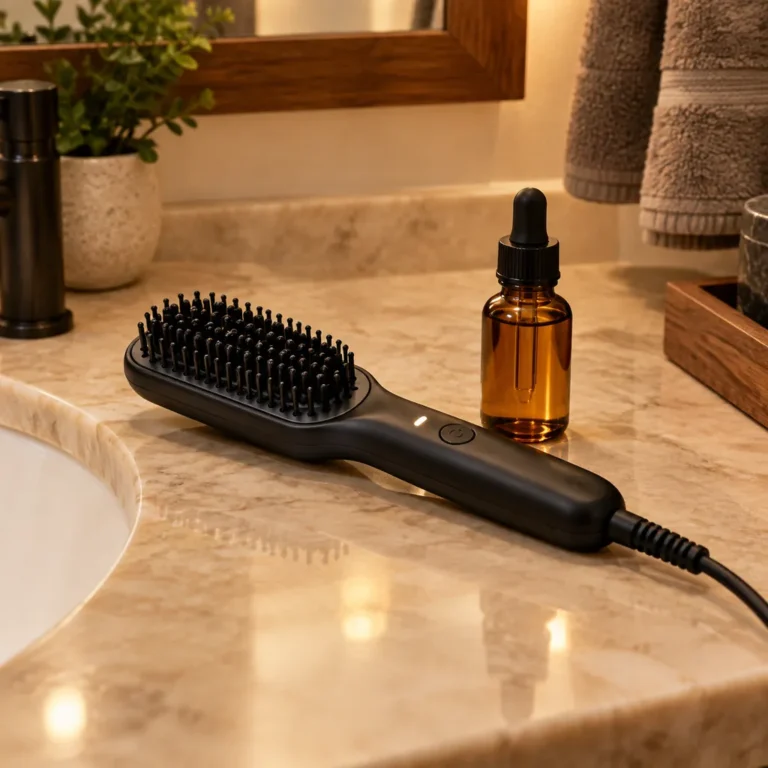
His settings are specific, and worth copying: a medium setting on the blow dryer, and a heated brush held to roughly 320 degrees, maybe 340 for genuinely unruly growth. Two guardrails make the difference between styling and cooking: apply a quality beard oil and let it sit for three to five minutes before any heat touches the beard, so the Honest Amish Classic Beard Oil is doing its work inside the cuticle rather than getting baked off the surface; and never park the heat on one spot. Keep the tool moving, and finish with a smooth comb without sharp edges to set the shape.
The Weekly Reset
The last structural tip answers a question the daily routine cannot: why does a well-washed grey beard still look dull by Friday? The answer is what the beard does all day. A beard literally acts as a filter for your mouth and nose, and it traps what is in the air: dirt, food, and airborne pollutants that settle into the hair and skin, dull the color, roughen the texture, and can even irritate the skin into breakouts. A gentle daily wash keeps the surface honest, but once a week Dave runs a deeper stripping wash to clear the accumulated film, and reports the beard looks brighter and feels lighter afterward. For a grey beard fighting yellowing from two directions, that weekly reset is cheap insurance; pair it with the tint-maintaining wash in the yellowing section above and you are covering both the buildup and the brass.
Yellowing: The Grey Beard’s One Real Enemy
Silver hair picks up yellow tones from several directions: minerals in shower water, chlorine from pools, UV exposure, and buildup from styling products or smoking. The fixes stack:
- Rinse after swimming. Chlorine is the fastest yellowing agent grey hair meets, and a plain water rinse immediately after a swim limits most of the damage.
- Wash on schedule. The buildup film that dulls grey hair is the same film that shifts it yellow. Sticking to the two-to-four washes a week cadence keeps it from accumulating.
- Watch the products. Heavy pomades and waxes sit in grey hair and oxidize. If your beard goes yellow by end of day, the styling product is a suspect before the water is.
A purple or blue-toned toning product, the same tool blondes use, can neutralize persistent yellow, but most grey beards do not need it once washing and rinsing are consistent. Fix the cause before reaching for a color corrector.
Choosing Between Silver and Blended
There are two legitimate strategies, and both have a failure mode.
Own the grey. Keep it clean, soft, and edged, and the silver does the talking. The failure mode is neglect: grey hair that is unwashed, wiry, and yellow reads old in the wrong way. This path is the cheaper and lower-maintenance of the two once the routine is running.
Blend it gradually. A grey-reducing wash like the Control GX beard wash walks the color back in small steps and holds it wherever you stop. The failure mode is the hard stop: an instant dye that leaves a flat, uniform color block with a visible demarcation as it grows out. Gradual products avoid that cliff, which is why barbers recommend them for first-timers over traditional beard dyes.
Skin Under a Grey Beard Needs Less Than You Think
The skin beneath a beard ages on its own schedule, and men over-washing the skin under a grey beard is one of the most common self-defeats in the routine. Cleanse gently, keep the daily oil going, and treat flaking or itching at the source. Dandruff in the beard zone is a yeast-and-oil problem, not a dryness problem, and it responds to a targeted antifungal routine rather than more moisturizer. Grey or not, the trim cadence follows the same rules as any beard: our piece on how often to get a haircut covers why four to six weeks is the ceiling for most styles.
Styles That Flatter Silver
The silver look has its own shortlist of styles that consistently work. The full boxed beard is the classic: squared at the chin, clean at the lines, and the single most reliable way to make grey read powerful rather than patchy, because the geometry does the styling and the color does the character. A well-kept goatee or van dyke suits men whose cheek growth has gone sparse while the chin stays thick, which is the most common grey growth pattern. And clean stubble is the lowest-maintenance silver look there is: grey stubble reads sharp at almost any age, and the routine reduces to washing, oiling, and edging the neckline.
The style to be careful with is the long, unstructured grey beard. It can work, and on some faces it is magnificent, but it demands the full routine daily: washed, oiled, brushed, and trimmed on a schedule. Silver hair shows a neglected perimeter instantly, so length should only follow consistency.
The Transition Weeks
The first weeks of going silver are the hardest stretch, because the color arrives unevenly: the chin goes first, the cheeks lag, and the mix reads messy before it reads distinguished. Two moves get men through it. First, keep everything slightly shorter than feels natural during the transition, since a tight trim makes the blend look deliberate while it works itself out. Second, use the gradual route if the patchiness bothers you, because a grey-reducing wash evens the transition out rather than accentuating it. The men who abandon the silver look overwhelmingly quit during these weeks, not because the endpoint disappointed them, but because they tried to judge the look at its messiest stage.
Frequently Asked Questions
Why is my grey beard coarser than my brown hair was?
The follicle itself changes with pigment loss: the strand often grows thicker in diameter and the cuticle sits rougher. Oil and heat-free smoothing are the only real fixes, and they work well once applied daily.
Will plucking one grey hair make more grow?
No. Plucking cannot multiply follicles, but it can damage the follicle you pulled from, which is reason enough to trim rather than pluck. A repeated plucked follicle eventually grows back finer or not at all, which in a beard reads as a gap.
Does a grey beard need different trimming than a dark one?
The lines matter more, not less. Grey hair shows the difference between a deliberate edge and a guessed one, so the neckline and cheek line deserve the same precision you would give a styled haircut.
Is it too late to start a routine if the beard is already wiry?
No. Wiry grey hair responds to consistent oiling and brushing within a couple of weeks. The strand does not regenerate, but the texture you see is largely hydration and alignment, and both are recoverable.
Does a silk pillowcase actually help a beard?
It helps more than most grooming purchases. Grey hair shafts are rigid, and a cotton pillowcase grinds that rigidity into frizz and split ends over eight hours a night. Silk or satin lets the hair slide instead of drag, which the tutorial above credits with less breakage and easier mornings, on top of staying cooler and collecting less dust and bacteria.
How hot should a heated brush get on a grey beard?
Keep it around 320 degrees, at most 340 for stubborn growth, on a medium blow-dryer setting before that. The other two rules matter as much as the number: beard oil goes on three to five minutes before any heat so the cuticle is protected, and the brush keeps moving rather than dwelling on one patch.
What is a weekly reset wash?
One deeper, stripping-style wash a week, on top of your gentle daily washes. A beard filters the air for your mouth and nose all day, and that trapped film of pollution and grime is what makes a clean-living grey beard look dull by week’s end. Strip it weekly and the tutorial’s verdict is a beard that looks brighter and feels lighter by the weekend.