TrustedBarber is reader-supported. If you buy through links on this page, we may earn a commission from Amazon at no extra cost to you.
Every beard shelf at the drugstore promises thickness, and almost none of them can deliver it, because thickness is mostly decided by biology and then protected or wasted by habits. The useful frame is the one Alex from Mission Beard lays out in his video on growing a thicker beard: understand what thickness is made of, find out what is actively holding you back, then run the small daily moves that let the beard you can grow reach its potential. His 15-point list, broken down below, covers the routine in one place.
What beard thickness is actually made of
Three factors decide how thick a beard looks. First, thickness of strand: a bigger hair follicle produces thicker beard bristles, and the thicker each individual bristle is, the fuller the beard reads as it grows out. Second, number of strands: the more hairs you have packed into a given area, the thicker the beard looks, full stop. Third, color: lighter beards tend to be denser, but the darker the color, the thicker it appears. None of the three is a product you can buy, which is why the honest part of this guide is about what you control around them.
What holds growth back
Two things sit at the edges of the list because you cannot fully control them, but you should know they exist. Age cuts both ways: thickness and density slow down as you get older, and at the other end, some men in their late teens and early twenties simply have not caught up yet. If you are young and patchy, the reason may be nothing more than time. Testosterone is the other one. It is crucial for hair growth and strand thickness, and low testosterone will stall a beard while also doing damage elsewhere in the body. If you suspect it, that is a doctor’s appointment, not a supplement order.
The 15 moves that matter
1. Be patient, for at least four weeks. The number one killer of thick beards is razors. Give a new beard at least four weeks before any trimming, and if it is patchy, give it a couple of months so the slow areas have time to fill in. Alex’s own account: he used to get bad patches on his chin, and the only thing that made them fill in was time.
2. Do not shave. Ever. The shaving-makes-it-thicker myth gets a full debunk. Shaving removes the thinner tips of the hair and leaves the thicker, darker bases, which looks fuller but is an illusion, and in the meantime you are resetting growth. Density is controlled by genetics and age, not by how often you clear the skin.
3. Eat a nutrient-rich diet. Studies show a direct correlation between obesity and low testosterone, which makes diet a beard lever, not just a health one. His shortlist: chicken and salmon for protein, chickpeas for zinc, and fruits and vegetables for the range of vitamins hair growth runs on.
4. Lift weights. Weight lifting increases testosterone and improves blood flow, two things facial hair depends on. Three or four sessions a week is the target he suggests, and if you are already training, keep going.
5. Stay properly hydrated. Everyone gets lectured on water from childhood; the new part is that hydration matters for beard growth specifically, not just everything else.
6. Use natural supplements to plug gaps. Beard growth needs a long list of vitamins and minerals, and copper, zinc and vitamin D are the ones he names. The framing matters: supplements fill holes in the diet, they do not replace eating well, and a balanced diet comes first.
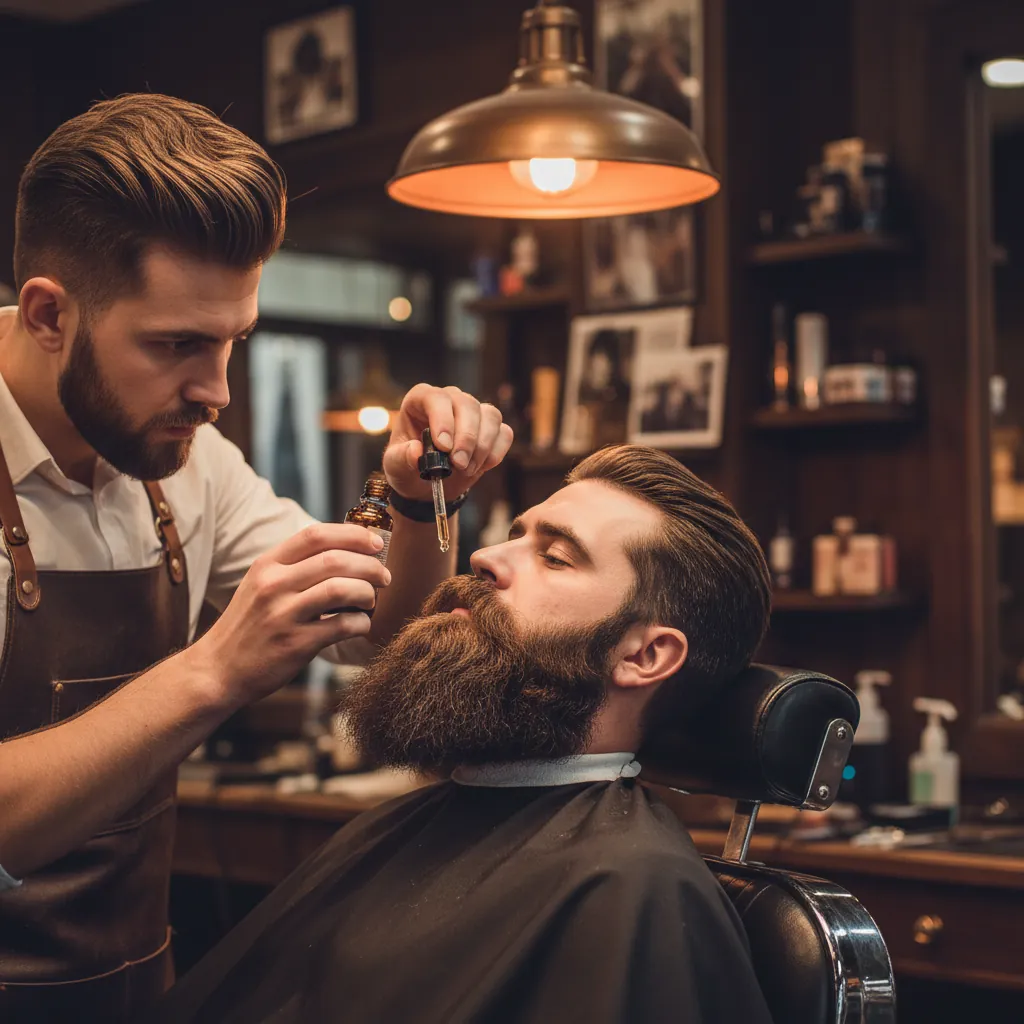
7. Use beard oil for what it actually does. Beard oil will not sprout hair where there is none, and anyone selling it as a miracle is selling snake oil. What it does: softens and nourishes the hairs you have, keeps them hydrated, keeps the skin underneath happy, and cuts down beard itch and irritation. That is the mechanism our beard oil vs balm vs butter comparison is built around.
8. Brush daily with a real beard brush. A beard brush used once or twice a day increases circulation to the follicles, which increases the nutrients they receive. The video is upfront that the growth-speed effect is anecdotal rather than proven, but the second function is not: brushing right after you apply oil distributes the product evenly through the beard. It is the pairing in the routine below.
9. Try a derma roller if you are patchy. Derma rollers are covered in hundreds of tiny titanium needles that create micro-punctures in the skin, which can raise collagen production, something strong, fast hair growth depends on. Used incorrectly they cause mild irritation, but for a patchy beard that will not connect, he considers them worth a shot. That is the whole technique: clean rollers, light passes, and patience.
10. Pick a strategic style. If the cheeks will not connect or the chin is sparse, shift the goal. Instead of chasing density where it will not come, make the hair you do have work as hard as possible: trim tactically for a tight, clean appearance, and use styling products to enhance what is there. A patchy beard that is deliberately styled beats a patchy beard that is just waiting.
11. Sleep seven to eight hours. Testosterone regenerates while you sleep, so more sleep means more testosterone, and more testosterone means better beard growth. The chain is that simple, and the video’s presenter admits he is the cautionary tale.
12. Shampoo and condition the beard. Head hair gets washed and conditioned; beard hair is the same hair and needs the same treatment. Keeping it clean and conditioned reduces breakage and falling hairs, which feeds directly into how full the beard looks. Our shave routine guide covers the skin side of the same principle.
13. Get stress down. Stress raises cortisol, a hormone that suppresses testosterone. It also constricts blood vessels, so less blood, oxygen and nutrients reach the follicles. Two mechanisms, one outcome: a stressed body grows a worse beard.
14. Trim, strategically, at length. This is the twist: after weeks of telling you to put the trimmer down, once the beard reaches real length, a trim helps. At length, the ends of the hairs get thin and frayed, and the tips look wispy next to the denser body of the beard. Set clear lines on the neckline and cheek line, and trim off the flyaway, faster-growing stray hairs. Our neckline and cheek line guide shows where those lines go, and the beard shaping framework covers the whole structure.
15. Approach growth boosters with your eyes open. There is real anecdotal evidence behind beard boosters for men missing specific nutrients, and there are also a lot of useless bottles. His advice before buying: check reviews, check what Reddit says, and read the ingredient list. It is your call whether the benefit is worth putting unknown ingredients in your body.
Two of the fifteen deserve more space than a bullet, because they are the two most people get wrong in opposite directions.
The derma roller, done right. The mechanism is mechanical, not chemical: the needles create controlled micro-injury, the skin responds with collagen, and collagen is the protein strong, fast hair growth is built on. That makes the roller a supporting act, not a substitute for the basics. The sequence that works: roll on clean, dry skin before bed, roll in the directions the hair grows with light, even pressure, and give the skin a day off between sessions. The product you apply afterward matters more on roller nights, because the micro-channels carry whatever you put on the skin directly into it. Keep it simple and clean on those nights, and never share a roller. Done that way, mild redness is the worst expected outcome; done roughly, you irritate the skin for a week and gain nothing.
The strategic trim, done at the right time. The beard’s fullness problem at length is mostly optical. Past a certain point every hair keeps growing but the tip, the oldest part of the hair, frays and thins out, so a beard that is actually dense at the skin starts to look wispy at the ends. The fix is not a shorter beard, it is a defined beard. Set the neckline at the point our neckline guide marks, set the cheek line, and take the flyaways down evenly across the body of the beard. What you keep is the dense part; what you lose is the see-through fringe that was doing nothing for the shape. A five-minute trim after week eight buys back the appearance of a month of growth.
Putting the fifteen into a weekly rhythm
Lists of fifteen are hard to run. Folded into a week, the routine is short. Every morning: rinse or splash the beard, apply a few drops of oil through to the skin, brush it through with the boar brush to distribute, done. Every evening on training days: the same oil pass, because post-shower skin absorbs better. Two or three times a week: wash with the beard shampoo, condition, towel dry, oil, brush. Every night: seven to eight hours of sleep, which costs nothing and moves the hormone that runs the whole operation. Weekly: the weight sessions, three or four of them, and a two-minute scan of the neckline and cheeks to see whether the next strategic trim is due. Once a month, at most: assess whether a derma roller session is warranted for any patch that has genuinely refused to fill.

Notice what is not on the schedule: shaving, miracle serums, and impatience. The list is fifteen points, but the daily cost is about three minutes.
The three-product starter stack
Points 7, 8 and 12 are the daily-ritual core of the list, and they run on exactly three products: an oil, a brush, and a wash. Here is the stack.
Honest Amish Classic Beard Oil
The oil is the product the whole routine hangs on. Honest Amish Classic Beard Oil is a natural-oil blend built to soften coarse facial hair and condition the skin underneath, which is exactly the two jobs point 7 assigns. A few drops into a damp beard, morning and night, is the whole technique.
Check the Honest Amish Beard Oil on Amazon
Viking Revolution beard brush and comb set
Point 8 needs a brush, and this is the set that does the daily job without costing real money. The Viking Revolution Beard Comb and Brush Set pairs a natural boar bristle brush with a dual-action pear wood comb and throws in a velvet travel pouch. Boar bristle is the right fiber for distributing oil down the hair shaft rather than sitting on top, and the comb handles the detangling pass before the brush work.
Check the Viking Beard Comb and Brush Set on Amazon
Viking Revolution tea tree beard wash
For point 12, beard-specific wash beats face wash and head shampoo both. The Viking Revolution Tea Tree Beard Wash and Conditioner is built for the skin-under-the-beard problem: tea tree oil for the itch and flake side, which matters double while you are pushing through the four-week no-trim window. Two or three washes a week, conditioner every time, is the rhythm.
Check the Viking Tea Tree Beard Wash on Amazon
For anyone who wants the how-to in one place: start with a clean, damp beard after a shower, because open cuticles and warm skin take oil in better than dry hair. Press the dropper once or twice into the palm, rub your palms together, and work from the skin outward, cheeks first, then chin, then mustache, so the oil reaches the skin that needs it rather than only coasting on the surface. Then brush from the neck upward against the grain for five or six strokes to lift the hairs, follow with a downward pass to set them where you want them, and finish with the comb to part and neaten. The whole pass takes under two minutes, and doing it at night means the product works through the hours when you are not sweating it off.
The stack lands under $25 and covers three of the fifteen points completely. The other twelve are habits: food, sleep, water, patience, and one honest trim at the right moment.
FAQ
How long before a patchy beard fills in?
Give it at least a couple of months before judging. Patchiness at week two or three often disappears by week ten on its own, and trimming during the patch window only resets the clock.
Does shaving make the beard grow back thicker?
No. Shaving removes the thinner tips and leaves the thicker bases, which reads as fuller but changes nothing about density or growth rate.
Will beard oil make my beard grow?
Not where there is no hair. Beard oil softens and nourishes the hair you have and keeps the skin underneath healthy, which lets the beard you can actually grow reach its potential.
When should I start using a derma roller?
When you have a genuine patch problem that patience has not fixed, and only with clean technique. The micro-punctures support collagen production, but incorrect use just irritates the skin.
Should I trim to make it look thicker?
Yes, at length. Frayed, wispy ends make a long beard look thinner than it is. Setting clean neckline and cheek lines and removing stray flyaways gives an instant fullness boost.
Related reading: the barber systems for fading a beard, the beard styles by face shape guide, the grey beard care guide, and razor bump prevention from barbers.