TrustedBarber is reader-supported. If you buy through links on this page, we may earn a commission from Amazon at no extra cost to you.
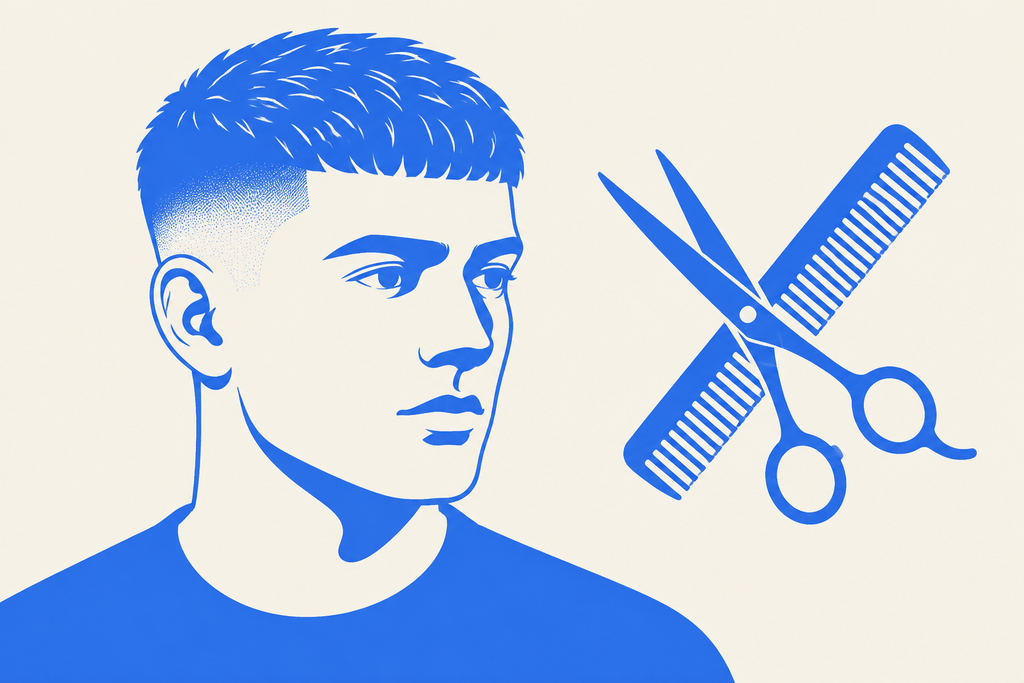
The French crop is a short, textured top pushed forward into a straight fringe, with the sides faded tight. It looks low-maintenance, and it is, but only if the cut itself is built right. Two professional tutorials cover it from complementary angles: barber David Falla builds a textured crop with a mid fade and explains every guard change, and Russell Mays, content director at Jatai Academy, teaches the crop as a fundamentals drill, including a fading motion most tutorials never mention. The crop is a close cousin of the Caesar cut; the difference is the crop’s fringe is point-cut and textured instead of blunt.
Sectioning around the growth pattern
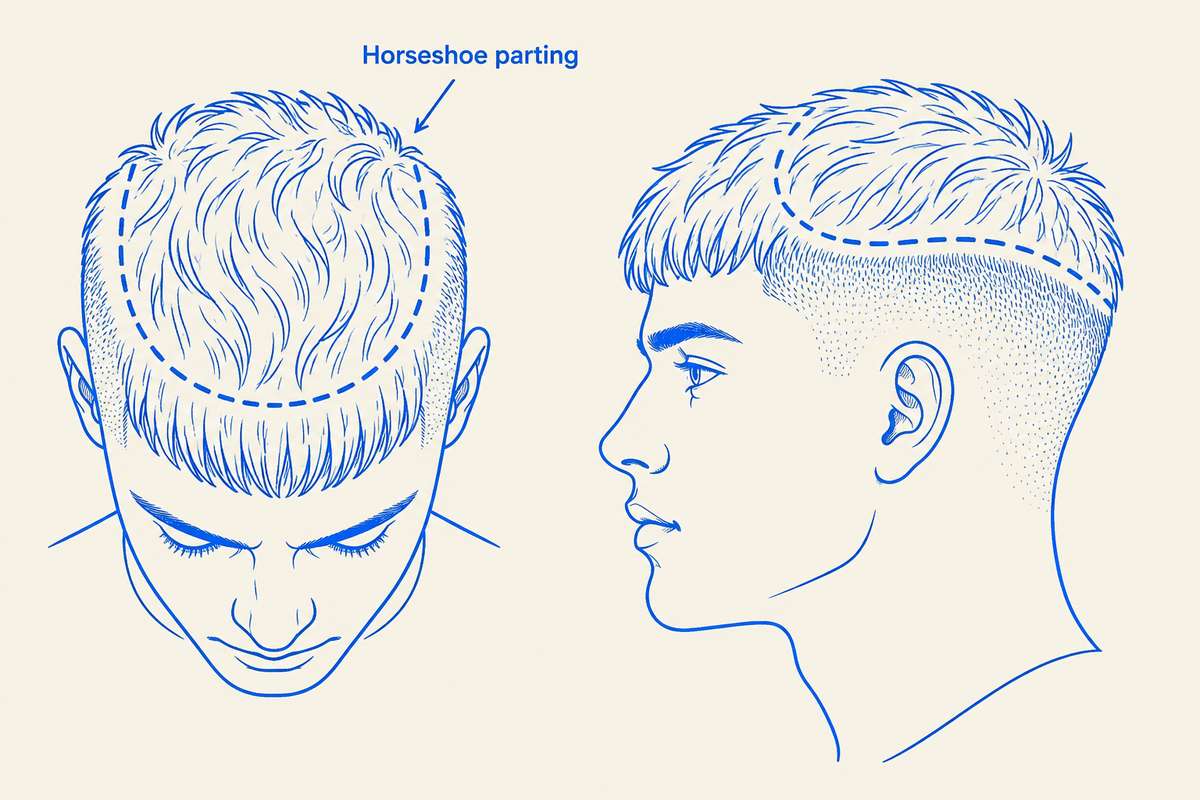
Falla’s first move is to separate the top from the sides, and he pays attention to the growth pattern before anything else: he wants to see what the hair wants to do and section in that direction. His client has cowlicks, and he sections those out deliberately so he does not cut against them and create a problem that shows up weeks later.
Mays teaches a precise version of the same line: from the center of the recession straight back to the quarter part, then curved around into the back so half of the parietal ridge sits with the top and half sits with the sides. Both barbers then set a graduation guide all the way around the head, which is the line that will separate the fade from the top. Falla places his for a mid fade and drops it lower in back because that is what fits the head shape.
Cutting the textured top
The top is scissor work on wet hair. Falla wets the top first, then carves a profile section right down the center, because that strip dictates the shape of everything else. He cuts it straighter through the middle and rounds it toward the front, keeping the front slightly longer so the hair pushes forward into the fringe. With the center guide visible, he connects the rest of the top to it, point cutting everything to build texture rather than weight lines. His drying step matters as much as the cutting: he uses a diffuser on the blow dryer specifically because he does not want the hair straight. The goal is movement and a slightly curly, broken-up texture, and a flat nozzle would polish that out.
Fading the sides: two ways in
Mays lays out the two legitimate approaches and when each makes sense. You can skin the bottom up to where you want the bald part to sit, then fade from short into long. Or you can work from long to short, stepping down through guards. His rule of thumb: if the skin is going high, skin it first and work the line out; if the taper is staying low, go from long to short. For this crop he goes long to short.
Falla runs the long-to-short version as a numbered system. A number 3, lever open, connects the fade to the graduation guide he set earlier. Then the lever closes and the zero guide goes in, placed about two fingers below the graduation line; he is explicit that this placement is the decision, because a lower line means a lower fade and a higher line means a higher fade. A trimmer clears everything below the zero guide, with an optional shaver pass depending on whether the client wants bald or a stubble finish. Then he down-fades: 1.5 guard lever open under the 3, then a number 1 lever open, closing the lever only as much as each head needs, then the 0.5 guard the same way. His repeated point is that every head is different, so the lever closes only when the blend asks for it, and skipping a guard is fine when the fade is already melting.
The rocking clipper motion
Mays adds the mechanical detail that makes long-to-short fading work. Coming down from the 3 to the 2, he goes up about a finger length and, as the clipper runs up the head, he rocks it away from the scalp. The wrist arches so the teeth cut the hair underneath short, then rock out to melt into the longer length above. He repeats the same motion with the 1.5 and then the 1, going lower each time. His note on why the steps shrink: the shorter the hair gets, the more visible every difference becomes, so the guard steps get smaller as you approach the skin.
Shape-up and styling
On the shape-up, Falla keeps the line natural rather than pushing it back, just crisping what is there, with an optional razor pass to sharpen it further. His styling finish is a small amount of styling powder followed by clay worked through the top. The powder does the texture work and the clay adds hold, which suits a cut that is supposed to look touchable rather than set. If you are weighing products, our pomade vs clay vs wax guide explains why clay is the right family here.
Tools for the job
Falla names his own clipper on camera: the BaBylissPRO FX870G GOLDFX, which he singles out for its click lever, since the detents tell him exactly where the lever sits and keep both sides even. For the finish, a matte clay like Baxter of California’s Clay Pomade covers the hold half of his styling combo, and Slick Gorilla’s texturizing powder covers the powder half.
Check the BaBylissPRO FX on Amazon
Check the clay pomade on Amazon
Check the styling powder on Amazon
Watch the full tutorials
David Falla’s textured crop with a mid fade, every guard change narrated:
Video credit: David Falla on YouTube. He mentions a styling clay brand with a discount code in the video; we do not use his code, and the technique does not depend on the product.
Russell Mays teaching the French crop as a fundamentals practice at Jatai Academy:
Video credit: Jatai Academy on YouTube, an education channel from the Jatai razor brand; the instructor is their content director, Russell Mays.
FAQ
What guard lengths does a French crop use?
Falla’s system runs a 3 at the top of the fade down through 1.5, 1 and 0.5 into the zero guide. Mays debulks with a 3 and steps down 2, 1.5, 1. Our guard numbers guide translates those numbers into actual lengths.
Does a French crop work on cowlicks?
It is one of the better cuts for them, as long as the sectioning respects the growth pattern. Falla’s whole first step is finding the cowlicks and sectioning them out so the fringe falls with the growth instead of fighting it.
Crop vs Caesar: what is the actual difference?
Both push hair forward into a fringe. The Caesar’s fringe is cut blunt and even; the crop’s is point-cut for texture and usually paired with a tighter fade. The Caesar tutorial shows the blunt version.