As an Amazon Associate, TrustedBarber earns from qualifying purchases.
Razor burn is not bad luck and it is not sensitive skin punishing you for shaving. It is friction: a blade scraping skin that was not ready, with more pressure than the hair needs, for more passes than the job takes. Every part of that sentence is fixable, which is why the men who stop getting razor burn did not switch to luckier skin. They switched routines. The shave that prevents it needs fewer products than the store aisle suggests, starting with a proper pre-shave like the Proraso Pre-Shave Cream rather than dry steel.
Quick answer
Razor burn comes from pressure, dull blades, too many passes, and dry skin. Prevent it by shaving after a warm shower with a proper cream, a sharp blade, light pressure, and the grain, then rinsing cool and finishing with a balm. One pass that leaves a little stubble beats three that leave nothing.
In this guide
What razor burn actually is
Razor burn is skin irritation: redness, a stinging warmth, sometimes small bumps that show up within minutes of the shave and fade within a day or two. It is different from razor bumps, which are ingrown hairs that turn up days later and stay. Our razor bumps routine guide covers that problem separately, because the fixes differ: burn responds to gentler technique, bumps respond to changing how the hair gets cut. Confusing the two is why some men keep buying “bump” products for a burn problem and stay irritated anyway.
The reassuring part is that burn is almost always mechanical. The blade, the pressure, the number of passes, and the state of the skin at the moment of contact decide it. That is a short list, and every item on it is under your control.
The four causes, and which one is yours
Pressure is the usual suspect. Cartridge razors are built to be pressed and still cut, which trains the wrong habit: the blade should float on the skin with its own weight doing the work, and your hand should only steer. If your shave leaves a red stripe where the blade went, pressure is your answer before any product is.
Dull blades come second. A blade past five or six shaves tugs hair instead of cutting it, and each tug is a micro-injury to the follicle. The third cause is pass count: every pass over the same skin multiplies friction, and the second pass against the grain is where most burn is earned. The fourth is dry or unprepared skin, which turns even a light, sharp shave into sandpaper. Diagnose honestly before buying anything, because the fix for a dull blade is a dollar, not a thirty-dollar cream.
The prep that does most of the work
The best razor burn prevention happens before the blade comes out of the drawer. Shave after a warm shower, or hold a warm, wet towel against the face for a minute. Warm water softens the hair and relaxes the skin, and softened hair cuts at less force. Then apply your lather and let it sit for a minute while you brush your teeth; that minute does more than any ingredient list.
For men whose skin stays tight and draggy even after showering, a pre-shave product is the missing layer. The Proraso Pre-Shave Cream in the oatmeal and green tea formula goes on before the lather and gives the blade a slicker, more cushioned entry, which is exactly what burn-prone skin wants. It also helps on days you must shave without a shower, which is when most burn happens anyway. A proper brush changes the equation too; our shaving brush and bowl guide covers the lather-building tools barbers actually keep on the station.
Blade and razor choices
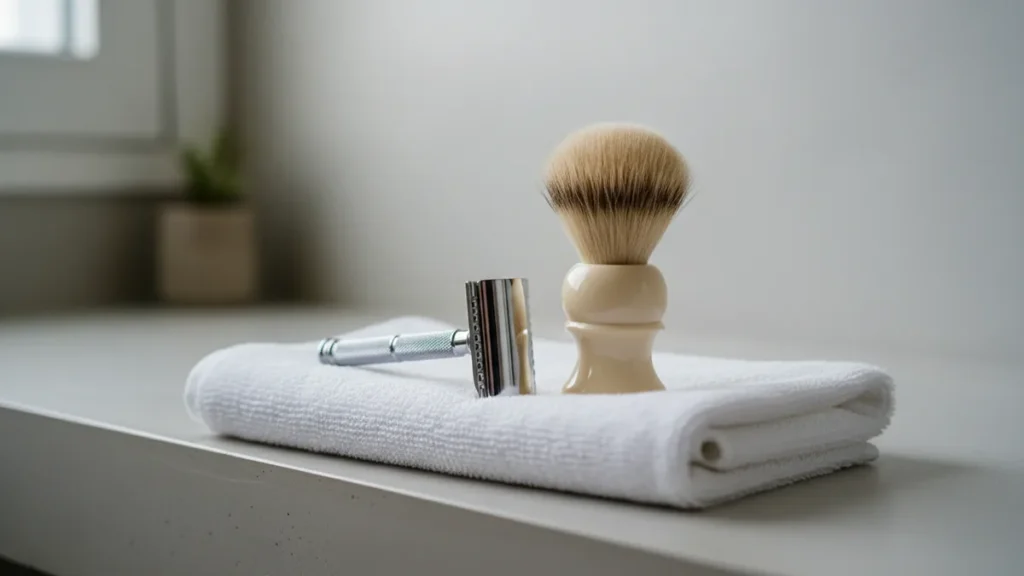
A single blade cuts differently from five. Multi-blade cartridges lift the hair, cut it below skin level, and let it snap back under the surface, which is efficient but rough on burn-prone skin. A double-edge razor like the Merkur 34C cuts at skin level with a fixed, forgiving angle, and because the blade is visible and exposed, light pressure becomes almost automatic. Many chronic-burn shavers who switch never go back, though the learning curve on angle is real for the first week or two.
Whatever razor you use, replace blades on a schedule rather than a feeling. A fresh cartridge every five to eight shaves, a double-edge blade every three to five, is the honest range, cheaper than any treatment for the skin a dull blade damages. Our safety razor how-to and the angle-and-pressure breakdown in our safety razor technique guide cover the switch in detail if you go that route.
The shave itself
Shave with the grain first, always, and accept what it leaves. The grain cut is the pass that never burns; the trouble starts when chase passes go across or against the grain to chase a closer finish. If your skin burns easily, try this for two weeks: one with-the-grain pass, a cool rinse, and stop. The difference in feel is usually decisive, and the “less close” shave looks closer than it feels because there is no redness fighting the stubble.
Keep the strokes short, rinse the blade between strokes, and re-lather before any second pass rather than dragging dry foam across skin. Pull the skin only lightly, because stretching skin flat turns it into a cut target. And never shave over already-irritated skin to “even it out”; that pass is where a rough morning becomes a bad two days.
The finish, and the hours after
Rinse with cool water to close the pores and settle the skin, pat dry rather than rub, and apply your finisher within a couple of minutes while the skin is still damp. An alcohol-free balm is the standard: the Nivea Men Sensitive Post Shave Balm is the one most drugstore shelves stock, and the Proraso After Shave Balm is the barber-counter counterpart in the same soothing oatmeal-and-green-tea family as the pre-shave above. Both rehydrate what the shave stripped and calm the surface before it can flare.
Skip the alcohol-heavy splashes on burn days. They feel brisk because they are drying the skin, which is the opposite of the goal. Give irritated skin a day off if the redness is real, and if the irritation keeps returning after two weeks of a corrected routine, that is a question for a dermatologist rather than another product swap. Our aftershave guide ranks the full field of balms and splashes, and our pre-shave and post-shave routine guide shows how barbers sequence the whole setup.
FAQ
Is razor burn the same as razor bumps?
No. Burn shows up within minutes as redness and sting and fades within a day or two. Bumps are ingrown hairs that appear days later and last longer. Burn is fixed with technique and prep; bumps need changes in how the hair is cut. If bumps are your problem, start with our razor bumps guide instead.
Does a sharper blade cause more cuts?
Fresh blades cause fewer. A dull edge drags and tugs, which is what actually nicks and burns skin. The cuts people blame on sharpness usually come from pressure on a blade that was already past its best days.
How often should I shave to avoid razor burn?
Let skin fully settle between shaves, which for most men means every other day at most on a burn-prone neck. Daily shaving on skin that is still irritated multiplies the problem rather than maintaining anything.
Are expensive razors better for sensitive skin?
Technique beats price. A budget double-edge razor with a fresh blade and light pressure outperforms a premium cartridge driven hard over the same skin. Spend the difference on a proper cream and a balm you will actually use daily.
The verdict
Preventing razor burn is a five-line checklist, not a shopping trip: shave warm and damp, use a sharp blade, cut with the grain at light pressure, limit the passes, and finish cool with a balm. Fix the two causes you actually have and the burn stays gone, which is why the routine above earns its place more than any single bottle in the aisle. The Proraso Pre-Shave Cream remains the easiest first upgrade for burn-prone skin.