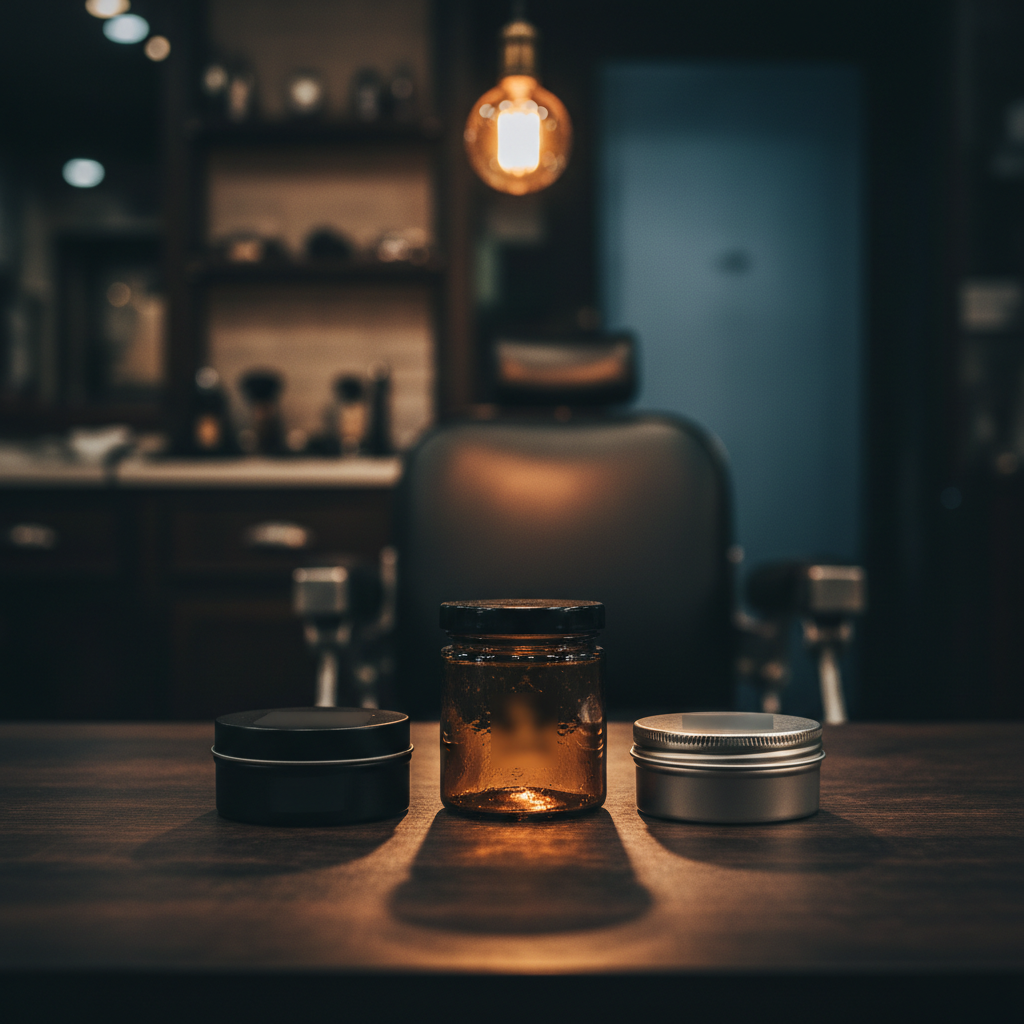
Walk into any barbershop and the shelf behind the chair has three jars that all claim to do the same thing: pomade, clay, and wax. They do not. Each one holds differently, shines differently, and washes out differently, and picking the wrong class for your hair type is why a product that looked perfect on a video makes your hair look either greasy or dead by lunch. The differences come down to three questions: what the base is made of, how much shine it leaves, and how much of the hair’s natural movement it kills. Answer those three and the jar picks itself.
This is the mechanics guide, and the broader tooling around it lives in our complete guide to men’s styling products, tools, and techniques. For a curated list of specific products by barber recommendation, we keep a separate piece on the pomades, clays, and pastes barbers actually recommend; this one explains why each class exists and which class your hair is asking for.
Barber pick
Suavecito Original Hold Pomade. the water-based daily workhorse most barbers reach for first.
The water-based versus oil-based split, the shine question, and which class fits which hair are what MartyBlendz sorts out in the breakdown below (watch it here); this guide applies that logic to the three products most people actually buy.
Video: MartyBlendz on YouTube
The short answer first
Water-based pomade is the default for most men because it restarts: it washes out with one shampoo, restyles with water, and covers everything from neat side parts to modern slick backs. Clay is the pick when you want hold with zero shine, which is the overwhelming preference for short and medium textured cuts. Wax is the strongest, longest-wearing hold of the three, built for styles that must not move, and it is the one that punishes you if you apply it to dry, unconditioned hair. Everything below is the detail behind those calls.
The variable that decides everything: the base
Every styling product is a base plus a hold agent, and the base is what separates the classes. Pomades split into two families. Oil-based, the original formula built on petrolatum and oils, never fully washes out, builds layer on layer, and can genuinely clog follicles on the scalp with heavy daily use; it also gives the deepest, longest shine in the industry, which is why classic pompadour and rockabilly cuts still use it. Water-based pomade replaced the petrolatum with water-soluble ingredients: it rinses clean, it can be reactivated with a wet hand hours later, and modern formulas hold nearly as long. Clay is built on kaolin or bentonite clay, which absorbs oil and dries matte. Wax is built on beeswax or candelilla wax, which physically stiffens.
That base difference explains every downstream property: shine (petrolatum high, clay none, wax low-medium), washability (water-based high, clay moderate, wax low), restyle-ability (water-based high, clay moderate, wax low), and scalp friendliness under daily use (water-based and clay high, oil-based and wax lower).
Water-based pomade: the restartable workhorse
If you only own one product, it should probably be this one. A good water-based pomade gives medium-to-firm hold, a controlled shine, and the ability to fix your hair at 3 PM with wet fingers and no reapplication. The classic example is Suavecito Original Hold Pomade, a firm water-soluble pomade that became the entry point for an entire generation of men because it does the side-part and slick-back jobs without the petrolatum buildup problem. It combs clean, washes with regular shampoo, and at under ten dollars for the four-ounce tub it costs less per month than most men spend on anything else in their routine.
Where it wins: side parts, slick backs, comb-overs, anything you comb. Where it loses: genuinely thick, coarse hair that needs more grip than a water base can carry, and any cut where shine reads wrong, like most short textured crops.
When you want the firm-hold slick look but with more shine and longer staying power, the strong-hold tier is where Reuzel Blue Strong Hold High Shine Pomade sits. It is water soluble despite the old-school tin presentation, which means you get a near-oil-based level of hold and gloss without the buildup, and it restyles with a wet comb through the day. Reuzel’s formulation is built by barbers for barbershop daily work, and it is the common answer when a client wants the classic pompadour finish without the classic pompadour regret at the end of the day.
Clay: matte, dry, and honest about thin hair
Clay does something no other class can: it holds while looking like you did nothing. The clay minerals absorb oil and add slight grit between strands, which gives fine or thinning hair actual thickness that shine-based products visually subtract. The finish is completely matte, the hold is medium, and the product brushes out with fingers rather than demanding a wash.
The benchmark is Baxter of California Clay Pomade, a strong-hold matte clay that has been the reference matte product in men’s grooming for over a decade. It has real grip for a clay, meaning it can hold a messy crop or a loose quiff in place all day, and it never reads as product in the hair. The trade is honest: no shine means no shine, and if your style depends on a glossy finish, clay is the wrong tool.
Where clay wins: textured crops, messy quiffs, any cut on fine or thinning hair, men who work with their hands and re-style casually through the day. Where it loses: combed styles that need shine, and very thick hair where its medium hold tops out.
Wax: the hold that does not blink
Wax is the class for one specific promise: the shape you set in the morning is the shape you still have at night. Beeswax physically locks strands where you put them, resists humidity better than anything else on the shelf, and carries a low, natural sheen rather than a gloss. The costs are the flip side of that promise. Wax does not restyle; once a strand is set, it stays until you wash or re-heat it. It builds up faster than any water-based product, and applying it to dry hair without working it in is how men end up with flakes and clumps by noon.
The correct wax technique is what separates good results from bad ones: emulsify fully between palms until the product turns clear and tacky, apply to towel-dried (not dry) hair, work from the back forward, and comb the final shape once. Applied right, nothing else holds a hard part or an upright front section as long.
The in-between classes, quickly
Shelves also carry paste, fiber, cream, and grooming spray, and the classes above explain all of them. Paste is wax’s structure at clay’s matte finish, with medium-flexible hold; it is the best all-arounder for textured medium-length styles. Fiber adds thickness to fine hair with a low-shine, tacky hold. Cream is the lowest-hold, lightest class, a frizz-tamer and shape-suggester more than a styling product. If a jar confuses you, check the first ingredients: water first means washable and restylable, wax or petrolatum first means commitment, clay anywhere means matte.
Matching the class to your cut
- Side part, comb-over, classic professional: water-based pomade, medium to firm, controlled shine.
- Pompadour, slick back, rockabilly: strong-hold water-based pomade, or oil-based if you accept the buildup tradeoff for the deepest shine.
- Textured crop, messy fringe, French crop: matte clay or matte paste, worked in with fingers, no comb.
- Fine or thinning hair: clay, always, for the visual thickness matte gives.
- Hard part, upright front, anything that must survive wind: wax, emulsified properly.
- Fresh fades and tapers: light clay or cream on top only, so the fade’s blend stays visible. The blend logic in our taper versus fade explainer applies: product piled near the transition line is how a clean fade reads blurry.
- The Edgar and other structured front lines: matte paste at low shine, so the cut’s architecture shows; the execution lives in our Edgar cut guide.
The mistakes barbers fix weekly
The most common is quantity: a fingertip’s worth, pea to almond sized, is a full application for short hair, and doubling that turns any product into grease. Second is applying to bone-dry hair, which makes clay and wax sit on the surface instead of distributing; towel-dried is the target. Third is sleeping in product and restyling on top of it the next morning, which builds layers that dull the hair and weight the style; a night wash costs you ninety seconds and saves the look. And fourth is fighting your haircut: if your cut fights the direction you style it, no jar fixes that, and the fix is the scissor work covered in our scissor cutting guide rather than more product.
What the Label Actually Promises
Two barbers, in two different tutorials above, land on the same warning: the jar’s label is a marketing word, not a specification. In the Gent’s Lounge video, barber Alex holds up two products that both say “pomade” on the tin and behave completely differently, one glossy and classic, one matte and dry, and calls the labels what they are: buzzwords that “get the job done but are sometimes mislabeled because they know you’re going to buy it.” MartyBlendz, in the second tutorial, sorts the same shelf by behavior instead of vocabulary.
The property that actually predicts how a jar performs is malleability. Alex’s test: “if it takes me five minutes to break it down in my hand, it’s not going to go into your hair and give you what you’re looking for.” A product that emulsifies fast between the palms distributes fast in the hair, which is why the Suavecito Pomade keeps showing up in shops despite costing a fraction of boutique jars. His corollary for thick, dense hair: pick the most malleable option on the shelf, because you can always add more of an easy-working product, while a stiff clay you cannot break down simply never reaches the hair. The Baxter of California Clay Pomade is the counterexample, a clay that softens on contact rather than fighting your hands.
Where Gel Fits, and Where It Does Not
Gel is the oldest product on the shelf and the one MartyBlendz is bluntest about. It built its reputation on the spike-and-mohawk looks of the early 90s, and it still does that one job well. Its two failure modes are why he tells most men to skip it entirely: it flakes through the day, going visibly white like dandruff, and on thinning or thick hair it dries in clumps that leave the scalp showing between strands. “I would definitely stay away from gels completely” is his verdict, softened only for men chasing that specific hard, spiky finish.
For everyone else the same shine and hold exist in better-mannered classes. The Reuzel Blue Strong Hold High Shine Pomade delivers the glossy, locked-in look gel promises without the flaking, and it restarts with water instead of cracking off.
The Pre-Styler Layer
The final idea from the tutorials is sequencing rather than choosing. A styling cream is the lowest-hold class in the line-up, but its real role is pre-styler: worked into damp hair before your actual product, its natural ingredients (typically built on things like olive oil) de-frizz and set the direction, and the hold product goes on top of it. MartyBlendz points out that creams combine with literally every other product on his list, which makes the cheapest jar on the shelf the one that upgrades all the others.
The newer additions to the shelf work the same way. A texturizing or volumizing powder sprinkled at the roots adds the dry, grit-forward lift that crops, fringes, and comb-overs run on, though it earns its keep by absorbing your hair’s oils, so it pairs with a real wash routine rather than replacing one. And a light hairspray is the capstone every class above can take: MartyBlendz finishes nearly every look with one, because it is what keeps frizz from undoing the styling two hours into the day.
Common questions
Can I mix classes?
Yes, and barbers do it in the chair. A rice-grain of wax over a clay base adds wind-proofing to the front section; a drop of water worked into a drying clay revives it for a second shape. Mixing same-brand products is the safe start.
Does pomade cause hair loss?
Oil-based pomades under heavy daily use can congest the scalp, which is unhealthy for follicles over time. Water-based pomade washed out daily does not carry that concern. If you notice shedding, change the base before you panic about anything else.
How much hold do I actually need?
Buy less than you think. Most men over-buy hold to compensate for a haircut that does not cooperate, then wonder why their hair looks stiff. Medium hold applied correctly outperforms maximum hold applied lazily.
Is gel ever the right pick?
For one look: the hard, spiked, mohawk-style finish it was built for. Everywhere else it costs you. It flakes white through the day like dandruff, and on thinning or thick hair it dries in clumps that expose the scalp between strands, which is why the barber in the second tutorial tells men to skip the category entirely.
What is a pre-styler?
The product that goes on first, usually a lightweight cream worked into damp hair. It de-frizzes, sets the direction, and gives the hold product that follows something to grip, instead of asking one jar to do the moisturizing, the shaping, and the holding at once. Every styling class, pomade through powder, layers on top of one.
Why does my hair feel dry after using texture powder?
Because that is the mechanism. Volumizing powders work by soaking up your hair’s natural oils to create the dry, gritty texture that gives a crop or comb-over its lift. The trade is that your hair needs real hydration elsewhere in the routine, and the powder comes off with conditioner in the shower rather than fighting you like an oil-based product does.
How do I know if a jar will actually work in my hair?
Do the palm test the Gent’s Lounge barber uses: work it between your hands. If it breaks down and emulsifies in a few seconds, it will distribute in your hair. If it fights your hands for five minutes, no amount of rubbing will fix that, especially in thick or dense hair, which needs the most malleable product you can find.